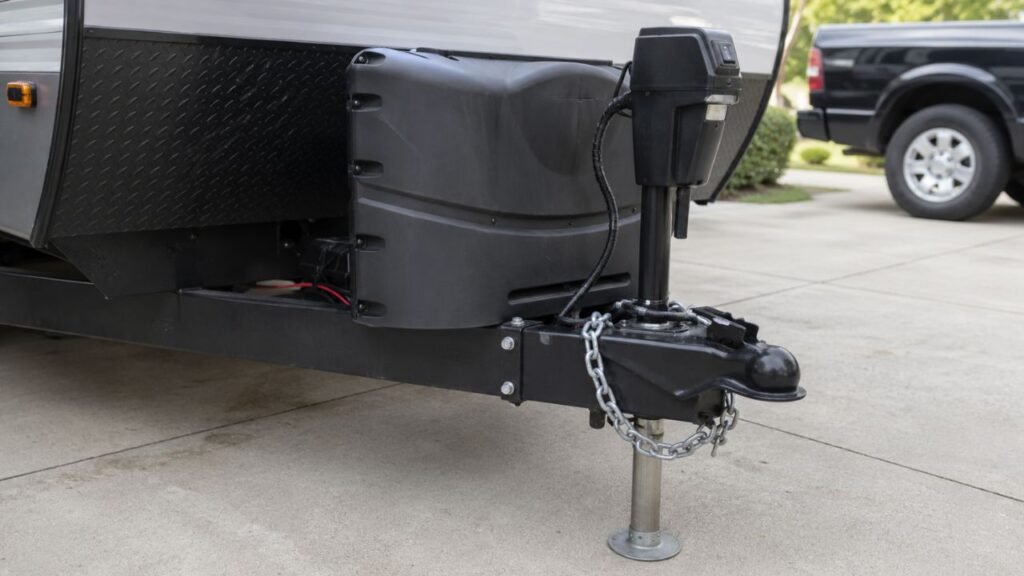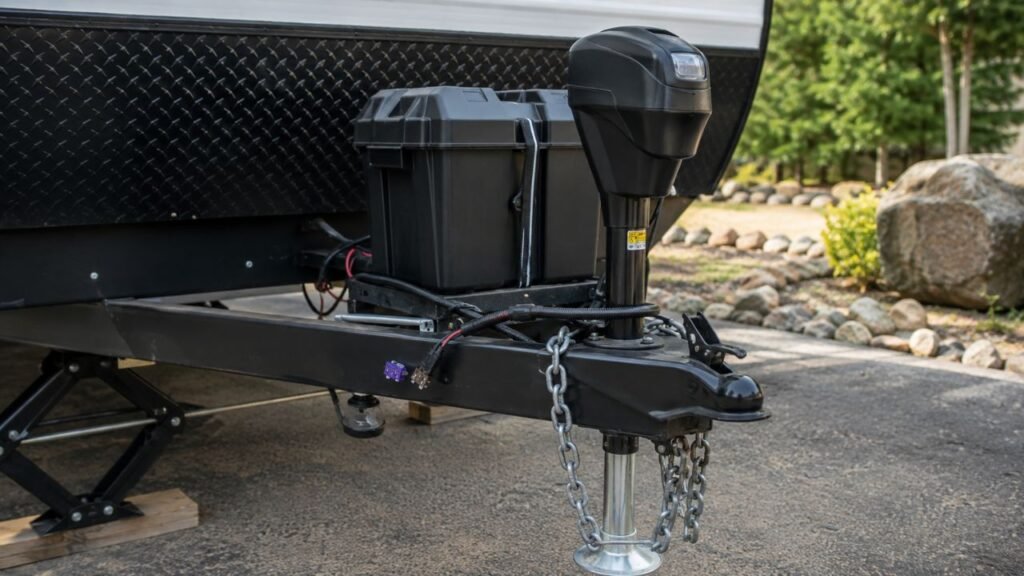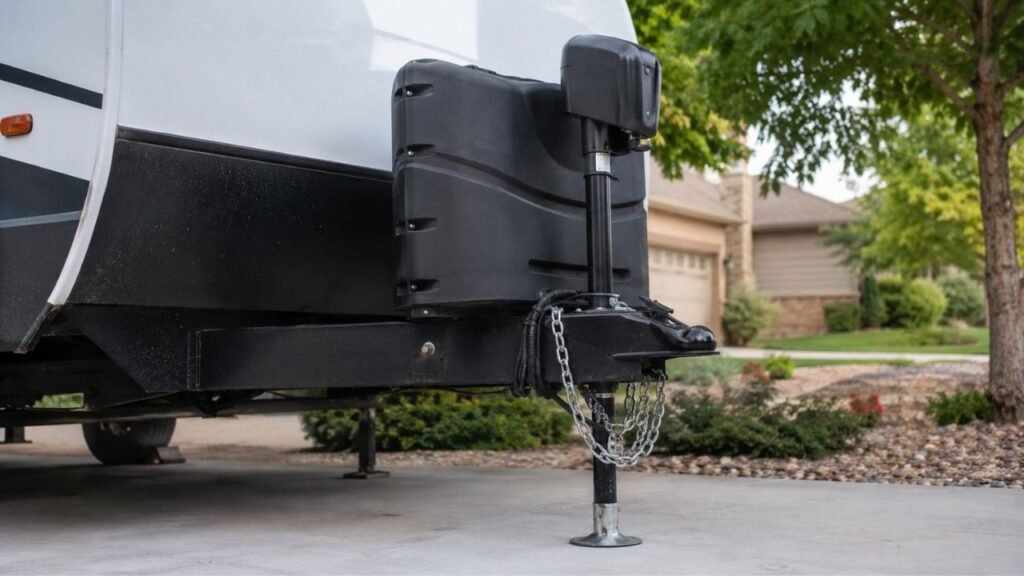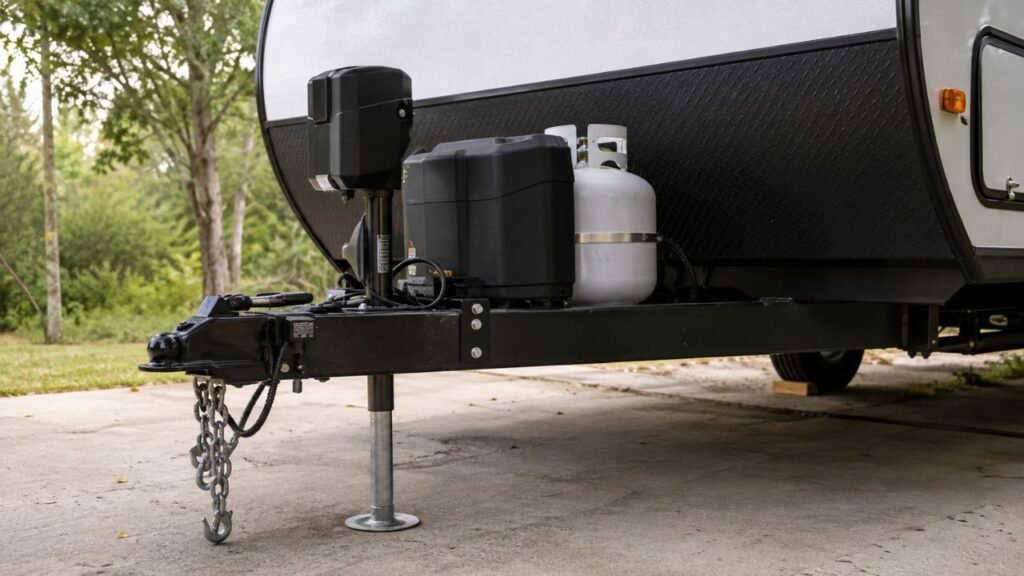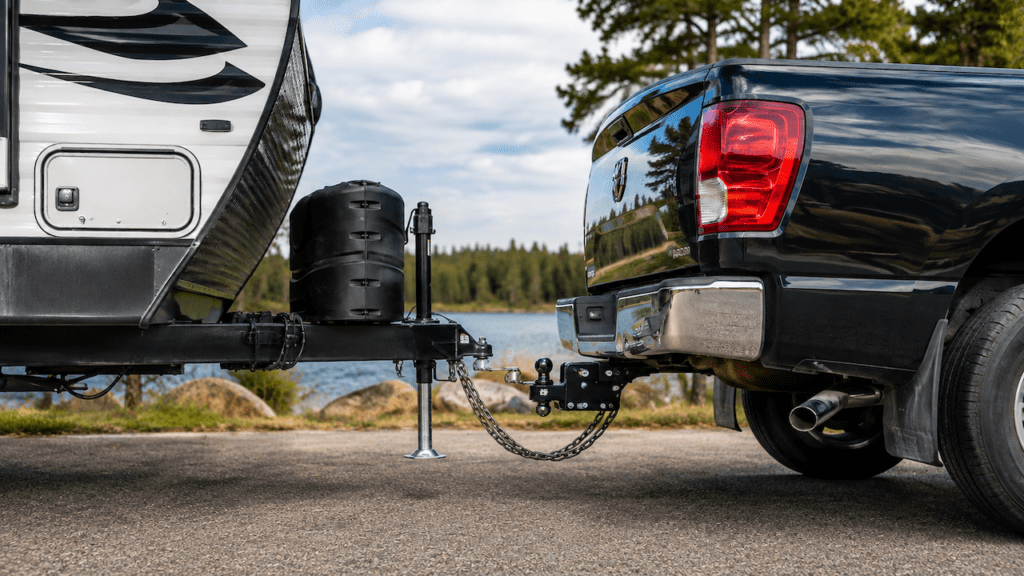
A trailer hitch usually rattles and clunks because there is too much movement somewhere in the hitch connection. The most common source is clearance between the ball mount and receiver, but a loose coupler, worn hitch pin, loose hitch ball, adjustable hitch, or exhaust contact can create similar noises.
The good news is that most hitch noises can be traced fairly quickly. Below, I’ll help you identify where the movement is coming from, what you can safely fix, and when the hitch needs closer inspection.
Key Takeaways
- A loose ball mount inside the receiver commonly causes hitch rattling.
- Clunking during braking often comes from front-to-back hitch movement.
- Coupler movement can sound almost identical to receiver hitch play.
- Loose or worn hitch pins can increase movement and noise.
- Adjustable hitches have additional connection points that may develop play.
- Anti-rattle devices only help when receiver-to-shank movement causes the noise.
- Some weight distribution hitch noises are normal during turns.
- Sudden or excessive hitch movement should be inspected before towing again.
Why Does My Trailer Hitch Rattle and Clunk?
Your towing connection contains several metal parts that must move slightly relative to each other. A receiver hitch, ball mount, hitch pin, ball, and trailer coupler are not one solid piece.
Small amounts of clearance make connecting and removing these components possible. That same clearance can also allow parts to shift when the trailer moves.
A rattle usually happens when components repeatedly move over bumps or rough pavement. You may hear several light metallic knocks from behind your vehicle.
A clunk is normally a heavier single movement. You might hear it when braking, accelerating, shifting into gear, or changing direction.
The important part is figuring out which connection is moving. Tightening the wrong part may quiet nothing and could hide a more important problem.
Where Is the Hitch Noise Actually Coming From?
Different hitch noises tend to appear under different driving conditions. Paying attention to when you hear the sound can narrow your search considerably.
| What You Hear | When It Usually Happens | Likely Source | Check First |
| Light metallic rattle | Rough roads and bumps | Ball mount moving inside receiver | Receiver-to-shank play |
| Heavy clunk | Braking or accelerating | Receiver, coupler, or adjustable hitch | Front-to-back movement |
| Knock when stopping | Braking | Coupler or receiver play | Ball and coupler fit |
| Squeak | Turning | Ball-to-coupler friction | Hitch ball condition |
| Groaning | Turning with a weight distribution hitch | WDH friction points | Manufacturer maintenance points |
| Rattle without trailer attached | Driving over bumps | Ball mount or hitch accessory | Receiver connection |
| Metallic vibration | Certain RPMs or bumps | Exhaust contacting hitch | Exhaust clearance |
| Increasing clunk | Starts, stops, and bumps | Component wear | Pin holes, shank, receiver |
Don’t diagnose the problem by sound alone. Use the sound as your starting point, then physically inspect each connection.
Common Causes of Trailer Hitch Rattle and Clunk
Several parts of a towing setup can create nearly identical noises. Start with the simplest connection and work your way toward the trailer.
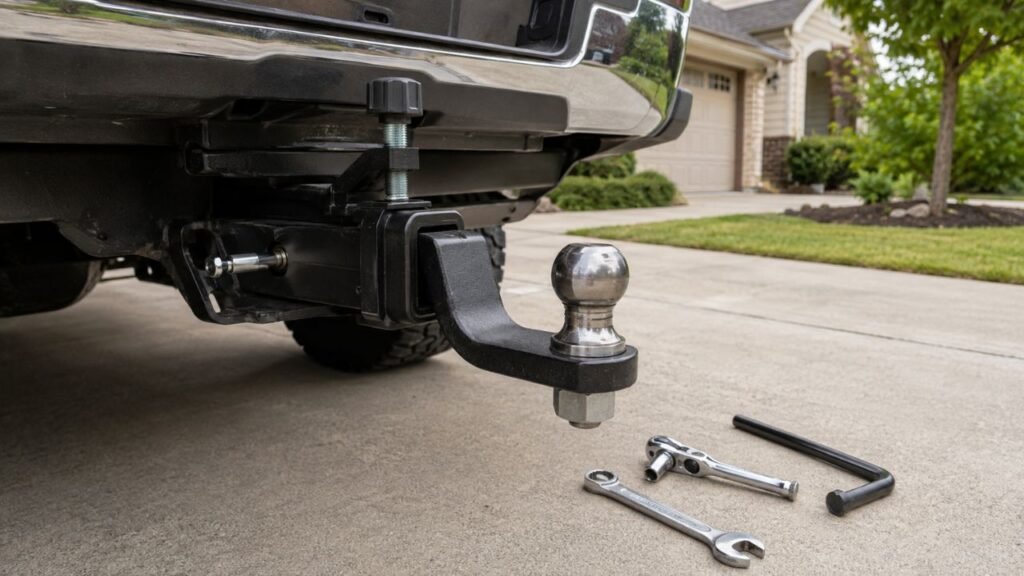
Ball Mount Is Loose Inside the Receiver
This is probably the most familiar cause of hitch rattle.
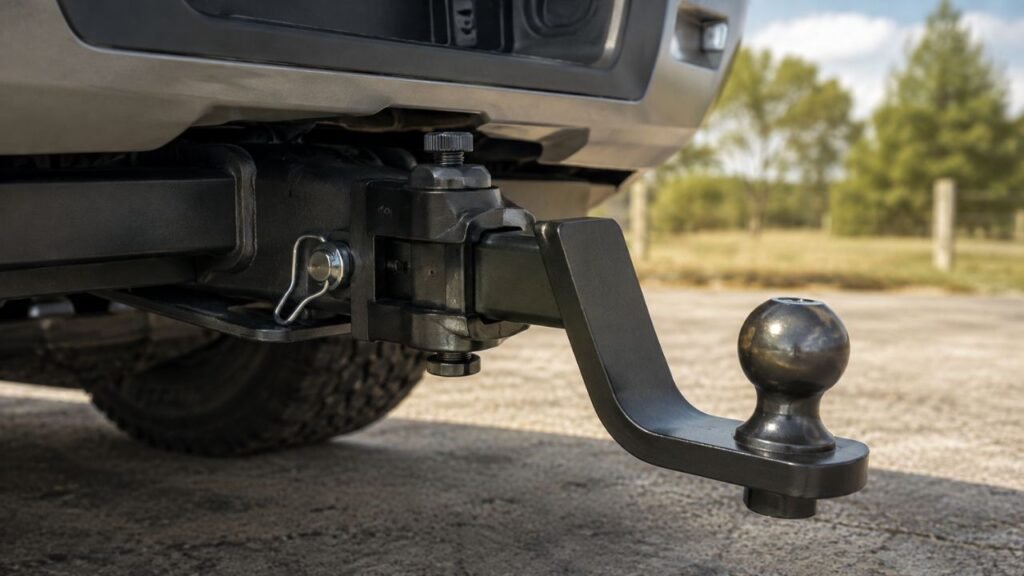
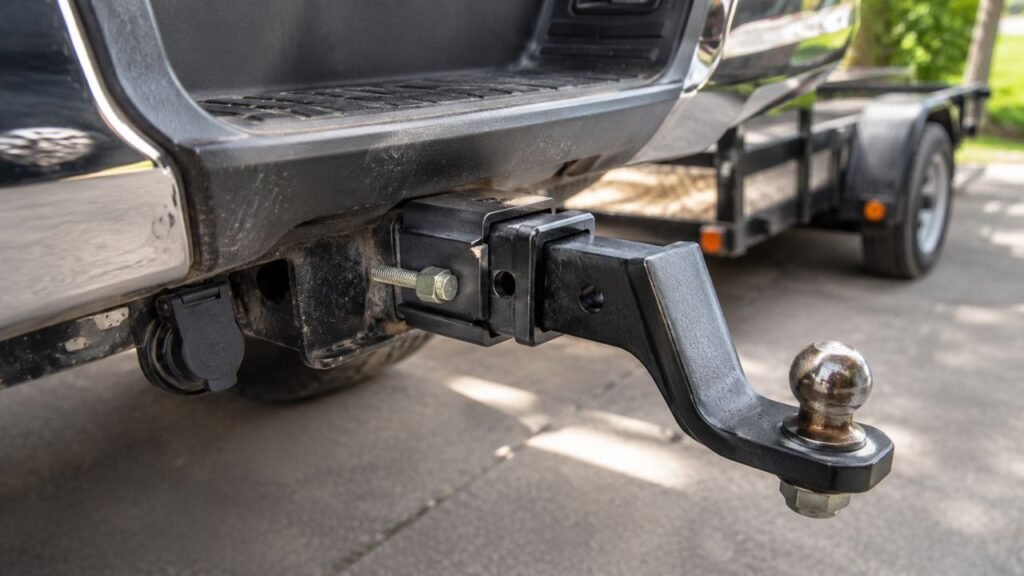
The square ball-mount shank slides inside your vehicle’s receiver tube. It cannot fit perfectly tight because you still need enough clearance to install and remove it.
That small gap can let the ball mount move vertically and sideways.
When you hit bumps, the shank may tap against the inside walls of the receiver. That produces the metallic rattling many drivers notice.
The same connection can also move front-to-back. When braking or accelerating, that movement can become a noticeable clunk.
You can often identify this problem while parked. Grab the ball mount and move it firmly up, down, and sideways.
A small amount of movement may simply come from normal clearance. Large movement or movement that has become noticeably worse deserves closer inspection.
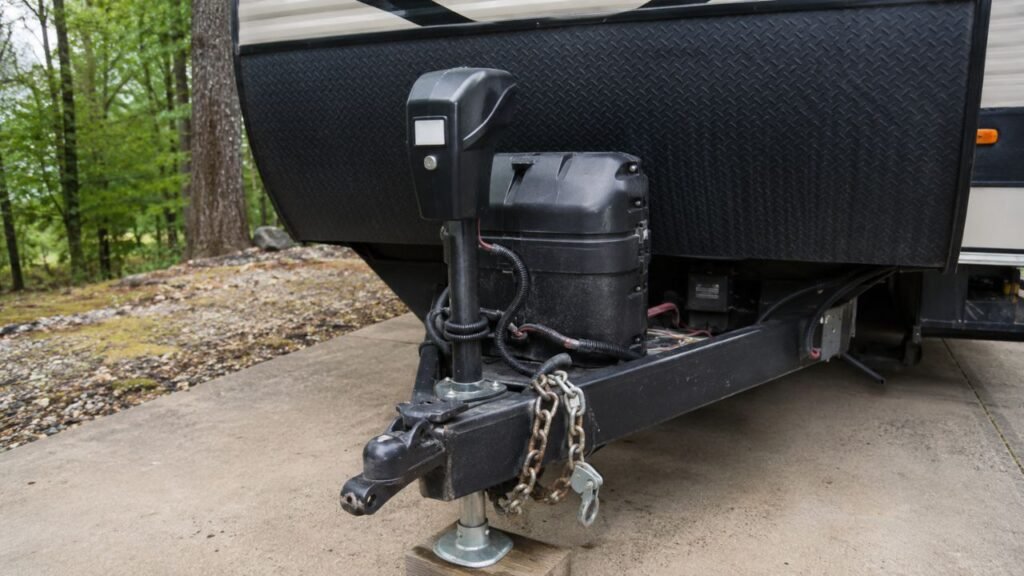
Trailer Coupler Has Too Much Play on the Hitch Ball
Don’t automatically blame your receiver whenever you hear a clunk.
The trailer coupler itself may be moving around the hitch ball.
This can happen when the coupler is worn, poorly adjusted, damaged, or connected to an incorrect ball size.
Your hitch ball diameter must match the size required by the coupler. Never assume two components fit correctly simply because the coupler closes over the ball.
With the trailer securely coupled, check whether the coupler appears to have excessive movement around the ball.
Some coupler designs include adjustment mechanisms. Others do not.
Follow the coupler manufacturer’s instructions rather than simply tightening anything that appears adjustable.
If the coupler cannot securely capture the correct hitch ball, stop towing until the problem is corrected.
Hitch Pin or Pin Hole Is Worn
The hitch pin keeps the ball mount from sliding out of the receiver.
Over time, repeated movement can wear the pin or the holes it passes through.
That extra clearance allows the shank to shift slightly farther before the hitch pin stops it.
You may notice this most when:
- Braking
- Accelerating
- Changing direction
- Moving from reverse into drive
- Starting uphill
Remove the hitch pin and inspect it for obvious wear, bending, grooves, or damage.
Also look at the pin holes in both the receiver and ball mount.
A new hitch pin cannot repair an elongated receiver hole. If the receiver itself appears worn or distorted, have it properly evaluated.
The Hitch Ball or Mounting Hardware Is Loose
Sometimes the clunk is coming from the ball itself.
The hitch ball is normally secured through the ball mount using heavy mounting hardware. If that connection becomes loose, the ball can shift under load.
This movement may feel or sound almost identical to receiver play.
With the trailer disconnected, check whether the hitch ball can move independently from the ball mount.
It should not.
If the ball needs tightening, follow the ball manufacturer’s torque specifications. Hitch balls vary greatly, so there is no single torque setting suitable for every installation.
If you’re unsure about the hardware condition, have the connection inspected professionally.
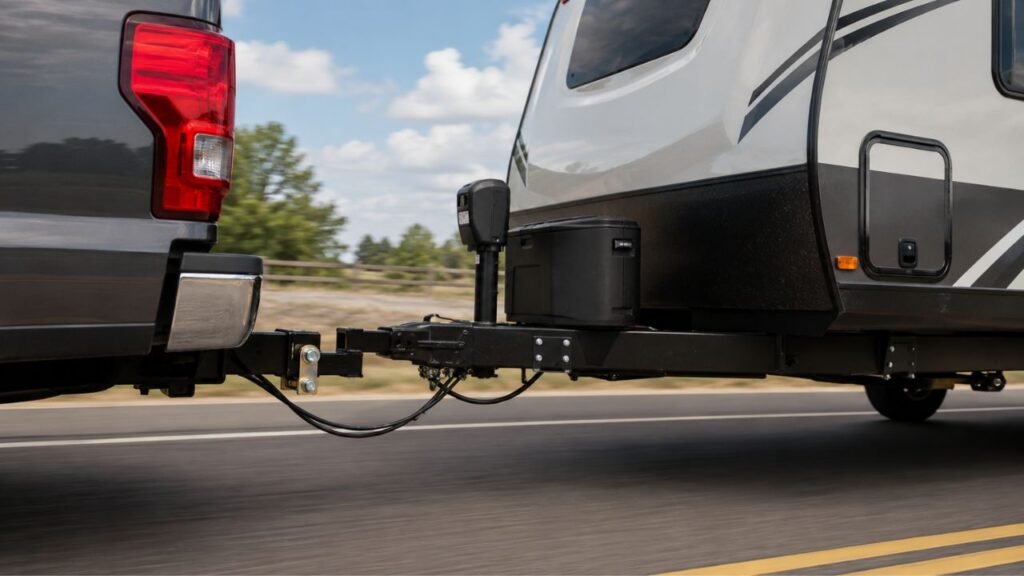
Adjustable Hitch Components Have Extra Play
Adjustable ball mounts are incredibly useful, but they introduce additional connections.
Instead of one fixed ball-mount assembly, you may have:
- Adjustment channels
- Vertical pins
- Locking pins
- Multiple pin holes
- Removable ball platforms
- Dual or tri-ball assemblies
Every removable connection needs some clearance.
A little movement across several connections can add up to a surprisingly loud clunk.
Hold each adjustable section separately and try moving it by hand.
You may discover that the receiver connection is reasonably tight while the adjustable portion creates most of the noise.
Check the manufacturer’s instructions before adding washers, shims, clamps, or other improvised fixes.
Receiver or Ball Mount Has Become Worn
Hitches deal with repeated pulling, braking, vibration, and weather exposure.
Eventually, wear can develop around contact points.
Look for:
- Enlarged hitch pin holes
- Distorted receiver openings
- Deep grooves
- Bent ball mounts
- Heavy rust
- Cracks
- Damaged welds
Surface rust alone doesn’t necessarily mean the hitch is unsafe. Structural corrosion is different.
If metal has become deeply scaled, weakened, cracked, or distorted, don’t hide the movement with an anti-rattle clamp.
The worn component needs to be inspected and possibly replaced.
Receiver Hitch Mounting Hardware Is Loose or Damaged
The receiver itself attaches to your vehicle’s frame or designated mounting points.
Although less common than ball-mount movement, problems here deserve immediate attention.
Look underneath the tow vehicle and inspect the receiver mounting area.
Watch for:
- Loose fasteners
- Missing hardware
- Cracked brackets
- Bent mounting plates
- Damaged welds
- Collision damage
- Severe corrosion
The receiver should not move independently from the vehicle.
If it does, stop towing until the mounting problem has been properly repaired.
The Hitch Is Touching the Exhaust
Not every metallic rattle actually comes from the towing connection.
Your receiver hitch and exhaust system often share limited space underneath the rear of the vehicle.
A tailpipe, muffler, exhaust hanger, or heat shield may sit close enough to touch the hitch.
Engine vibration can then create a metallic buzzing or rattling sound.
You may notice this noise even while the vehicle is parked.
It may also change depending on engine RPM.
Look underneath and check for unusually small gaps between the exhaust and hitch assembly.
Shiny contact marks can also reveal where two parts have been hitting.
If exhaust repositioning is necessary, have the mounting or hanger arrangement corrected properly rather than bending components randomly.
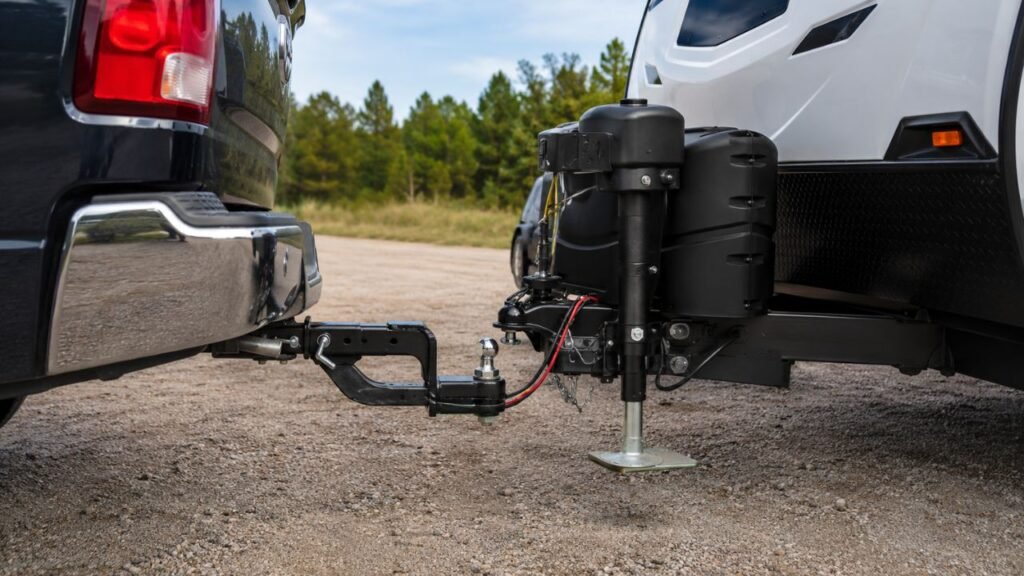
The Noise Is Coming From a Weight Distribution Hitch
Weight distribution hitches operate differently from standard ball mounts.
They contain additional pivot points, spring bars, brackets, and sometimes friction-based sway control components.
Because of that, some creaking, groaning, or popping while turning can be normal.
The important distinction is whether the sound is expected for your specific hitch.
A familiar creak during tight turns is different from:
- A new heavy bang
- A loose hitch head
- Damaged spring bars
- Missing hardware
- Excessive pin movement
- A suddenly worsening clunk
Weight distribution hitch manufacturers also specify exactly where lubrication should be used.
Don’t grease every moving or friction surface. Some sway-control systems depend on friction to work correctly.
Always follow the maintenance instructions for your exact hitch.
Why Does My Trailer Hitch Clunk When I Stop or Accelerate?
Clunking during starts and stops usually happens because towing forces change direction while there is free movement somewhere in the connection.
While cruising, your tow vehicle is pulling the trailer forward. The trailer places tension on the hitch in one direction.
During braking, those forces change. Any clearance between the receiver, hitch pin, adjustable mount, ball, or coupler lets the components shift.
You hear a clunk when that movement reaches the end of the available clearance.
Then you accelerate again.
The parts shift back toward the opposite side and may clunk a second time.
If you’re hearing this repeatedly, inspect the complete towing connection rather than assuming the receiver is the only source.
Why Does My Hitch Rattle Over Bumps?
A hitch that mainly rattles over bumps usually has vertical or side-to-side movement somewhere in the setup.
Road imperfections make your vehicle and trailer move independently. Loose hitch components then bounce slightly within their available clearance.
The most likely source is the ball mount inside the receiver.
However, also check:
- Adjustable hitch sections
- Hitch-mounted accessories
- Loose pins
- Exhaust clearance
- Heat shields
- Receiver hardware
If you can recreate the same rattle by moving the ball mount while parked, you’ve probably found the source.
How to Find the Source of Hitch Rattle in a Few Minutes
You don’t need to replace parts randomly. A careful hands-on inspection can often reveal the noisy connection quickly.
- Park on firm, level ground. Secure the vehicle and trailer before inspecting anything.
- Check the ball mount inside the receiver. Push it upward, downward, and sideways.
- Check front-to-back movement. Watch how much movement exists around the hitch pin.
- Inspect the hitch pin. Look for wear, bending, grooves, or damage.
- Check the ball mount pin hole. Look for unusual enlargement or deformation.
- Inspect the trailer coupler. Confirm that it is fully seated and correctly latched.
- Confirm hitch ball size. Make sure the ball matches the coupler specification.
- Check the hitch ball itself. It should not move independently from the mount.
- Inspect adjustable hitch connections. Move each removable section separately.
- Check exhaust clearance. Look for metal contact near the receiver.
- Inspect the receiver mounting points. Look for movement, cracks, loose hardware, or corrosion.
The goal isn’t simply to find something that moves.
You’re looking for the exact location producing excessive or abnormal movement.
If possible, have another person move the hitch components by hand while you watch each connection point from a safe position.
That often makes the problem much easier to spot.
Is Trailer Hitch Rattle Normal or Dangerous?
Some clearance is expected in removable hitch components, while other movement can indicate wear or an unsafe connection. The location and amount of movement matter more than the sound itself.
Minor Receiver Movement
A removable ball mount generally cannot fit inside the receiver with absolutely zero clearance.
That means you may notice a little movement when grabbing the unloaded ball mount by hand.
Minor rattling can therefore be annoying without automatically meaning your receiver is failing.
However, there isn’t one universal amount of acceptable movement for every hitch.
Receiver design, hitch class, ball mount, vehicle, and manufacturer specifications all matter.
If movement seems excessive or has increased significantly, inspect the components rather than assuming it is normal.
Movement You Should Not Ignore
Take the problem more seriously if you notice:
- A coupler that seems loose around the correct hitch ball
- An incorrect hitch ball size
- A hitch ball moving in the ball mount
- Elongated hitch pin holes
- A bent ball mount
- A distorted receiver opening
- Loose receiver mounting hardware
- Cracks around structural hitch components
- Severe structural corrosion
- Unusual trailer movement while towing
- A clunk that suddenly becomes much worse
Noise is only one clue.
Visible structural damage or an insecure coupling matters much more.
How to Stop Trailer Hitch Rattle and Clunk
The best fix depends entirely on where the movement originates. Fix the loose connection rather than trying to silence the entire hitch.
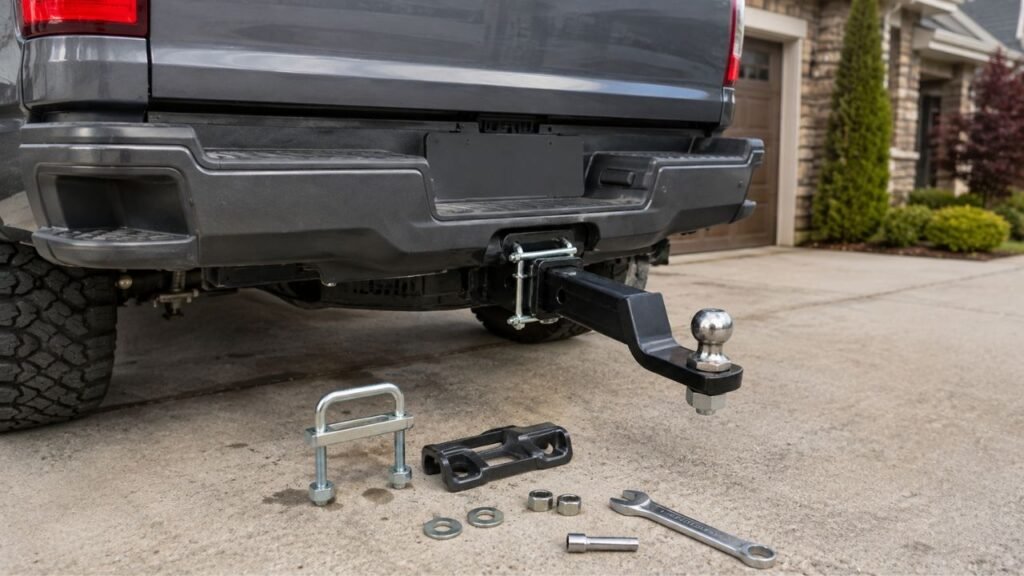
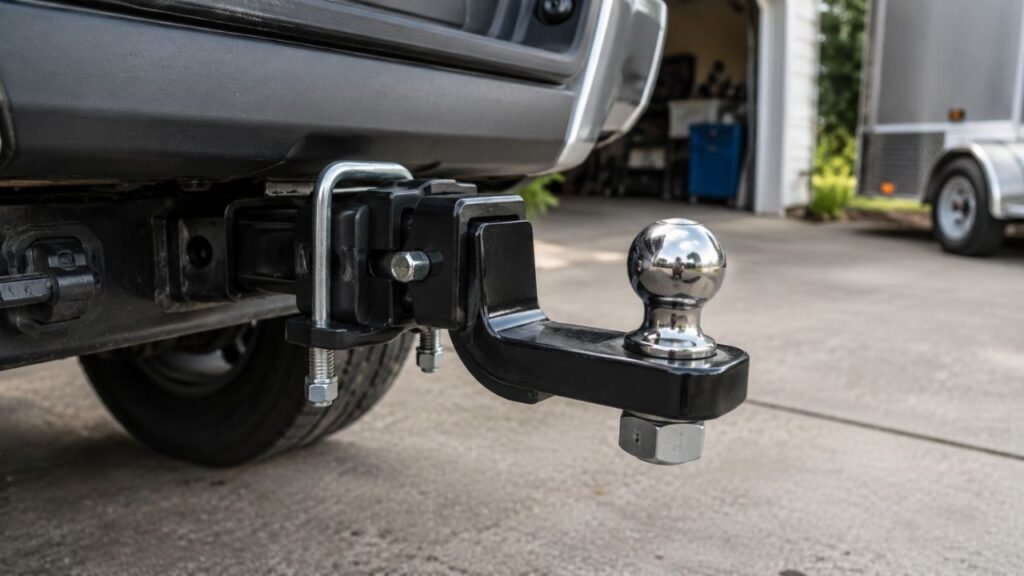
Install an Anti-Rattle Hitch Tightener
An anti-rattle hitch tightener is one of the simplest solutions when the ball mount itself is moving inside the receiver.
Many designs use a U-bolt and metal plate that clamp the ball-mount shank firmly against one side of the receiver.
This removes much of the free movement responsible for:
- Rattling
- Wobbling
- Light knocking
- Some stop-and-start clunking
Installation is generally straightforward, but use a device compatible with your receiver size and towing application.
An anti-rattle clamp is not a repair for a bent, cracked, or severely worn receiver.
If structural wear is causing the movement, address that problem first.
Use a Compatible Threaded Anti-Rattle Pin
Some hitch accessories use threaded anti-rattle pins.
Instead of allowing the accessory to float around the pin, the threaded system pulls the shank firmly against one wall of the receiver.
This can be very effective.
However, threaded pins aren’t universally interchangeable.
Use the system designed for your hitch accessory or one specifically approved for the application.
Don’t force a random bolt through the receiver because it happens to fit.
Adjust or Replace the Trailer Coupler
If movement comes from the ball-to-coupler connection, tightening the receiver won’t help.
Some couplers have an adjustment mechanism that controls how firmly the coupler grips the ball.
If yours is adjustable, follow its manufacturer’s procedure.
The coupler still needs enough freedom to articulate normally while towing.
If adjustment cannot provide a secure connection, or the coupler is visibly worn or damaged, replacement may be necessary.
Replace a Worn Hitch Pin
A damaged or significantly worn hitch pin should be replaced with properly rated hardware.
But remember one important point.
A new pin only fixes a worn pin.
If the receiver hole or ball-mount hole has become enlarged, replacing the pin may not eliminate the movement.
Inspect all three parts together.
Tighten or Service the Hitch Ball
If the hitch ball itself is loose, fix that connection before towing.
Use the correct tools and the manufacturer’s required torque specification.
Don’t estimate the torque based on how tight the nut feels.
Hitch ball sizes and hardware specifications vary widely.
If you don’t have the equipment to tighten it correctly, a trailer shop or qualified technician can handle the job quickly.
Replace Worn Ball Mount or Receiver Components
Anti-rattle devices remove clearance.
They don’t restore missing metal.
If the ball mount is badly worn, bent, cracked, or significantly distorted, replacement is usually the safer route.
The same applies to a damaged receiver.
Structural hitch components carry substantial towing loads. Avoid homemade structural repairs unless they have been properly engineered and approved.
Correct Exhaust-to-Hitch Contact
If your exhaust is hitting the hitch, the fix may be as simple as restoring proper clearance.
A stretched exhaust hanger, misaligned muffler, or poorly positioned pipe can sometimes bring the exhaust too close to the receiver.
Replace damaged hangers or have the system properly repositioned.
Once the metal-to-metal contact disappears, the mysterious hitch rattle may disappear with it.
Service Weight Distribution Hitch Lubrication Points
Some weight distribution hitch noises can be reduced through proper maintenance.
But don’t automatically grease every contact point.
Certain systems rely on friction for sway control.
Lubricating the wrong surface could affect how the hitch operates.
Follow the lubrication instructions for your exact hitch model.
If the manufacturer says a surface should remain dry, leave it dry.
Which Hitch Rattle Fix Should You Use?
Once you identify where the movement comes from, choosing the correct fix becomes much easier. Use this table as a quick troubleshooting guide.
| Problem | Best First Fix | Anti-Rattle Clamp Helps? | Replacement May Be Needed? |
| Ball mount loose in receiver | Install compatible anti-rattle device | Yes | Sometimes |
| Coupler loose on hitch ball | Inspect or adjust coupler | No | Yes |
| Wrong hitch ball size | Install correct ball | No | Yes |
| Worn hitch pin | Replace properly rated pin | Sometimes | Yes |
| Elongated receiver hole | Professional inspection | No | Possibly |
| Loose hitch ball | Service mounting hardware | No | Possibly |
| Adjustable hitch play | Inspect pins and connections | Sometimes | Possibly |
| Exhaust hitting hitch | Correct exhaust clearance | No | Rarely |
| Normal WDH friction noise | Manufacturer-specified maintenance | No | Usually not |
| Damaged receiver | Stop towing and inspect | No | Yes |
An anti-rattle tightener works very well for the problem it was designed to solve.
It just shouldn’t become the answer to every hitch noise.
Will Greasing the Hitch Stop the Clunking?
Grease helps with friction, not excessive clearance.
Lubricating a hitch ball may reduce squeaking and friction between the ball and coupler when the manufacturer recommends lubrication.
Proper lubrication may also reduce certain weight distribution hitch noises.
However, grease cannot stop a loose ball mount from moving inside the receiver.
If two parts are physically shifting before slamming together, lubrication doesn’t remove that gap.
So if your problem sounds like a heavy stop-and-start clunk, locate the movement first.
Don’t use grease as a substitute for fixing loose or worn components.
Can Hitch Rattle Cause Damage Over Time?
Repeated movement can contribute to wear, especially when heavy components continually strike each other.
Potential wear points include:
- Hitch pins
- Receiver pin holes
- Ball-mount pin holes
- Receiver surfaces
- Adjustable hitch connections
- Coupler components
That doesn’t mean every lightly rattling ball mount is damaging your tow vehicle.
The bigger concern is movement that keeps increasing.
If you notice that today’s small clunk becomes noticeably stronger over several towing seasons, inspect why the clearance is growing.
Finding wear early is usually easier than dealing with a badly distorted connection later.
When Should I Stop Towing and Have the Hitch Inspected?
A little receiver rattle is very different from a questionable trailer connection. Stop and investigate before towing when the hitch shows signs of structural damage or insecure coupling.
Pay particular attention when:
- The hitch ball size doesn’t match the coupler.
- The coupler doesn’t latch securely.
- The coupler can lift abnormally from the ball.
- The hitch ball itself is loose.
- The receiver pin holes appear badly elongated.
- The ball mount is bent.
- The receiver opening is distorted.
- Structural welds show cracking.
- Receiver mounting hardware is loose.
- Severe corrosion affects structural areas.
- The receiver moves relative to the vehicle.
- Hitch movement suddenly becomes much worse.
- The trailer feels unstable behind the tow vehicle.
When you’re unsure whether a structural hitch component is safe, getting it inspected is the better decision.
A quiet hitch isn’t the goal.
A secure towing connection is.
How to Prevent Hitch Rattle From Getting Worse
A few simple checks can keep small hitch issues from becoming larger ones.
- Inspect the hitch connection before longer trips.
- Check the hitch pin for wear periodically.
- Watch receiver and ball-mount pin holes for enlargement.
- Keep the coupler clean and properly maintained.
- Confirm the coupler fully latches before towing.
- Use the correct hitch ball size.
- Lubricate only where the manufacturer recommends it.
- Inspect adjustable hitch pins and holes.
- Check receiver mounting hardware periodically.
- Keep an eye on corrosion.
- Correct hitch-to-exhaust contact early.
- Use a compatible anti-rattle device when receiver play causes the noise.
- Replace damaged components instead of hiding serious wear.
You don’t have to obsess over every little sound.
Just pay attention when the sound changes or movement starts getting worse.
Final Words
A rattling or clunking trailer hitch usually means that something has enough clearance to move and make contact. In many cases, that something is simply the ball mount shifting inside the receiver.
But don’t stop your inspection there.
Check the coupler, hitch ball, hitch pin, adjustable mount, receiver, exhaust, and weight distribution components before deciding on a fix.
If receiver play is the problem, an anti-rattle hitch tightener can be a simple solution. If you find damaged, loose, or badly worn structural parts, repair or replace those components instead.
Find the movement first, then fix the actual cause. That’s the best way to get a quieter hitch without overlooking a towing problem that really matters.
Related FAQs
How Much Play Is Normal in a Trailer Hitch?
A removable ball mount may have some clearance inside the receiver because it needs enough space for installation and removal. There is no universal amount of acceptable play for every hitch, so investigate movement that seems excessive, suddenly increases, or appears alongside visible wear.
Why Does My Hitch Clunk When I Brake?
A hitch often clunks during braking because towing forces change direction and loose components shift within their available clearance. Common sources include the receiver and ball mount, hitch pin, adjustable hitch, and trailer coupler.
Why Does My Hitch Rattle Over Bumps?
Rattling over bumps usually comes from vertical or side-to-side movement between the ball mount and receiver. Adjustable hitch components, loose accessories, exhaust contact, or worn hardware can create similar noises.
Will an Anti-Rattle Hitch Tightener Stop Clunking?
An anti-rattle hitch tightener can reduce clunking when movement between the ball-mount shank and receiver causes the noise. It will not fix a loose coupler, wrong hitch ball, damaged receiver, loose ball, or other worn components.
Can I Tow With an Anti-Rattle Hitch Tightener?
Yes, when the device is specifically designed and approved for your receiver, hitch accessory, and towing application. Follow the manufacturer’s installation instructions and never use an anti-rattle device to hide structural hitch damage.
Should I Grease My Trailer Hitch Ball?
Many hitch ball and coupler systems benefit from proper lubrication, but you should follow your manufacturer’s instructions. Grease can reduce friction and squeaking, but it will not remove excessive clearance that causes a heavy clunk.
Can a Loose Hitch Pin Cause Clunking?
Yes. Movement around the hitch pin can contribute to a clunk during braking and acceleration. However, inspect the receiver and ball-mount pin holes too because enlarged holes can create movement even with a new hitch pin.
Why Does My Weight Distribution Hitch Make Noise?
Weight distribution hitches can make some creaking, groaning, or popping noises because they contain pivoting and friction-based components. A new heavy bang, obvious looseness, damaged hardware, or suddenly worsening noise should still be inspected.
Can a Worn Receiver Hitch Be Repaired?
It depends on where the wear occurs and how severe it is. Structural receiver damage, cracks, distortion, or badly worn mounting areas should be evaluated by the hitch manufacturer, vehicle manufacturer, or a qualified towing professional before repair.

Ryan Mitchell writes for readers who prefer independent travel and practical outdoor motorhome living. His how-to guides and reviews focus on simplicity, durability, and real value. He brings a calm, hands-on perspective to every topic.