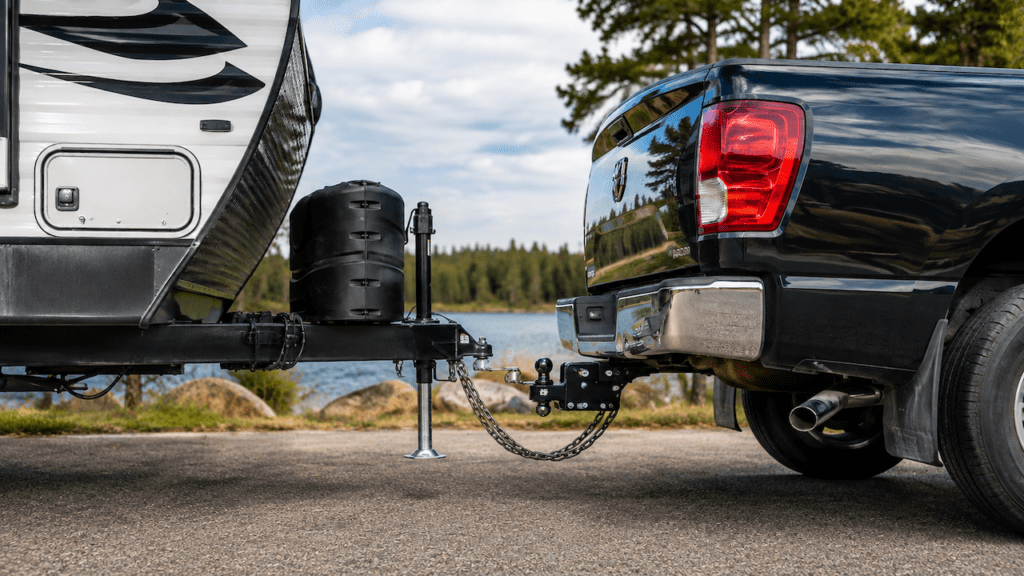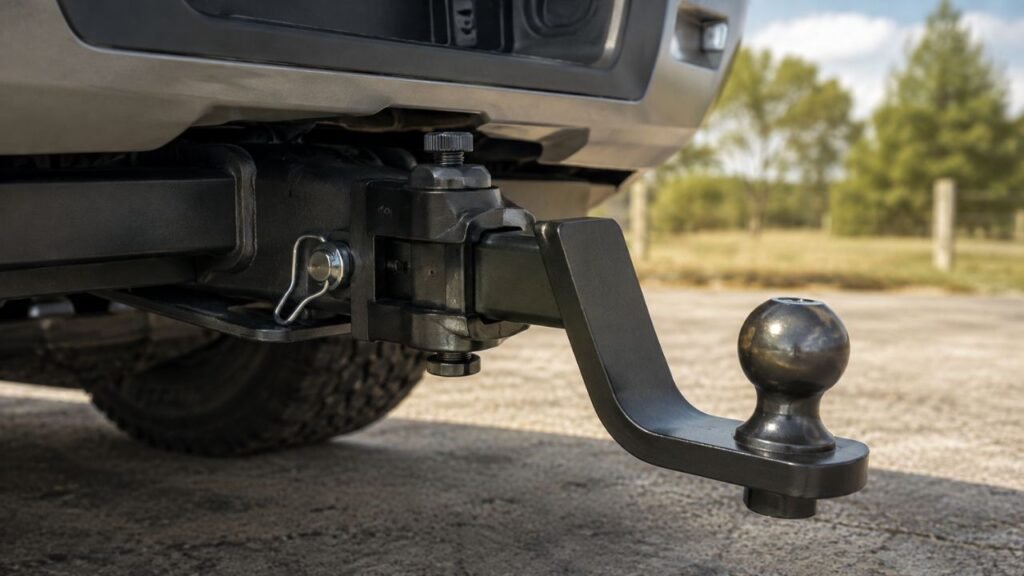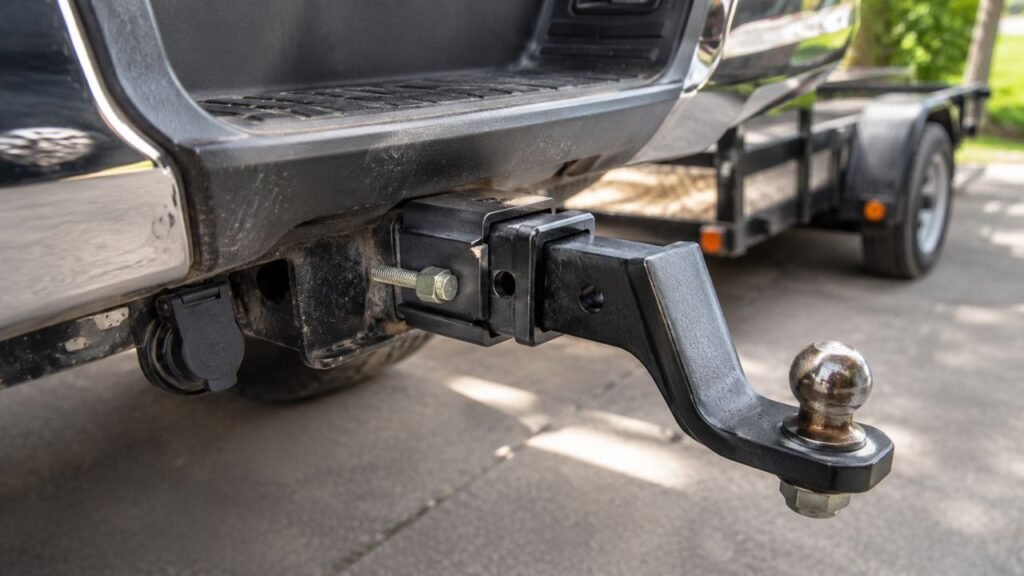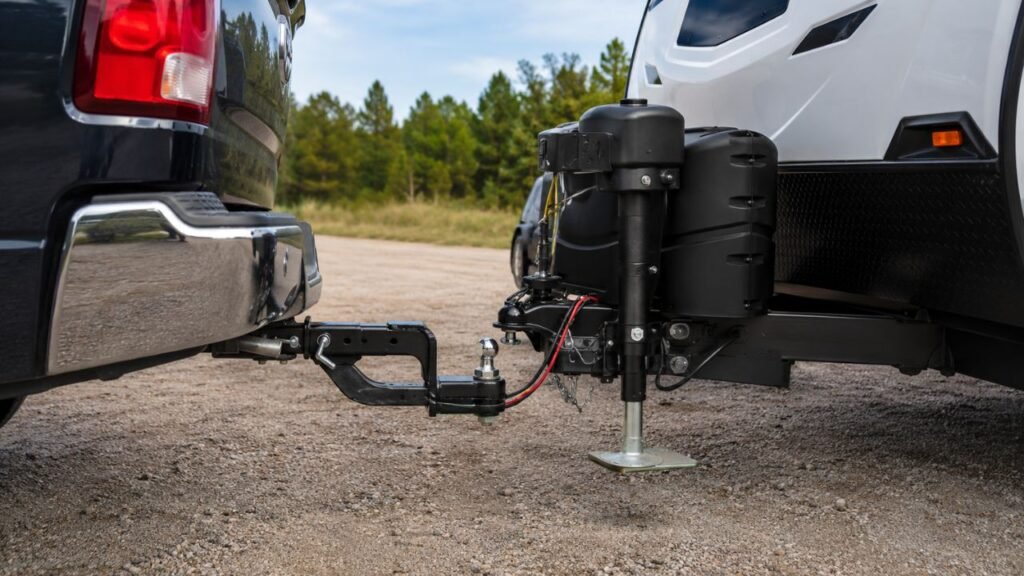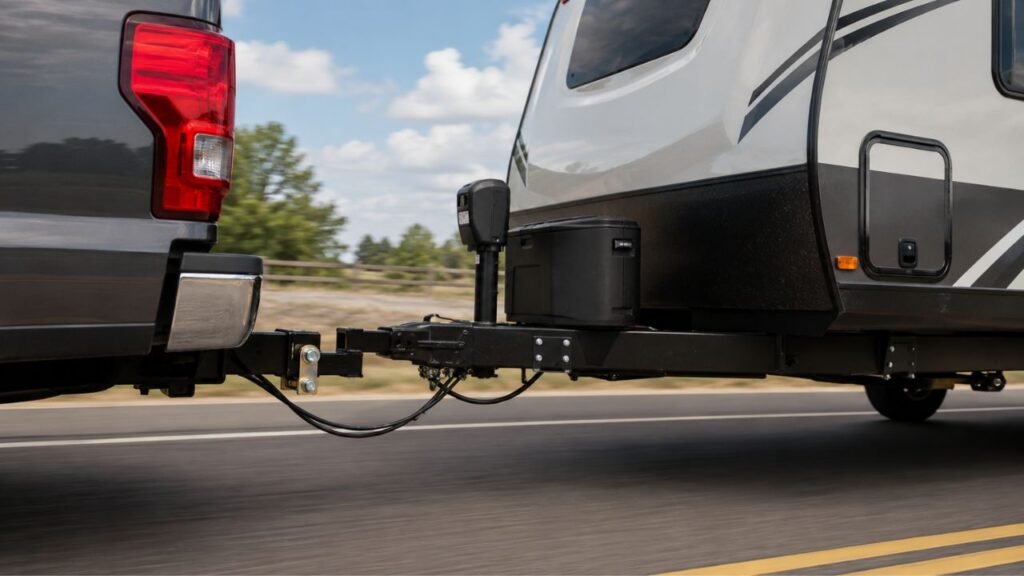
Yes, you can usually tow with an anti-rattle hitch clamp when it is designed for towing, fits your receiver correctly, and your proper hitch pin remains installed. The clamp reduces movement between the ball mount and receiver, but it does not increase towing capacity or replace damaged hitch components.
If your hitch keeps clunking while towing, I’ll show you what the clamp actually does, when it is safe to use, and when you should inspect the hitch instead. We’ll also cover weight distribution hitches, reducer sleeves, trailer sway, and proper clamp checks.
Key Takeaways
- You can tow with most properly rated anti-rattle hitch clamps.
- Always keep the required hitch pin or locking pin installed.
- A clamp reduces receiver play, rattling, and some clunking.
- It does not increase your vehicle or hitch towing capacity.
- A hitch clamp should not be used to hide damaged components.
- Weight distribution hitches may require a compatible clamp design.
- Anti-rattle clamps cannot correct true trailer sway.
- Check clamp tightness and condition as part of your towing inspection.
Can You Safely Tow With an Anti-Rattle Hitch Clamp?
Yes, you can safely tow with an anti-rattle hitch clamp in most normal receiver-hitch setups. The important part is making sure the clamp is intended for your receiver size and towing application.
An anti-rattle clamp works alongside your normal hitch hardware. It reduces the small amount of clearance that normally exists between the ball mount shank and receiver tube.
That clearance is useful because your ball mount needs to slide into the receiver. However, it can also allow the shank to move up, down, or sideways while driving.
A properly installed clamp holds the shank more firmly against the receiver. This can make the connection quieter and reduce the knocking you hear over bumps.
Still, never assume that simply adding a clamp makes any towing setup safe.
Your vehicle, receiver, ball mount, hitch ball, coupler, and trailer must all remain within their proper ratings.
What Does an Anti-Rattle Hitch Clamp Do While Towing?
An anti-rattle clamp mainly controls movement where the ball mount slides into the receiver. Understanding that job helps you avoid expecting the clamp to fix problems somewhere else.
It Removes Play Between the Receiver and Ball Mount
There is normally a small clearance between a hitch receiver and ball mount shank.
Without that clearance, inserting and removing the ball mount would be difficult.
Unfortunately, the same space allows the shank to rock inside the receiver.
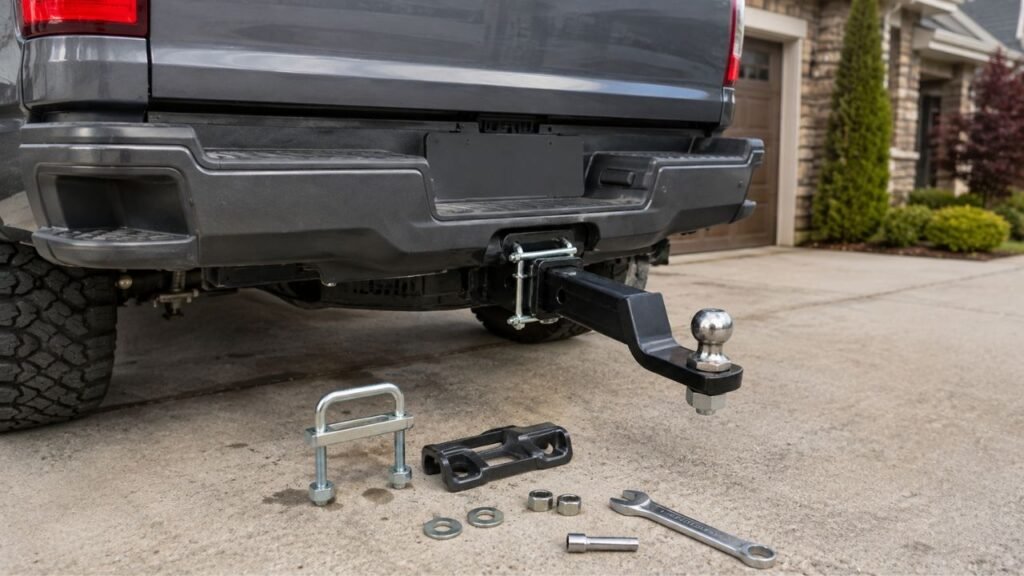
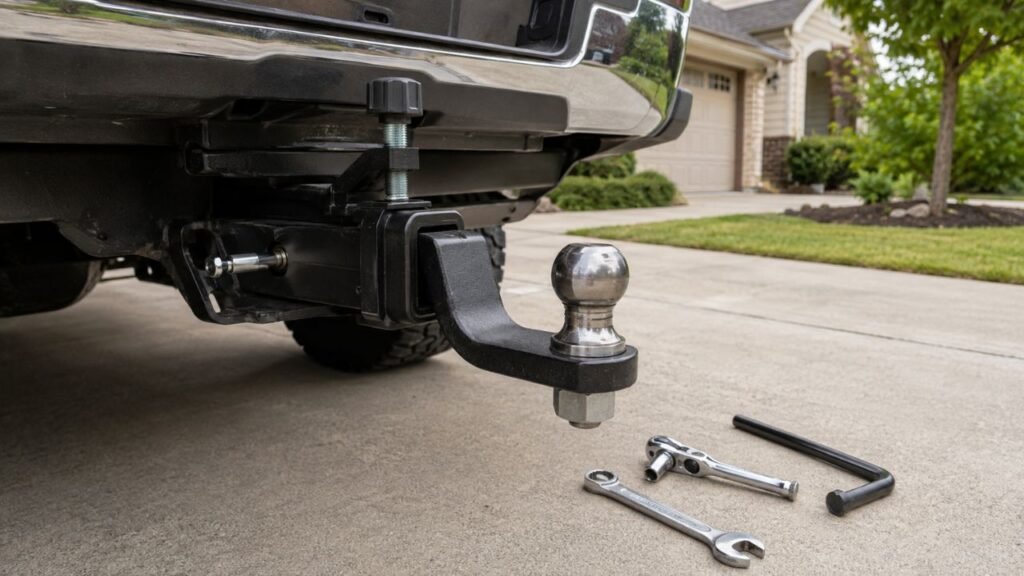
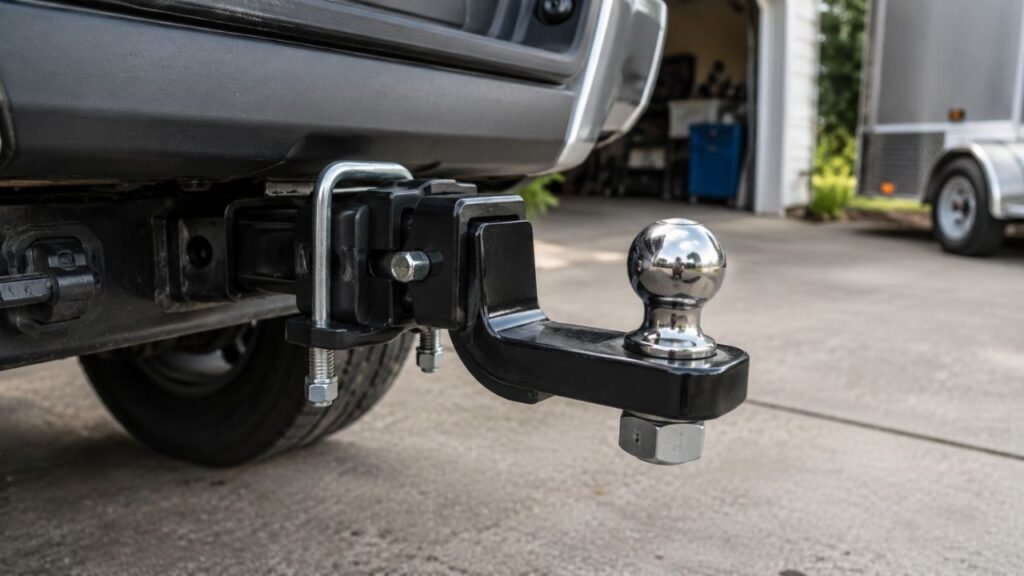
A U-bolt or collar-style anti-rattle clamp applies pressure around this connection. It pushes or pulls the ball mount firmly against one side of the receiver.
Once tightened correctly, much of that unwanted movement disappears.
It Reduces Rattling and Clunking
That familiar metallic clunk often happens when the ball mount changes position inside the receiver.
You might hear it while:
- Driving across uneven pavement
- Going over speed bumps
- Accelerating from a stop
- Braking
- Entering driveways
- Towing over rough campground roads
Removing the free movement usually makes these noises noticeably quieter.
It Can Reduce Receiver-Side Chucking
You may also feel a small forward-and-back knock when towing.
Some of that feeling can come from the ball mount shifting inside the receiver whenever towing forces change direction.
A clamp can reduce that particular movement.
However, trailer chucking can also come from the coupler, weight distribution hitch, suspension, or trailer itself.
So, don’t expect the clamp to cure every push-and-pull sensation.
It Does Not Increase Your Towing Capacity
This point is especially important.
Installing an anti-rattle clamp does not increase how much trailer weight your vehicle can safely tow.
It also doesn’t increase the tongue-weight rating of your receiver or ball mount.
Always base your towing limits on the lowest-rated component in the towing system.
Does the Anti-Rattle Clamp Carry the Trailer Load?
A conventional external anti-rattle clamp should be viewed as a stabilizing device rather than the primary component securing your ball mount.
Your towing system handles several different jobs.
The receiver supports the inserted ball mount. The ball mount and hitch ball transfer towing forces. The hitch pin keeps the ball mount from sliding out of the receiver.
The anti-rattle clamp mainly removes clearance between those parts.
That’s why you should never remove the normal hitch pin simply because your clamp feels extremely tight.
The connection may feel solid while parked, but the clamp is not automatically a replacement for the retaining pin.
There are also anti-rattle hitch pins that work differently.
Some threaded anti-rattle pins are specifically designed to secure the shank while also reducing movement.
If you use that style, follow its instructions rather than assuming it works exactly like an external U-bolt clamp.
When Is It Safe to Tow With an Anti-Rattle Clamp?
Different towing setups place different demands on the clamp. Use the table below as a quick way to determine whether your setup needs additional checking.
| Towing Setup | Tow With Clamp? | What You Should Check |
| Standard ball mount in matching receiver | Usually yes | Correct clamp size, hitch pin, secure installation |
| 2-inch shank in 2-inch receiver | Usually yes | Clamp compatibility and receiver clearance |
| Heavy trailer | Depends | Clamp instructions and all towing ratings |
| Weight distribution hitch | Depends | Manufacturer compatibility |
| Receiver with reducer sleeve | Depends | Clamp and sleeve compatibility |
| Worn or elongated hitch pin hole | No, repair first | Receiver and ball mount condition |
| Missing hitch pin | No | Install the proper retaining pin |
| Bent or cracked receiver | No | Repair or replace damaged components |
| Clamp being used to stop trailer sway | No | Diagnose loading and towing setup |
If anything about the connection looks damaged, fix that problem before relying on the clamp.
Do You Still Need a Hitch Pin With an Anti-Rattle Clamp?
Yes. With a normal external anti-rattle hitch clamp, you should still use the correct hitch pin or locking hitch pin.
Think of the two parts as doing different jobs.
The hitch pin prevents your ball mount from sliding completely out of the receiver.
The anti-rattle clamp removes the looseness around that ball mount.
A clamp may hold everything extremely tightly when parked. However, towing creates repeated pulling, pushing, vibration, and vertical movement.
Never treat friction from the clamp as your only method of securing the ball mount.
The exception is a purpose-built anti-rattle hitch pin designed to replace a conventional pin.
In that case, use the hardware exactly as the manufacturer intended.
Can an Anti-Rattle Clamp Stop Trailer Sway?
An anti-rattle clamp can reduce movement inside the hitch receiver, but it should not be treated as a trailer-sway device.
This distinction matters because hitch play and trailer sway are two different problems.
Hitch play happens when the ball mount rocks inside the receiver.
Trailer sway happens when the trailer begins moving from side to side behind your tow vehicle.
True trailer sway may be related to:
- Improper tongue weight
- Poor cargo distribution
- Excessive towing speed
- Strong crosswinds
- Incorrect tire pressure
- Worn suspension components
- Improper hitch setup
- Trailer loading problems
Removing receiver play may make your towing setup feel slightly tighter.
However, if your trailer is moving sideways behind your vehicle, you need to find the actual cause.
Do not simply tighten the clamp harder and assume the problem is solved.
How to Tow Safely With an Anti-Rattle Hitch Clamp
Using an anti-rattle clamp is usually simple, but a few basic checks can prevent problems. I recommend making these steps part of your normal hitching routine.
- Check your towing ratings. Confirm your vehicle, receiver, ball mount, hitch ball, and trailer are within their rated capacities.
- Confirm the clamp is intended for towing. Some anti-rattle devices are designed mainly for bike racks or cargo carriers.
- Match the clamp to your receiver. A clamp made for a 2-inch receiver may not work properly on another receiver size.
- Install the hitch pin first. Secure the ball mount with the correct pin and retaining clip or lock.
- Position the clamp correctly. Follow the design of your U-bolt, plate, collar, or other anti-rattle system.
- Tighten it evenly. If your clamp uses two nuts, alternate between them so pressure stays balanced.
- Follow the specified torque. Use the manufacturer’s value when one is provided.
- Test for movement. Push the ball mount by hand before towing and confirm excessive play is gone.
- Inspect it during regular towing checks. Look for looseness, corrosion, damaged threads, or bent hardware.
These simple checks take very little time once they become part of your routine.
How Tight Should an Anti-Rattle Hitch Clamp Be?
Your anti-rattle clamp should be tight enough to remove unwanted ball-mount movement without damaging the hardware.
Avoid the common mistake of thinking tighter is always better.
Over-tightening can damage threads, distort plates, or make the clamp extremely difficult to remove later.
Some clamps include a specific torque recommendation.
If yours does, use that number rather than guessing.
If no torque value is provided, follow the tightening method supplied with the clamp.
Once the ball mount no longer rocks significantly inside the receiver, repeatedly adding more force usually isn’t necessary.
Can You Use an Anti-Rattle Clamp With a Weight Distribution Hitch?
Some anti-rattle clamps work with weight distribution hitches, while others do not. Compatibility depends on the clamp design, receiver, and weight distribution shank.
Some Clamps Are Compatible
Certain external U-bolt-style clamps can fit around weight distribution hitch shanks.
They may help reduce movement between the large shank and receiver.
This can be useful because heavy adjustable shanks sometimes produce noticeable clunking.
Some Clamps Are Not Compatible
Other clamp designs may interfere with the weight distribution hitch or simply lack enough space around the receiver.
Receiver lips, hitch geometry, brackets, and shank dimensions can all affect fit.
A clamp that fits your standard ball mount may not automatically fit your weight distribution hitch.
Check Both Manufacturers Before Towing
Look at the instructions for your anti-rattle device and weight distribution hitch.
If either manufacturer says not to combine them, don’t improvise.
A slightly noisy connection is better than using incompatible hardware.
Can You Use a Hitch Clamp With a Receiver Reducer Sleeve?
Yes, sometimes, but reducer sleeves make the situation more complicated.
Imagine you have a 2.5-inch receiver but use a 2-inch ball mount.
A reducer sleeve sits between the two components.
Now you have two possible areas of movement:
- Between the receiver and reducer
- Between the reducer and ball mount
A clamp positioned at only one connection may not eliminate movement at the other.
Some anti-rattle systems are designed to work with reducer sleeves. Others specifically are not.
If you’re using a sleeve, verify that your particular clamp is approved for that setup.
Don’t force a clamp into place or stack random shims around the receiver.
When Should You Not Tow With an Anti-Rattle Hitch Clamp?
A hitch clamp is meant to control normal clearance. It should never be used to hide damaged, incorrectly fitted, or unsafe towing components.
Do not tow until you correct the problem if:
- Your hitch pin is missing or damaged.
- The receiver is cracked or bent.
- Severe rust has weakened the receiver.
- The ball mount is visibly damaged.
- Hitch-pin holes have become badly elongated.
- The clamp will not stay tight.
- Threads on the U-bolt or nuts are damaged.
- The clamp interferes with another hitch component.
- The clamp blocks proper safety-chain attachment.
- Excessive movement remains after installation.
- The manufacturer does not approve the towing setup.
- You are trying to use the clamp to cure trailer sway.
If something looks structurally wrong, replacing the damaged part is the safer solution.
What If the Hitch Still Moves With the Clamp Installed?
A properly fitted clamp should remove most normal receiver-shank movement. If the hitch still rattles badly, work through the possible causes instead of simply tightening harder.
The Clamp May Be Installed Incorrectly
Start by checking its position.
U-bolt clamps commonly need to sit tightly against the end of the receiver.
If the plate, U-bolt, or nuts are positioned incorrectly, the clamp may tighten without actually pulling the shank firmly against the receiver.
The Clamp May Not Fit Properly
A clamp must match your receiver and ball mount geometry.
If it is too large, too small, or unable to seat against the receiver correctly, it may leave movement behind.
Your Receiver or Ball Mount May Be Worn
Years of towing can enlarge clearances.
Look closely at the hitch-pin holes and receiver opening.
If the holes are stretched or the ball mount is heavily worn, a clamp may only hide part of the problem.
The Noise May Be Coming From Somewhere Else
Not every hitch noise comes from the receiver.
Check:
- The hitch ball
- Trailer coupler
- Safety chains
- Weight distribution bars
- Adjustable ball mount hardware
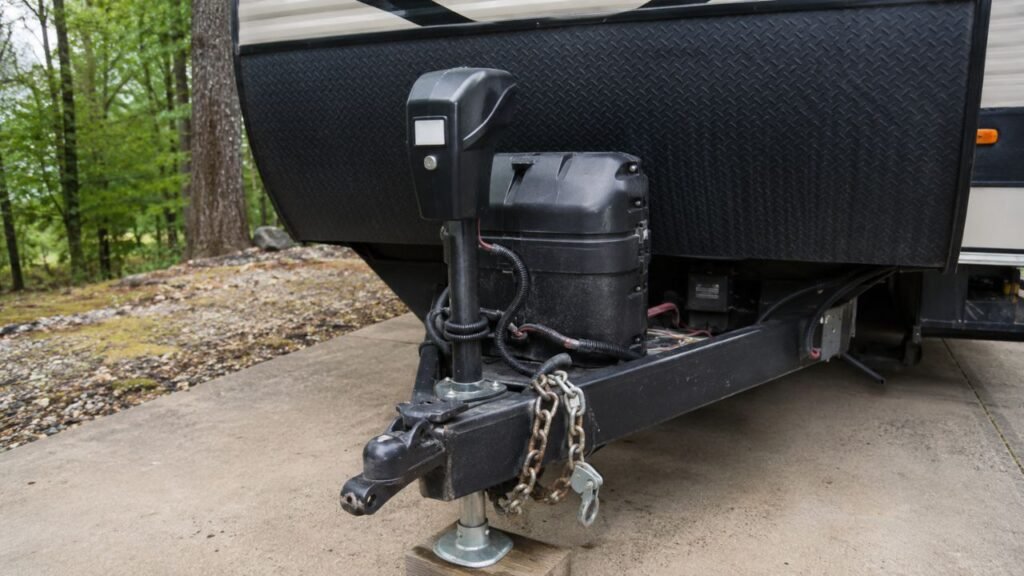
- Trailer jack
- Receiver mounting bolts
- Exhaust components near the hitch
If the receiver connection feels tight but you still hear clunking, start checking these other areas.
Anti-Rattle Hitch Clamp vs. Anti-Rattle Hitch Pin for Towing
Both devices can reduce hitch movement, but they work differently. Knowing the difference can help you choose the right solution for your setup.
Anti-Rattle Hitch Clamp
A clamp mounts around the outside of the receiver connection.
It normally pushes or pulls the ball mount against the receiver wall.
One major advantage is that many clamp designs work with solid ball-mount shanks.
The normal hitch pin generally remains installed.
Anti-Rattle Hitch Pin
An anti-rattle hitch pin passes through the hitch-pin hole.
Many designs use threading or an internal nut to pull the shank against one side of the receiver.
Some require a hollow accessory shank.
Others are designed specifically for compatible ball mounts.
Which Is Better for Trailer Towing?
Neither design is automatically better for every setup.
An external clamp may be simple and versatile.
A threaded anti-rattle pin can create a clean connection with fewer external parts.
Choose based on receiver size, shank design, towing approval, weight distribution compatibility, and manufacturer instructions.
Does an Anti-Rattle Clamp Reduce Hitch Wear?
Yes, reducing repeated movement can also reduce some wear between the ball mount and receiver.
Every time the shank moves inside the receiver, metal surfaces contact one another.
Over thousands of miles, that movement can wear coatings and gradually enlarge contact areas.
A clamp keeps the parts more consistently positioned.
That may help reduce repeated impact and rubbing.
However, it will not prevent all hitch wear.
Water, road salt, dirt, heavy loads, and normal use still affect hitch components over time.
Inspecting and maintaining the hitch remains important even when you use a clamp.
How Often Should You Check an Anti-Rattle Clamp While Towing?
Your clamp should become part of your normal towing inspection. You don’t need to obsess over it, but you shouldn’t install it once and forget about it forever.
- Check it before starting a towing trip.
- Confirm the nuts or bolts remain secure.
- Inspect it after driving particularly rough roads.
- Recheck it if hitch rattling suddenly returns.
- Look for damaged threads or bent hardware.
- Watch for heavy rust or corrosion.
- Follow any retorque schedule supplied by the manufacturer.
- Check again after reinstalling the ball mount.
If the clamp repeatedly works loose, stop and determine why before continuing to rely on it.
Final Verdict: Can You Tow With an Anti-Rattle Hitch Clamp?
Yes, you can normally tow with an anti-rattle hitch clamp when the device is intended for towing and properly matches your hitch setup. A good clamp can reduce ball-mount movement, quiet annoying rattles, and make the receiver connection feel much more solid.
Just remember what the clamp is actually there to do. Keep your proper hitch pin installed, stay within every towing rating, and verify compatibility with weight distribution hitches or reducer sleeves. If your hitch is damaged or your trailer is swaying, fix that underlying problem rather than asking the clamp to hide it.
Related FAQs
Can You Tow a Travel Trailer With an Anti-Rattle Clamp?
Yes, you can usually tow a travel trailer with an anti-rattle clamp if the clamp is approved for your receiver and hitch setup. Keep the proper hitch pin installed and verify compatibility if you use a weight distribution hitch.
Do I Need a Hitch Pin With an Anti-Rattle Clamp?
Yes, a conventional external anti-rattle clamp does not normally replace your hitch pin. The pin keeps the ball mount secured inside the receiver while the clamp reduces unwanted movement around it.
Does an Anti-Rattle Clamp Affect Towing Capacity?
An anti-rattle clamp does not increase your towing capacity. Your allowable trailer weight remains limited by the lowest-rated component in your vehicle and towing system.
Can an Anti-Rattle Clamp Stop Trailer Sway?
No, you should not depend on an anti-rattle clamp to control true trailer sway. It can reduce receiver play, but trailer sway usually requires correcting loading, tongue weight, speed, tires, or hitch setup.
Can You Use an Anti-Rattle Clamp With a Weight Distribution Hitch?
Sometimes. Certain clamps work with weight distribution hitch shanks while others do not. Check the instructions for both the clamp and weight distribution hitch before combining them.
Can You Use an Anti-Rattle Clamp With a 2.5-Inch Receiver?
Yes, if the clamp is designed for a 2.5-inch receiver or your specific receiver and reducer combination. Do not assume a 2-inch clamp will work correctly on a larger receiver.
Can an Anti-Rattle Clamp Damage a Hitch Receiver?
A correctly fitted clamp used according to its instructions should not normally damage a healthy receiver. Problems are more likely if the clamp is incompatible, badly positioned, or excessively tightened.
Why Does My Hitch Still Rattle With an Anti-Rattle Clamp?
Your clamp may be installed incorrectly, poorly matched to the receiver, or unable to compensate for worn hitch parts. The noise can also come from the coupler, safety chains, ball mount hardware, or other trailer components.

Ryan Mitchell writes for readers who prefer independent travel and practical outdoor motorhome living. His how-to guides and reviews focus on simplicity, durability, and real value. He brings a calm, hands-on perspective to every topic.