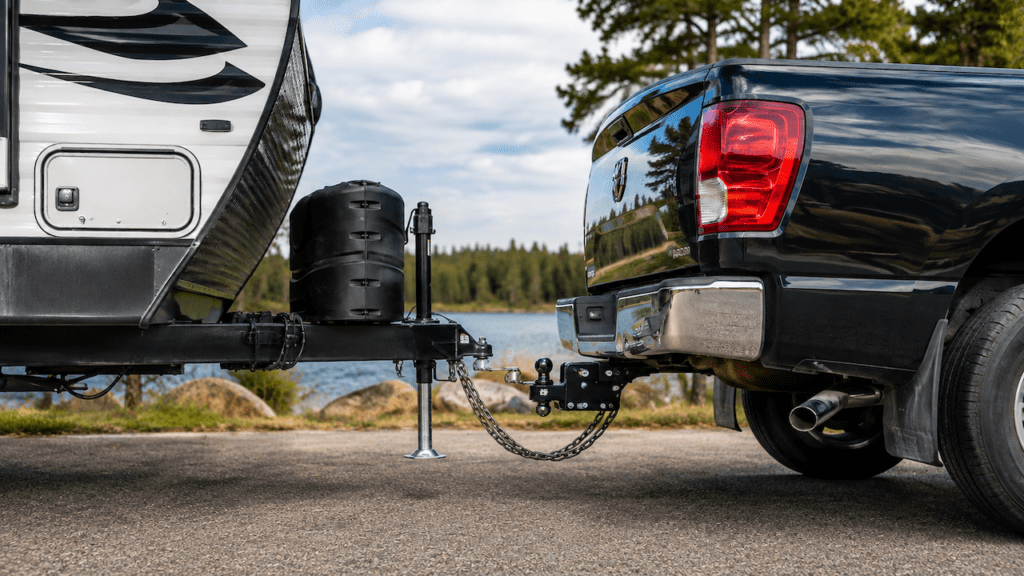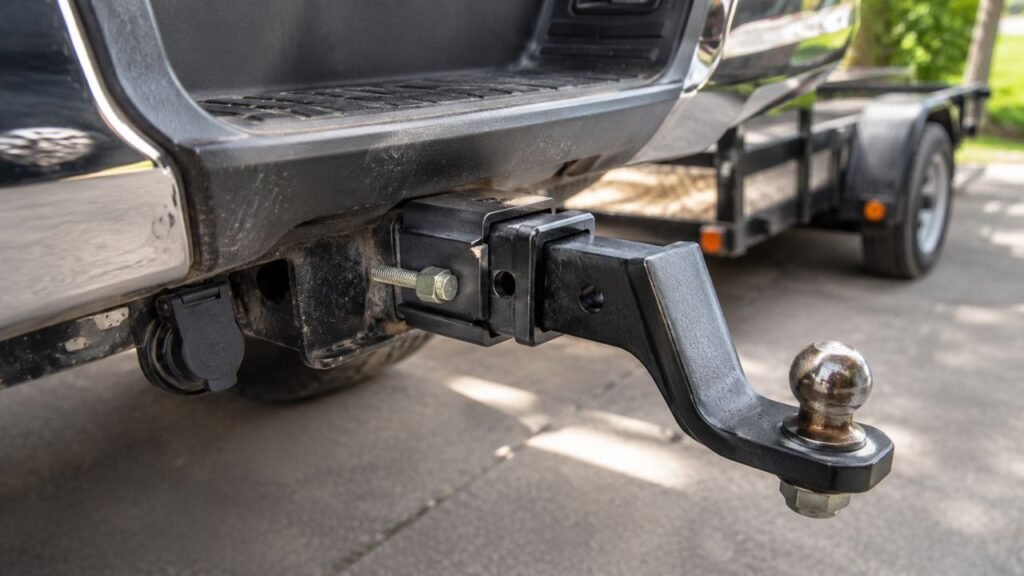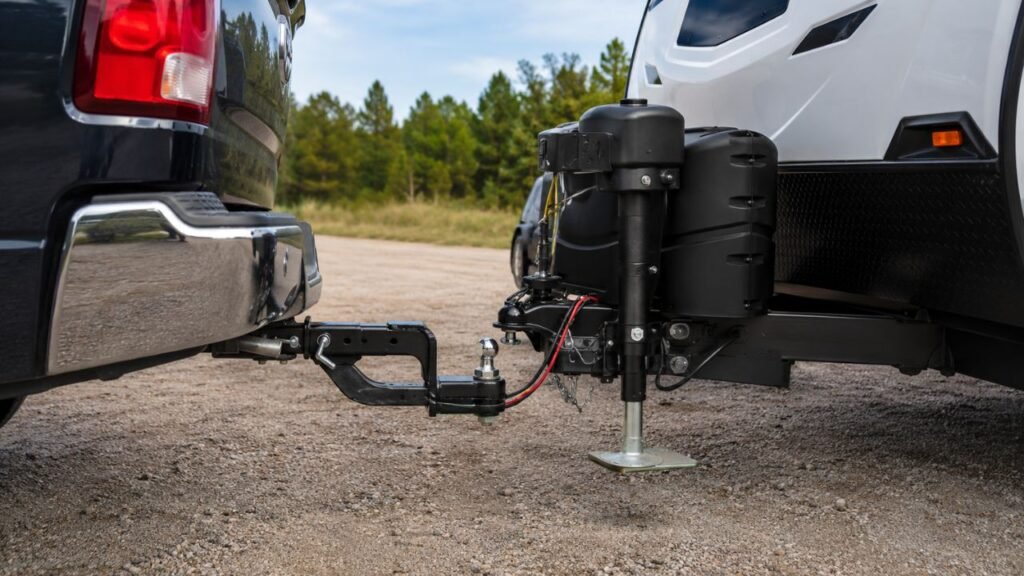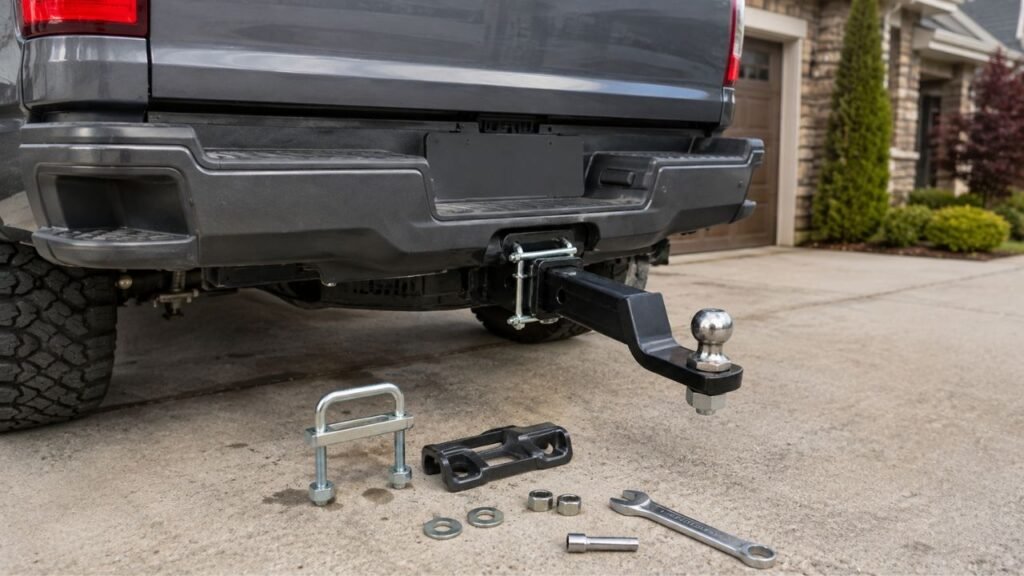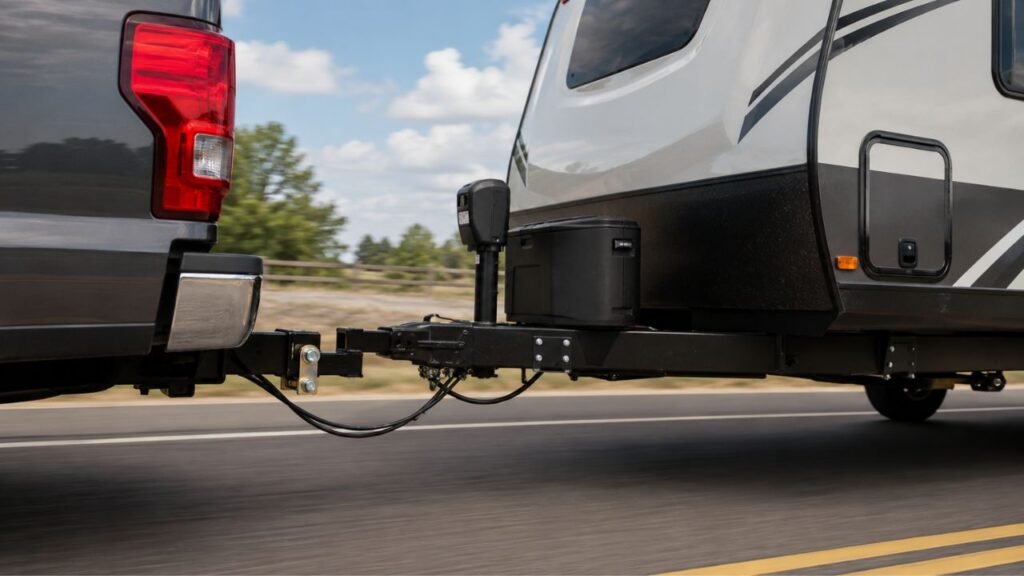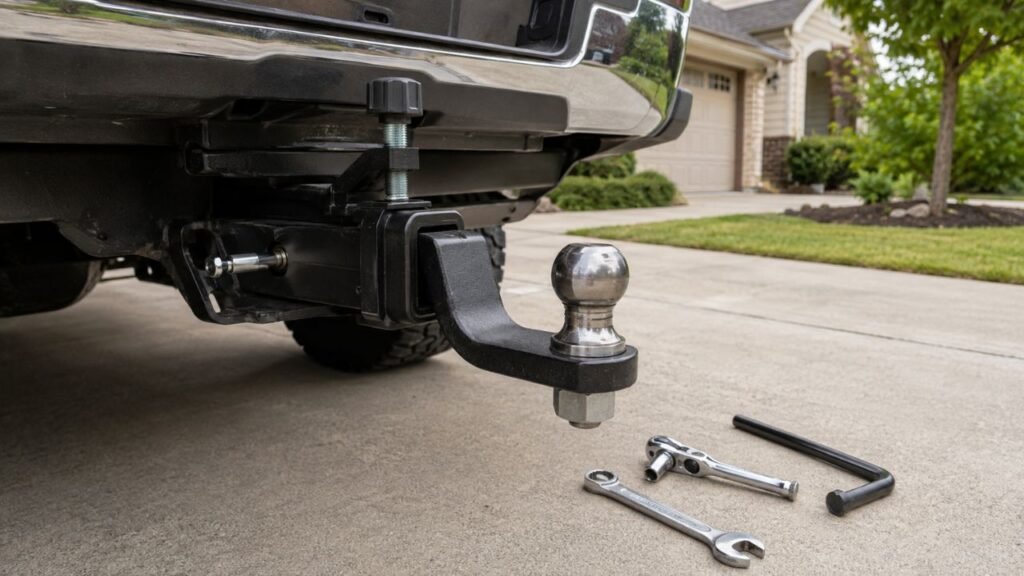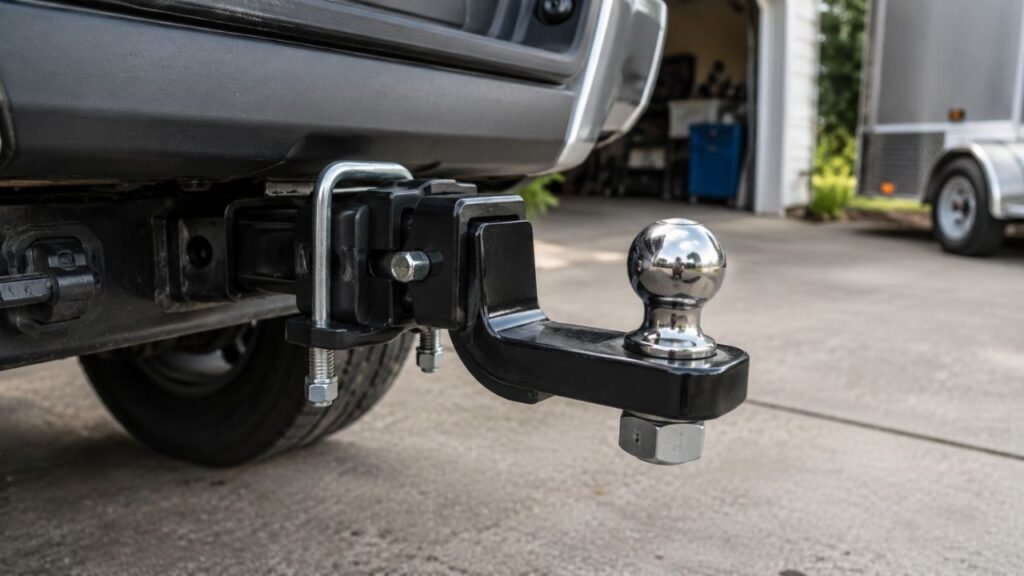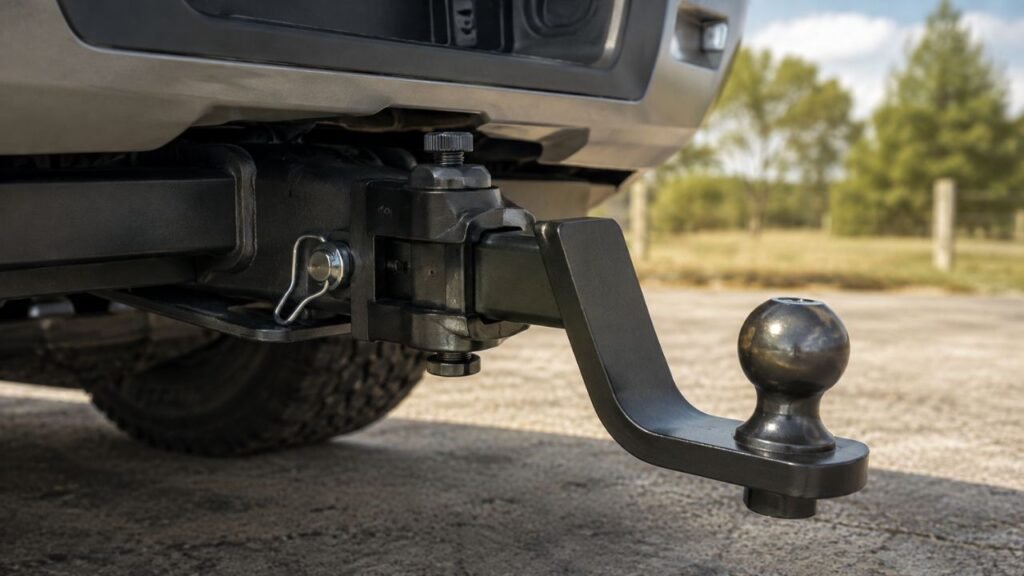
You can stop a ball mount from moving by using an anti-rattle hitch clamp, compatible threaded hitch pin, receiver immobilizer, or properly designed hitch shim. A small amount of movement inside the receiver is normal, but excessive play may also point to worn, damaged, or poorly matched hitch components.
The important part is figuring out exactly where that movement starts. Below, I’ll help you check the hitch, choose the right fix, and know when tightening the ball mount is not enough.
Key Takeaways
- A little ball mount movement inside the receiver is usually normal.
- An anti-rattle hitch clamp is often the easiest solution.
- Threaded anti-rattle pins do not work with every ball mount.
- Adjustable ball mounts can move at several different connection points.
- Receiver adapters may create additional movement and rattling.
- Excessive play can sometimes indicate worn hitch components.
- Never use an anti-rattle device to hide structural hitch damage.
- Reducing ball mount movement does not increase your towing capacity.
How Can I Stop a Ball Mount From Moving?
The easiest way to stop a ball mount from moving is usually to install a properly sized anti-rattle hitch clamp. The clamp pushes the ball mount shank firmly against one side of the receiver, removing much of the vertical and side-to-side play.
You can also use a threaded anti-rattle hitch pin if your ball mount supports one. Receiver immobilizers, purpose-built shims, and ball mounts with built-in anti-rattle systems can work as well.
However, don’t assume the ball mount itself is always causing the movement. The looseness may actually come from an adjustable hitch mechanism, receiver adapter, hitch ball, coupler, or worn receiver.
That is why I recommend checking the connection first.
First, Find Out Where the Ball Mount Is Moving
Before tightening anything, grab the unloaded ball mount and move it gently up, down, left, right, forward, and backward. Watch each connection point closely while you do this.
You want to determine which part is actually moving before choosing a solution.
Movement Between the Ball Mount Shank and Receiver
This is the most common problem.
The square ball mount shank slides inside the receiver tube, but the two parts cannot fit perfectly against each other. There must be enough clearance for you to insert and remove the ball mount.
That small gap allows the shank to move slightly.
You may notice a metallic rattle over bumps or a clunk when accelerating and braking. If the movement comes directly from this connection, an anti-rattle clamp is usually the simplest solution.
Movement at an Adjustable Ball Mount
Adjustable ball mounts have more moving parts than fixed ball mounts.
Besides the receiver connection, you may have pins, channels, adjustment holes, locking mechanisms, and a removable ball platform.
Grab the ball platform separately and move it.
If the receiver shank stays still while the lower portion moves, tightening the receiver connection will not completely solve your problem.
Inspect the adjustment pins and hardware instead.
Movement Between the Hitch Ball and Ball Mount
The hitch ball itself should not wobble around on the ball mount platform.
If you can see the ball moving independently from the mount, inspect the ball nut and mounting surface.
Do not confuse this problem with normal receiver play.
A loose hitch ball needs to be corrected according to the hitch ball manufacturer’s installation requirements.
Movement Between the Hitch Ball and Trailer Coupler
Sometimes the noise appears to come from the receiver when it actually comes from the trailer coupler.
A small amount of operating clearance between the ball and coupler may exist, but excessive looseness deserves inspection.
Make sure you are using the correct hitch ball diameter for the trailer coupler.
Common ball sizes include 1-7/8 inch, 2 inch, and 2-5/16 inch.
Never tow using a smaller hitch ball simply because the coupler will close around it.
Movement From the Hitch Receiver Itself
Finally, look at the receiver rather than the ball mount.
Have someone move the unloaded ball mount while you watch the receiver mounting points.
The receiver should not shift against the vehicle.
Look for damaged mounting hardware, elongated holes, cracks, severe corrosion, deformation, or unusual movement around the receiver structure.
If the receiver itself moves, an anti-rattle clamp is not the solution.
Is It Normal for a Ball Mount to Move in the Receiver?
Yes. A small amount of ball mount movement inside a hitch receiver is generally normal.
The ball mount needs enough clearance to slide into and out of the receiver. If manufacturers made both parts exactly the same dimensions, installation could become extremely difficult once dirt, corrosion, paint, or minor manufacturing variations were involved.
That necessary clearance creates some play.
You may therefore be able to move an unloaded ball mount slightly by hand.
What matters is how much movement you are seeing and whether the condition is getting worse.
A slight wiggle with no visible damage is very different from a mount that slams noticeably forward and backward every time you brake.
Pay more attention if you notice:
- Loud or worsening clunking
- Noticeably elongated hitch-pin holes
- Visible receiver deformation
- Excessive fore-and-aft movement
- Severe rust around structural areas
- Cracks around the receiver
- Movement that suddenly becomes much worse
Those symptoms deserve closer inspection.
Why Does My Ball Mount Have So Much Play?
Several things can create noticeable ball mount movement. Some are completely normal, while others may require repair.
Common causes include:
- Normal manufacturing clearance between the shank and receiver
- A ball mount that fits slightly loose inside the receiver
- A receiver tube with slightly greater internal clearance
- Wear on the ball mount shank
- Wear inside the receiver tube
- Enlarged hitch-pin holes
- A loose receiver reducer sleeve
- Multiple receiver adapters or extensions
- Loose adjustable ball mount hardware
- Incorrect receiver or ball mount size
- Damage or deformation from heavy towing
- Severe corrosion around the receiver
Manufacturing tolerances are one reason two ball mounts of the same advertised size can feel slightly different inside the same receiver.
One may slide in snugly while another has more noticeable play.
That does not automatically mean either part is defective.
The important question is whether the components remain correctly sized, undamaged, and properly rated for your towing setup.
Best Ways to Stop a Ball Mount From Moving
Once you know the movement comes from the receiver-to-shank connection, you have several practical ways to reduce it.
The best option depends on your receiver size, ball mount design, and how frequently you remove the hitch.
1. Install an Anti-Rattle Hitch Clamp
For most standard setups, this is where I would start.
An anti-rattle hitch clamp normally sits around the receiver and ball mount connection. Tightening its hardware applies pressure that pushes the ball mount shank firmly against one side of the receiver tube.
Instead of the shank bouncing between several receiver walls, it stays pressed against one surface.
That greatly reduces rattling and clunking.
Anti-rattle clamps are especially useful because they normally work externally. You don’t need an internal threaded mechanism inside the ball mount.
They can also work with many solid and hollow ball mount designs.
Before buying one, check:
- Receiver size
- Clamp dimensions
- Clearance around the receiver
- Ball mount shape
- Manufacturer towing restrictions
Most clamps install quickly using basic hand tools.
2. Use a Threaded Anti-Rattle Hitch Pin
A threaded anti-rattle pin takes a different approach.
Instead of simply passing through the hitch-pin hole, the pin threads into a compatible internal nut or mechanism.
As you tighten it, the system pulls the ball mount firmly toward one side of the receiver.
This can produce a very clean installation without an external U-bolt or clamp.
However, compatibility matters.
Many threaded anti-rattle systems are designed around hollow accessory shanks or ball mounts that contain a compatible threaded insert.
A solid steel ball mount may not accept the same system.
Do not assume any threaded anti-rattle pin will work simply because the pin diameter matches your receiver.
Check the ball mount and pin requirements first.
3. Use a Receiver Immobilizer or Hitch Tightener
You may also see products called receiver immobilizers, hitch tighteners, hitch stabilizers, or anti-wobble devices.
The names vary, but the goal is similar.
These devices apply pressure to the ball mount and prevent it from bouncing freely inside the receiver.
Some push vertically.
Others apply both vertical and horizontal pressure.
A quality immobilizer can work especially well when your ball mount has noticeable up-and-down movement.
Just make sure the device is intended for your receiver size and towing application.
4. Use a Proper Receiver Shim or Anti-Rattle Wedge
A purpose-built receiver shim can physically fill part of the gap between the receiver and ball mount shank.
This may work well when the clearance is relatively small.
The important phrase here is purpose-built.
I would not recommend permanently stuffing random materials inside the receiver.
Avoid relying on things like:
- Folded aluminum scraps
- Pieces of wood
- Foam
- Rubber strips not designed for towing
- Tape wrapped repeatedly around the shank
- Loose metal pieces
These improvised solutions may move, deteriorate, fall out, or interfere with proper ball mount insertion.
Use a towing-specific shim or wedge designed to stay securely positioned.
5. Tighten or Replace the Receiver Reducer
A receiver reducer can create an extra source of play.
For example, imagine your truck has a 2.5-inch receiver but your ball mount uses a 2-inch shank.
You may have:
2.5-inch receiver → reducer sleeve → 2-inch ball mount.
You now have two possible loose connections.
The reducer can move inside the large receiver, and the ball mount can move inside the reducer.
If you hear rattling from this setup, hold the reducer while moving the ball mount.
You may discover that both connections are moving.
A properly designed anti-rattle reducer or compatible immobilizer may solve the problem better than tightening only the inner ball mount.
6. Use a Ball Mount With Built-In Anti-Rattle
If you tow frequently, you may prefer a ball mount with an integrated anti-rattle system.
These mounts use internal screws, wedges, expanding mechanisms, or other designs that tighten directly against the receiver.
You don’t have to install a separate clamp every time.
This can be convenient if your ball mount stays on the vehicle for long periods.
The disadvantage is cost.
Replacing a perfectly usable ball mount solely to eliminate minor movement may not make sense if an inexpensive clamp already solves the problem.
However, if you are buying a new ball mount anyway, integrated anti-rattle can be a useful feature.
7. Replace a Worn or Poorly Fitting Ball Mount
Sometimes another properly sized ball mount simply fits better.
Small manufacturing differences can create noticeable changes in receiver fit.
However, replacing the ball mount should not become a way to ignore receiver wear.
If several correctly sized ball mounts all feel excessively loose, inspect the receiver itself.
Likewise, replace the ball mount if its shank shows substantial material loss, deformation, severe corrosion, or unusual wear.
Which Ball Mount Anti-Rattle Method Should I Use?
There isn’t one solution that works perfectly for every towing setup. Use the table below to narrow down your options.
| Solution | Best For | Solid Shank | Hollow Shank | Main Advantage | Main Limitation |
| Anti-rattle clamp | General receiver-to-shank movement | Yes | Yes | Simple and widely compatible | External hardware remains visible |
| Threaded anti-rattle pin | Compatible internal systems | Sometimes | Commonly | Clean installation | Not universal |
| Receiver immobilizer | Moderate receiver play | Usually | Usually | Strong stabilization | Must fit your receiver setup |
| Purpose-built shim | Small clearance gaps | Yes | Yes | Simple way to reduce play | Must remain securely positioned |
| Anti-rattle reducer | 2.5″ to 2″ receiver conversions | Yes | Yes | Helps control reducer movement | Only useful with adapters |
| Built-in anti-rattle ball mount | Frequent towing | Built into mount | Built into mount | No separate clamp required | Requires replacing the ball mount |
Always follow the instructions for the exact anti-rattle device you install.
Do not assume identical-looking products use the same tightening procedure or torque requirements.
How to Install an Anti-Rattle Hitch Clamp
Installing most anti-rattle hitch clamps is straightforward, but always follow the instructions supplied with your specific device.
A typical installation looks like this:
- Park your tow vehicle on firm, level ground.
- Insert the correctly sized ball mount into the receiver.
- Align the hitch-pin holes.
- Install the properly rated hitch pin and retaining clip.
- Position the anti-rattle clamp around the receiver connection.
- Install the tightening plate or hardware.
- Tighten each fastener evenly.
- Check that the ball mount is firmly restrained.
- Recheck the hardware after your first towing trip.
Do not blindly use a universal torque number you find online.
Anti-rattle clamps use different bolt sizes, materials, and designs.
Follow the manufacturer’s tightening requirements.
What Not to Do When Trying to Stop Hitch Movement
Reducing hitch movement is usually simple, but there are a few shortcuts I would avoid.
- Don’t use the wrong ball mount size.
- Don’t force an oversized shank into the receiver.
- Don’t depend on random household materials as permanent shims.
- Don’t ignore elongated hitch-pin holes.
- Don’t cover structural cracks with an anti-rattle clamp.
- Don’t weld modifications onto the receiver without proper engineering guidance.
- Don’t exceed the anti-rattle device’s tightening requirements.
- Don’t assume a locking hitch pin automatically stops receiver movement.
- Don’t treat an anti-rattle clamp as a towing-capacity upgrade.
- Don’t use an accessory in configurations the manufacturer excludes.
An anti-rattle device should control normal clearance.
It should never become a way to compensate for damaged towing equipment.
When Ball Mount Movement Means Something Is Worn Out
Ball mount play isn’t always caused by normal receiver clearance. Sometimes the components themselves have started wearing.
Look closely at the areas below before assuming another clamp will solve everything.
Worn Hitch-Pin Hole
Inspect the hitch-pin holes in both the receiver and ball mount.
They should remain reasonably round.
If you notice obvious elongation, heavy wear, deformation, or torn-looking metal around the opening, the repeated forward-and-backward loading may have started damaging the connection.
A clamp may reduce noise, but it doesn’t replace missing metal.
Have significant wear inspected professionally.
Worn Ball Mount Shank
Pull the ball mount out and clean the shank.
Look for unusual grooves, deep wear marks, severe corrosion, deformation, or areas where significant material appears to be missing.
Surface scratches are common.
Major dimensional wear is different.
If the shank itself has become noticeably loose because of material loss, replacing the mount may be the better option.
Damaged Receiver Tube
Inspect the receiver opening carefully.
Check for:
- Bent receiver walls
- Cracked welds
- Severe rust
- Deformed pin holes
- Loose mounting hardware
- Movement where the hitch attaches to the vehicle
If you suspect structural receiver damage, stop trying to eliminate the noise with accessories.
Have the hitch inspected before towing again.
Loose Hitch Ball or Adjustable Hardware
Not every clunk comes from the receiver.
If your adjustable ball mount uses several pins or bolts, inspect each connection separately.
Likewise, check that the hitch ball does not move independently from its mounting platform.
An anti-rattle receiver clamp cannot fix loose hardware farther down the hitch assembly.
Movement Keeps Getting Worse
Pay attention when a hitch that used to feel fairly tight gradually becomes much looser.
Normal manufacturing clearance does not suddenly increase by itself.
Increasing movement may indicate wear, deformation, loose hardware, or another developing problem.
That is the time to investigate rather than simply tightening the clamp harder.
Can a Loose Ball Mount Damage the Receiver?
Repeated ball mount movement can contribute to wear over time, especially when the shank repeatedly strikes the receiver during acceleration, braking, or rough-road driving.
The contact can also create the familiar metallic clunk many drivers hear from the rear of the vehicle.
That does not mean every slightly loose ball mount is damaging your hitch.
Some clearance is expected.
The concern becomes greater when there is strong fore-and-aft slamming, visible wear, enlarged pin holes, or movement that continues increasing.
Reducing unnecessary play can make the hitch connection quieter while limiting repeated metal-to-metal impact.
Will an Anti-Rattle Device Make Towing Safer?
An anti-rattle device can create a more stable-feeling receiver connection, but it should not be treated as a substitute for proper towing setup.
It does not increase your:
- Receiver rating
- Ball mount rating
- Hitch ball rating
- Trailer rating
- Tongue weight capacity
- Vehicle towing capacity
It also does not replace correct trailer loading.
If your trailer sways, pushes the tow vehicle, or feels unstable at highway speeds, don’t assume receiver play is the main cause.
You may need to check tongue weight, hitch height, tire pressure, suspension, trailer brakes, weight distribution, or trailer loading.
Think of an anti-rattle device as a way to control unwanted receiver movement, not as a cure for every towing-handling problem.
Why Does My Ball Mount Still Move After Installing an Anti-Rattle Clamp?
If you’ve installed a hitch tightener and still notice movement, don’t immediately keep tightening it.
First determine where the remaining play comes from.
Common reasons include:
- The clamp is positioned incorrectly.
- The fasteners are not tightened evenly.
- The clamp is the wrong size.
- The ball mount is moving at its adjustable section.
- A receiver reducer is still loose.
- The hitch ball itself is loose.
- Movement is coming from the trailer coupler.
- The receiver or ball mount is badly worn.
- The device is not compatible with your setup.
- A hitch extension creates another loose connection.
Have someone move the unloaded hitch while you watch every joint.
You can often see immediately which connection still moves.
How to Keep the Ball Mount From Getting Loose Again
Once you’ve solved the problem, a little routine inspection can keep the hitch quiet and dependable.
- Inspect the ball mount before longer towing trips.
- Check anti-rattle clamp hardware periodically.
- Look for elongated hitch-pin holes.
- Clean heavy rust and debris from the receiver.
- Inspect receiver reducers separately.
- Check adjustable ball mount pins and fasteners.
- Watch for increasing fore-and-aft movement.
- Replace severely worn components.
- Check the receiver mounting points occasionally.
- Follow your hitch manufacturer’s maintenance instructions.
You don’t need to obsess over a tiny wiggle.
You’re mainly looking for changes.
If the hitch feels much looser than it did several months ago, find out why.
Final Words
If your ball mount moves slightly inside the receiver, there is usually no reason to panic. A small amount of clearance helps the ball mount slide into the receiver, and some movement is expected.
If the rattling bothers you, a properly sized anti-rattle hitch clamp is often the easiest solution. Just make sure the movement actually comes from the receiver connection first. If you find worn pin holes, damaged hardware, a loose hitch ball, or a moving receiver, repair that problem instead of simply trying to clamp everything tighter.
Related FAQs
Should a Ball Mount Wiggle in the Receiver?
A small amount of ball mount wiggle is generally normal because the shank needs clearance to slide into the receiver. Excessive movement, loud clunking, or increasing looseness should be inspected more closely.
How Much Ball Mount Movement Is Normal?
There is no single movement measurement that applies to every hitch and ball mount combination. A slight unloaded wiggle can be normal, but strong slamming or visibly worn components are not something I would ignore.
Why Does My Ball Mount Clunk When I Stop?
The ball mount may slide forward and backward slightly inside the receiver as towing forces change during braking. A compatible anti-rattle device can reduce this movement if the hitch components are otherwise in good condition.
Do Anti-Rattle Hitch Clamps Work While Towing?
Many anti-rattle hitch clamps are specifically designed to control receiver movement during towing. Make sure the model you choose is approved for your receiver size, ball mount, trailer weight, and towing application.
Can I Use an Anti-Rattle Clamp on a Solid Ball Mount?
Many external anti-rattle clamps work with both solid and hollow ball mount shanks because they tighten around the outside of the receiver. Always confirm compatibility with the specific clamp before towing.
Can I Use a Threaded Anti-Rattle Pin With a Solid Shank?
Not always. Many threaded anti-rattle pins require a hollow shank containing an internal nut or threaded mechanism. A solid ball mount may require an external clamp instead.
Can I Put a Shim Between the Ball Mount and Receiver?
Yes, if you use a purpose-designed receiver shim intended for towing applications. Avoid relying on improvised pieces of wood, rubber, tape, or loose metal that may shift or deteriorate.
Will a Locking Hitch Pin Stop My Ball Mount From Moving?
A standard locking hitch pin mainly prevents easy removal or theft. It does not necessarily eliminate receiver play unless the pin also includes an anti-rattle tightening mechanism.
Why Does My 2-Inch Ball Mount Move Inside a 2-Inch Receiver?
Both parts need manufacturing clearance so the ball mount can slide into the receiver. Small dimensional differences can therefore create noticeable movement even though both components are correctly labeled as 2 inches.
Why Does My Ball Mount Still Move With a Hitch Tightener?
The remaining movement may come from an adjustable hitch section, receiver reducer, coupler, hitch ball, worn pin hole, or another connection. Watch each joint while someone moves the unloaded hitch to find the actual source.
Can a Loose Ball Mount Damage My Hitch?
Minor normal clearance is usually not a major concern, but repeated hard movement can contribute to wear at the shank, receiver, and hitch-pin holes. Increasing play or visible damage should be inspected.
Does a Loose Ball Mount Cause Trailer Sway?
Receiver play may contribute to a loose feeling or clunking, but it is usually not the main cause of trailer sway. Incorrect tongue weight, trailer loading, speed, tires, suspension, and hitch setup deserve closer attention.
Should I Replace a Ball Mount That Has Too Much Play?
Replace the ball mount if you find substantial wear, deformation, severe corrosion, or damage. If the mount is simply loose because of normal receiver clearance, a compatible anti-rattle device may solve the problem.
How Do I Stop Movement With a 2.5-Inch to 2-Inch Receiver Adapter?
Check both the reducer-to-receiver connection and the ball-mount-to-reducer connection. You may need an anti-rattle reducer or compatible immobilizer that controls movement at both interfaces rather than tightening only the inner ball mount.

Ryan Mitchell writes for readers who prefer independent travel and practical outdoor motorhome living. His how-to guides and reviews focus on simplicity, durability, and real value. He brings a calm, hands-on perspective to every topic.