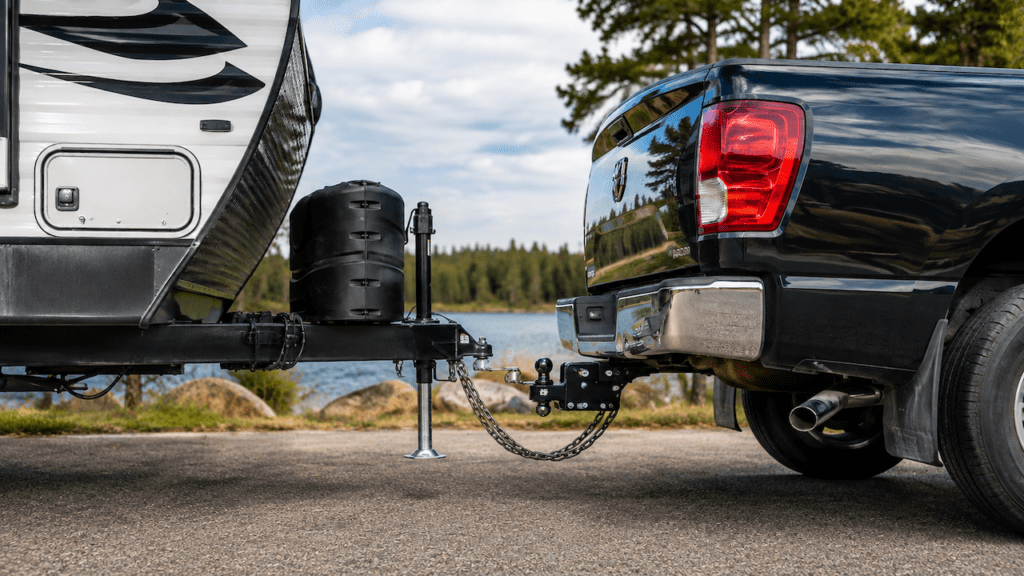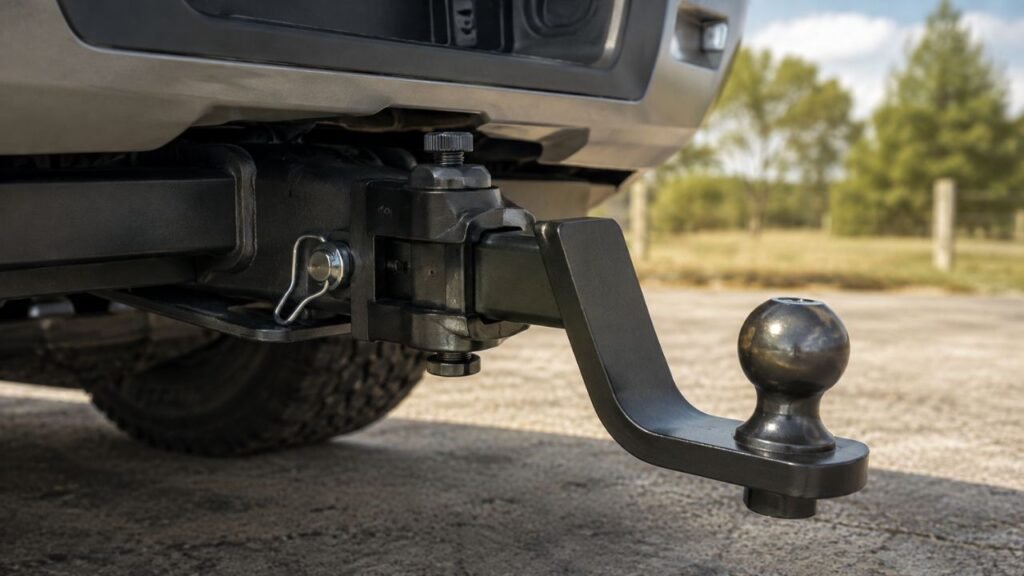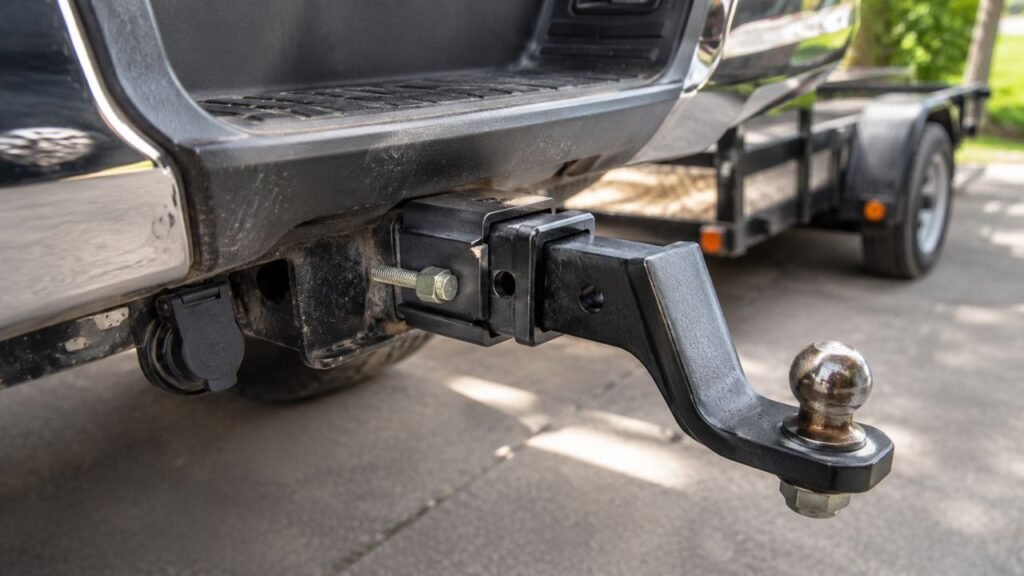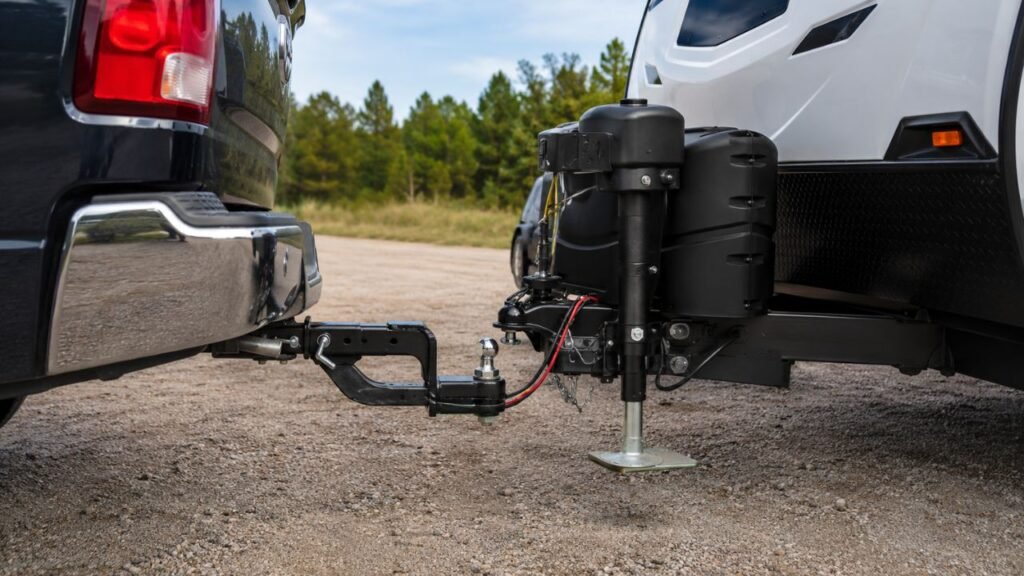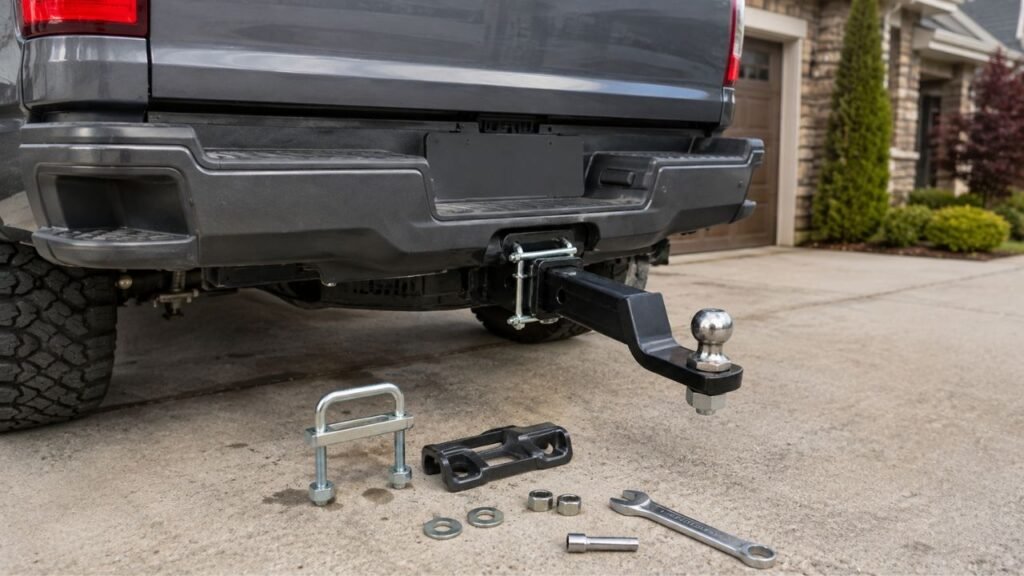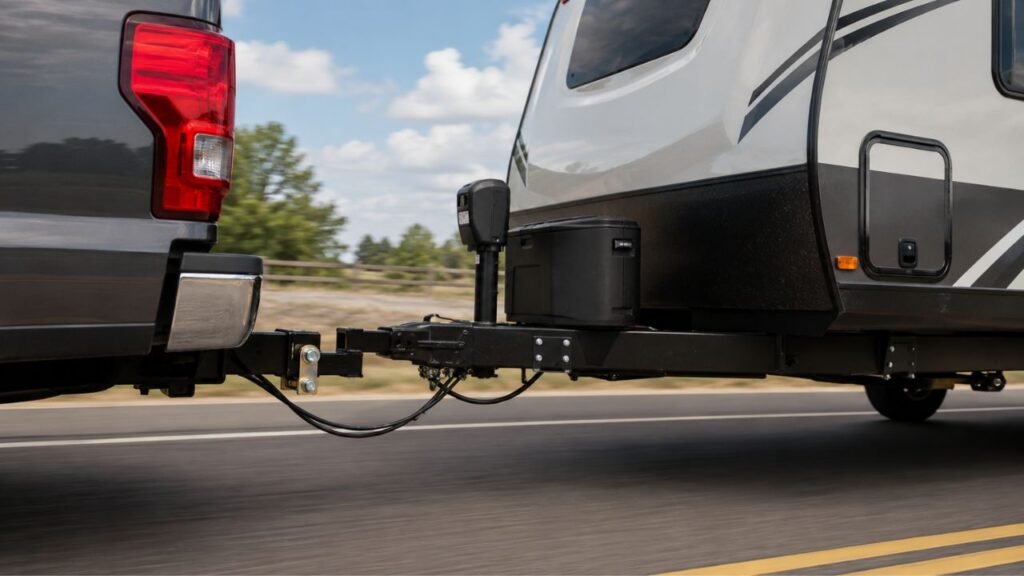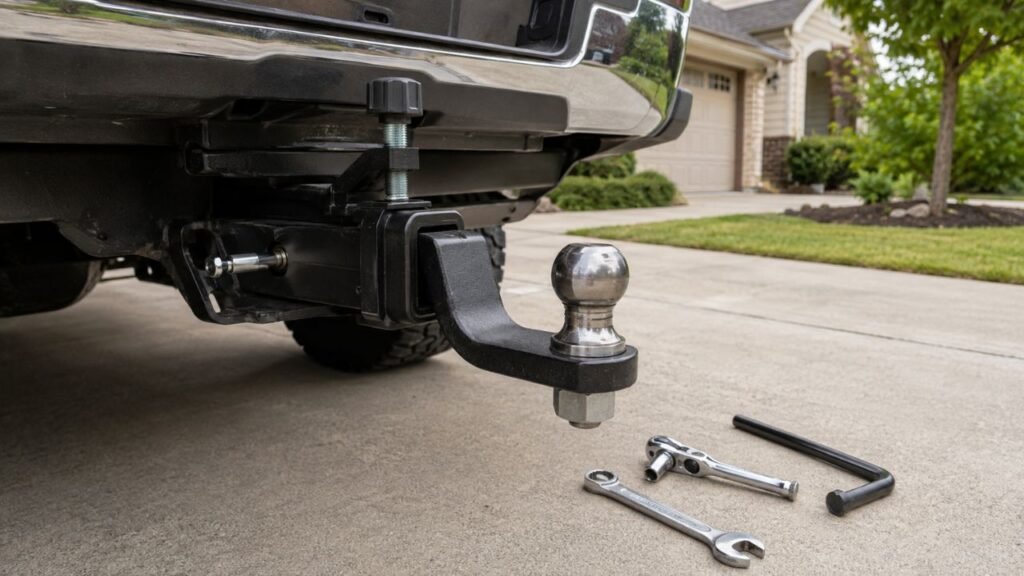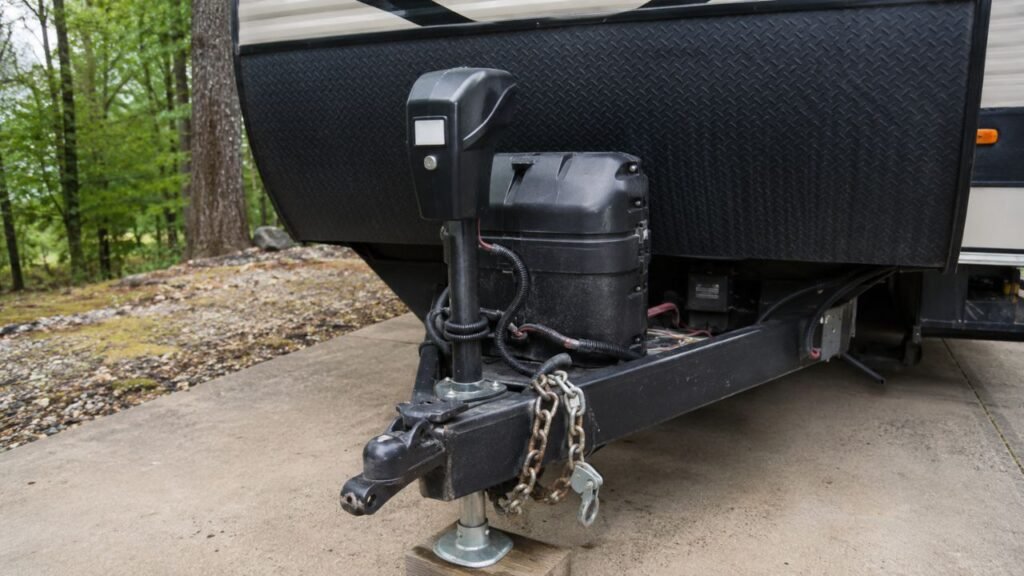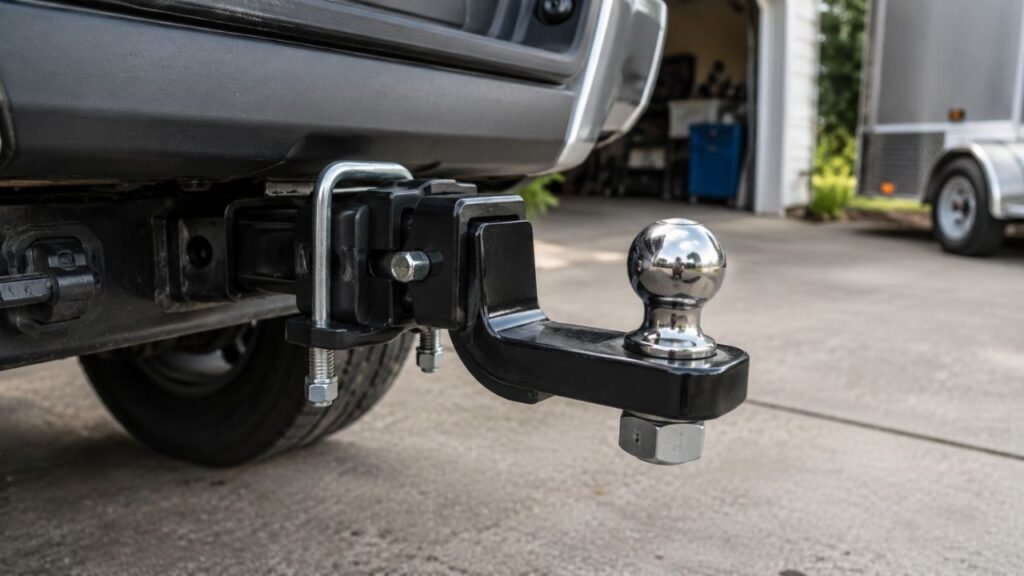
No, a properly sized and correctly installed anti-rattle device normally will not damage a healthy hitch receiver. In many cases, it can actually reduce wear by limiting the repeated movement and metal-to-metal impacts between the hitch shank and receiver tube.
Problems usually appear when the device is over-tightened, installed incorrectly, used with incompatible equipment, or fitted to an already damaged receiver. Below, I’ll show you what damage to watch for and how to avoid it.
Key Takeaways
- A properly installed anti-rattle device should not damage a healthy receiver.
- Light scratches or paint marks usually are not structural damage.
- Excessive tightening can damage hardware or place unnecessary pressure on the receiver.
- The device must match your receiver size and intended application.
- Some anti-rattle devices support towing, while others are accessory-specific.
- Weight-distribution hitch compatibility depends on the particular device.
- Never use an anti-rattle device to hide cracks, severe wear, or deformation.
Can an Anti-Rattle Device Actually Damage the Hitch Receiver?
An anti-rattle device can potentially cause damage, but normal use should not. Most problems happen because something about the installation or application is wrong.
Your receiver and ball mount normally have a small amount of clearance between them. That clearance allows the shank to slide into and out of the receiver without getting stuck.
Unfortunately, the same clearance can create movement while driving. The shank may shift slightly every time you accelerate, brake, turn, or travel across rough pavement.
An anti-rattle device simply limits that movement.
When installed properly, it holds the shank firmly against one or more sides of the receiver. This can actually reduce the repeated impacts that contribute to wear over time.
The concern starts when someone treats the device like a heavy-duty clamp and keeps tightening long after the movement has disappeared.
You want the hitch connection secure. You do not need to squeeze the receiver tube as hard as physically possible.
What Kind of Damage Can an Anti-Rattle Device Cause?
Most anti-rattle problems fall into a few predictable categories. Knowing the difference between normal contact marks and genuine damage can prevent unnecessary worry.
Scratches and Paint Damage
The most common thing you may notice is scratched paint.
A U-bolt, metal plate, collar, or threaded component may contact painted surfaces around the receiver. Tightening and vibration can eventually rub through some of that coating.
That may look concerning, but minor paint damage is generally cosmetic.
However, exposed steel can eventually develop surface rust. Clean the area occasionally and touch up damaged coating when necessary.
Receiver Collar or Tube Deformation
Actual receiver deformation is much more serious.
If excessive clamping pressure is concentrated near the receiver opening, you could theoretically distort weaker components or an already compromised receiver.
You should not see the receiver opening becoming visibly squeezed, bent, or uneven.
If tightening the device changes the shape of the receiver, stop immediately.
That is not normal anti-rattle operation.
Stripped or Stretched Anti-Rattle Hardware
The anti-rattle hardware itself may fail before your hitch receiver does.
Possible signs include:
- Bent U-bolts
- Stretched bolts
- Flattened washers
- Damaged threads
- Nuts that no longer hold tension
- A visibly bent tightening plate
These symptoms often mean the device has been over-tightened or repeatedly subjected to loads outside its intended use.
Replacing damaged hardware is safer than continually tightening it.
Hitch Pin or Pin-Hole Wear
An anti-rattle device does not replace the hitch pin unless specifically designed to do so.
The hitch pin still performs the important job of retaining the ball mount or accessory inside the receiver.
Reducing movement can lessen repeated impacts around the pin area. However, an anti-rattle device cannot repair a receiver hole that is already badly worn or elongated.
If the pin hole looks stretched, cracked, or unusually oversized, inspect the hitch before continuing to tow.
Damage to an Already Weakened Receiver
This is one of the situations I would take most seriously.
A receiver weakened by corrosion, previous impact damage, cracked welds, or severe wear may not react normally to additional clamping pressure.
The anti-rattle device may not actually cause the original problem. It can simply make an existing weakness easier to notice.
That is why I always recommend inspecting the receiver first instead of immediately tightening away every bit of movement.
Does the Type of Anti-Rattle Device Affect the Risk of Damage?
Yes. Anti-rattle devices use different methods to control movement, so their contact points and possible problems are not identical.
| Anti-Rattle Device | How It Reduces Movement | Main Contact Area | Possible Concern | Common Use |
| U-bolt hitch tightener | Clamps shank against receiver | Receiver collar and shank | Over-tightening or plate bending | Ball mounts, racks, towing when approved |
| Threaded anti-rattle pin | Pulls shank against receiver wall | Pin hole and internal shank | Wrong fit or excessive tightening | Hollow shanks and accessories |
| Hitch collar or clamp | Secures movement at receiver opening | Receiver collar | Poor positioning or excessive pressure | Ball mounts and accessories |
| Internal wedge or shim | Fills clearance inside receiver | Internal receiver wall | Binding or poor fit | Mostly accessory applications |
| Integrated rack stabilizer | Tightens accessory inside receiver | Internal shank connection | Accessory-specific compatibility | Bike racks and cargo racks |
A device fitting your receiver size does not automatically mean it fits your application. You also need to consider the shank design, towing load, available clearance, and manufacturer instructions.
Can Over-Tightening an Anti-Rattle Hitch Clamp Damage the Receiver?
Yes, excessive tightening can potentially create problems, particularly with weaker hardware or an already compromised receiver.
The purpose of tightening an anti-rattle device is simple: remove unwanted movement.
Once the ball mount or accessory feels stable, additional force usually provides little benefit.
Some owners assume that tighter automatically means safer. That is not always true.
Excessive force may:
- Stretch the U-bolt
- Damage threads
- Bend the tightening plate
- Gouge the ball mount
- Make removal difficult
- Apply unnecessary pressure around the receiver opening
There is also no single torque value that works for every anti-rattle device.
Different products use different bolt sizes, materials, washers, and tightening methods. Follow the instructions supplied with your specific device.
If your device does not provide a torque specification, tighten it firmly enough to remove play without forcing or deforming anything.
How Do I Know If My Anti-Rattle Device Is Too Tight?
You usually do not need special equipment to notice excessive tightening. A few visible and mechanical warning signs can tell you something is wrong.
Watch for:
- The receiver collar visibly changing shape
- A tightening plate bending significantly
- U-bolt threads appearing stretched
- Washers crushing or deforming
- Nuts becoming unusually difficult to turn
- Deep gouges appearing around contact points
- The ball mount becoming extremely difficult to remove
- The accessory sitting at an unusual angle
- The clamp repeatedly loosening despite aggressive tightening
- Cracks or distortion appearing around the receiver
A few light contact marks are different from structural deformation.
If the receiver itself looks bent or cracked, stop using it until you know why.
Can You Use an Anti-Rattle Device While Towing a Trailer?
Yes, many anti-rattle devices can be used while towing a trailer.
The important word here is many, not all.
Some devices are specifically intended for ball mounts and towing applications. Others are designed primarily to stabilize bike racks, cargo carriers, or other hitch accessories.
Before towing, confirm three things:
- The device fits your receiver size.
- The manufacturer allows it for your intended application.
- It does not interfere with other towing components.
Do not assume that a device suitable for a cargo rack automatically works for a heavy travel trailer.
At the same time, you should not assume every anti-rattle clamp is unsuitable for towing.
The design and manufacturer instructions matter much more than the general product category.
Can You Use an Anti-Rattle Device With a Weight Distribution Hitch?
Sometimes, but compatibility must be confirmed for your specific equipment.
Weight distribution hitches transfer forces differently than a simple ball mount. The shank and receiver can experience substantial loads while accelerating, braking, turning, and traveling over uneven roads.
Some anti-rattle devices are specifically designed to work with weight-distribution hitch setups.
Others are not.
I would never add a generic clamp simply because it physically fits around the receiver.
Check the anti-rattle device instructions first. Then confirm that the weight distribution hitch manufacturer does not prohibit that type of stabilizer.
If both systems allow it, the device can be useful for reducing unwanted receiver movement.
If compatibility is unclear, avoiding unnecessary additional hardware is the safer choice.
When Is an Anti-Rattle Device More Likely to Cause Problems?
Anti-rattle devices usually become problematic because of mismatched equipment or installation mistakes. These situations deserve extra attention.
Using the Wrong Receiver Size
Receiver sizes commonly include 1.25-inch, 2-inch, 2.5-inch, and larger heavy-duty setups.
A clamp that almost fits is not good enough.
Incorrectly sized hardware may sit crooked, concentrate pressure unevenly, or loosen during travel.
Use the size specifically intended for your receiver.
Installing the Clamp in the Wrong Position
The clamp needs a solid, appropriate surface for applying pressure.
Installing it too far away from the receiver opening may reduce effectiveness. Placing it against an irregular edge can also cause uneven loading.
Make sure the tightening plate sits flat and both sides are evenly supported.
Also check that the clamp does not interfere with safety-chain loops, wiring, bumper components, or other hitch hardware.
Using an Accessory Stabilizer for Unapproved Towing
Bike racks and cargo carriers can benefit greatly from anti-wobble systems.
However, an accessory-specific stabilizer is not automatically suitable for trailer towing.
A bike rack may place very different forces on the receiver than a trailer with hundreds of pounds of tongue weight.
Use towing-rated equipment when towing.
Using It With a Badly Worn Receiver
An anti-rattle device can make a loose connection feel tighter.
That does not mean the underlying receiver is healthy.
If you see significant rust, pin-hole elongation, cracked welds, or deformation, tightening the shank against the receiver may only hide the symptom.
Repair or replace damaged components instead.
Continually Tightening a Device That Keeps Coming Loose
If your anti-rattle device constantly loosens, do not simply keep applying more force.
Something else may be happening.
Check:
- Device size
- Bolt condition
- Washer condition
- Clamp position
- Shank fit
- Corrosion
- Receiver condition
- Whether the device is approved for the load
A correctly installed device should not require increasingly aggressive tightening after every trip.
Can an Anti-Rattle Device Prevent Hitch Receiver Wear?
It can help reduce certain types of wear.
Without an anti-rattle device, the shank may repeatedly strike the receiver walls as the vehicle moves.
Those tiny impacts occur during braking, acceleration, potholes, driveway transitions, and rough roads.
Over thousands of miles, repeated movement can contribute to:
- Surface wear
- Enlarged clearances
- Hitch pin wear
- Pin-hole wear
- Increased clunking
Holding the shank more firmly can reduce that unnecessary motion.
However, an anti-rattle device cannot reverse existing damage.
It also does not increase the hitch’s towing capacity.
If your receiver is rated for a certain maximum load, adding a clamp does not raise that rating.
Think of an anti-rattle device as a stabilizer, not a structural upgrade.
What Should You Inspect Before Installing an Anti-Rattle Device?
A quick inspection takes only a few minutes and can prevent you from tightening hardware around an existing problem.
Check the following areas:
- Receiver opening for bending or distortion
- Receiver collar for cracks
- Hitch pin hole for elongation
- Receiver mounting bolts for looseness
- Welds for visible cracking
- Receiver tube for serious corrosion
- Ball mount shank for bending
- Hitch pin for unusual wear
- Safety-chain attachment points
- Anti-rattle hardware for damaged threads
- Correct receiver and device size
- Clearance around the bumper and wiring
Surface rust is common and not always serious.
Heavy scaling, flaking metal, cracked welds, or obvious deformation deserve closer inspection.
How to Use an Anti-Rattle Device Without Damaging Your Hitch
Using an anti-rattle device safely is mostly about proper fit and reasonable tightening. You are trying to remove movement, not force mismatched parts together.
- Inspect the receiver first: Look for corrosion, bends, cracks, and damaged pin holes in the receiver before installing anything, since these issues can affect safety and may require repair or replacement before use.
- Confirm the correct size: Match the device to your exact receiver dimensions so it fits securely without forcing or leaving excessive play that could reduce its effectiveness.
- Check its intended application: Make sure it supports your ball mount, accessory, or towing setup, since some anti-rattle devices are designed only for racks or carriers and not for towing.
- Position it correctly: Keep the tightening plate flat and the hardware properly aligned so pressure is distributed evenly and no part of the receiver or shank is unnecessarily stressed.
- Tighten both sides evenly: Alternate between nuts when using a U-bolt design to ensure balanced pressure and prevent uneven clamping that could damage hardware or reduce stability.
- Stop once the movement disappears: Do not continue tightening simply because the wrench still turns, as over-tightening can strain components without providing additional benefit.
- Recheck after driving: Inspect the device after your first short trip and periodically afterward to ensure it remains secure and has not loosened or shifted during use.
Never use extra tightening force to compensate for worn, cracked, bent, or incorrectly sized components.
When Should You Stop Using the Hitch and Have It Inspected?
Most hitch rattle is harmless clearance, but certain symptoms should not be ignored.
Stop towing and have the setup inspected if you notice:
- Cracked receiver welds
- Visible receiver tube deformation
- Severely elongated hitch pin holes
- Heavy corrosion with flaking metal
- Loose receiver mounting hardware
- A ball mount sitting noticeably crooked
- Hitch pins repeatedly bending
- Structural movement around the receiver
- Damage following a collision
- Movement that suddenly becomes much worse
An anti-rattle device should improve normal receiver play.
It should never be used to cover up structural hitch damage.
Is an Anti-Rattle Device Worth Using?
For most healthy hitch receivers with normal clearance, yes.
A properly chosen device can reduce noise, movement, and repeated metal contact. It can make a bike rack feel more secure and a ball mount noticeably quieter.
The key is using the right device for the job.
If your receiver already has excessive wear or damage, fix that first. A tightener should stabilize a healthy connection rather than compensate for a failing one.
Final Verdict
A properly installed anti-rattle device should not damage a healthy hitch receiver. In many setups, reducing repeated movement may actually help limit unnecessary wear.
The main risks come from over-tightening, poor positioning, incompatible hardware, and using an accessory-specific device for an application it was never designed to handle.
Tighten only enough to eliminate unwanted movement or meet the manufacturer’s specification. If you see bending, cracks, severe wear, or persistent loosening, investigate the underlying hitch condition instead of simply tightening harder.
Related FAQs
Here are a few quick answers to common questions about anti-rattle devices, receiver damage, and proper tightening.
Can an Anti-Rattle Clamp Bend a Hitch Receiver?
A properly fitted anti-rattle clamp should not bend a healthy receiver during normal installation. Excessive tightening, incorrect placement, weakened metal, or damaged receiver components can increase the risk of deformation.
Can an Anti-Rattle Hitch Tightener Damage the Hitch Pin Hole?
Normally, no. Reducing shank movement can actually reduce repeated impacts around the hitch pin. However, a tightener cannot repair a pin hole that is already stretched, cracked, or badly worn.
Do Anti-Rattle Devices Reduce Hitch Wear?
Yes, they can reduce wear caused by repeated movement between the hitch shank and receiver. They do not repair existing damage or increase the receiver’s rated towing capacity.
Should an Anti-Rattle Device Be Extremely Tight?
No. Tighten it only enough to remove unwanted play or reach the manufacturer’s specified torque. Additional tightening usually provides little benefit and may damage the device or surrounding components.
Can I Tow a Travel Trailer With an Anti-Rattle Device?
Yes, if the anti-rattle device is specifically approved for towing and compatible with your receiver, ball mount, trailer weight, and hitch system. Accessory-only stabilizers should not automatically be used for trailer towing.
Can I Use an Anti-Rattle Clamp With a Weight Distribution Hitch?
Some anti-rattle devices are designed for weight distribution hitch setups, while others are not. Check the instructions for both the anti-rattle device and your weight distribution hitch before combining them.
Can an Anti-Rattle Device Fix a Worn Hitch Receiver?
No. It may temporarily reduce movement, but it cannot restore worn metal, repair cracks, strengthen damaged welds, or reverse an elongated pin hole. Structural hitch problems should be repaired properly.
Can an Anti-Rattle Device Scratch My Hitch?
Yes, metal clamps and tightening plates can leave minor scratches or wear marks on painted surfaces. These marks are usually cosmetic, but exposed steel should be protected from corrosion.
Why Does My Anti-Rattle Device Keep Coming Loose?
Repeated loosening can result from poor installation, incorrect sizing, damaged hardware, vibration, worn components, or using the device outside its intended application. Find the cause rather than simply tightening it harder each time.
Do I Still Need a Hitch Pin With an Anti-Rattle Clamp?
Yes. A standard clamp normally stabilizes the connection but does not replace the hitch pin. You still need the proper retaining pin unless your anti-rattle system specifically includes an approved replacement mechanism.

Ryan Mitchell writes for readers who prefer independent travel and practical outdoor motorhome living. His how-to guides and reviews focus on simplicity, durability, and real value. He brings a calm, hands-on perspective to every topic.