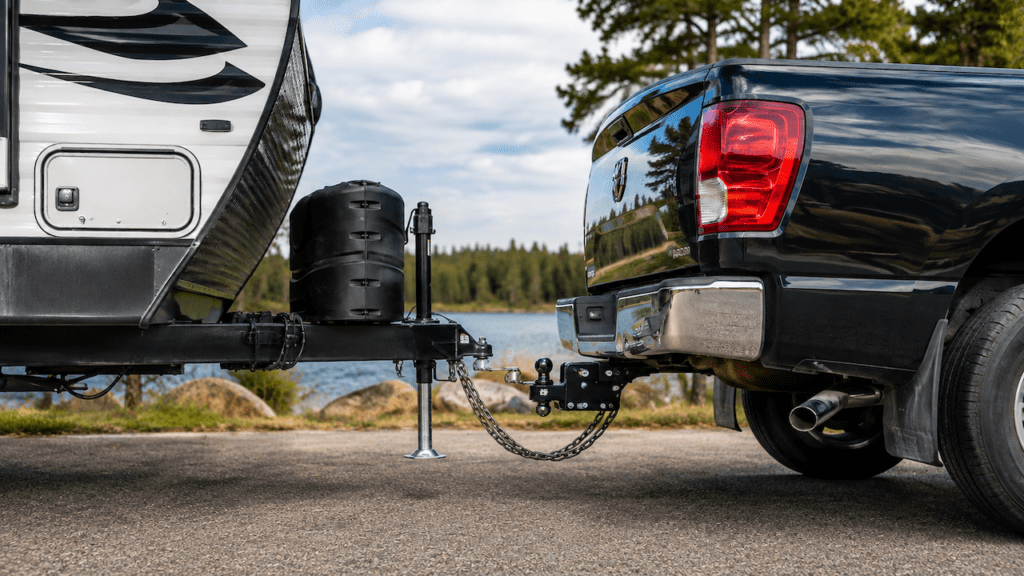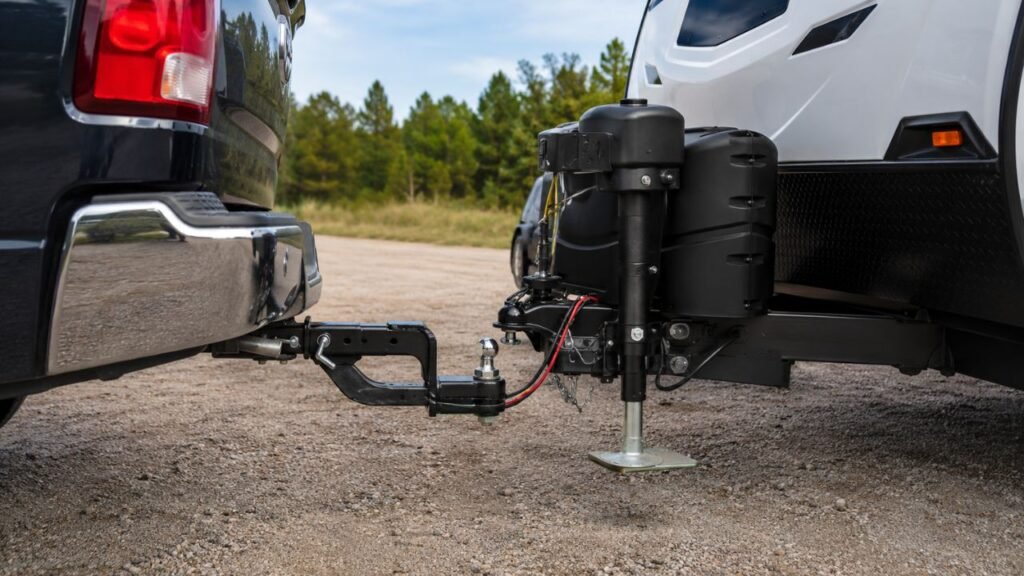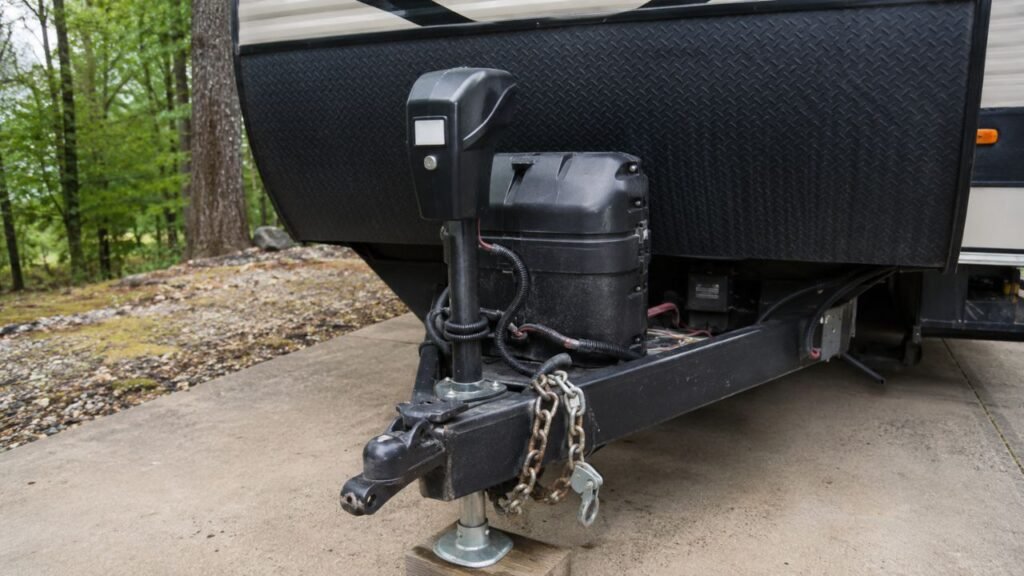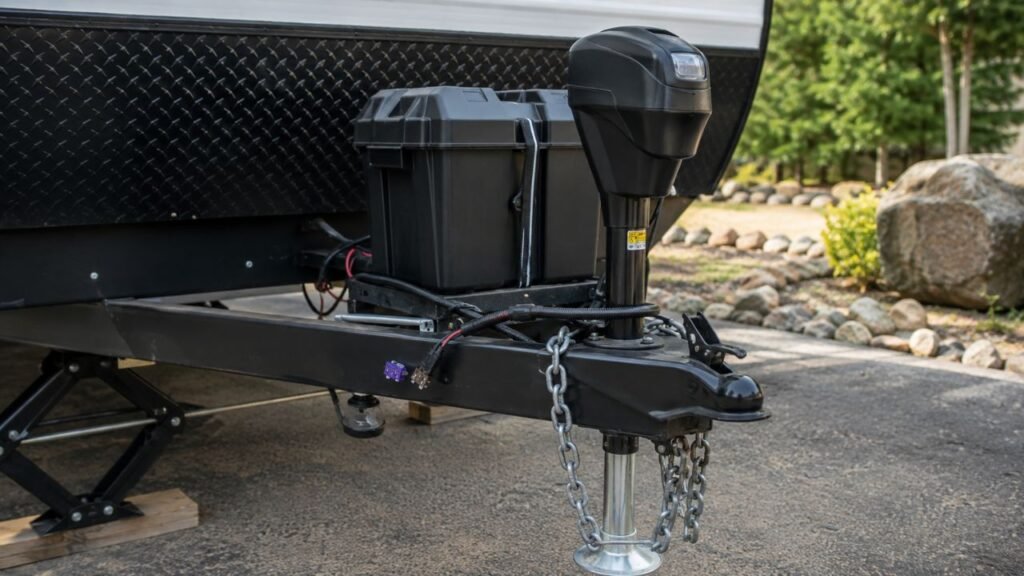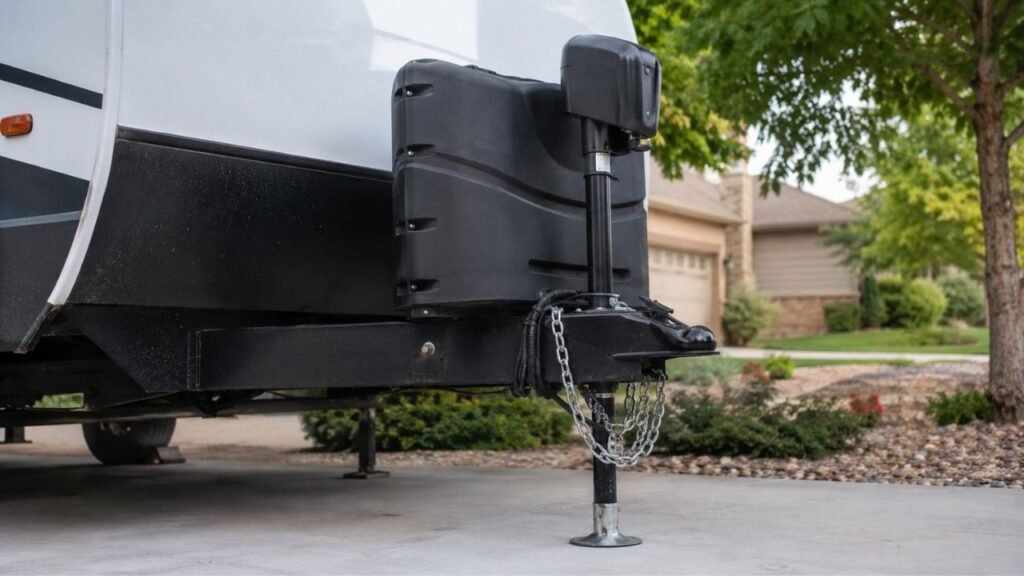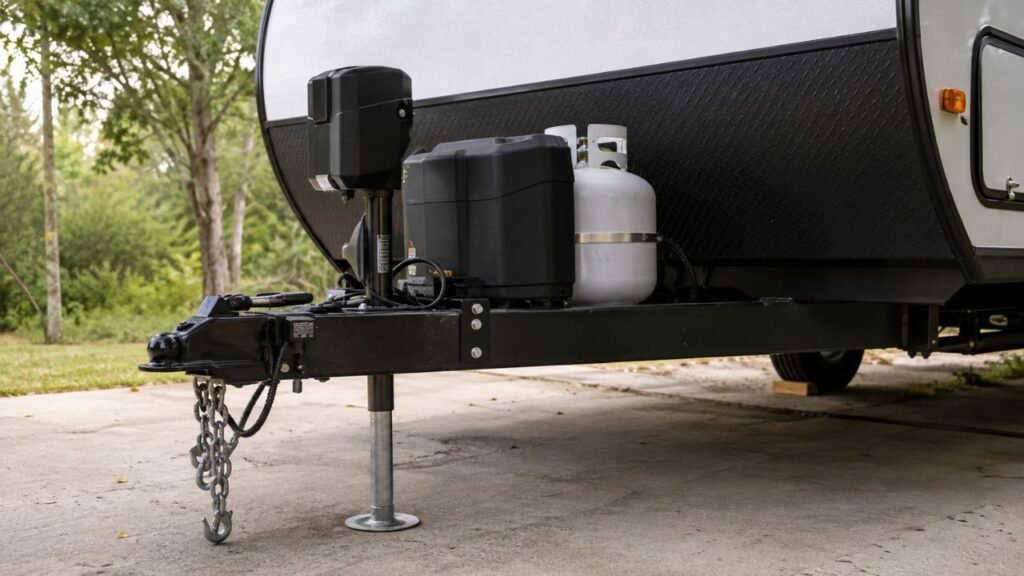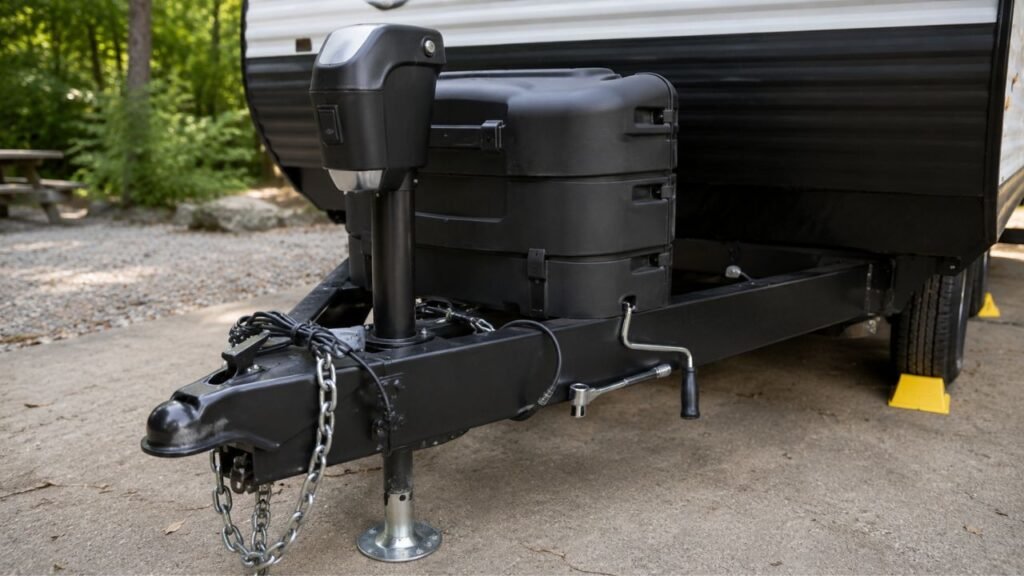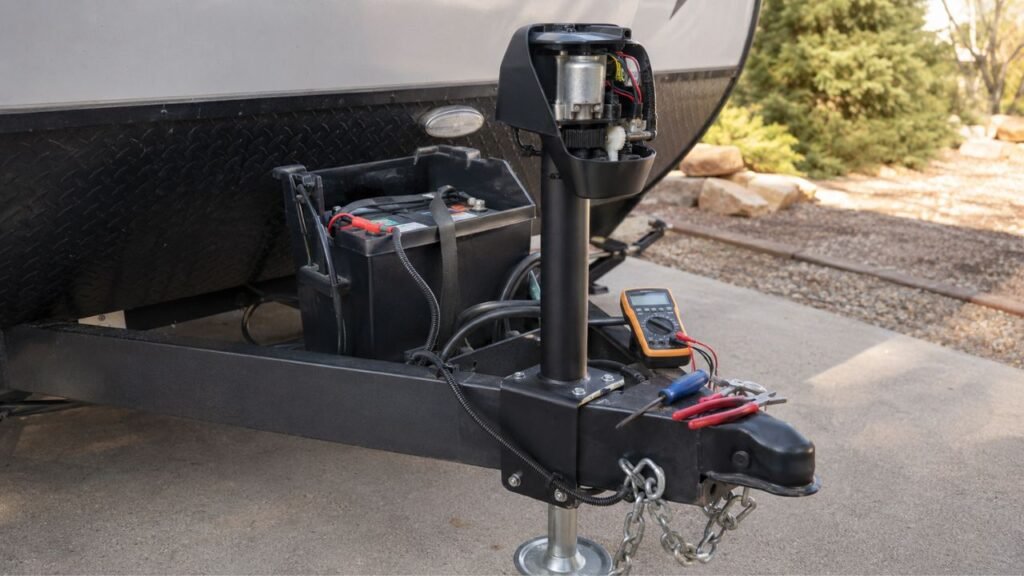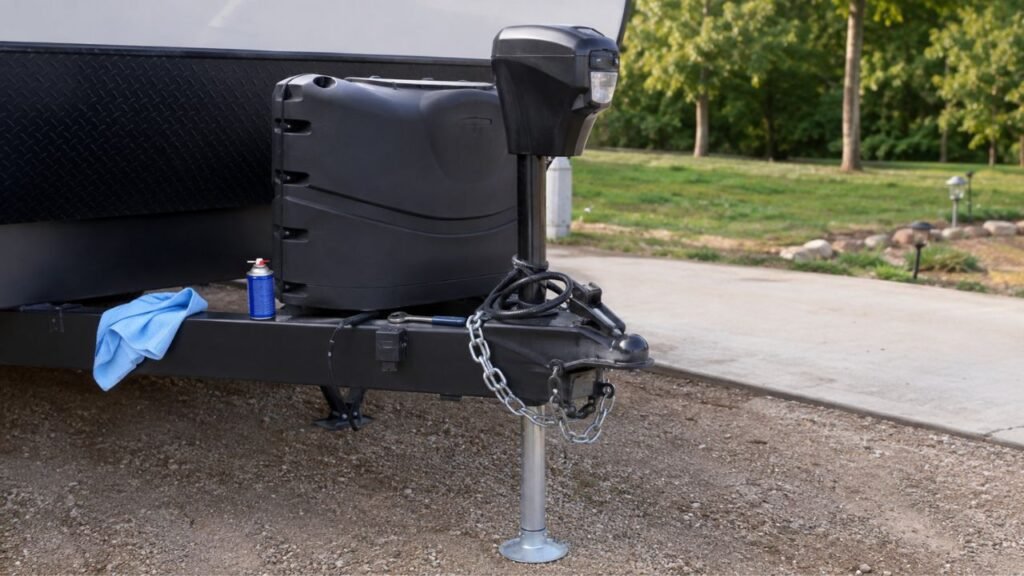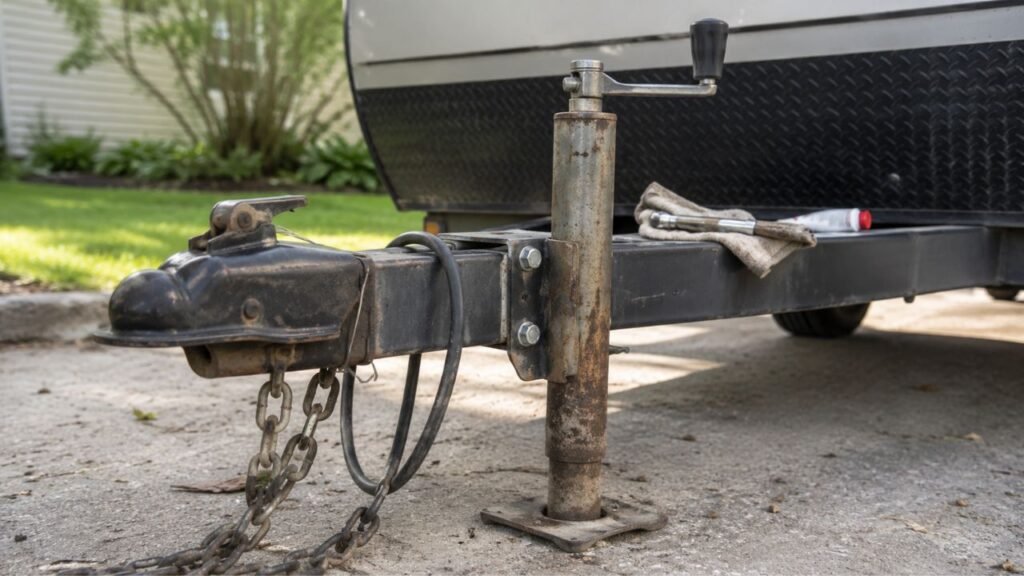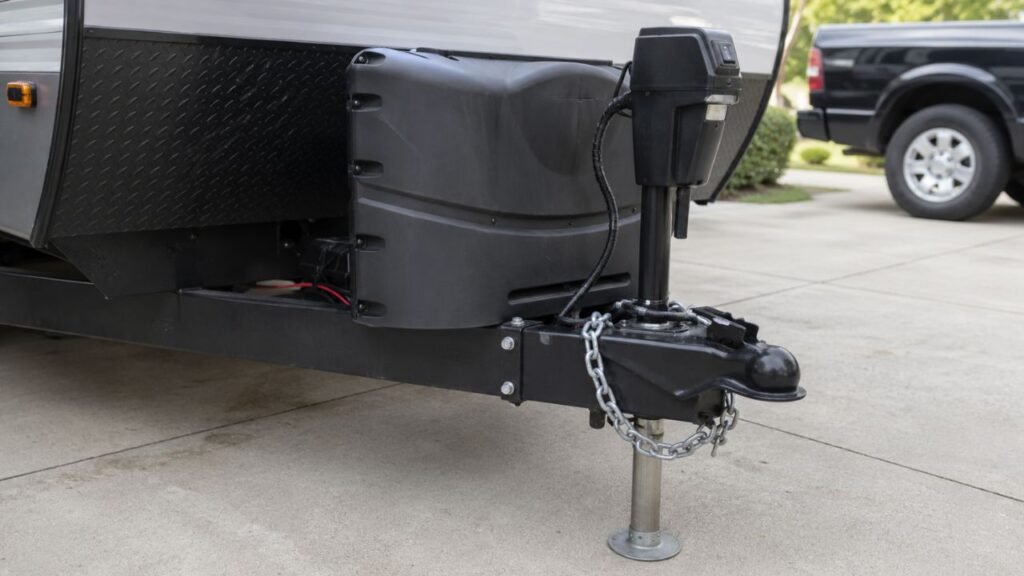
An electric trailer jack that clicks but does not move usually has an electrical or mechanical problem. The jack may have enough power to activate its switch or relay, but not enough current to run the motor. A weak battery, poor ground, loose connection, jammed screw, or damaged gearbox can cause this problem.
The good news is that you can usually narrow down the cause quickly. I’ll walk you through the electrical checks, mechanical checks, and safest troubleshooting order.
Key Takeaways
- A clicking jack does not always mean the motor has failed.
- Weak batteries can click the jack without providing enough motor power.
- Poor grounding is one of the most common trailer jack problems.
- Check battery voltage while operating the jack, not only at rest.
- A manual crank test helps separate electrical and mechanical problems.
- Stop operating the jack if you hear grinding or severe binding.
- Always follow your jack manufacturer’s fuse and manual-override specifications.
Why Does My Electric Trailer Jack Click but Not Move?
When your electric trailer jack clicks without moving, something is responding electrically. However, the motor may not be receiving enough usable current to operate.
The problem usually falls into one of two categories.
An electrical problem prevents sufficient power from reaching the motor. Weak batteries, corroded terminals, poor grounds, damaged wiring, or faulty switches commonly cause this.
A mechanical problem prevents the jack mechanism from physically moving. The jack may be overextended, jammed, bent, overloaded, or damaged internally.
I recommend checking simple electrical problems before assuming the motor is bad. Battery and connection problems are usually easier and cheaper to fix.
Quick Diagnosis: What Your Jack Symptoms Usually Mean
Different noises and behaviors can point toward different problems. Use this table as your starting point before removing anything.
| Jack Symptom | Most Likely Problem Area | What to Check First |
| One click but no movement | Battery, ground, switch, or mechanical bind | Battery voltage and manual crank |
| Repeated clicking | Voltage drop or overload protection | Battery terminals and ground |
| Jack light works but jack does not | High-current electrical circuit | Voltage while pressing switch |
| Jack hums but will not lift | Heavy load or mechanical resistance | Load and manual operation |
| Works when truck is connected | Weak trailer battery or voltage drop | Trailer battery condition |
| Goes down but will not go up | Switch, voltage drop, or excessive load | Loaded voltage and switch |
| Motor runs but leg stays still | Gearbox or internal drive failure | Gears and manual mechanism |
| Manual crank feels extremely hard | Mechanical jam or bent component | Jack tube and screw mechanism |
The table gives you direction, but avoid replacing parts immediately. A few simple tests can tell you much more.
What Does the Clicking Sound Actually Mean?
The type of clicking you hear can provide useful clues. Listen carefully while operating the switch for only a moment.
One Click When You Press the Switch
A single click often means the control side receives electrical power. However, the motor may not receive enough current to start turning.
Possible causes include a weak battery, poor ground, bad connection, faulty switch, or jammed motor.
Do not assume the click confirms that full power reaches the motor.
Repeated Clicking While Holding the Switch
Repeated clicking often appears when voltage drops sharply under load. The jack tries to operate, loses power, then attempts again.
A weak battery, corroded terminal, loose ground, or overloaded motor can cause this.
Some jacks also use automatic overload protection that resets after cooling.
Clicking With a Hum or Straining Sound
A humming or strained sound suggests the motor is trying harder. Mechanical resistance becomes more likely in this situation.
The jack could be overloaded, side-loaded, jammed, or near its travel limit.
Stop operating it if the sound becomes harsh or irregular.
Motor Runs but the Jack Still Does Not Move
If you clearly hear the motor spinning, inspect the mechanical drive system. The motor may be operating while damaged gears fail to transfer movement.
A stripped gear, broken drive component, or damaged screw mechanism may be responsible.
Most Common Causes of an Electric Trailer Jack Clicking Without Moving
Several different faults can create almost identical clicking symptoms. Start with the easiest possibilities before opening the jack housing.
1. Weak or Discharged Trailer Battery
A weak battery is one of the most common causes. The battery may still operate lights while failing under motor load.
Electric jack motors require considerably more current than small lights. That explains why everything can appear normal until you press the switch.
Charge the battery fully before performing more complicated troubleshooting.
2. Battery Voltage Drops Under Jack Load
A battery can show acceptable voltage while nothing is running. That does not always mean the battery is healthy.
Pressing the jack switch places a much heavier load on it. A weak battery may experience a sudden voltage drop during operation.
This is why checking voltage under load provides better information.
If voltage falls dramatically when operating the jack, inspect the battery first.
3. Poor Jack Ground Connection
Many electric tongue jacks depend heavily on a solid ground. Some ground through their mounting plate and trailer frame.
Rust, paint, dirt, corrosion, or loose mounting hardware can weaken that connection.
The jack might still click because limited current can pass. However, the motor requires a much stronger electrical path.
Clean any applicable metal-to-metal grounding surfaces before testing again.
4. Loose or Corroded Electrical Connections
Battery terminals can look connected while still causing resistance. Corrosion commonly develops beneath terminals where you cannot immediately see it.
Inspect the positive cable, battery terminals, ring connectors, and fuse holder.
Also check crimped connectors for looseness, discoloration, or heat damage.
A warm electrical connection often indicates unwanted resistance.
5. Fuse or Circuit Breaker Problems
Most electric trailer jacks include electrical protection somewhere in their circuit. Depending on the design, this could be a fuse or breaker.
A completely blown fuse commonly causes no operation at all. However, poor fuse-holder contacts can create severe voltage drop.
Automatic breakers may also interrupt power after excessive load.
Never install a larger fuse simply to stop it blowing. Use the rating specified by your jack manufacturer.
6. Faulty Extend and Retract Switch
The directional switch handles repeated electrical loads throughout the jack’s life. Internal contacts can eventually become worn, burned, or contaminated.
A damaged switch may work intermittently or only in one direction.
If power reaches the switch but not the motor, investigate further.
Replacing a switch can sometimes solve the problem without replacing everything.
7. Jack Is Fully Extended or Retracted
A jack can bind when operated against its travel limit. Some models provide protection, while others depend more on operator awareness.
If the jack stopped immediately after reaching maximum extension, avoid forcing it.
Try the manual override according to the manufacturer’s instructions.
You may only need to relieve pressure from the mechanism.
8. Jack Screw or Inner Tube Is Jammed
The jack’s internal screw mechanism must move smoothly under considerable weight. Dirt, rust, corrosion, or lack of lubrication can increase resistance.
Side loading can also push the inner tube against surrounding components.
Inspect the exposed tube for bending, heavy rust, or damage.
A jack that feels difficult manually deserves closer mechanical inspection.
9. Excessive Tongue Weight or Side Loading
Electric jacks are rated for specific lifting capacities. Remember that trailer GVWR and tongue weight are different measurements.
Normally, the jack lifts the trailer’s tongue weight rather than everything.
However, an overloaded front end can still exceed the jack’s capacity.
Uneven ground can also create sideways pressure on the jack tube.
Whenever possible, keep the jack vertical and properly aligned.
10. Failed Motor or Gearbox
Motor and gearbox failure should usually come later in diagnosis. Eliminate battery, wiring, grounding, and binding problems first.
Motors can wear internally and eventually stop producing enough torque.
Gearboxes can also strip, crack, or seize from wear.
If voltage reaches the motor correctly but nothing moves, internal failure becomes more likely.
How to Troubleshoot an Electric Trailer Jack That Clicks but Won’t Move
The order you test things matters because it prevents unnecessary repairs. Start with simple checks and work toward internal components.
- Chock the trailer wheels securely: Prevent the trailer from moving while you inspect the jack.
- Stop repeatedly pressing the switch: Repeated attempts can overheat wiring, motors, or protective components.
- Check whether the jack reached its travel limit: Look for signs of full extension or full retraction.
- Inspect the trailer battery terminals: Tighten loose terminals and remove visible corrosion.
- Inspect the jack’s positive power cable: Look for damaged insulation, loose terminals, or burned connectors.
- Check the correct fuse or circuit breaker: Replace only with the manufacturer’s specified rating.
- Measure battery voltage at rest: This gives you a useful starting measurement.
- Measure voltage while operating the jack: Watch for excessive voltage drop under motor load.
- Inspect and clean the jack ground: Pay particular attention to mounting surfaces and bolts.
- Try the manufacturer’s manual override: This helps identify whether the jack is mechanically free.
- Notice how the jack feels manually: Smooth movement suggests an electrical problem is more likely.
- Stop if manual movement is extremely difficult: Strong resistance can indicate mechanical binding or damage.
- Check the switch and motor circuit: Do this after confirming battery, fuse, and ground condition.
- Replace damaged internal parts when appropriate: Severe gearbox or structural damage may justify jack replacement.
How to Test Your Trailer Jack Battery and Voltage Correctly
Voltage testing is one of the most useful diagnostic steps. The important part is knowing when and where to measure it.
Check Battery Voltage With Everything Off
Begin by measuring the trailer battery with no major loads running.
A healthy reading provides a baseline, but it proves very little alone.
The jack motor places a much heavier load on the battery.
Measure Voltage While Pressing the Jack Switch
Keep your meter connected while briefly operating the jack.
If voltage drops heavily during the attempt, investigate the battery.
A battery can appear charged while having poor load capacity.
Poor connections can create the same voltage-drop symptom.
Test Voltage Closer to the Jack
A good battery does not guarantee good voltage at the motor.
Long wires, corrosion, loose terminals, and weak grounds create resistance.
Measure near the jack’s power connection while operating it.
A significant difference suggests wiring or connection losses.
Follow the Manufacturer’s Voltage Requirements
Different electric jacks have different electrical specifications. Avoid relying on one universal voltage threshold for every model.
Check your jack’s manual for minimum operating voltage and fuse rating.
That prevents incorrect diagnosis and protects the electrical system.
How to Check and Fix a Bad Trailer Jack Ground
A poor ground can make a perfectly good jack behave badly. Fortunately, it is usually inexpensive to correct.
- Disconnect electrical power when required by your jack instructions.
- Identify how your particular jack receives its ground.
- Check the mounting plate for rust, paint, and corrosion.
- Clean applicable contact surfaces down to clean metal.
- Inspect mounting bolts for looseness or heavy rust.
- Check grounding washers if your installation uses them.
- Inspect any dedicated negative ground wire and terminal.
- Tighten everything securely before restoring power.
- Test the jack again while watching for voltage drop.
Do not remove protective coatings from unnecessary areas. Only clean surfaces required for the electrical ground path.
Use the Manual Override to Separate Electrical and Mechanical Problems
Most electric trailer jacks provide some form of manual operation. This is not only useful during emergencies; it is also an excellent diagnostic test.
If the Jack Cranks Normally by Hand
Smooth manual operation suggests the mechanical system is probably free.
That directs your attention toward:
- battery condition
- power cable
- ground connection
- switch
- fuse or breaker
- motor
- internal electrical connections
If all electrical tests pass, the motor itself becomes more suspicious.
If the Jack Is Very Hard to Crank
Strong resistance usually points toward a mechanical issue.
Possible problems include:
- seized screw mechanism
- bent inner tube
- damaged gears
- heavy corrosion
- full travel limit
- side loading
- excessive load
Remove as much load as safely possible before further inspection.
Do Not Force the Manual Crank
If the jack refuses to move, avoid using excessive force.
You could strip gears, damage threads, or create an unstable trailer.
Some jack designs also require specific procedures before manual operation.
Always follow the instructions written for your particular jack model.
Why Does My Jack Click Even Though the Battery Shows Fully Charged?
A full battery indicator does not prove the battery can deliver high current. Battery monitors usually provide only part of the picture.
The battery may have enough voltage for lights and controls. However, internal battery wear can cause voltage to collapse under load.
You can also lose power through corroded wires or poor grounds.
That is why loaded voltage testing is much more useful here.
Why Does the Electric Jack Work When I Plug the Trailer Into My Truck?
If the jack suddenly works when connected to your running tow vehicle, suspect the trailer’s power supply. The additional charging voltage can help compensate for a weak battery.
It can also temporarily overcome moderate resistance in some connections.
However, do not consider this a permanent solution.
Check your trailer battery, terminals, ground path, and charging system afterward.
What If the Jack Clicks but Moves in Only One Direction?
A jack working in one direction gives you another important clue. It means several major components can still operate.
Possible causes include:
- worn contacts inside the directional switch
- a damaged wire for one operating direction
- loose connections inside the control housing
- heavier electrical demand while lifting the tongue
- mechanical resistance in one direction
- the jack reaching one end of its travel
If the jack lowers normally but struggles upward, test voltage while lifting.
Lifting usually places considerably more demand on the motor.
When Should You Stop Troubleshooting the Jack?
Some symptoms suggest that continued operation could worsen the problem. Stop using the switch if you notice any of these conditions.
- The jack tube appears visibly bent.
- The jack moves sideways significantly while loaded.
- You hear grinding, popping, or metal-on-metal noises.
- Manual cranking requires excessive force.
- Electrical wires or terminals become unusually hot.
- You smell burning plastic or overheated electrical components.
- The correct fuse repeatedly blows after replacement.
- The jack slips downward while supporting the trailer.
- The mounting area appears cracked or structurally damaged.
Support the trailer safely before removing or disassembling the jack.
Can You Repair a Clicking Electric Trailer Jack or Should You Replace It?
Many clicking jack problems are inexpensive electrical faults. Others involve enough internal damage that replacement makes more sense.
Repair May Make Sense When
Repairing the existing jack is usually reasonable when you find:
- dirty or corroded grounding surfaces
- loose battery terminals
- damaged ring terminals
- corroded fuse holders
- replaceable directional switches
- damaged external wiring
- manufacturer-supported replacement motors or gears
Simple repairs can often restore normal operation completely.
Replacement Is Usually Better When
Consider replacing the jack when you discover:
- a significantly bent jack tube
- severe structural corrosion
- stripped internal screw threads
- badly damaged gearbox components
- repeated internal failures
- unavailable replacement parts
- repair costs approaching replacement cost
A damaged structural jack is not worth risking your trailer.
How to Prevent Your Electric Trailer Jack From Clicking or Jamming Again
A few simple maintenance habits can prevent many jack failures. You do not need an elaborate maintenance routine.
- Keep the trailer battery properly charged.
- Inspect battery terminals several times each season.
- Clean corrosion before it becomes severe.
- Maintain a clean and secure ground connection.
- Avoid holding the switch after reaching travel limits.
- Keep the jack vertical while lifting the trailer.
- Avoid excessive sideways pressure on the jack.
- Clean dirt and road debris from exposed jack parts.
- Lubricate components according to manufacturer instructions.
- Protect the jack head from unnecessary water exposure.
- Inspect wiring for cracking, abrasion, or loose terminals.
- Address slow or strained operation before complete failure develops.
Small problems are much easier to fix before the jack stops moving.
Final Words
When your electric trailer jack clicks but does not move, start simple. Check the battery under load, terminals, ground, fuse, and wiring first.
Next, use the manual override to determine whether the mechanism moves freely. Smooth manual movement usually pushes the diagnosis toward the electrical system.
If the jack binds manually, stop forcing it and inspect mechanically. A bent tube, seized screw, or damaged gearbox needs proper repair.
Related FAQs
Can a Weak Battery Make an Electric Trailer Jack Click?
Yes. A weak battery can provide enough power for a switch or relay to click while failing to deliver the heavier current required by the motor.
Can a Bad Ground Cause a Trailer Jack to Click but Not Move?
Yes. A poor ground can severely restrict current flow, especially on jacks that depend on their mounting plate and trailer frame for grounding.
Why Does My Trailer Jack Light Work but the Jack Will Not Move?
The jack light requires much less electrical current than its motor. Therefore, the light can work normally even when voltage drops heavily under motor load.
Why Does My Electric Trailer Jack Keep Clicking Repeatedly?
Repeated clicking commonly points toward low voltage, a weak battery, high-resistance connections, overload protection, or a motor that cannot overcome mechanical resistance.
Why Does My Electric Jack Work Without a Load but Not Lift the Trailer?
The motor requires much more current and torque while lifting weight. Weak batteries, poor connections, excessive tongue weight, or internal friction can become noticeable only under load.
Can I Manually Crank an Electric Trailer Jack?
Most electric jacks include a manual override, but procedures vary between models. Follow the manufacturer’s instructions carefully before manually operating a loaded jack.
What Size Fuse Does an Electric Trailer Jack Need?
Use the exact fuse size specified by your jack manufacturer. Installing an oversized fuse can allow excessive current and potentially damage wiring or internal components.
Can Overextending an Electric Trailer Jack Damage It?
Yes. Repeatedly running some jacks against their maximum travel limits can create binding, excessive stress, or internal damage depending on the jack’s design.
Why Does My Electric Trailer Jack Go Down but Not Up?
The switch may have worn contacts, voltage may drop heavily while lifting, or the jack could be struggling with excessive load or mechanical resistance.
How Do I Know if My Electric Trailer Jack Motor Is Bad?
Suspect the motor after confirming good battery voltage, solid grounding, proper switch output, and free manual movement. If correct power reaches the motor but it remains inactive, motor failure becomes more likely.

Ryan Mitchell writes for readers who prefer independent travel and practical outdoor motorhome living. His how-to guides and reviews focus on simplicity, durability, and real value. He brings a calm, hands-on perspective to every topic.