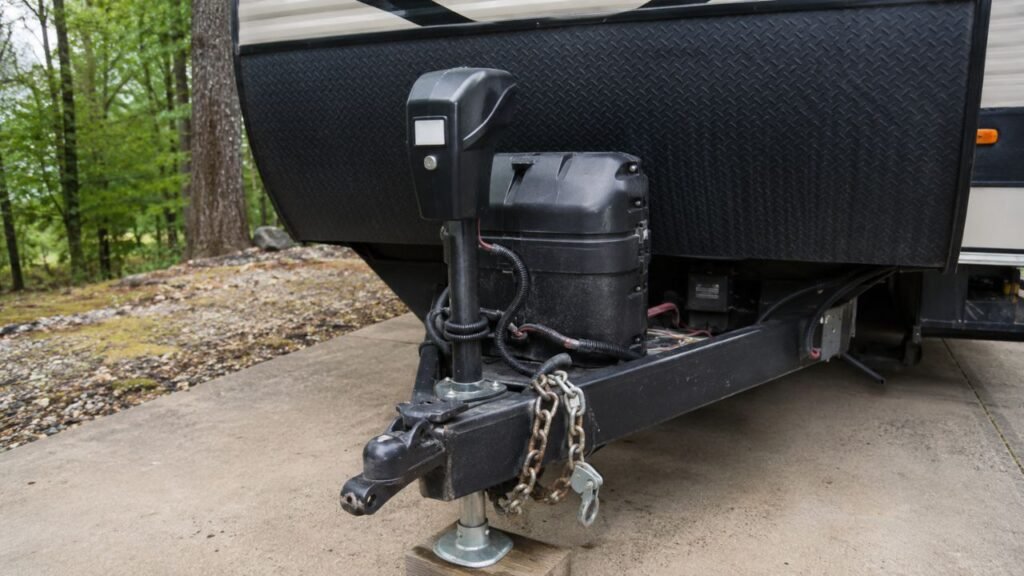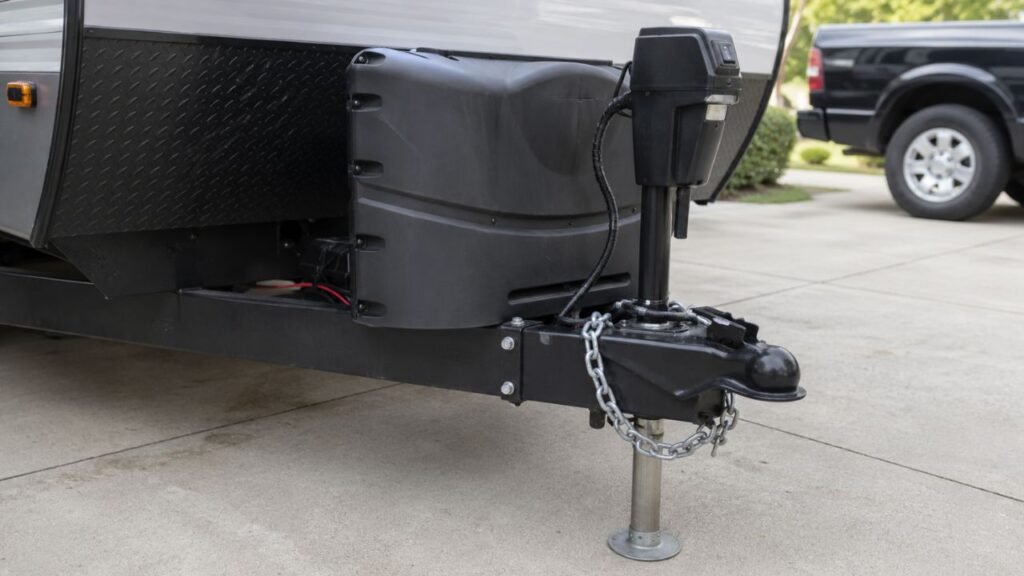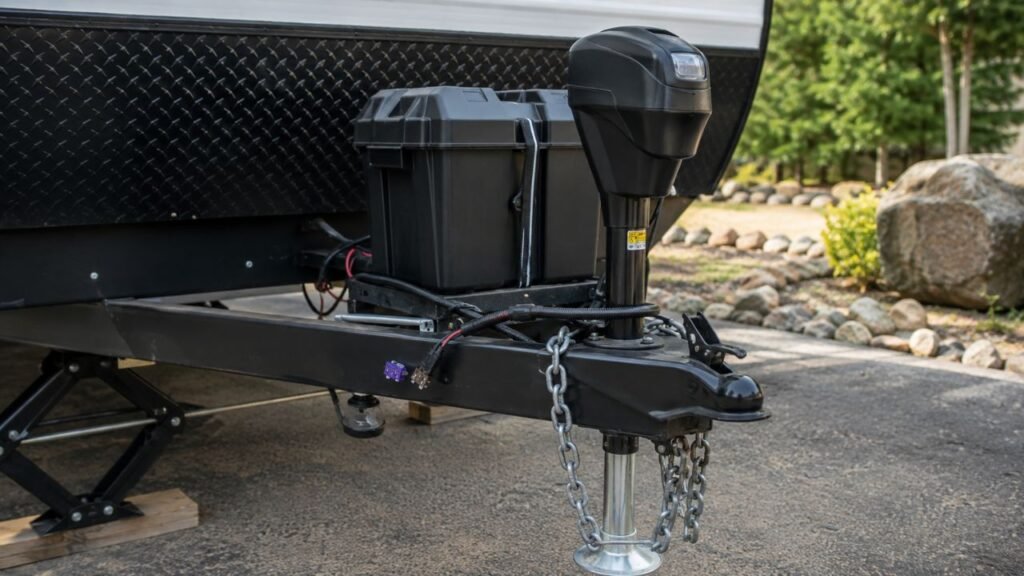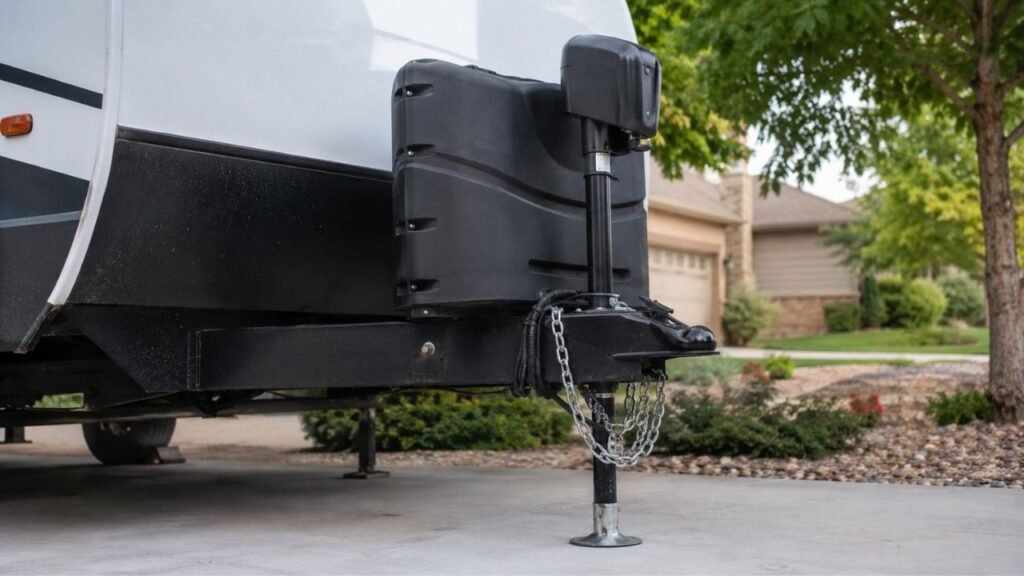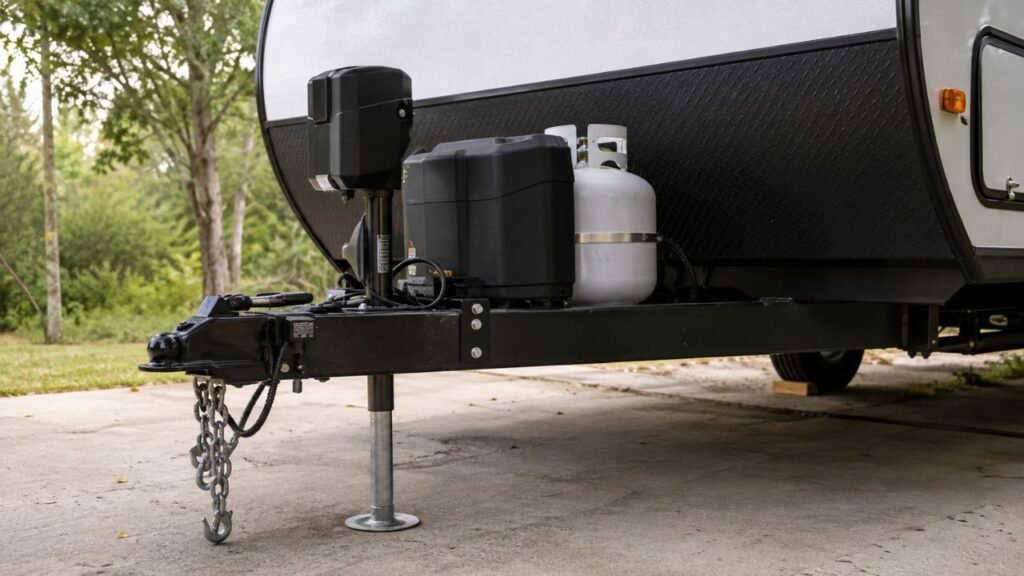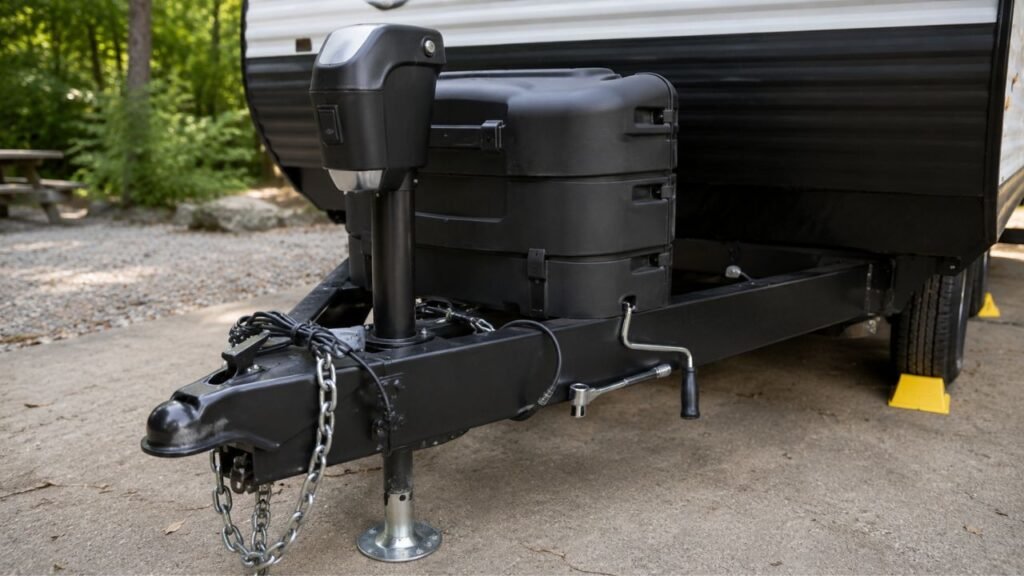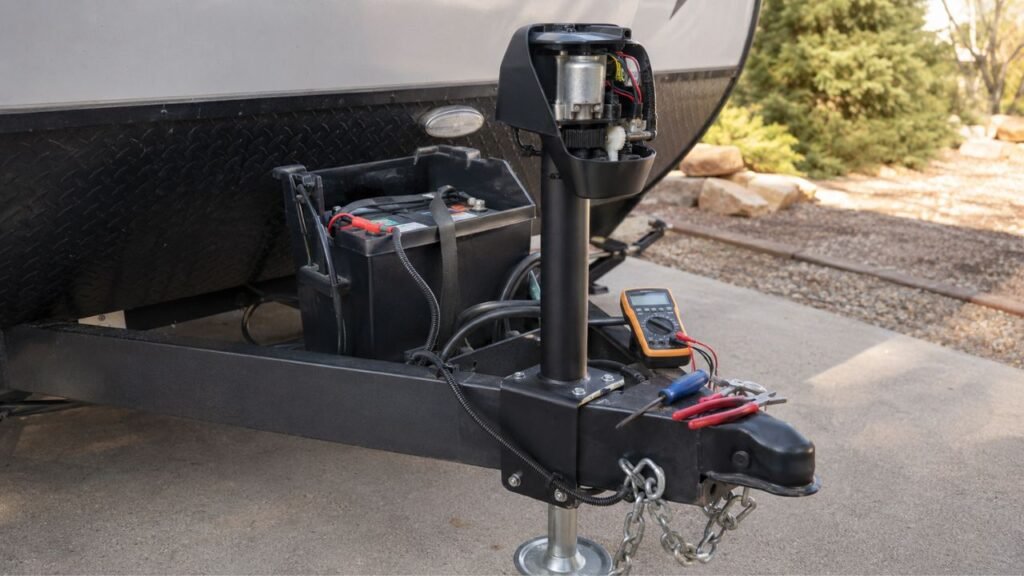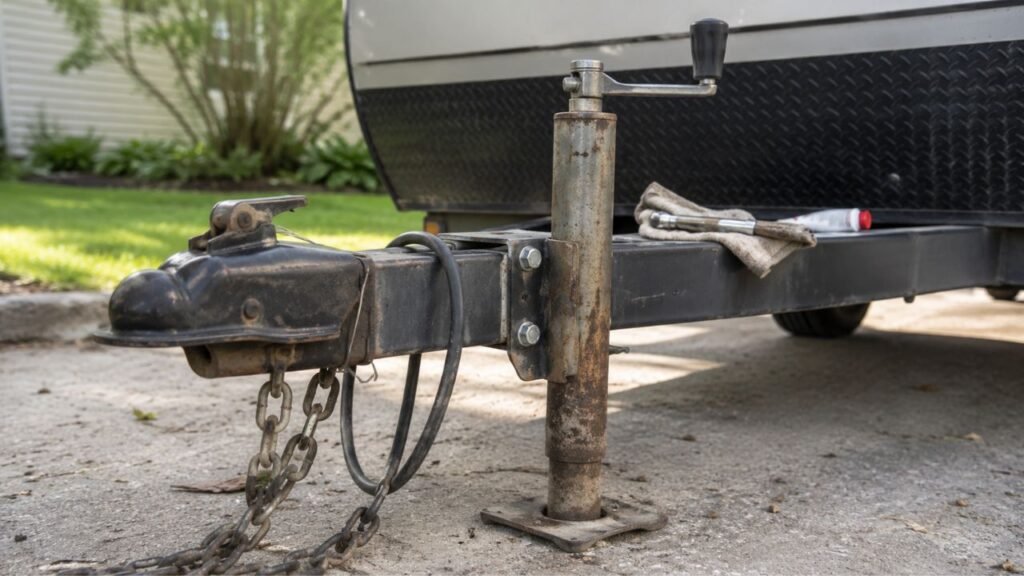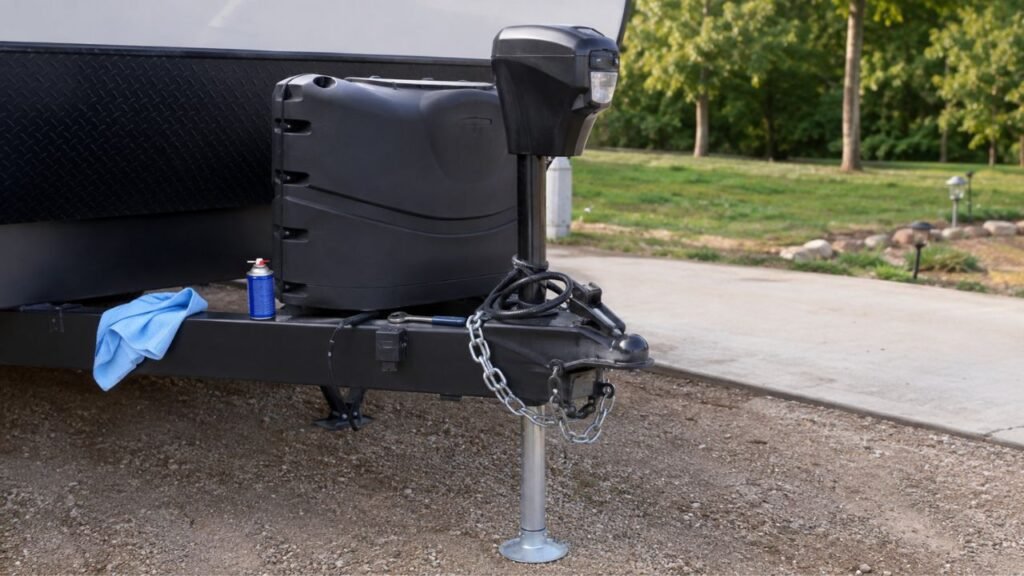
You maintain an electric trailer jack by keeping the moving parts clean, lubricating them according to the manufacturer’s instructions, checking wiring and grounding, tightening mounting hardware, and protecting the motor head from moisture. A quick inspection before trips and a more thorough service every six to twelve months can prevent many common jack problems.
The good news is that electric trailer jack maintenance is usually simple. I’ll walk you through the mechanical, electrical, and weather-related checks that matter most, including what you should and shouldn’t lubricate.
Key Takeaways
- Inspect the jack before towing for damage, rust, or loose hardware.
- Keep the exposed inner tube clean before retracting the jack.
- Lubricate the jack only with manufacturer-approved products.
- Do not assume every jack needs internal grease.
- Check battery connections, wiring, fuse holders, and grounding regularly.
- Protect the motor head and switches from prolonged weather exposure.
- Never repeatedly hold the switch after reaching full travel.
- Keep the manual override crank or correct socket inside your trailer.
- Clean the jack sooner after road salt, mud, or coastal exposure.
Electric Trailer Jack Maintenance Schedule
You don’t need to completely service your electric jack every weekend. However, a few quick inspections throughout the year can prevent corrosion, electrical problems, and premature mechanical wear.
| Maintenance Interval | What You Should Do |
| Before each trip | Check operation, mounting hardware, wiring, tube, and footplate |
| After mud or road salt | Clean and dry the exposed jack components |
| Every 3–6 months | Inspect wiring, battery terminals, fuse holder, and ground |
| Every 6–12 months | Clean and lubricate the exposed inner tube as recommended |
| Once a year | Perform a complete mechanical and electrical inspection |
| Before storage | Clean, dry, cover, and test the manual override |
| Whenever operation changes | Investigate unusual noise, slowing, clicking, or binding |
Think of this schedule as a practical starting point. Your jack’s owner’s manual should always take priority if it gives different maintenance intervals.
Check Your Jack’s Manual Before Lubricating Anything
This is probably the most important maintenance rule in this entire guide. Electric trailer jacks may look similar from the outside, but their internal lubrication requirements can be very different.
Why Electric Jack Lubrication Methods Differ
Some electric trailer jacks have mostly sealed internal mechanisms. Others have serviceable gears, grease fittings, or accessible lead screws.
One manufacturer may tell you to lubricate only the exposed inner leg. Another may provide a grease fitting specifically for the internal screw.
That means you shouldn’t remove the motor cover simply because you saw someone grease another jack online.
First, identify your jack’s brand and model. Then check its maintenance instructions before opening anything.
Basic Maintenance Supplies to Keep on Hand
You don’t need an entire workshop to maintain your jack. A small collection of basic supplies is usually enough.
- Clean shop towels or microfiber cloths
- Mild automotive or general-purpose cleaner
- Silicone or manufacturer-approved spray lubricant
- Correct grease if your jack specifically requires it
- Small wire brush
- Basic wrench and socket set
- Electrical contact cleaner if appropriate
- Spare fuse of the correct rating
- Weather-resistant jack cover
- Manual override crank or correct socket
Avoid buying a heavy grease and assuming it belongs everywhere. Using the wrong lubricant can attract dirt or interfere with parts that were designed to remain relatively clean.
Step 1: Inspect the Electric Trailer Jack
Start with a visual inspection before cleaning anything. You’re looking for problems that could make continued operation unsafe or cause additional damage.
Stand in front of the jack and make sure it appears straight. Look for dents, bending, deep rust, peeling coating, or damage around the mounting flange.
Inspect the motor housing for cracks or signs of water entry. Check the switches, rubber boots, light housing, and manual override cap.
Also check the lower tube and footplate. Make sure the drop-leg pin, if equipped, isn’t bent or badly worn.
Pay particular attention to:
- Bent or crooked tubing
- Loose mounting bolts
- Cracked motor housing
- Damaged switch covers
- Frayed wiring
- Rust around mounting points
- Damaged footplate
- Missing pins or clips
- Severe corrosion
- Missing manual override cover
A slightly dirty jack usually just needs cleaning. A visibly bent jack is a completely different situation and deserves closer inspection before you continue using it.
Step 2: Clean the Jack and Exposed Inner Leg
Cleaning matters because the exposed inner tube moves back inside the outer jack housing. Dirt, grit, and road salt left on that surface can increase wear and encourage corrosion.
How to Clean the Inner Jack Tube
First, park the trailer securely and chock the wheels.
Extend enough of the jack leg to expose the area that normally slides inside the outer tube. Don’t exceed the jack’s normal operating limits.
Wipe away loose dust and dirt with a clean cloth.
If there is stubborn road grime, use a mild cleaner that won’t damage the jack’s finish. Avoid aggressive chemicals around electrical components and seals.
Once clean, dry the tube thoroughly.
Run your hand carefully around the visible surface. Look for rough spots, corrosion, scratches, pitting, or anything that could cause binding.
Clean More Often After Road Salt, Mud, or Coastal Use
Don’t wait until your annual maintenance day if the jack has been covered in road salt.
Salt can accelerate corrosion quickly, especially around mounting hardware, exposed steel, electrical terminals, and chipped paint.
The same applies after towing through mud, wet gravel roads, or coastal areas.
A simple rinse and wipe-down soon after exposure can save you much more work later.
Just avoid blasting electrical switches or the motor housing with high-pressure water.
Step 3: Lubricate the Jack Correctly
Lubrication reduces friction and helps protect moving metal surfaces. However, using too much lubricant or applying it in the wrong place can create problems instead of solving them.
Lubricating the Exposed Inner Tube
After cleaning and drying the inner tube, apply the lubricant recommended by your jack manufacturer.
Many electric tongue jacks use a light silicone-type lubricant on exposed telescoping surfaces.
Apply only a light coating.
You don’t want the tube dripping with lubricant. A heavy sticky layer can collect dust, sand, and road grit.
After applying the lubricant, operate the jack through part of its normal travel. This helps spread the lubricant over the working surface.
Wipe away obvious excess afterward.
Lubricating a Jack With a Grease Fitting
Some electric jacks have an actual grease fitting designed for internal lubrication.
If your jack has one, follow the manufacturer’s instructions carefully.
Don’t assume more grease is better.
A few pumps may be all the manufacturer recommends. Excessive grease can create unnecessary pressure or make a mess inside the housing.
You should also use the correct grease type specified for that particular jack.
If you aren’t certain whether a fitting is intended for routine greasing, check the manual before using it.
Should You Grease the Internal Gears?
Only if your jack’s manufacturer specifically tells you to.
This is where a lot of electric trailer jack maintenance advice becomes too general.
Some jacks have serviceable gears and lead screws. Others aren’t designed for owners to open the motor housing during routine maintenance.
Removing covers unnecessarily can damage seals or introduce dirt and moisture.
So don’t automatically remove the power head and pack the gears with grease.
If the owner’s manual gives a gearbox lubrication procedure, follow it. Otherwise, leave the internal mechanism alone.
What Should You Avoid Using?
Be cautious with random penetrating oils and thick grease.
Avoid:
- Packing exposed tubes with thick grease
- Pouring lubricant into the motor housing
- Spraying lubricant directly into electrical switches
- Mixing several different grease types
- Opening sealed housings without instructions
- Forcing grease into holes that aren’t grease fittings
The goal is smooth operation, not coating every visible component with lubricant.
Step 4: Maintain the Jack’s Electrical System
An electric trailer jack is still an electrical appliance sitting outside on the front of your trailer. Mechanical maintenance alone won’t prevent failures caused by weak power, corrosion, or poor connections.
Inspect the Battery Connection
Follow the jack’s positive power wire back toward the trailer battery.
Check where the wire connects to the battery terminal or distribution point.
The connection should be secure, clean, and free from white, blue, or green corrosion.
Loose or corroded terminals can create voltage drop. That may make a healthy jack seem weak or slow.
If corrosion is present, disconnect power safely before cleaning the terminal.
Reconnect everything securely afterward.
Inspect the Inline Fuse and Fuse Holder
Many electric trailer jacks use an inline fuse near the power source.
Open the fuse holder and inspect it.
Look for:
- Corrosion on the fuse blades
- Loose contacts
- Melted plastic
- Frayed wiring
- Water inside the holder
- A fuse that doesn’t fit securely
Always replace a fuse with the correct rating for your specific jack.
Never install a larger fuse just because the original keeps blowing.
Repeatedly blown fuses usually mean something else needs attention.
Check the Power Wire
Follow as much of the power wire as you can see.
Trailer wiring can rub against the frame, battery box, propane tray, or other hardware.
Look for:
- Chafed insulation
- Cuts
- Pinched areas
- Stretched wiring
- Loose connectors
- Sections rubbing against sharp metal
Repair damaged wiring before it develops into an intermittent failure or short circuit.
Check the Jack Ground
A poor ground connection can cause slow operation, clicking, or complete failure.
Some electric tongue jacks ground through their mounting hardware rather than a separate ground wire.
That means the mounting surface must maintain good electrical contact.
Rust, thick paint, corrosion, or loose bolts can increase resistance.
If your jack uses the mounting flange as its ground, inspect the connection carefully.
Don’t remove protective coatings unnecessarily. Instead, follow your manufacturer’s grounding method.
Inspect the Switches and Rubber Boots
Your jack’s up/down switch spends its life exposed to sunlight, rain, dust, and temperature changes.
Inspect the rubber switch boot for cracks or tears.
Make sure the switch moves freely without sticking.
Also check any built-in light switch and LED housing.
If you see moisture around the controls, address the problem before water works deeper into the power head.
Step 5: Inspect the Mounting Bolts, Tube, and Footplate
The jack supports substantial tongue weight, so its structural components matter just as much as its motor.
Check each mounting bolt for looseness and corrosion.
If the jack begins leaning slightly, don’t assume that’s normal. Find out whether the mounting plate, frame, bolts, or jack tube is causing the movement.
Inspect the outer and inner tubes for dents or bending.
A tube that binds at one particular point may have suffered impact damage.
Also inspect the footplate or removable drop leg. Make sure its pin fits securely and the holes aren’t badly elongated.
A damaged footplate should be repaired or replaced before it fails under load.
Severely bent structural components generally shouldn’t be straightened casually and returned to service. Replacement is often the safer solution.
Step 6: Protect the Motor Head From Water and Weather
Most electric trailer jacks are built for outdoor use, but that doesn’t make them immune to years of rain, sunlight, snow, dirt, and freeze-thaw cycles.
A simple weather-resistant jack cover can provide extra protection when the trailer is parked.
Pay attention to the smaller sealing points too.
- Keep the manual override cap installed.
- Replace damaged rubber plugs.
- Replace torn switch boots.
- Don’t leave electrical connectors exposed.
- Keep standing water away from the power head.
- Check the housing after severe storms.
- Dry the jack before covering it for long storage.
A cover should protect the jack without trapping moisture against the housing.
If the inside of the cover constantly stays wet, remove it periodically and let everything dry.
Step 7: Test the Jack After Maintenance
Once you’ve inspected and cleaned everything, operate the jack. A functional test can reveal problems that aren’t obvious during a visual inspection.
Run the Jack Up and Down
Operate the jack through a reasonable portion of its travel.
Pay attention to how it sounds and feels.
A healthy jack should move relatively smoothly and consistently.
Listen for:
- Grinding
- Clicking
- Scraping
- Sudden motor speed changes
- Excessive vibration
- Binding
- Unusual squealing
Don’t repeatedly hold the switch once the jack reaches the end of its normal travel.
Stalling the motor unnecessarily creates heat and puts extra stress on gears, wiring, and electrical components.
If the jack suddenly sounds different than it did before, investigate before continuing to load it heavily.
Test the Manual Override
Your manual override isn’t something you want to discover for the first time when the battery is dead at a campsite.
Locate the manual override access point.
Make sure the protective cap can actually be removed.
Then confirm that you have the correct crank handle or socket.
Store that tool somewhere you can reach even if the trailer has no electrical power.
You don’t necessarily need to manually raise the trailer during every maintenance session. The important part is confirming that the equipment is present and accessible.
Maintenance Habits That Make an Electric Trailer Jack Last Longer
Proper maintenance helps, but the way you operate the jack every day matters just as much.
- Stay within the jack’s rated lifting capacity.
- Fully retract the jack before towing.
- Don’t drive with the jack partially extended.
- Avoid pushing sideways against the jack.
- Don’t repeatedly run the motor against its travel stop.
- Use a drop leg correctly when your jack has one.
- Keep the trailer battery properly charged.
- Clean road salt off promptly.
- Avoid repeatedly lifting more trailer weight than necessary.
- Use wheel chocks before working around the hitch.
- Don’t treat the tongue jack like a stabilizer jack.
- Stop using the jack if it becomes visibly bent.
A motor that constantly works at its limit will usually wear faster than one that operates within its intended range.
Common Electric Trailer Jack Maintenance Mistakes
Some maintenance habits actually shorten jack life. These are the mistakes I would avoid.
- Greasing internal parts without checking the manual
- Using thick grease on exposed telescoping surfaces
- Ignoring battery terminal corrosion
- Installing a larger fuse after repeated fuse failures
- Retracting the leg while it’s covered in mud
- Leaving torn switch boots unrepaired
- Ignoring loose mounting bolts
- Continuing to operate a bent jack
- Holding the switch after reaching full travel
- Spraying water directly into the motor housing
- Losing the manual override crank
- Assuming slow operation is always a bad motor
A little restraint helps here. Good maintenance means servicing what needs attention rather than taking the entire jack apart.
Signs Maintenance Is No Longer Enough
Routine cleaning and lubrication can prevent many problems. However, they cannot reverse serious wear, structural damage, or electrical failures.
| Symptom | Possible Cause | What to Do |
| Jack runs much slower | Low voltage, poor connection, excessive load, or friction | Check electrical supply and mechanical condition |
| Grinding during movement | Gear, screw, or internal wear | Stop and investigate before continued use |
| Jack clicks but won’t move | Electrical or mechanical failure | Troubleshoot the power and drive system |
| Fuse keeps blowing | Short circuit, overload, binding, or motor problem | Find the cause before installing more fuses |
| Tube is visibly bent | Structural damage | Stop using and evaluate replacement |
| Jack stops under load | Voltage drop, overload, heat, or binding | Diagnose before repeated use |
| Severe pitting or corrosion | Advanced rust damage | Evaluate structural integrity |
| Water inside power head | Damaged seal or housing | Dry, inspect, and repair before use |
Don’t keep forcing a struggling jack because it still moves occasionally.
Intermittent problems often become complete failures at the worst possible time.
A Simple 10-Minute Electric Trailer Jack Maintenance Routine
If you don’t want to turn maintenance into an afternoon project, this short routine covers the essentials.
- Inspect the jack housing and tubes.
- Check the mounting bolts.
- Inspect the footplate and drop-leg pin.
- Clean the exposed inner tube.
- Apply the recommended lubricant.
- Inspect the battery connection.
- Check the inline fuse and wiring.
- Inspect the jack’s ground connection.
- Run the jack and listen for abnormal sounds.
- Confirm the manual override tool is inside the trailer.
You can do this quick check periodically and save the deeper maintenance for your annual trailer service.
Final Words
Maintaining an electric trailer jack isn’t complicated. The biggest thing is paying attention before small issues become big ones.
Keep the leg clean, maintain good electrical connections, protect the power head, and inspect the mounting hardware regularly.
Most importantly, don’t assume every electric jack needs the same grease or internal service. Check your specific owner’s manual before opening the housing or lubricating the internal screw and gears.
A few minutes of maintenance can help your jack operate more smoothly and reduce the chance of being stuck with a dead tongue jack when you’re trying to hitch up.
Related FAQs
How Often Should You Lubricate an Electric Trailer Jack?
Many electric trailer jacks benefit from cleaning and lubrication every six to twelve months, but the exact interval depends on the manufacturer. You should also clean and relubricate sooner after heavy dirt, road salt, or harsh weather exposure.
What Lubricant Should I Use on an Electric Trailer Jack?
Use the lubricant recommended for your specific jack. Many manufacturers recommend a light silicone lubricant on exposed inner tubing, while certain serviceable models may require chassis grease or another specified grease for internal components.
Can I Use WD-40 on an Electric Trailer Jack?
Standard WD-40 can help displace moisture or loosen light corrosion, but it shouldn’t automatically replace the lubricant specified by your jack manufacturer. Use the proper long-term lubricant for the tube, screw, or gears.
Should I Grease the Screw Inside an Electric Trailer Jack?
Only grease the internal screw if your jack’s maintenance instructions tell you to. Some jacks have serviceable lead screws or grease fittings, while others aren’t intended to be opened during routine owner maintenance.
Do Electric Trailer Jacks Need to Be Covered?
A cover isn’t always mandatory, but it can help protect the motor housing, switches, lights, and manual override opening from prolonged rain, sunlight, dust, and snow while the trailer is parked.
How Do I Keep My Electric Trailer Jack From Rusting?
Keep the jack clean and dry, remove road salt quickly, maintain damaged paint or protective coatings, and lubricate exposed moving surfaces as recommended. Pay particular attention to mounting hardware and areas where moisture collects.
Should I Disconnect the Battery Before Maintaining an Electric Trailer Jack?
Disconnecting power is a good idea whenever you’re servicing wiring, electrical connections, switches, or internal components. Follow your jack manufacturer’s instructions, especially before opening the motor or gearbox housing.
Why Is My Electric Trailer Jack Getting Slower?
A slow electric trailer jack may have a weak battery, voltage drop, corroded connections, excessive tongue load, dirty moving surfaces, or internal mechanical wear. Check the electrical supply and mechanical condition before assuming the motor has failed.
How Long Should an Electric Trailer Jack Last?
There isn’t one reliable lifespan for every electric trailer jack. Longevity depends on load, frequency of use, weather exposure, corrosion, battery condition, lubrication, and whether the jack is operated within its rated capacity.

Ryan Mitchell writes for readers who prefer independent travel and practical outdoor motorhome living. His how-to guides and reviews focus on simplicity, durability, and real value. He brings a calm, hands-on perspective to every topic.