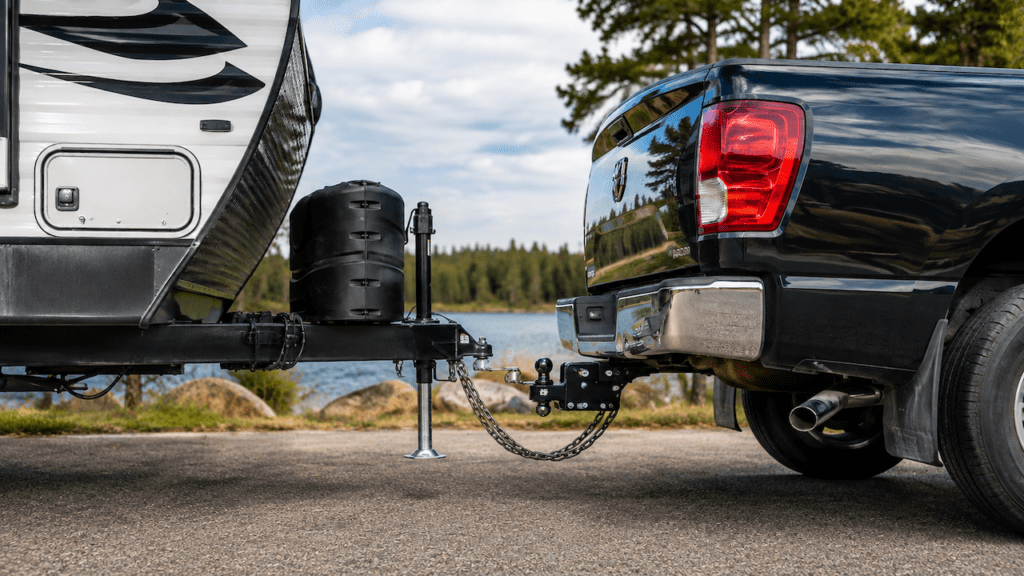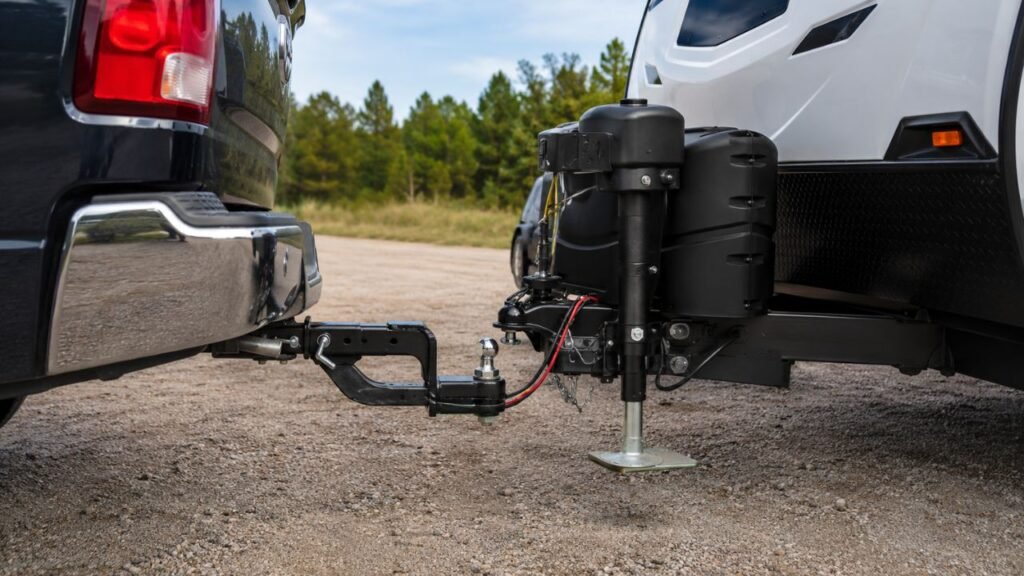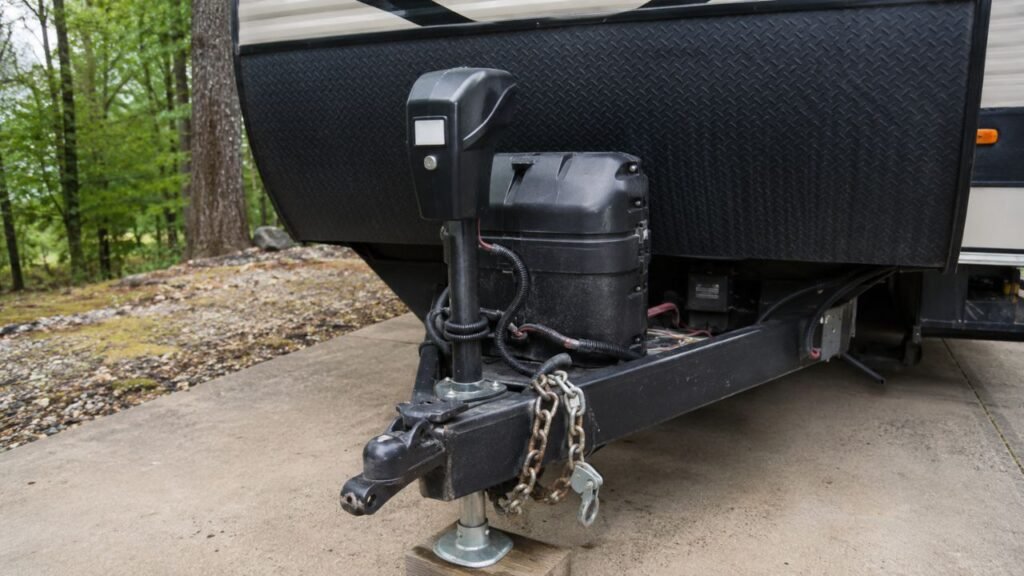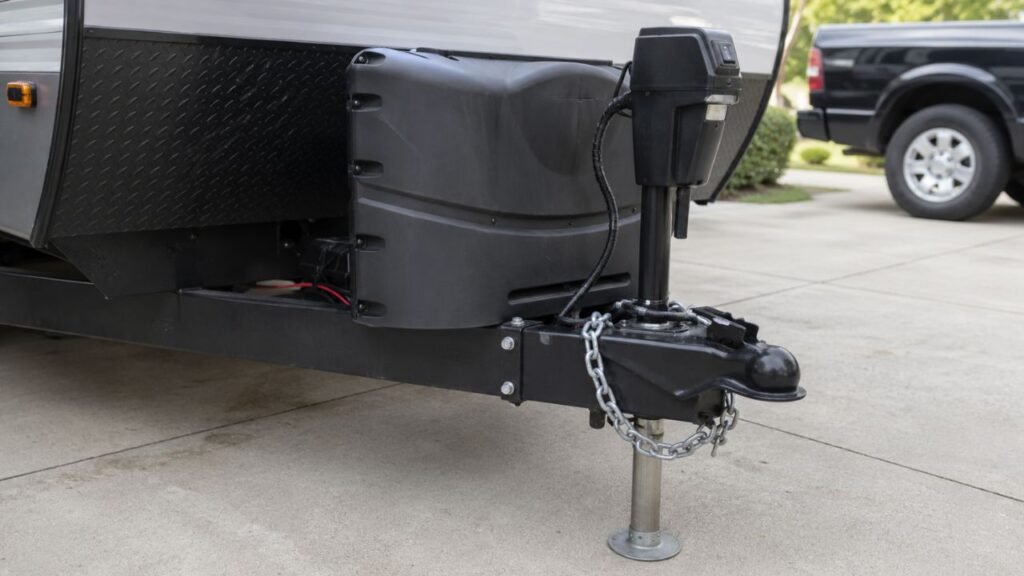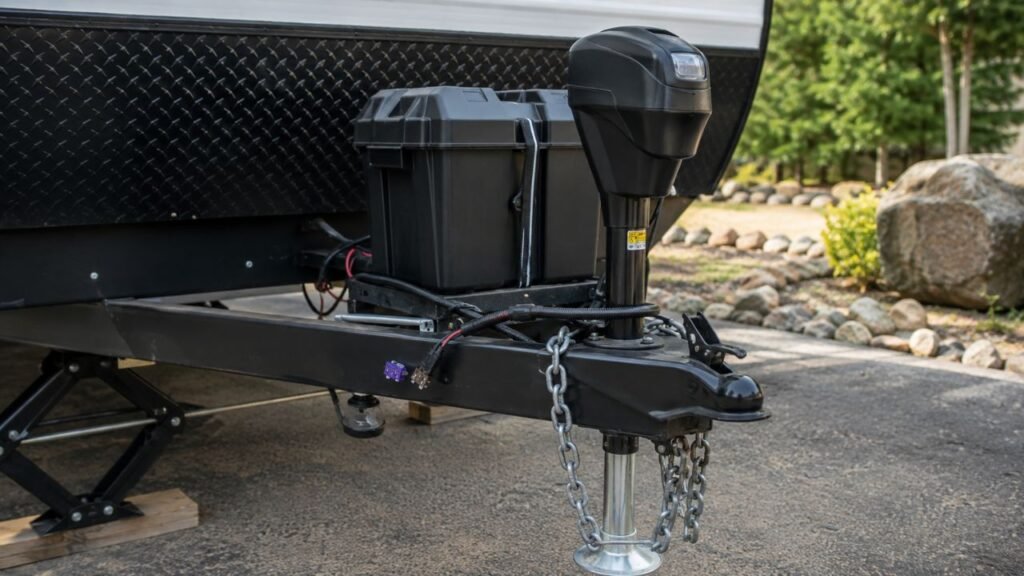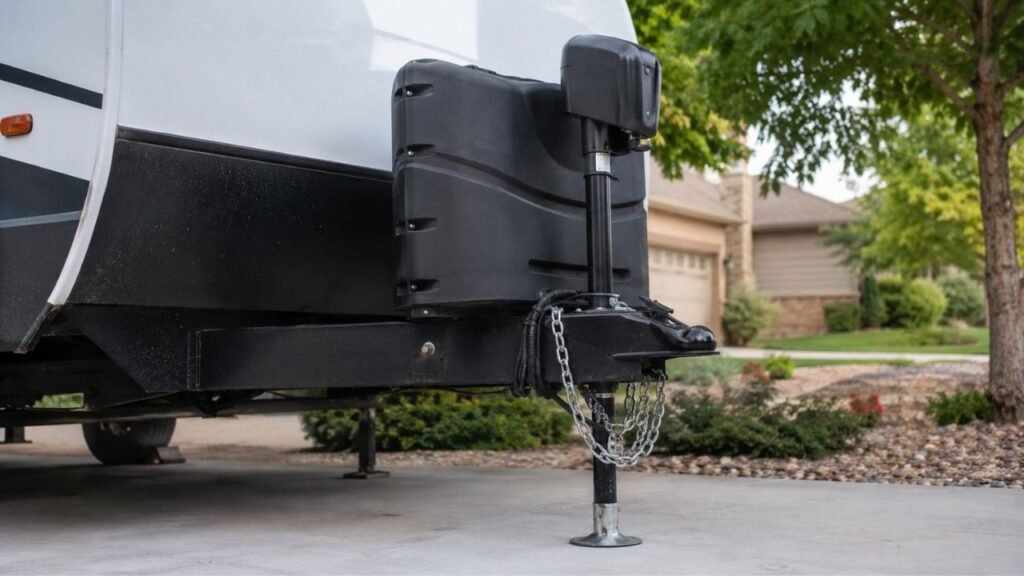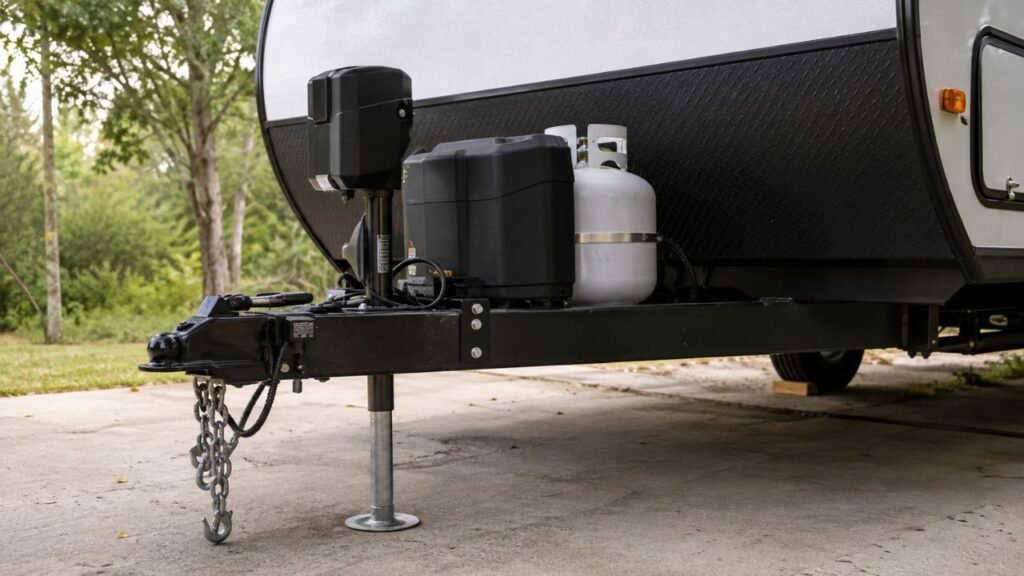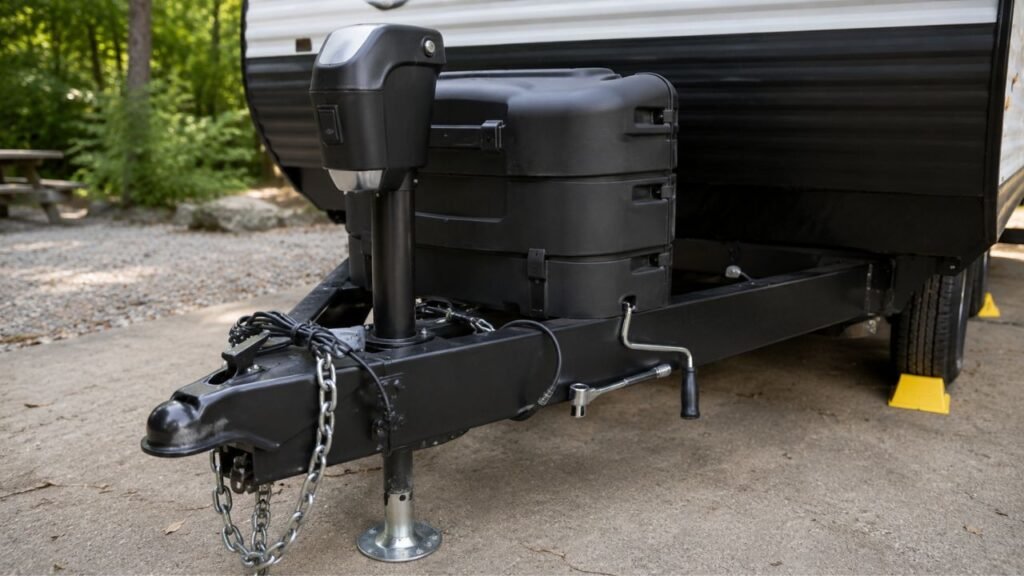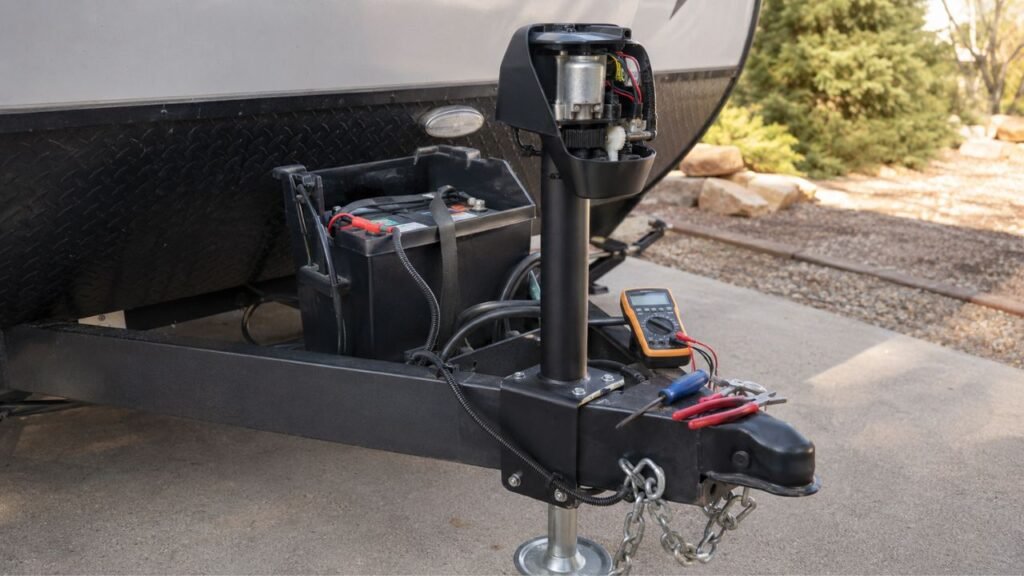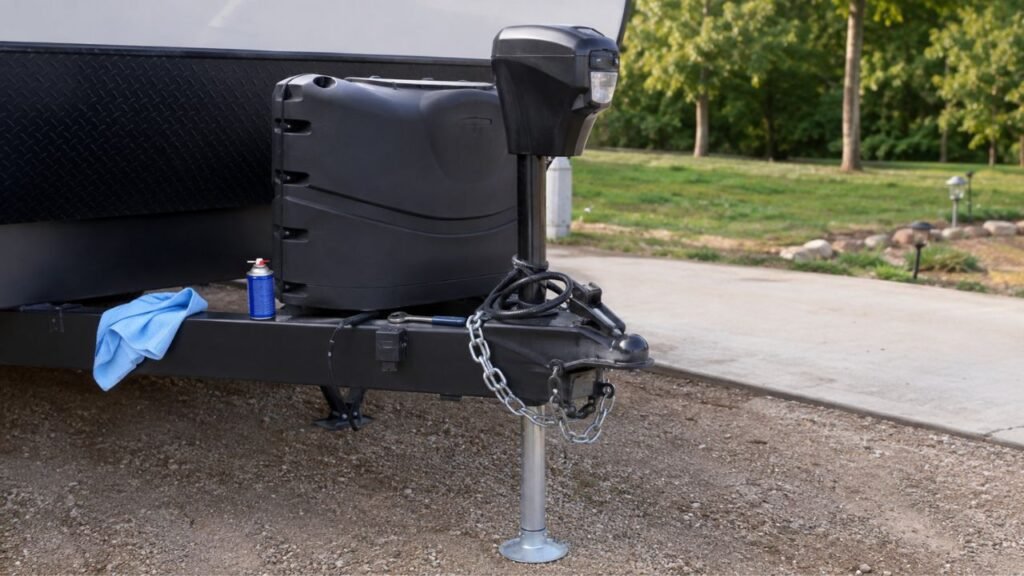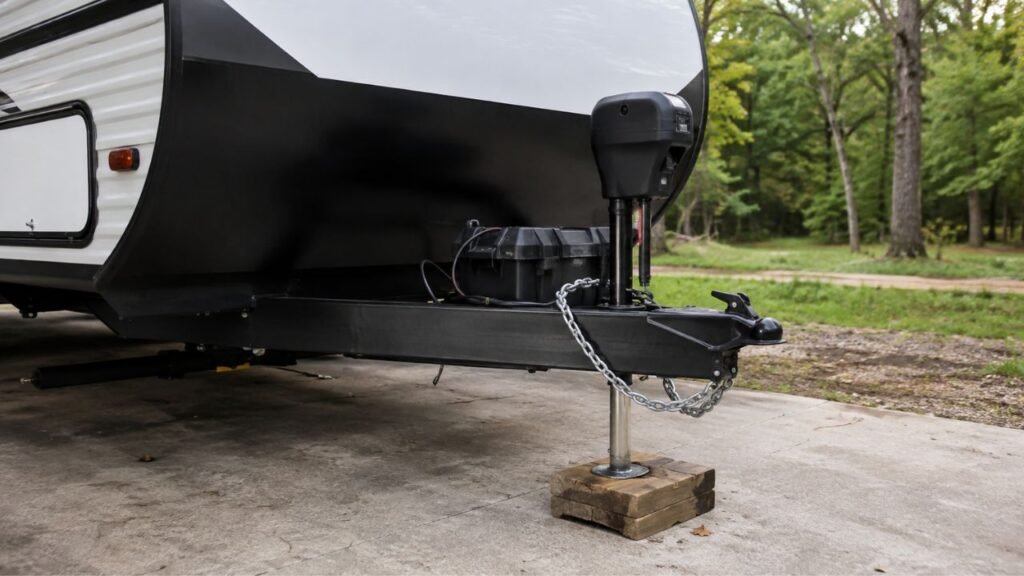
A trailer jack slowly drops when it can no longer hold the trailer load securely. Common causes include hydraulic pressure bypass, leaking valves or seals, worn gears, damaged screw threads, overloading, or a jack foot slowly sinking into soft ground.
In this guide, I’ll help you figure out what is actually moving, identify the likely cause based on your jack type, and decide whether you can fix the problem or need a replacement.
Key Takeaways
- A trailer jack that keeps lowering under load needs attention.
- First confirm the jack is retracting instead of sinking into the ground.
- Hydraulic jacks commonly drop because pressure escapes internally.
- Electric and manual jacks may slip because of worn mechanical parts.
- Overloading can accelerate gear, screw, seal, and valve wear.
- Never work beneath a trailer supported only by its jack.
- Replace a jack if it cannot reliably hold the trailer load.
Why Does My Trailer Jack Slowly Drop?
A trailer jack can slowly drop for several reasons. The most likely cause depends on whether you have a hydraulic, electric, or manual jack.
| Possible Cause | Common Jack Type | What You May Notice | Likely Solution |
| Hydraulic fluid bypass | Hydraulic | Jack slowly creeps downward | Inspect cylinder and valves |
| Valve not sealing | Hydraulic | Jack drops while parked | Service or replace valve |
| External fluid leak | Hydraulic | Oil around fittings or cylinder | Repair leak |
| Worn screw or nut | Electric/manual | Jack slips under load | Repair or replace parts |
| Damaged gears | Electric/manual | Clicking or skipping | Replace gears or jack |
| Overloaded jack | Any lifting jack | Drops with heavier tongue load | Reduce load or upgrade jack |
| Worn drop-leg pin | Drop-leg jack | Inner leg moves unexpectedly | Replace worn pin or leg |
| Soft ground | Any | Trailer lowers but jack length stays same | Use a larger jack pad |
A slowly dropping jack is not always completely broken. However, continuous movement usually means something is no longer holding the load properly.
First, Make Sure the Jack Is Actually Dropping
Before taking the jack apart, confirm that the jack itself is shortening. Sometimes the trailer moves because the ground, mounting hardware, or jack block is settling.
Check Whether the Jack Leg Is Retracting
Start by parking the trailer on firm and level ground. Chock the trailer wheels before doing anything around the tongue.
Extend the jack normally, then place a small piece of painter’s tape on the exposed inner tube. You can also measure the distance between the jack housing and foot.
Check the measurement again after 20 or 30 minutes.
If the exposed jack leg becomes shorter, the jack is actually retracting.
You can repeat the test after several hours if the movement is extremely slow.
Check Whether the Jack Foot Is Sinking
Soft ground can easily look like jack failure.
Gravel may compress, wet soil can shift, and even hot asphalt may slowly deform under a heavily loaded jack foot.
Look around the jack pad for:
- Crushed gravel
- Soft soil
- Tilted blocks
- Indentations in asphalt
- Split or compressed wood
Try placing the jack on a wider, solid jack pad.
If the trailer stops dropping, the jack may be working normally.
Check for Trailer or Mounting Movement
The jack may stay extended while another component shifts.
Inspect the mounting area for loose bolts, cracks, bending, or movement.
Also check:
- Swivel-jack brackets
- Drop-leg pins
- Mounting plates
- Welds
- Jack feet
- Trailer tongue structure
If the mounting point moves, repairing the jack alone will not solve the problem.
How Much Trailer Jack Drop Is Normal?
A very small amount of initial settling can happen after placing weight on a jack. Ground compression, movement in jack blocks, and minor mechanical clearance can create a slight change in height.
What should concern you is continuous movement.
If the trailer keeps lowering every hour, drops noticeably overnight, or needs repeated adjustment, something is wrong.
A properly functioning trailer jack should hold its intended load without steadily retracting.
Why Does a Hydraulic Trailer Jack Slowly Drop?
A hydraulic jack holds weight by keeping hydraulic fluid trapped under pressure. If that pressure escapes through a valve, cylinder, fitting, or internal passage, the jack may slowly creep downward.
The Release Valve Is Not Fully Closed
Check the release or manual override valve first.
A valve that remains slightly open can allow fluid to return slowly.
This may happen because the valve was not fully tightened after manual operation.
Dirt can also prevent the valve from sealing completely.
If your jack has a manual release procedure, make sure the valve is returned to the manufacturer’s normal operating position.
Do not overtighten it.
A Check Valve Is Leaking Internally
Hydraulic systems often use valves to prevent fluid from flowing backward once the jack stops moving.
If a check valve becomes worn, dirty, or damaged, fluid may slowly pass through it.
The result can be a jack that works normally when extending but gradually lowers afterward.
You usually will not see an external oil leak when this happens.
That is why a completely dry hydraulic system can still suffer from internal pressure loss.
Hydraulic Fluid Is Bypassing Inside the Cylinder
Internal cylinder leakage is another possibility.
A hydraulic cylinder contains seals that help keep pressure on the correct side of the piston.
As those seals wear, fluid may begin moving where it should not.
The jack may still lift normally but struggle to maintain the same position under load.
This type of problem usually requires proper testing before replacing the cylinder.
The Cylinder, Hose, or Fitting Is Leaking
External leaks are easier to identify.
Inspect the entire hydraulic circuit and look for:
- Oil around hose fittings
- Wet areas on the cylinder
- Oily residue on the jack
- Drips beneath the trailer
- Damaged hydraulic hoses
- Falling reservoir fluid level
Even a small leak can eventually allow the jack to lose height.
Do not loosen hoses while the jack is supporting the trailer.
Contaminated Hydraulic Fluid Is Affecting the Valves
Hydraulic components depend on very small internal clearances.
Dirty or contaminated fluid can prevent a valve from sealing properly.
Debris may also damage seals over time.
If your fluid looks unusually dark, dirty, foamy, or contaminated, follow the manufacturer’s maintenance procedure.
Do not mix hydraulic fluids unless your system specifically allows it.
Air Is Trapped in the Hydraulic System
Air usually causes different symptoms than a simple internal leak.
You may notice:
- Jerky movement
- Spongy operation
- Uneven extension
- Unusual pump noise
- Erratic jack movement
Air can affect system performance, but I would not automatically blame trapped air when a jack continually drops while sitting still.
If the jack keeps creeping downward, you should also check for internal or valve leakage.
Why Does an Electric Trailer Jack Slowly Drop?
An electric jack uses electrical power to move the motor, but mechanical components inside the jack carry and transfer the load. If those components wear out, the jack may slip after the motor stops.
The Internal Screw or Nut Is Worn
Most electric tongue jacks rely on some type of screw-driven mechanism.
The motor turns the internal drive system, which raises or lowers the jack leg.
Over time, the screw or nut may wear.
This creates excessive internal play and reduces the jack’s ability to hold heavy loads.
You may notice the jack works better without much weight but slips when supporting the trailer.
At that point, lubrication alone will not repair worn threads.
Internal Gears Are Worn or Damaged
Electric jacks also contain gears that transfer motor power to the lifting mechanism.
Those gears can wear, crack, or strip.
Common signs include:
- Clicking
- Grinding
- Skipping
- Uneven movement
- Motor turning without full jack movement
- Jack slipping backward under load
If you hear repeated clicking while the trailer slowly drops, internal gear damage becomes more likely.
The Jack Was Overextended
Running a jack to the very end of its travel repeatedly puts extra stress on internal parts.
Some jacks include protective stops or clutches. Others are less forgiving.
Hard overextension can damage gears, screw threads, or drive components.
Try to avoid using the last bit of jack travel whenever possible.
A taller jack block can reduce the amount of extension needed.
The Jack Is Overloaded
A jack that handles a lighter trailer normally may struggle when overloaded.
That does not always mean the trailer itself exceeds its GVWR.
The important number is the amount of weight actually being applied to the jack.
Extra stress may occur when:
- Tongue weight is unusually high
- Cargo is concentrated toward the front
- The jack is undersized
- You lift the rear of the tow vehicle during hitch setup
- The trailer sits on a steep angle
Overloading can damage gears and screw components even before the jack completely fails.
Is a Weak Battery Causing the Jack to Drop?
Usually, not directly.
A weak battery or poor electrical connection can make an electric jack:
- Run slowly
- Stop under load
- Sound strained
- Move intermittently
However, once you release the switch, the electrical system is no longer actively raising the trailer.
If the jack then begins creeping downward, I would inspect the mechanical holding components rather than blaming the battery first.
Battery problems affect operation speed more often than static load holding.
Why Does a Manual Trailer Jack Slowly Lower Itself?
Manual trailer jacks do not have motors or batteries, but they still depend on gears, screw threads, pins, and other mechanical parts to hold weight.
The Jack Screw or Nut Is Worn
The internal screw and nut carry a large amount of force.
Years of use, poor lubrication, corrosion, and overloading can gradually wear their threads.
Once wear becomes severe, the mechanism may develop enough play to slip.
You may also feel unusual looseness while turning the handle.
If the threads are badly damaged, replacing the worn parts or entire jack is usually safer than continuing to use it.
The Drive Gears Are Damaged
Many manual trailer jacks use gears near the crank handle.
These gears can wear or break.
You may feel the crank suddenly become easier, harder, or inconsistent.
Clicking or skipping while turning the handle also points toward gear problems.
Inspect serviceable gears if your jack manufacturer provides replacement parts.
The Drop-Leg Pin Is Not Fully Engaged
Drop-leg jacks deserve a separate check.
A worn or partially engaged pin can let the lower leg shift unexpectedly.
Inspect the pin for:
- Bending
- Excessive wear
- Rust
- Damaged holes
- Weak retaining hardware
- Incomplete engagement
Never assume the pin is locked just because it looks close to the hole.
Make sure it passes fully through the intended mounting position.
Corrosion or Poor Lubrication Has Damaged Internal Parts
Dry jack screws can wear much faster than properly maintained ones.
Corrosion makes the problem worse.
You may notice:
- Rough cranking
- Binding
- Squeaking
- Rust-colored debris
- Excessive resistance
- Uneven movement
Lubrication can help prevent damage, but it cannot restore metal that has already worn away.
Could My Trailer Jack Be Overloaded?
Yes. Overloading can make a trailer jack slip, wear faster, or fail prematurely.
One common mistake is choosing a jack based only on total trailer weight.
The tongue jack normally supports the tongue portion of the trailer, not its entire loaded weight.
Still, the jack needs enough capacity for the actual load placed on it.
Keep in mind that the load may temporarily become much higher during hitching.
For example, some owners raise the trailer tongue and rear of the tow vehicle together while connecting weight-distribution spring bars.
That can put more pressure on the jack than normal parked tongue weight.
Continually working near the jack’s maximum capacity can accelerate wear in gears, screws, nuts, seals, valves, and mounting hardware.
How Can I Tell What Is Causing My Trailer Jack to Drop?
You do not need to start by disassembling the jack. A few simple checks can usually tell you which area deserves attention.
- Chock the trailer wheels. Prevent the trailer from rolling before inspecting the jack.
- Check the ground. Make sure the foot or jack block is not sinking.
- Mark the jack tube. Use tape or a washable marker to track movement.
- Measure the extension. Confirm whether the jack itself becomes shorter.
- Identify the jack type. Hydraulic, electric, and manual jacks fail differently.
- Inspect the mounting system. Look for loose bolts, damaged welds, or movement.
- Check hydraulic components. Look for wet hoses, fittings, cylinders, or reservoir loss.
- Listen to the jack. Clicking, grinding, or skipping suggests mechanical damage.
- Compare loaded and unloaded operation. A jack that slips only under load may have worn internal parts or insufficient capacity.
- Think about recent events. Overextension, heavy tongue loads, impact damage, or long-term corrosion can point you toward the cause.
- Check the manufacturer’s service instructions. Some hydraulic and electric jacks require specific diagnostic procedures.
What Your Trailer Jack’s Symptoms Can Tell You
The way your jack drops can reveal a lot about the likely cause. Use the symptoms below as a starting point rather than replacing a full inspection.
| Symptom | Likely Area to Check |
| Drops only under heavy load | Capacity, screw, gears, hydraulic bypass |
| Drops without visible fluid | Internal hydraulic or mechanical problem |
| Hydraulic oil is visible | Hose, fitting, cylinder, seal |
| Electric jack clicks while dropping | Gear or drive damage |
| Crank turns backward | Screw, nut, or gear mechanism |
| Jack leg gets shorter | Jack is actually retracting |
| Jack length stays unchanged | Ground or mounting point is settling |
| One hydraulic leg drops | Individual cylinder or valve circuit |
| Several hydraulic legs drop | Shared hydraulic circuit or valve issue |
| Jack runs slowly but holds height | Battery, wiring, friction, or lubrication |
Do not replace parts based only on one symptom. Use this table together with the earlier inspection steps.
How Do I Stop My Trailer Jack From Slowly Dropping?
The right fix depends entirely on what is allowing the trailer to lose height. Avoid replacing the jack until you have ruled out simpler problems.
Fix the Support Surface First
If the jack is not actually retracting, improve the ground support.
Use a solid jack pad large enough to spread the load.
Avoid stacking several unstable blocks.
On gravel or soft soil, a larger footprint helps prevent the pad from sinking.
Correct Hydraulic Valve Problems
If a hydraulic valve is not sealing, follow the manufacturer’s service procedure.
Sometimes dirt or contamination causes the issue.
In other situations, the valve itself may need replacement.
Do not randomly tighten hydraulic valves beyond their specified position.
Overtightening can damage them.
Repair Hydraulic Leaks or Internal Bypass
Visible leaks should be repaired before using the system normally.
Depending on the problem, this may involve:
- Replacing a hose
- Tightening or replacing a fitting
- Rebuilding a cylinder
- Replacing seals
- Servicing a check valve
- Replacing a damaged hydraulic component
Internal bypass can be harder to confirm without the correct test procedure.
If you are unsure, a trailer or RV technician can test the system safely.
Replace Worn Mechanical Components
Some electric and manual jacks can be rebuilt.
Available parts may include:
- Gears
- Bearings
- Bushings
- Pins
- Screw assemblies
- Nuts
- Gearbox components
Repair makes sense if the jack body remains straight and the required parts are available.
Replace the Jack When Internal Parts Are Not Serviceable
Many lighter electric tongue jacks are not economical to rebuild.
If internal gears, screw threads, or structural components are badly worn, complete replacement may be the better choice.
The important thing is restoring reliable load holding, not keeping an old jack operating at any cost.
Should I Repair or Replace a Trailer Jack That Keeps Dropping?
Some jack failures are inexpensive to repair, while others make replacement the safer and simpler option.
Repair the jack when:
- Replacement seals are available.
- A specific hydraulic valve has failed.
- Serviceable gears are available.
- A replaceable pin or bushing is worn.
- The jack tube remains straight.
- Repair costs remain reasonable.
Consider replacing the jack when:
- Screw threads are severely damaged.
- Internal components repeatedly slip.
- The jack tube is bent.
- Structural corrosion is extensive.
- Parts are no longer available.
- The jack is undersized for your trailer.
- Repair costs approach replacement cost.
- You no longer trust it to hold the load.
I would always prioritize predictable load holding over getting a little more life from a badly worn jack.
Is It Safe to Use a Trailer Jack That Slowly Drops?
A jack that clearly loses height under load should not be treated as reliable.
Even slow movement can become dangerous if someone is near the trailer tongue or underneath the frame.
Until you identify the cause:
- Keep the trailer wheels securely chocked.
- Keep hands and feet away from the jack and tongue.
- Do not crawl underneath the trailer.
- Use properly rated supports for service work.
- Never loosen hydraulic hoses under load.
- Do not depend on a dropping jack while hitching.
A tongue jack is designed to support and position the tongue within its intended use.
It is not a replacement for properly rated service supports.
How Can I Prevent My Trailer Jack From Dropping Again?
Good maintenance cannot prevent every failure, but it can reduce wear and help you catch problems before the jack starts slipping.
- Stay within the jack’s rated capacity.
- Avoid repeatedly running the jack to full extension.
- Use a jack block when extra height is needed.
- Lubricate screw and gear components as recommended.
- Protect electric jack heads from water intrusion.
- Inspect hydraulic hoses and fittings regularly.
- Keep hydraulic fluid clean and at the correct level.
- Keep drop-leg pins clean and fully engaged.
- Use a stable, wide jack pad.
- Inspect mounting bolts and brackets.
- Investigate new clicking or grinding noises early.
- Replace badly worn components before they fail completely.
A few minutes of inspection every few trips can save you from dealing with a failed jack at a campground or storage lot.
Final Words
A trailer jack that slowly drops is usually telling you that something is no longer holding the load correctly. The important first step is confirming whether the jack is actually retracting or the trailer is simply settling into the ground.
For hydraulic jacks, focus on pressure loss, valves, leaks, and internal bypass. For electric or manual jacks, inspect gears, screw components, pins, capacity, and mounting hardware.
Do not ignore gradual movement just because the jack has not completely failed. A jack should hold its intended load consistently and predictably.
Related FAQs
Why Does My Trailer Jack Drop Overnight?
A trailer jack that drops overnight may have internal hydraulic leakage, a valve that does not seal properly, worn mechanical components, or a jack foot sinking into soft ground. Mark the jack tube before leaving it overnight so you can confirm whether the jack itself is retracting.
Why Does My Electric Trailer Jack Slowly Lower by Itself?
An electric trailer jack may slowly lower because its internal gears, screw, nut, or other drive components have become worn. If the jack drops after the motor stops, focus on the mechanical holding system rather than the battery first.
Why Does My Hydraulic Trailer Jack Keep Sinking?
A hydraulic trailer jack usually sinks when hydraulic pressure escapes through a valve, cylinder, seal, hose, or fitting. Internal leakage may occur without any visible oil around the jack.
Can Air in a Hydraulic Jack Make It Drop?
Air can cause jerky, spongy, or uneven hydraulic operation, but continuous static dropping often points toward a valve or internal leakage problem. If bleeding the system does not help, the hydraulic circuit needs further inspection.
Can a Weak Battery Make an Electric Trailer Jack Drop?
A weak battery can make an electric jack move slowly or struggle while lifting, but it usually does not cause the jack to mechanically creep downward after the motor stops. Check gears and screw components if the jack cannot hold position.
Can a Trailer Jack Drop Because It Is Overloaded?
Yes. Excessive tongue load can place too much stress on gears, screw threads, hydraulic seals, valves, and mounting components. Continued overloading may eventually cause the jack to slip or fail.
Can I Leave My Trailer Supported on the Tongue Jack?
A properly rated tongue jack can normally support the trailer tongue while parked when used as intended. However, you should never crawl beneath the trailer or perform service work while relying only on the tongue jack.
Should a Trailer Jack Hold Its Position Under Load?
Yes. A properly functioning trailer jack used within its rated capacity should hold its position without continually retracting. Noticeable ongoing movement means the jack or supporting surface should be inspected.
How Do I Know if My Trailer Jack Gears Are Stripped?
Stripped or damaged gears may cause clicking, grinding, skipping, excessive free play, or motor movement without matching jack movement. A jack that works unloaded but slips under tongue weight may also have worn internal gears.
When Should I Replace My Trailer Jack?
Replace the jack when it has severe internal wear, bent structural parts, repeated slipping, unavailable replacement components, extensive corrosion, or insufficient capacity. Replacement is also wise when you no longer trust the jack to hold the trailer safely.

Ryan Mitchell writes for readers who prefer independent travel and practical outdoor motorhome living. His how-to guides and reviews focus on simplicity, durability, and real value. He brings a calm, hands-on perspective to every topic.