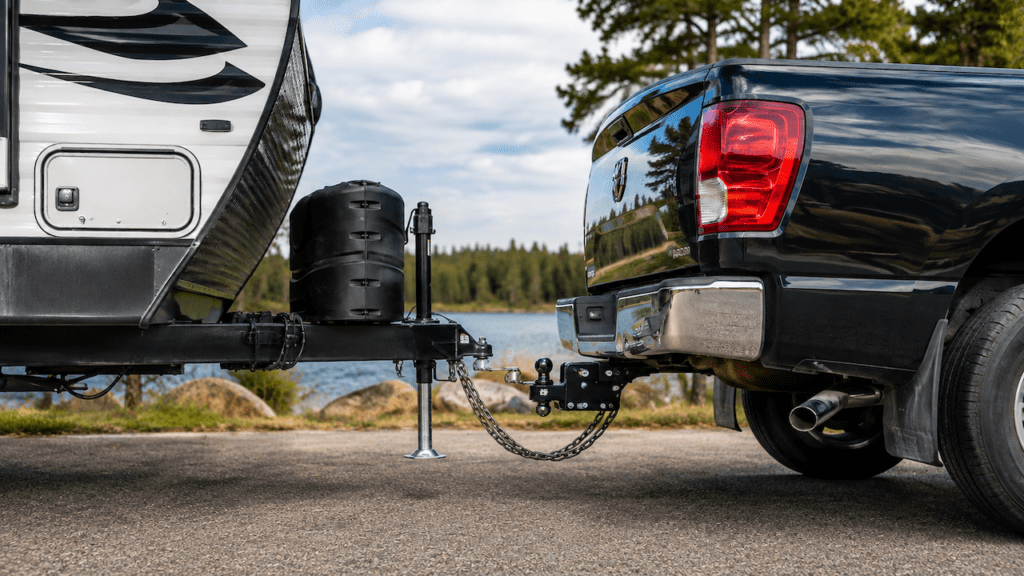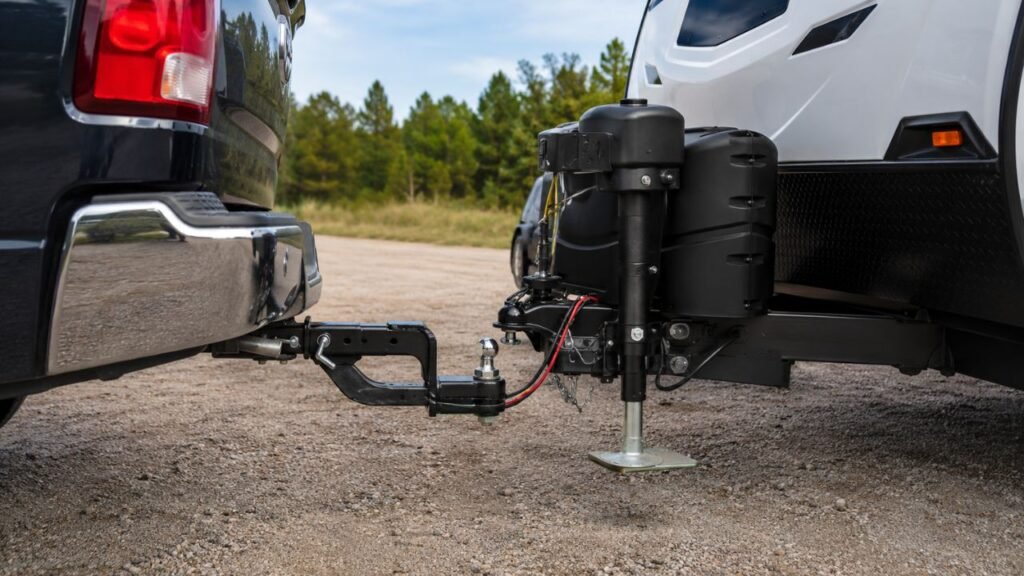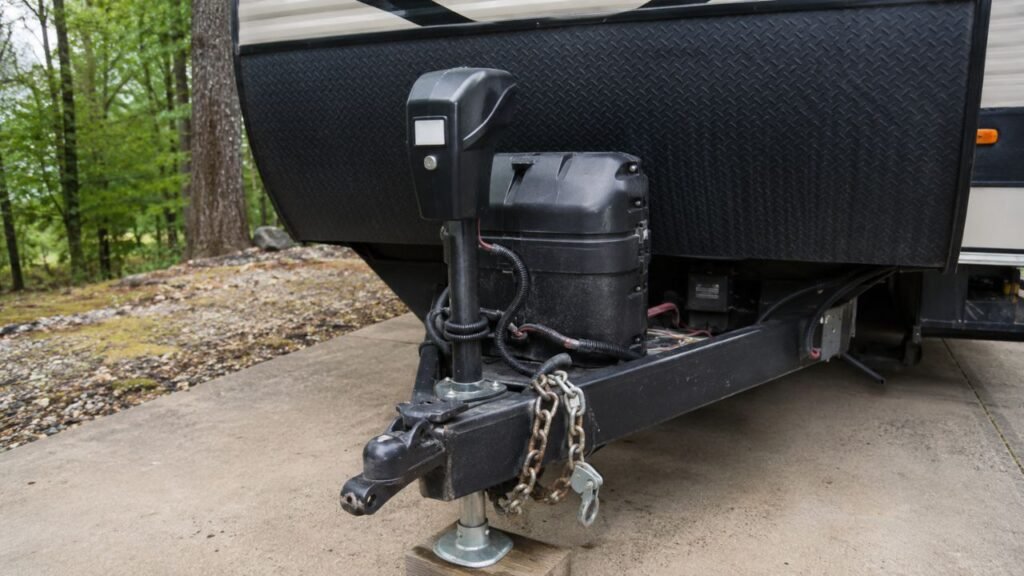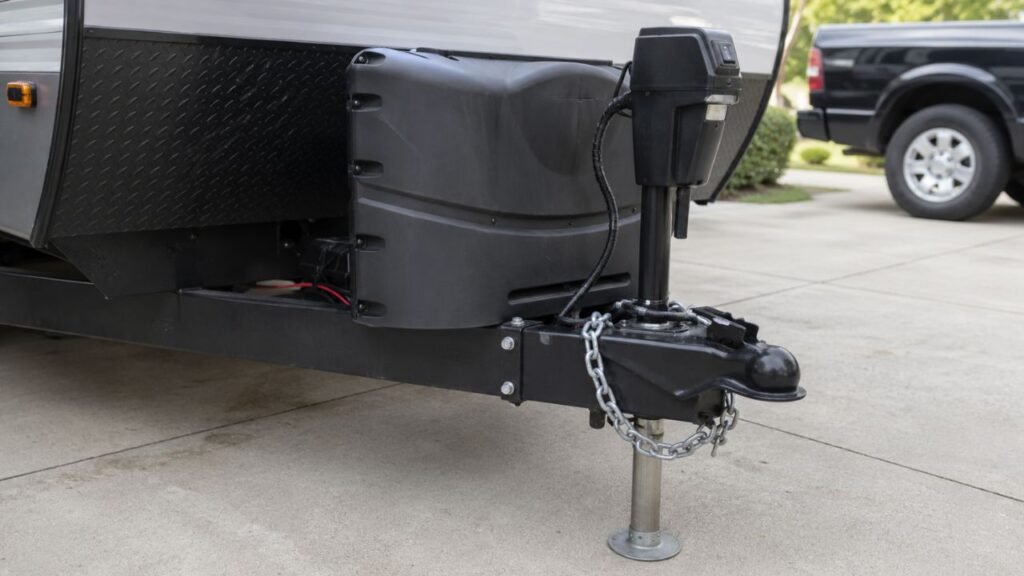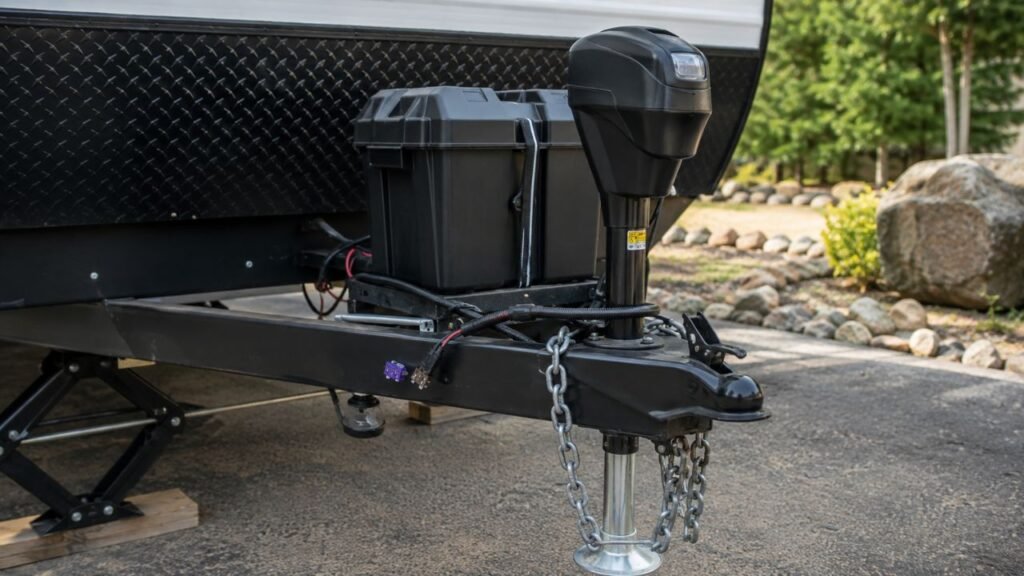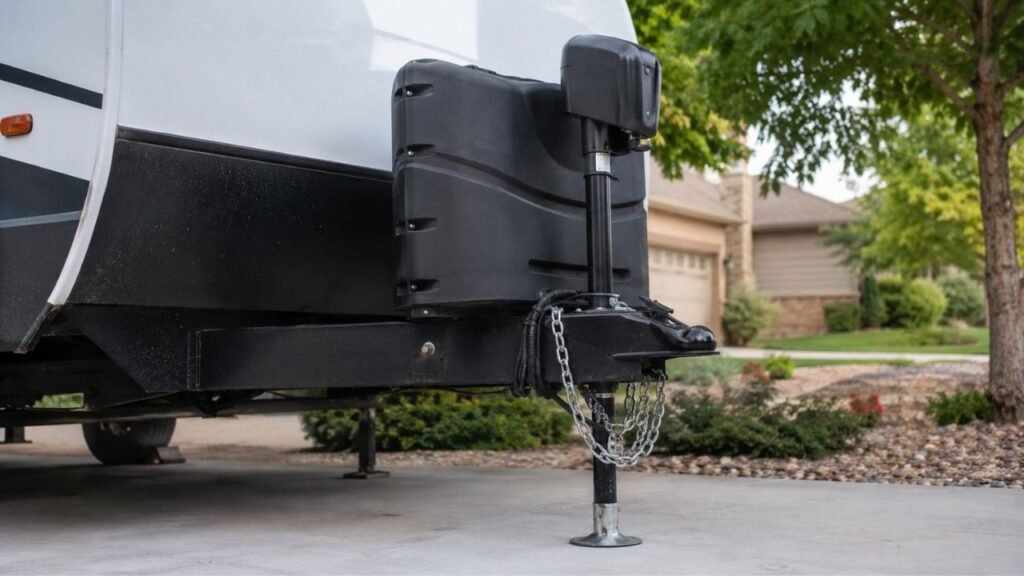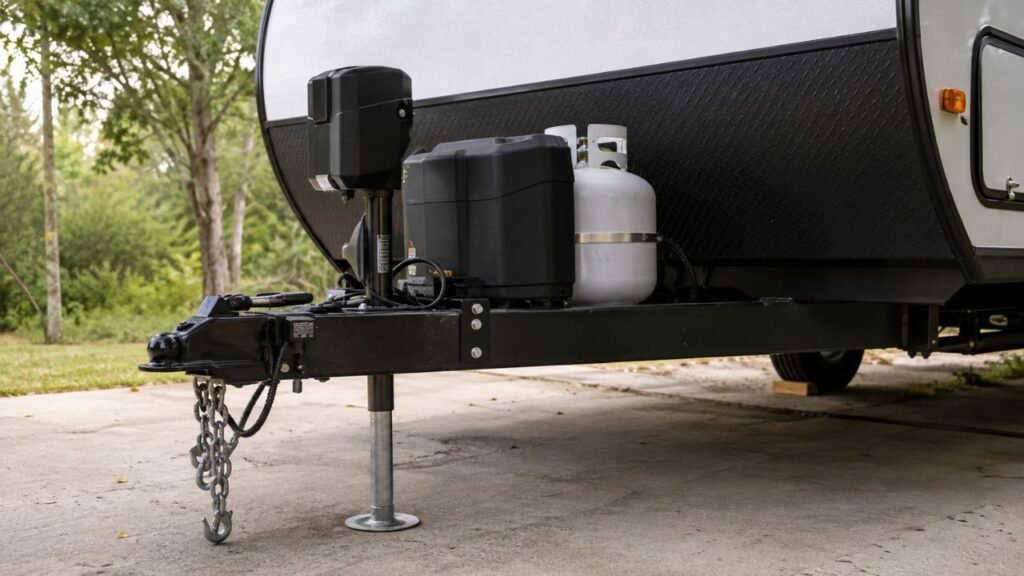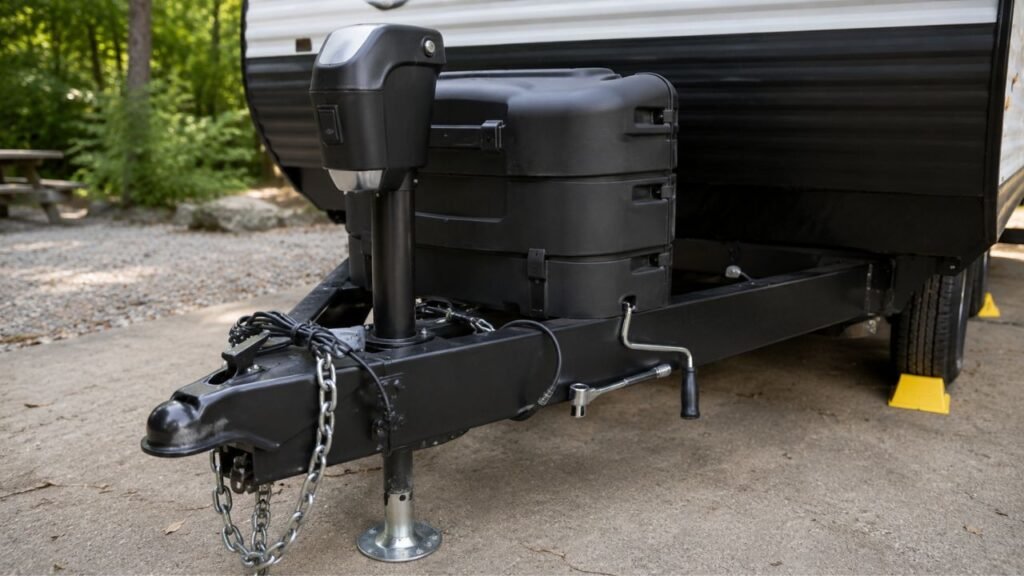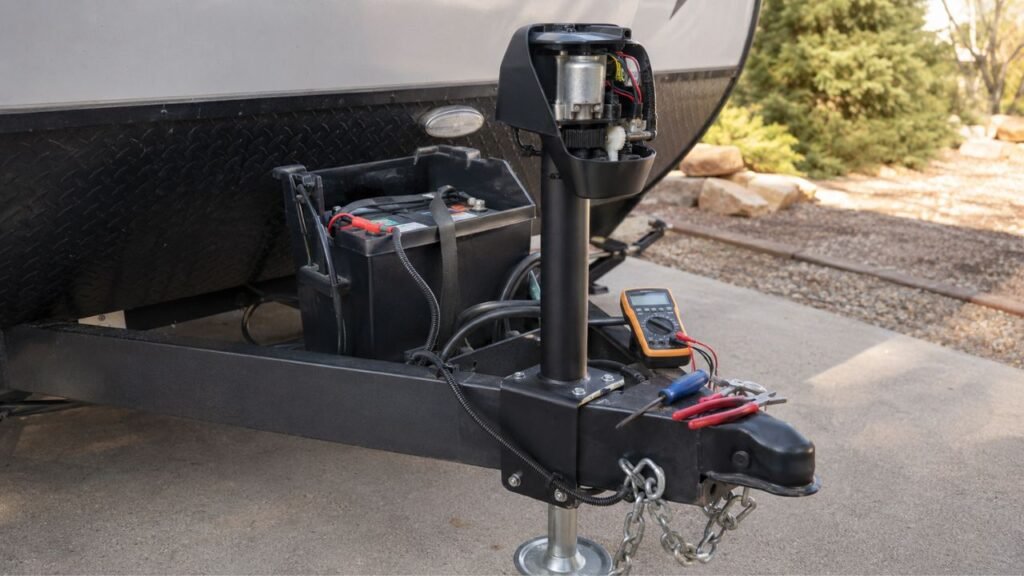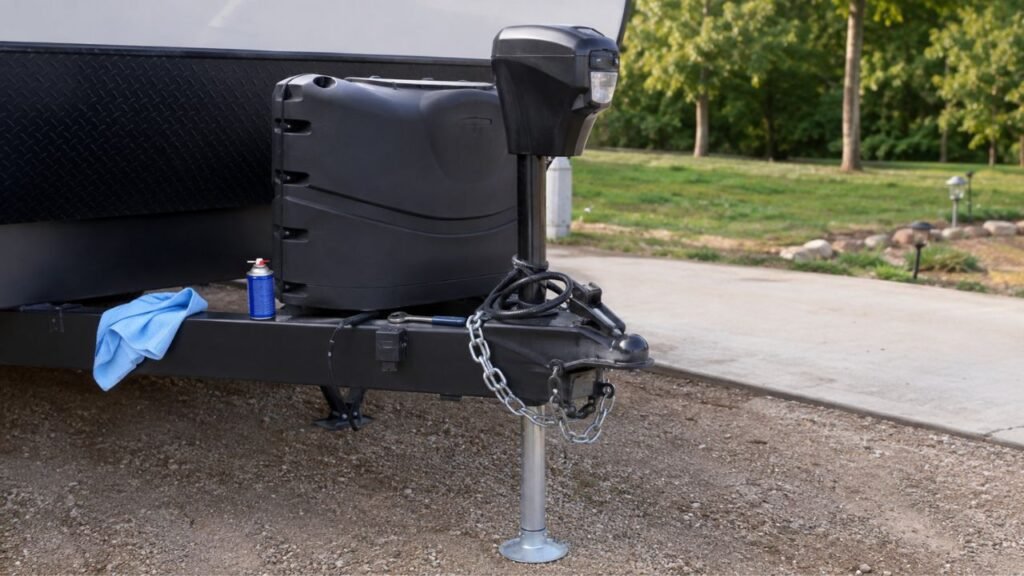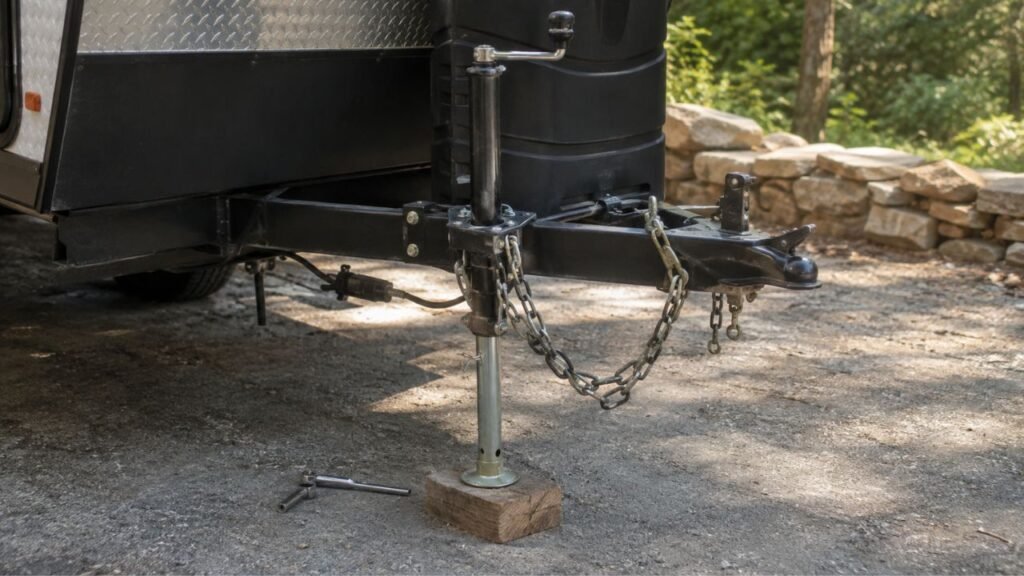
A trailer jack gets stuck in the down position when its screw binds, the jack reaches full extension, internal parts rust, or gears become damaged. Heavy tongue weight and side pressure can also lock the mechanism. On electric trailer jacks, battery, fuse, wiring, switch, or motor problems may prevent retraction.
I’ll help you narrow down the cause before forcing anything. We’ll cover safe ways to free the jack, troubleshoot electric models, and decide when replacement makes more sense.
Key Takeaways
- Remove tongue weight from the stuck jack before forcing it.
- A jack that will not crank manually usually has mechanical binding.
- A jack that manually retracts but not electrically likely has electrical trouble.
- Overextending the jack can jam or damage its internal screw.
- Rust, dirt, and dried grease can eventually seize the mechanism.
- A motor running without jack movement may indicate stripped internal parts.
- Never tow while the trailer jack remains extended toward the ground.
- Replace a jack with bent tubes or serious internal damage.
What Does “Stuck in the Down Position” Mean?
When I say the jack is stuck down, I mean its leg remains extended toward the ground and refuses to retract.
For a tongue jack, retracting should pull the inner leg upward. That movement raises the jack foot away from the ground before towing.
The problem can happen with manual or electric trailer jacks. It is especially frustrating because you cannot safely tow until the jack clears the ground.
A jack may also appear stuck for several different reasons. Sometimes the mechanism is physically jammed. Other times an electric jack simply cannot power the mechanism upward.
That difference matters because the correct fix depends on the symptom.
Diagnose the Problem Before You Force the Jack
A few simple observations can tell you surprisingly much. Check what the jack actually does before grabbing bigger tools or applying more force.
| What the Jack Does | Likely Problem | First Thing to Check |
| Electric jack stays completely silent | Battery, fuse, wiring, ground, or switch | Check electrical power |
| Jack light works but motor does not | Weak battery, poor connection, switch, or motor | Check voltage and connections |
| Motor runs but jack will not retract | Gear, screw, nut, or overextension problem | Try the manual override |
| Motor clicks or struggles | Excessive load, weak battery, or binding | Remove tongue weight |
| Manual crank becomes extremely hard | Load binding, corrosion, bent tube, or dry screw | Support the trailer tongue |
| Manual crank will not turn | Severe mechanical binding | Stop applying additional force |
| Handle spins but jack does not move | Stripped gears or broken drive component | Inspect internal drive parts |
| Jack jammed at maximum extension | End-of-travel binding | Relieve pressure before reversing |
| Jack works unloaded but jams under weight | Excessive load, wear, or alignment problem | Check jack capacity and alignment |
| Inner tube looks crooked | Bent tube or side-loading damage | Replace or professionally inspect |
This diagnosis saves you from chasing electrical problems when the jack is mechanically seized.
It also prevents unnecessary damage from forcing a jack that has already failed internally.
Why Is My Trailer Jack Stuck in the Down Position?
Several different failures can leave the jack extended. I recommend starting with the most common causes before assuming the entire jack needs replacement.
Tongue Weight Is Binding the Screw
Tongue weight normally presses downward through the jack. A properly sized jack is designed to handle that load.
However, trouble begins when the load presses unevenly against the mechanism.
This can happen when the trailer sits slightly sideways. It can also happen if the jack foot sinks or shifts.
The internal screw and nut may become difficult to turn under pressure. A worn or poorly lubricated jack makes this problem more noticeable.
If the jack works after removing tongue weight, binding was probably involved.
The Jack Was Extended Too Far
Another common problem happens when the jack reaches maximum extension.
Continuing to crank or power the jack can force internal components against their travel limit.
You may then find that the jack refuses to move upward again.
Overextension can put excessive pressure on:
- The lead screw
- Internal nut
- Gears
- Drive pins
- Motor components
Do not repeatedly hold an electric switch after movement stops.
That extra force can turn a simple bind into expensive damage.
Rust or Corrosion Has Seized the Screw
Trailer jacks live outside where water and road grime are unavoidable.
Moisture can eventually reach the inner tube, gears, or screw assembly. Rust then increases friction until the jack becomes difficult to move.
You may notice the problem developing gradually.
The jack might feel rough during one trip. It becomes harder during the next. Eventually, it refuses to retract completely.
Long storage periods can make corrosion worse because the mechanism remains stationary.
The Internal Screw or Gears Are Dry
A trailer jack depends on lubrication to move smoothly under load.
Old grease can dry out or become contaminated with dirt. Some areas may also lose lubrication after years of normal use.
Warning signs commonly include:
- Increasing crank resistance
- Squeaking
- Grinding
- Jerky movement
- Slower electric operation
- Hotter motor operation
I recommend addressing these symptoms early. Waiting until the jack completely stops makes repairs much harder.
The Jack Tube Is Bent or Side-Loaded
A jack tube does not need a dramatic bend to become troublesome.
Even slight deformation can make the inner tube rub against the outer housing.
Common causes include:
- Trailer movement while the jack remains planted
- A slipping jack foot
- Uneven ground
- Accidentally towing with the jack partially extended
- Impact with an obstacle
- Strong sideways tongue movement
Look closely at the extended tube from several angles.
If it appears crooked, forcing the mechanism can make the damage worse.
The Gears, Pin, Nut, or Screw Have Failed
Internal failures produce different symptoms than ordinary binding.
If the handle is extremely difficult to turn, something may be seized.
If the handle spins easily but nothing moves, the drive may be disconnected.
Possible failed parts include:
- Stripped gears
- Broken gear teeth
- Damaged drive pin
- Worn screw nut
- Broken screw
- Damaged coupler between motor and drive assembly
Grinding or repeated clicking usually deserves closer inspection.
An Electric Jack Has an Electrical Fault
Your electric trailer jack may be mechanically fine but electrically unable to retract.
Common electrical causes include:
- Low battery voltage
- Weak battery
- Loose battery connection
- Corroded terminal
- Poor frame ground
- Blown fuse
- Faulty retract switch
- Damaged wiring
- Motor failure
The manual override becomes very helpful here.
If the jack retracts manually, you can focus more attention on its electrical system.
Before Trying to Retract a Stuck Trailer Jack
Safety matters more than freeing the jack quickly. The jack may currently be supporting hundreds or even thousands of pounds.
- Chock the trailer wheels before beginning.
- Park on firm, reasonably level ground whenever possible.
- Keep children and other people away from the trailer tongue.
- Connect the tow vehicle when that provides safe tongue support.
- Otherwise use properly rated lifting and support equipment.
- Support the trailer at a suitable structural lifting point.
- Remove enough tongue load to reduce pressure on the jack.
- Never remove jack mounting bolts while the jack carries weight.
- Never place your body beneath an unsupported trailer tongue.
- Do not rely on stabilizer jacks for primary tongue lifting.
- Stop immediately if the trailer shifts unexpectedly.
- Avoid working roadside when traffic creates additional danger.
The main goal is simple.
Support the trailer independently before treating the jack as a repairable part.
Once the tongue is secure, you can troubleshoot without asking the damaged jack to support everything.
How Do You Free a Trailer Jack Stuck in the Down Position?
Start with gentle methods and work progressively. Forcing a seized jack should never be your first troubleshooting step.
Step 1: Take the Tongue Weight Off the Jack
This is where I would start almost every time.
Use the tow vehicle or properly rated lifting equipment to support the tongue.
You do not necessarily need to raise the trailer significantly.
The goal is simply reducing pressure on the stuck mechanism.
Try the crank again once the jack feels unloaded.
If it suddenly moves easily, excessive loading or binding was probably involved.
Step 2: Try Moving It Slightly the Opposite Way
A jack stuck against its travel limit may need pressure released first.
Try moving it slightly toward extension before retracting.
Only use a very small movement.
Do not continue forcing the jack farther downward against its stop.
The idea is relieving internal pressure, not increasing extension.
Step 3: Inspect the Inner Tube and Foot
Look closely around the extended portion of the jack.
Check for:
- Bent tubing
- Rust
- Dirt buildup
- A damaged footplate
- A crooked drop leg
- Misaligned pins
- Debris between moving surfaces
- Abnormal rubbing marks
A bent tube usually requires more than lubrication.
If you see obvious structural damage, I recommend stopping there.
Step 4: Use Penetrating Oil for Corrosion
Penetrating oil can help loosen rusted exposed components.
Apply it where the jack design allows access to affected moving parts.
Give the product time to work before trying the jack again.
However, penetrating oil and grease serve different purposes.
Penetrating oil helps loosen corrosion. Grease provides longer-term lubrication.
Do not assume spraying the outside of a sealed jack lubricates its internal screw.
Follow the manufacturer’s lubrication points whenever possible.
Step 5: Work the Crank Gently Back and Forth
Once the trailer is safely supported, try small crank movements.
Move slightly in one direction, then slightly in the other.
This can sometimes loosen light rust or pressure against the threads.
Avoid using excessive leverage immediately.
I would also avoid reaching for an impact wrench first.
Too much torque can damage:
- Gears
- Pins
- Shafts
- Screw threads
- Crank mechanisms
A jack that requires extreme force is telling you something is wrong.
Step 6: Stop if It Still Requires Extreme Force
Sometimes the smartest repair move is knowing when to stop.
If the unloaded jack remains completely seized, additional force can worsen damage.
You may need to:
- Remove and disassemble the jack
- Replace serviceable internal parts
- Replace the complete jack
- Have a trailer shop inspect it
A severely seized jack rarely becomes reliable simply because you managed to force it once.
How Do You Retract an Electric Trailer Jack That Is Stuck Down?
Electric jacks add another troubleshooting layer because the mechanical assembly and electrical system can fail independently. The manual override is usually the fastest way to separate those possibilities.
Try the Manual Override First
Many electric tongue jacks include an emergency manual override.
The access point is commonly located beneath a top cover or rubber plug.
Your exact design may differ, so use the crank or socket specified for your jack.
First support the tongue and reduce load on the mechanism.
Then carefully try retracting the jack manually.
The result tells you a lot:
Manual override works: The mechanical system probably still moves. Focus on battery power, wiring, fuse, switch, ground, and motor operation.
Manual override will not move: Mechanical binding or internal damage becomes much more likely.
Do not keep running the motor against a mechanically seized jack.
Check Battery Condition and Voltage
A weak battery can create confusing symptoms.
The jack’s LED light might still turn on normally.
That does not prove the battery can supply enough current for the motor.
Electric motors need considerably more current under load.
Check:
- Battery charge
- Battery terminals
- Cable condition
- Voltage under load
If the motor becomes slower before stopping, low voltage deserves attention.
Inspect the Fuse
Many electric tongue jacks use an inline fuse or circuit protection.
Find the fuse specified for your particular jack.
Check whether it has blown or developed corrosion around its holder.
If the fuse blows again immediately, do not simply install a larger fuse.
Repeated fuse failure may indicate:
- Binding
- Motor overload
- Shorted wiring
- Internal motor problems
Always use the fuse rating specified for your jack.
Check the Ground and Connections
A poor ground can make an electric jack behave unpredictably.
Some trailer jacks ground through their mounting hardware and trailer frame.
Corrosion between mounting surfaces can weaken that connection.
Inspect:
- Mounting bolts
- Frame contact areas
- Ground wires
- Battery terminals
- Wire connectors
- Inline fuse holder
Clean loose or corroded connections before condemning the motor.
Check the Extend/Retract Switch
A switch problem becomes particularly likely when one direction still works.
For example, the jack extends normally but refuses to retract.
That may indicate failure on the retract side of the switch.
Listen carefully while operating it.
Complete silence in one direction can point toward an electrical control issue.
Listen to What the Motor Does
The sound coming from the jack can narrow things down.
No motor sound: Check battery, fuse, ground, switch, wiring, and motor.
Motor runs normally but leg stays still: Suspect gears, coupling, screw, or internal drive damage.
Motor strains or clicks: The mechanism may be overloaded or mechanically bound.
If motor moves slowly: Check voltage, load, lubrication, and internal friction.
These clues can prevent you from replacing electrical parts unnecessarily.
What if the Manual Crank Will Not Turn Either?
If the manual crank remains locked after removing tongue weight, the problem is probably mechanical rather than electrical.
Possible causes include a seized screw, damaged screw nut, bent tube, severe corrosion, stripped gears, or internal overextension damage.
I would stop applying heavy force at this point.
A power problem cannot explain why the mechanical override is physically unable to move.
The jack may need disassembly or complete replacement.
What if the Jack Handle Turns but the Leg Does Not Move?
A freely turning handle gives you another important clue.
Normally, crank rotation transfers through gears into the jack’s lifting screw.
If the handle turns but the leg remains stationary, that connection may have failed.
Possible problems include:
- Stripped gears
- Broken gear tooth
- Broken drive pin
- Damaged crank shaft
- Broken screw connection
- Failed internal nut
You may hear clicking or feel unusually little resistance.
Opening a serviceable gearbox can confirm the problem.
However, replacement often makes more sense on older inexpensive jacks.
How Do I Get My Trailer Moving if the Jack Is Stuck Down?
A stuck jack becomes more urgent when you’re trying to leave a campsite, driveway, marina, or storage lot. The priority is safely clearing the jack without allowing the tongue to fall.
- Do not tow with the jack still extended.
- Chock the trailer before working around the tongue.
- Hitch the tow vehicle when safely possible.
- Otherwise support the tongue with properly rated equipment.
- Transfer the trailer’s weight away from the failed jack.
- Retract the jack manually if the mechanism allows it.
- Remove the jack only after the tongue is independently supported.
- Replace a seriously damaged jack before continuing normal use.
- Call roadside assistance when roadside conditions make repairs unsafe.
- Seek professional help with welded, bent, or heavily loaded jack assemblies.
Do not improvise with unstable blocks or undersized equipment.
Getting the trailer moving is never worth losing control of the tongue.
Should You Repair or Replace a Stuck Trailer Jack?
Not every stuck jack needs replacement. Minor electrical faults, lubrication problems, and some serviceable parts can be repaired fairly easily.
| Jack Condition | Repair May Make Sense | Replacement Usually Makes More Sense |
| Dry but straight screw | Yes | No |
| Light surface corrosion | Yes | Sometimes |
| Dirty electrical connection | Yes | No |
| Blown correct-size fuse | Yes | No |
| Replaceable switch failure | Yes | No |
| Replaceable gear damage | Sometimes | Sometimes |
| Jack repeatedly binds under normal load | Maybe | Yes |
| Severely rusted screw | Rarely | Yes |
| Bent inner tube | No | Yes |
| Bent outer housing | No | Yes |
| Cracked mounting structure | No | Yes |
| Broken screw with unavailable parts | No | Yes |
| Jack is undersized for the trailer | No | Yes |
| Serious overextension damage | Sometimes | Often |
Cost matters, but reliability matters more.
Your tongue jack supports a heavy part of the trailer whenever you hitch, unhitch, or adjust tongue height.
I would not rely on a structurally damaged jack simply because it can still move.
Why Does My Trailer Jack Keep Getting Stuck?
A jack that repeatedly sticks usually has an underlying issue. Freeing it without correcting that cause almost guarantees another frustrating failure.
The Jack Is Reaching Its Travel Limit
Running a jack completely to the end of its travel increases stress.
Use a suitable jack block or drop leg when appropriate.
That reduces unnecessary extension and saves operating time.
Leave some travel available instead of repeatedly driving against the stop.
The Jack Is Carrying Side Load
Trailer tongue jacks are designed primarily for vertical loading.
Side pressure can make the inner and outer tubes bind.
Keep the jack foot centered on firm ground.
Also chock the trailer so it cannot roll while unhitching.
The Screw Needs Lubrication
Increasing crank effort is often an early maintenance warning.
Do not wait until the mechanism completely locks.
Lubricate serviceable screw and gear areas using the recommended product.
Avoid mixing random lubricants without knowing what the jack requires.
Water and Road Contamination Are Getting Inside
Rain, road spray, salt, dirt, and mud eventually attack exposed components.
Keep protective caps and covers installed.
Inspect rubber plugs and seals around electric jack heads.
Clean mud from moving surfaces before long-term storage.
The Jack Is Undersized or Worn
An older jack may technically still operate but struggle under normal tongue weight.
Its internal nut, screw, gears, and bearings can gradually wear.
Also verify that your jack has appropriate lifting capacity.
Do not choose capacity based only on the trailer’s total weight.
The jack primarily supports the load applied at the tongue.
How to Prevent Your Trailer Jack From Sticking Again
A few simple habits can prevent most repeat failures. I would focus on reducing corrosion, preventing side loading, and catching increasing resistance early.
- Follow the manufacturer’s lubrication schedule.
- Lubricate serviceable gears and screw components correctly.
- Keep protective caps and covers installed.
- Clean dirt and road salt from exposed jack surfaces.
- Avoid running the jack hard against full extension.
- Use an appropriate jack block when excessive extension is unnecessary.
- Keep the jack as vertical as possible.
- Prevent the trailer from rolling during operation.
- Keep the jack foot on firm support.
- Inspect the tube for bending or unusual rubbing.
- Tighten loose mounting hardware.
- Keep electric connections clean and protected.
- Inspect the fuse holder for corrosion.
- Exercise the jack occasionally during long storage.
- Investigate increasing crank resistance before complete seizure occurs.
A healthy trailer jack should not require heroic effort.
If it becomes noticeably harder each month, fix the cause early.
Final Words
A trailer jack stuck in the down position usually gives you clues before complete failure.
Start by safely removing tongue weight and observing exactly what happens.
If the jack moves after unloading, investigate binding, alignment, lubrication, and wear. If an electric jack retracts manually but not with power, concentrate on its electrical system.
When neither the powered system nor manual crank can move an unloaded jack, mechanical damage becomes much more likely.
Do not keep forcing a bent or severely seized jack.
Replacing one damaged component is far cheaper than dropping the trailer tongue unexpectedly.
Related FAQs
Can Tongue Weight Cause a Trailer Jack to Get Stuck?
Yes. Tongue weight can increase friction inside the jack, especially when the mechanism is dry, worn, undersized, or carrying sideways pressure. Reducing the load may allow the jack to retract normally again.
How Do You Manually Retract an Electric Trailer Jack?
Find the jack’s manual override access point and use its specified crank or socket. Safely support the trailer first, then turn the override in the retract direction according to your jack’s instructions.
Why Does My Electric Trailer Jack Extend but Not Retract?
A jack that extends but will not retract may have a faulty switch, wiring issue, mechanical binding, overextension damage, or internal drive failure. Try the manual override to separate electrical problems from mechanical ones.
Why Does My Trailer Jack Motor Run but the Leg Does Not Move?
The motor may be spinning without transferring power to the lifting mechanism. Stripped gears, broken drive components, damaged screw threads, or an overextended mechanism can all cause this symptom.
Why Won’t My Trailer Jack Crank by Hand?
The jack may be carrying excessive pressure, corroded internally, poorly lubricated, bent, or mechanically seized. Support the tongue first before applying additional force to the crank.
Can I Use WD-40 on a Stuck Trailer Jack?
A penetrating lubricant can help loosen light corrosion on accessible components, but it should not replace the proper grease or lubricant specified for ongoing jack maintenance.
Can I Hit a Stuck Trailer Jack With a Hammer?
Light tapping with a rubber mallet may sometimes help release minor binding, but heavy hammering can bend the tube or damage internal parts. Remove the load and diagnose the cause first.
Can I Tow a Trailer With the Jack Still Down?
No. The jack should be fully retracted, safely secured, or removed before towing. An extended jack can strike the road, damage the trailer, or create a serious towing hazard.
How Do I Know if My Trailer Jack Has Stripped Gears?
A stripped gear often lets the crank or motor turn without corresponding movement from the jack leg. Clicking, grinding, free spinning, or unusually little resistance can also indicate internal gear damage.
Is a Stuck Trailer Jack Worth Repairing?
Minor corrosion, lubrication problems, electrical connections, switches, and replaceable gears may justify repair. Bent tubes, severe rust, broken screws, or repeated binding usually make complete replacement the safer choice.

Ryan Mitchell writes for readers who prefer independent travel and practical outdoor motorhome living. His how-to guides and reviews focus on simplicity, durability, and real value. He brings a calm, hands-on perspective to every topic.