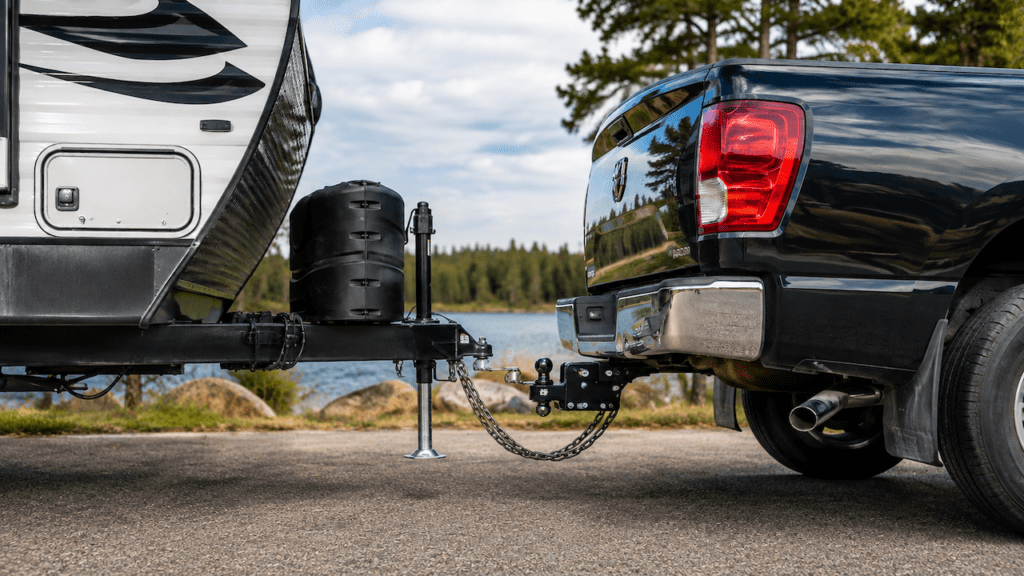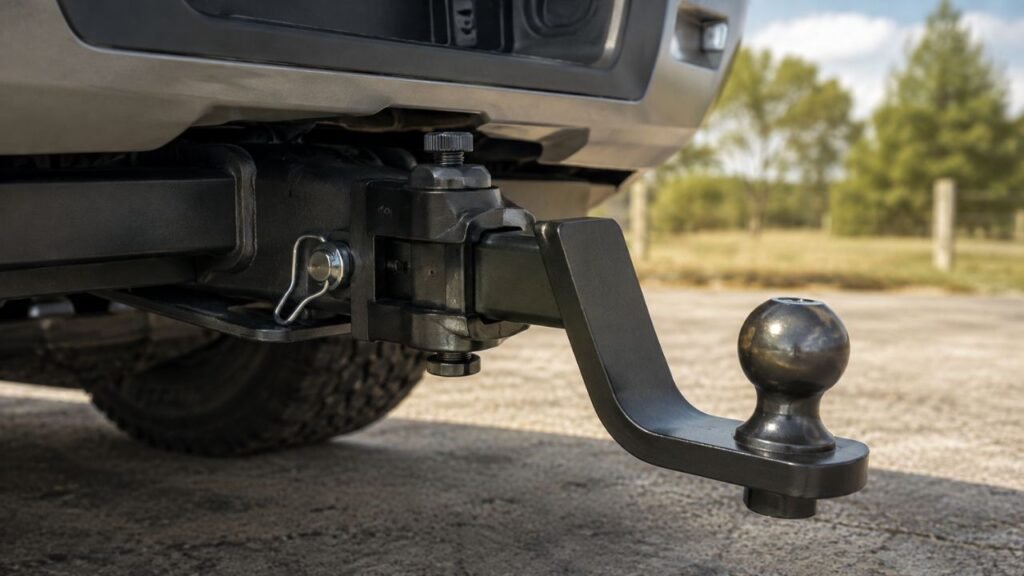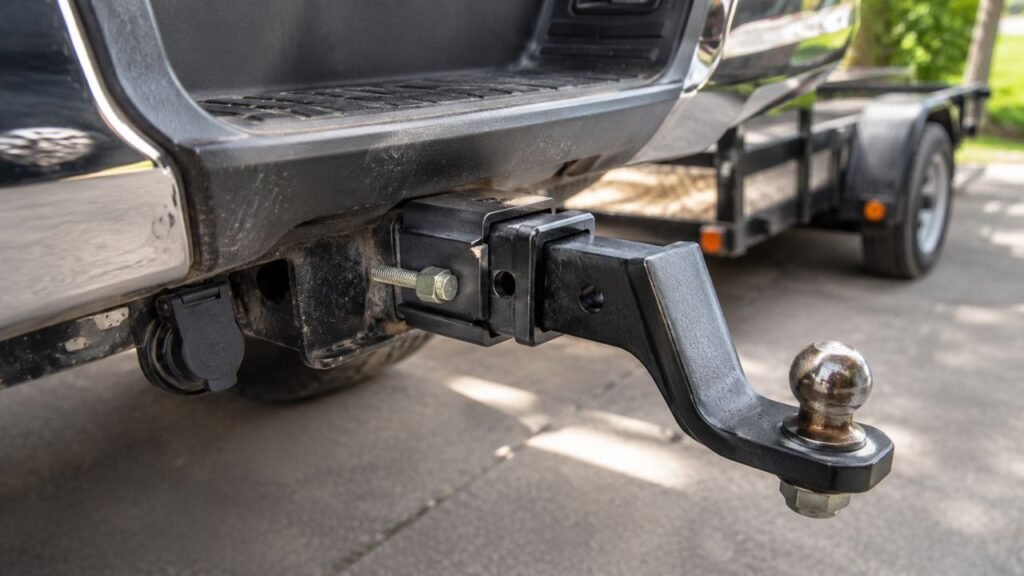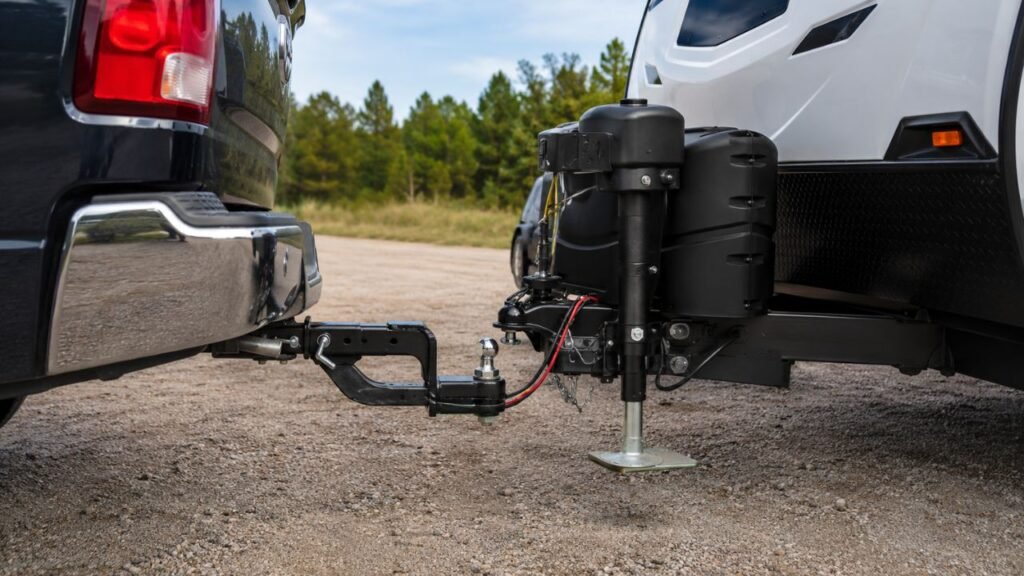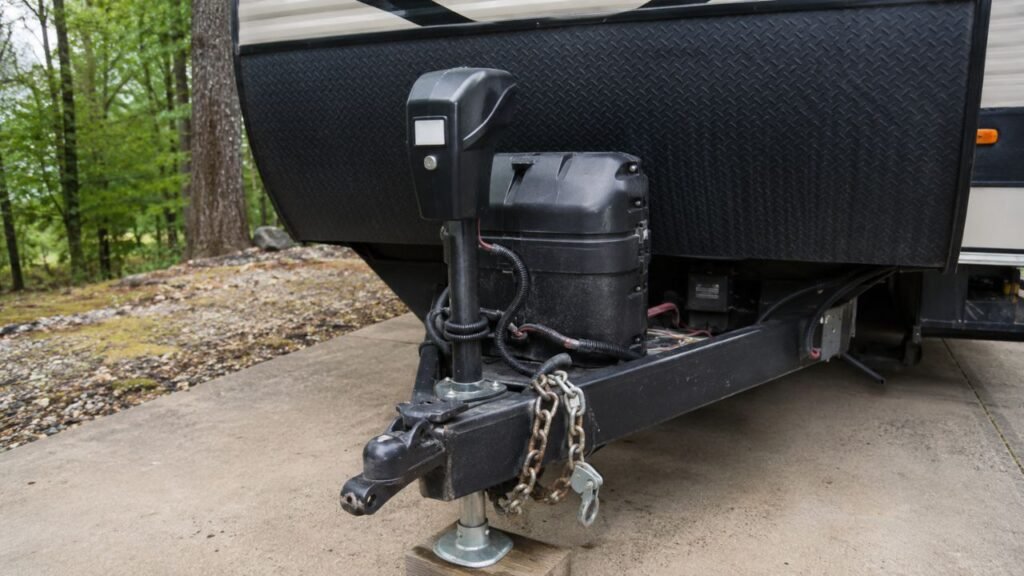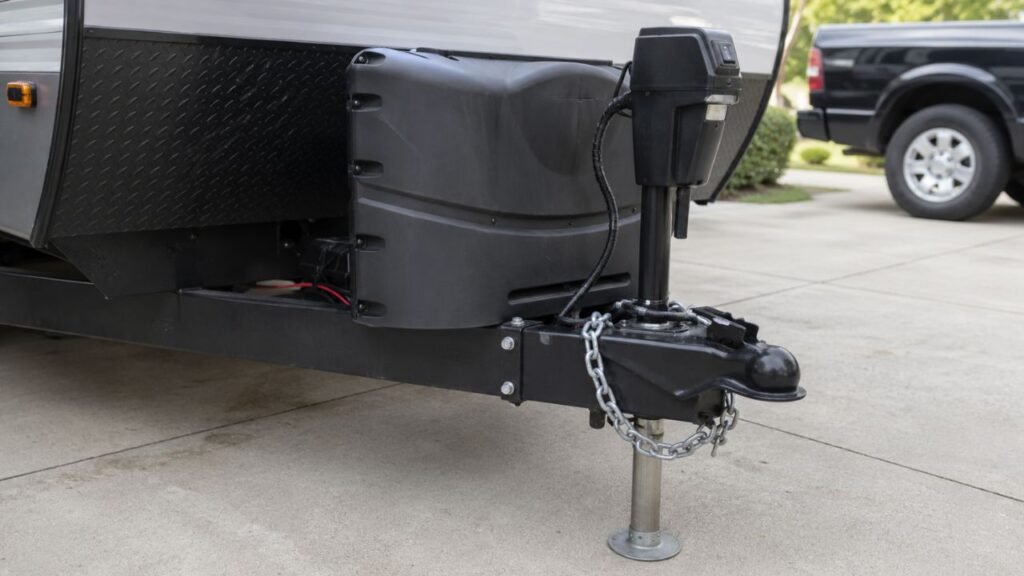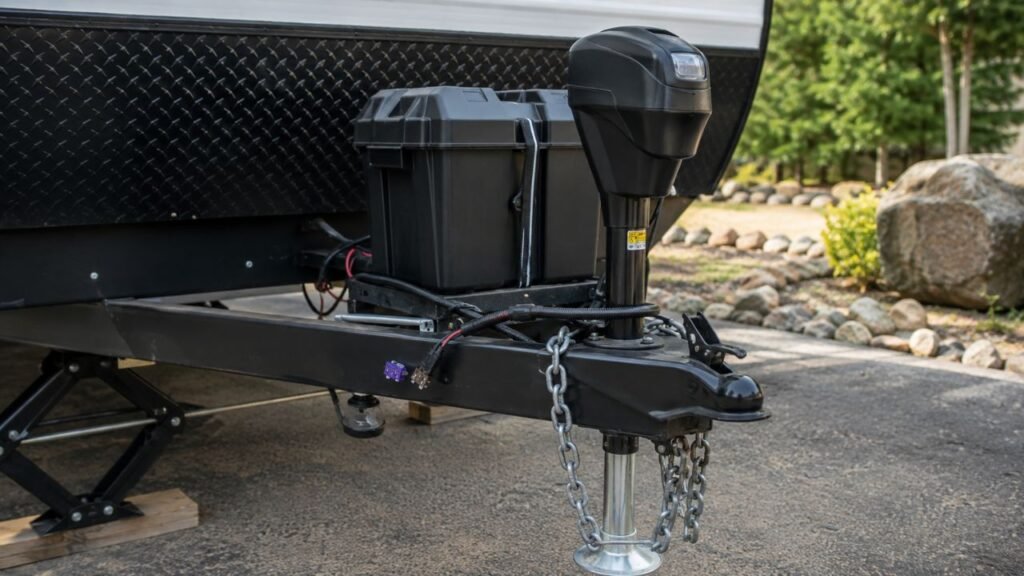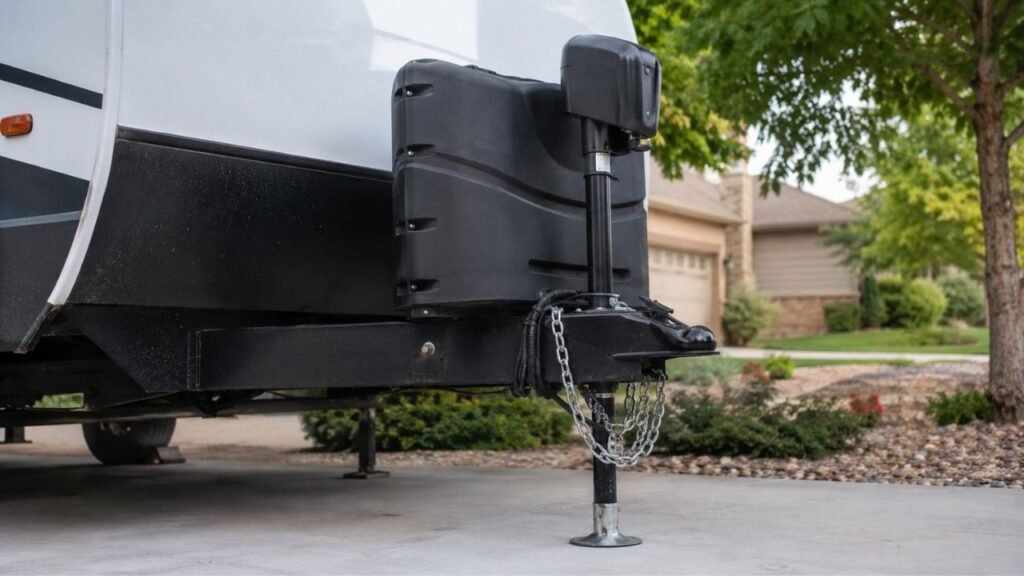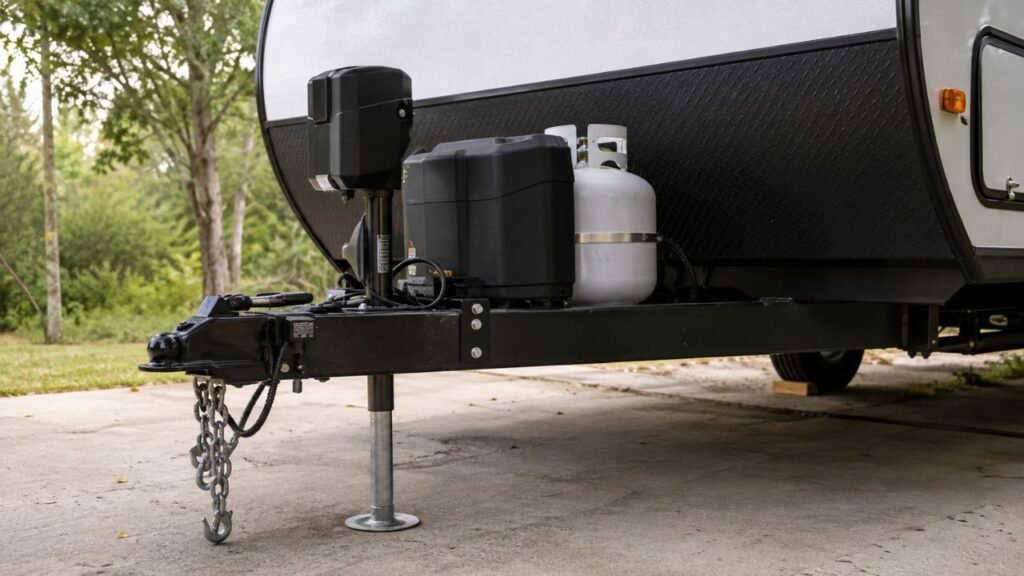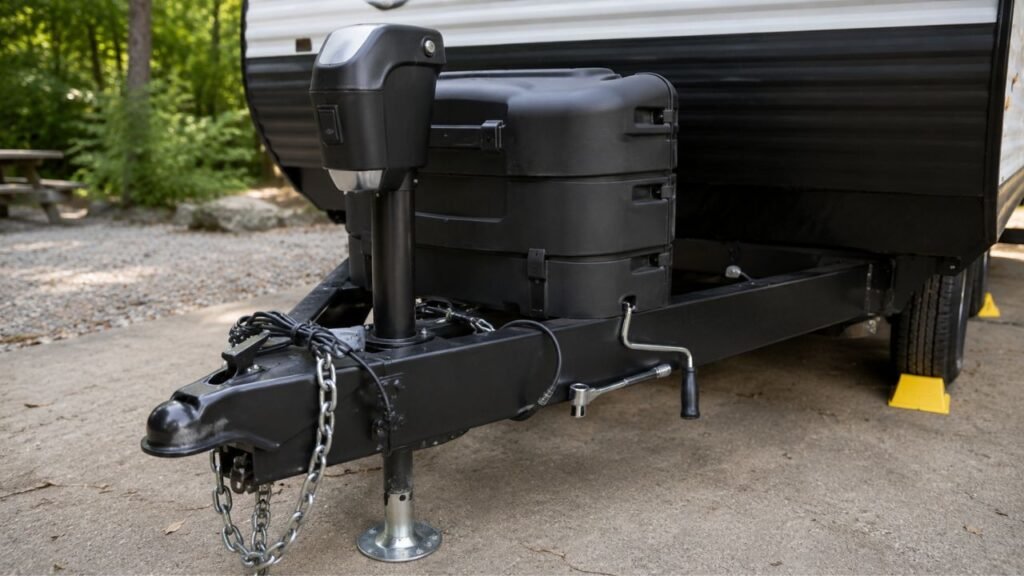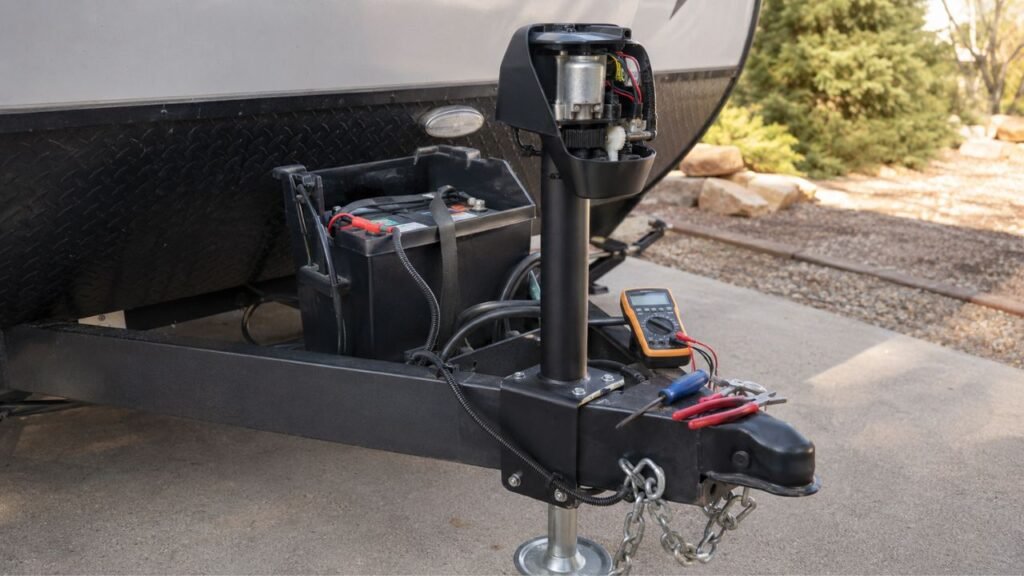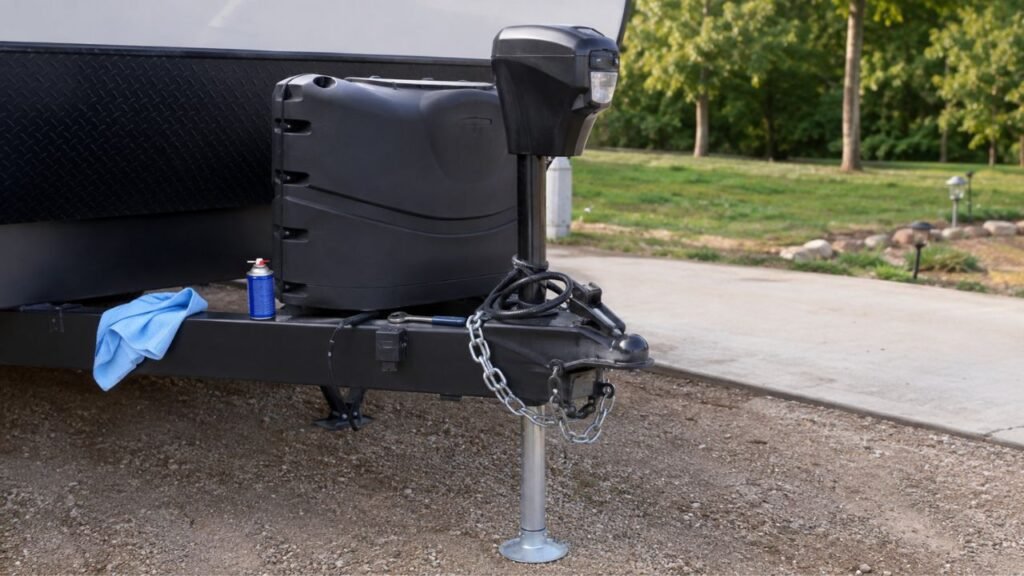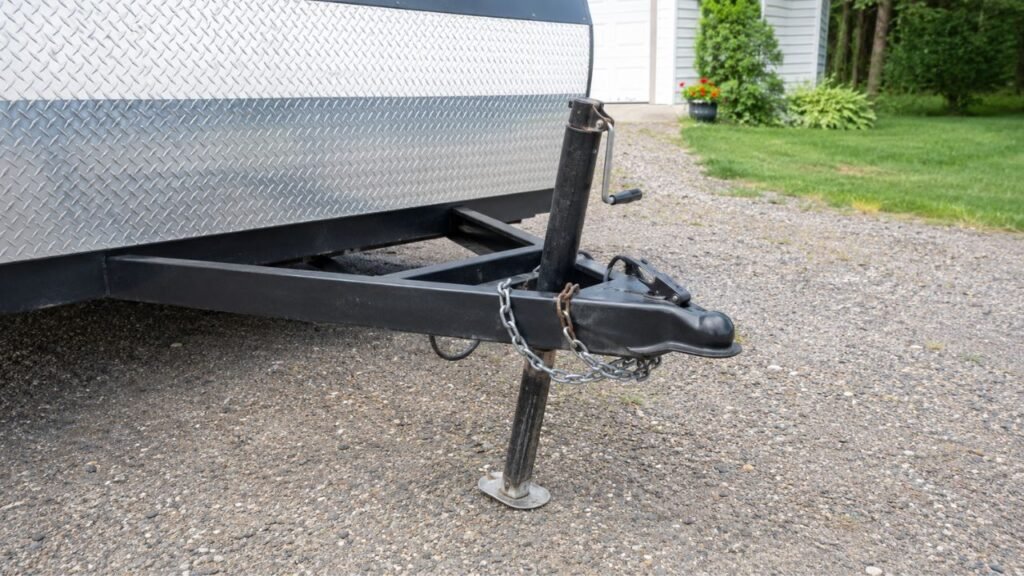
A trailer jack usually leans to one side because of loose mounting hardware, a bent jack tube, worn swivel components, damaged mounting metal, or sideways pressure on the jack. Uneven ground can also create an apparent lean. If the jack bends farther as tongue weight increases, stop relying on it until you find the cause.
I’ll help you figure out exactly where the lean is coming from. We’ll also cover safe troubleshooting, repair options, replacement signs, and ways to prevent the problem from returning.
Key Takeaways
- A leaning trailer jack does not always mean the jack itself is bent.
- Loose bolts can allow the entire jack assembly to tilt sideways.
- Bent inner or outer tubes often cause binding while operating.
- Worn swivel pins or brackets can create noticeable side-to-side movement.
- A damaged A-frame mounting plate may make a straight jack sit crooked.
- Soft or uneven ground can make the jack appear bent.
- Trailer movement while unhitching can place damaging sideways force on a jack.
- A jack that leans farther under load needs immediate attention.
- Cracked trailer-frame metal or damaged welds require professional repair.
- Replacing a structurally bent jack is usually safer than straightening it.
Is a Trailer Jack Supposed to Lean Slightly?
Ideally, your trailer jack should remain reasonably straight while supporting the trailer. The jack tube should not visibly bow sideways or change its angle as weight is added.
However, a small fixed angle does not automatically mean the jack has failed.
Some A-frame trailers have upper and lower mounting openings that are not perfectly aligned. A straight jack passing through those openings can therefore sit at a slight angle.
The important question is whether the angle has always been there or recently appeared.
A small angle is less concerning when the jack operates smoothly, the mounting plate stays rigid, and the angle never changes.
I would be much more concerned if the jack suddenly started leaning. You should also investigate if the lean becomes worse when you raise the tongue.
Binding, scraping, wobbling, cracking sounds, and visible frame movement are additional warning signs.
Where Is the Trailer Jack Actually Leaning?
Before replacing anything, spend a few minutes identifying exactly where the angle begins. That simple inspection can prevent you from replacing a perfectly usable jack when the real problem is the mount or trailer frame.
| What You Notice | Area to Inspect | Likely Cause | Concern Level |
| Entire jack tilts from the trailer | Mounting bolts or bracket | Loose or damaged hardware | High |
| Mount stays straight but tube angles | Inner or outer jack tube | Bent tube | High |
| Mounting plate moves with jack | Trailer tongue or A-frame | Cracked weld or distorted metal | Very high |
| Swivel jack rocks around pivot | Swivel bracket and pin | Worn pin or enlarged hole | High |
| Jack leans more when extended | Inner tube and mount | Bent tube or excessive play | High |
| Jack foot sinks sideways | Ground or support block | Soft or uneven surface | Moderate |
| Jack tilts after trailer moves | Chocks and ground slope | Side loading | High |
| New jack sits like the old jack | A-frame openings | Mounting alignment issue | Inspect |
Do not focus only on the jack tube. Look at everything from the foot upward to the trailer tongue.
Why Is My Trailer Jack Leaning to One Side?
Several problems can create the same crooked appearance. The easiest way to diagnose yours is to inspect each possible cause separately rather than assuming the jack tube is bent.
Loose or Damaged Mounting Bolts
Loose mounting hardware is one of the first things I would check.
Road vibration, repeated loading, corrosion, and years of normal use can gradually loosen bolts. Once the bracket can move, the entire jack may begin tilting.
Look closely at the mounting bolts, U-bolts, washers, and brackets.
You may notice polished metal around the mounting holes. That usually means something has been shifting.
Also inspect the holes themselves.
If they have become elongated or distorted, tightening the bolts harder may not solve the problem. The damaged bracket or mounting hardware may need replacement.
Use the jack manufacturer’s specified hardware and tightening requirements whenever possible.
Bent Inner or Outer Jack Tube
A bent structural tube can make the jack lean even when its mounting bracket remains perfectly straight.
This commonly happens after a strong sideways force.
For example, the trailer may have rolled while the jack was extended. The jack may also have contacted the road because it was not fully retracted before towing.
Look down the length of the tube from different angles.
A slightly bent tube is not always obvious while completely retracted. Extending the jack can make the bend easier to see.
You may also notice:
- Resistance while cranking
- Scraping between the tubes
- Jerky movement
- Uneven gaps around the inner tube
- A changing angle during extension
- More visible bending under tongue weight
A structurally bent load-bearing tube should generally be replaced rather than forced straight again.
Misaligned A-Frame Mounting or Guide Plate
This cause is easy to overlook.
Many A-frame tongue jacks pass through an upper mounting plate and another opening lower in the trailer tongue.
Those openings should guide the jack in the correct direction.
If they are slightly misaligned, however, the jack can appear tilted even though the actual jack tube is straight.
Here is a useful clue.
If you replace the jack and the new one sits at exactly the same angle, the trailer’s mounting structure deserves closer inspection.
Look at the upper mounting plate from the front and side. Then compare its position with the lower guide opening.
Do not enlarge or modify structural mounting holes casually. Misalignment may need proper fabrication or welding work.
Bent or Cracked Trailer Tongue Metal
Sometimes the jack is only showing you a deeper trailer problem.
The A-frame plate, tongue section, or nearby metal can bend from an impact, corrosion, excessive loading, or previous damage.
Watch the mounting area carefully while the trailer weight changes.
The mounting plate should not noticeably flex or twist.
Check for:
- Cracked paint near welds
- Rust spreading around structural seams
- Hairline weld cracks
- Torn or stretched mounting holes
- Warped mounting plates
- Visible movement under load
- Separation between welded components
If the trailer frame itself is moving, I would stop using the jack until the structure is inspected.
This is no longer a simple jack adjustment.
Worn Swivel Jack Pivot or Locking Mechanism
Swivel jacks introduce another possible source of movement.
Instead of remaining permanently fixed in one position, these jacks rotate around a mounting point. A pull pin locks the jack into its operating or travel position.
After years of use, the pivot area can wear.
The pin hole may become elongated. The mounting tube can loosen. Washers or retaining components can also develop excessive clearance.
A little mechanical clearance may be normal, but the jack should not feel like it can fold sideways.
With the trailer properly supported, gently check the swivel area.
If most of the movement comes from the pivot rather than the jack tube, the mount deserves attention.
Side Loading While the Trailer Is Unhitched
Trailer jacks are excellent at supporting downward forces.
They are much less happy when the trailer suddenly pushes sideways against them.
Imagine the trailer wheels rolling two inches after you unhitch. The tongue wants to travel with the trailer, but the jack foot remains planted on the ground.
Something has to absorb that sideways movement.
Often, that something is the jack.
Side loading can happen when:
- The wheels are not properly chocked
- The trailer sits on a slope
- You push the trailer by hand
- Cargo shifts inside an unhitched trailer
- Heavy equipment is loaded or unloaded
- The tow vehicle moves during uncoupling
- The coupler remains under tension
Repeated side loading can gradually loosen mounts or bend structural components.
The Jack Is Undersized for the Trailer
An undersized jack may struggle with the trailer’s tongue weight.
Remember that a tongue jack does not normally support the trailer’s entire gross weight. It primarily supports the load carried at the tongue.
Still, the jack needs enough capacity for the actual load it will handle.
Operating close to the jack’s limit leaves less margin when the trailer shifts or creates sideways pressure.
If you are replacing the jack, check its rated capacity along with the trailer’s actual tongue weight and manufacturer requirements.
Going larger does not fix a damaged mounting structure. It simply gives you appropriate capacity when everything else is healthy.
Soft, Uneven, or Sloped Ground
Not every crooked trailer jack is actually damaged.
Sometimes the foot is simply sinking.
A small jack foot places considerable pressure on soft ground. Dirt, gravel, mud, grass, and hot asphalt may gradually give way.
One edge of the foot can sink more than the other.
The jack then appears to lean even though the tubes remain straight.
Check the jack foot before assuming structural damage.
A stable jack pad can spread the load over a larger surface. Just avoid creating an unstable tower of loose blocks to gain height.
Corrosion Has Weakened the Jack or Mount
Surface rust does not automatically make a trailer jack unsafe.
Structural corrosion is different.
Pay particular attention to rust around:
- Welds
- Pivot brackets
- Mounting plates
- Bolt holes
- Tube seams
- Swivel components
- Fasteners
Deep scaling, thinning metal, cracks, or holes indicate more than a cosmetic problem.
Corrosion around the trailer tongue deserves particular attention because the jack may be transferring significant load through that area.
Why Does My Trailer Jack Lean More When It Is Extended?
A jack that appears straight while retracted but leans increasingly as it extends deserves closer inspection.
More extension makes small alignment problems easier to see.
The inner tube is also exposed farther from the supporting outer tube. Existing looseness, bending, or side loading may therefore become more noticeable.
First, look at the gap between the inner and outer tubes.
The clearance should remain reasonably even.
If one side almost touches while the opposite side opens noticeably wider, the tube may be bent or heavily worn.
Next, inspect the mounting bracket.
A tiny amount of looseness near the mounting point can create a much larger visible movement at the jack foot.
Finally, check where the foot contacts the ground.
If the foot sits several inches away from the jack’s natural vertical line, the trailer may be pushing the jack sideways.
Do not keep extending a jack that is visibly bowing under load.
Why Does My Trailer Jack Lean When I Unhitch?
If the jack looks fine while towing but suddenly leans during uncoupling, trailer movement is a strong suspect. The following situations commonly create sideways force during the unhitching process.
The Trailer Rolls After Leaving the Hitch Ball
Your trailer may move only an inch or two, but that movement can still place considerable sideways pressure on an extended jack.
Chock the trailer wheels securely before removing the trailer from the tow vehicle.
On tandem-axle trailers, use wheel-chocking methods appropriate for the trailer and surface.
The Coupler Is Still Under Tension
Sometimes the truck and trailer are pushing or pulling against each other when you begin raising the coupler.
You might notice the coupler suddenly jump or move after separating from the hitch ball.
That sudden movement can transfer directly into the jack.
Try to park reasonably straight and reduce obvious hitch tension before final separation.
The Trailer Is Parked on a Slope
Gravity constantly tries to move a trailer downhill.
Wheel chocks are especially important on sloped surfaces.
Even when the wheels barely move, the resulting force can push the jack foot sideways.
Whenever practical, unhitch on firm and relatively level ground.
Cargo Shifts After the Tow Vehicle Is Removed
Cargo position affects how forces travel through the trailer.
This matters especially with utility trailers, equipment trailers, enclosed cargo trailers, and horse trailers.
Loading or unloading heavy items while the trailer is supported only by its tongue jack can change both vertical and sideways forces.
Follow the trailer manufacturer’s loading and support recommendations.
How Can I Tell Whether the Jack, Mount, or Trailer Frame Is Bent?
The goal here is not simply finding something that looks crooked. You want to identify which component actually moves or changes shape. Work carefully because the jack may be supporting significant trailer weight.
Secure the Trailer Before Inspecting It
Start on firm, stable ground whenever possible.
Chock the wheels so the trailer cannot unexpectedly roll forward or backward.
Keep people away from areas where the trailer could fall or shift.
Never crawl underneath a trailer that is supported only by a jack you already suspect is damaged.
Remove the Trailer Weight From the Suspect Jack
A leaning jack should not remain your only source of support while you inspect it.
Use properly rated lifting and supporting equipment at manufacturer-approved locations.
Do not assume every point on the trailer frame can safely support a floor jack or bottle jack.
Once the trailer is safely supported, the tongue jack can be inspected without carrying the full load.
Look at the Jack From the Front and Side
Step several feet away and sight down the jack.
Look separately at:
- The outer jack tube
- The inner tube
- The mounting plate
- The coupler
- The trailer A-frame
- The jack foot
This helps determine whether the angle starts at the mounting plate or somewhere inside the jack itself.
A straightedge can also help identify obvious tube deformation once the jack is unloaded and safely accessible.
Watch the Mount While Load Is Applied Carefully
When safe to do so, observe the jack mounting area as the tongue begins transferring weight.
The plate should remain solid.
If the entire mounting structure bends, twists, or moves, stop.
Do not continue experimenting with a visibly flexing structural mount.
Cracked trailer metal requires a different repair approach than a loose jack bolt.
Extend and Retract the Jack Without Full Trailer Load
Operate the jack through part or all of its normal travel once the trailer is independently supported.
Movement should remain reasonably smooth.
Pay attention to:
- Tight spots
- Scraping sounds
- Sudden resistance
- Jerky motion
- Changes in tube alignment
- Grinding
- Visible rubbing
A bend may reveal itself only at a particular extension point.
Do not force a badly binding jack through its travel.
Inspect Swivel Pins and Pivot Holes
For a swivel jack, hold the jack body and check where the movement originates.
If the jack rocks while the mounting bracket stays still, inspect the pivot.
The locking pin should fit correctly.
The hole should not be severely elongated.
Also check retaining hardware and the mating surfaces for wear.
Inspect the Foot and Ground Contact
Finally, look down at the base.
Make sure the foot is sitting flat rather than hanging over one edge of a block.
Check whether the ground underneath has compressed.
You may discover that the jack is straight and the base has simply shifted.
Can I Keep Using a Trailer Jack That Leans?
I would not continue relying on a jack that suddenly developed a noticeable lean.
Stop using it as your primary support if the jack:
- Bends farther when weight is added
- Binds while raising or lowering
- Has a visibly bent structural tube
- Moves at its mounting plate
- Has cracked welds nearby
- Has a badly worn swivel joint
- Makes cracking or popping noises
A very small, unchanged installation angle can be a different situation.
For example, you may discover that the jack tube itself is straight and the trailer’s guide openings simply place it at a slight fixed angle.
The key difference is movement or deformation under load.
A jack that progressively bows is giving you a warning.
Do not wait for it to fold completely before dealing with the cause.
How Do I Fix a Trailer Jack That Is Leaning?
The correct repair depends entirely on what you found during inspection. Fix the source of the angle instead of treating every leaning jack as the same problem.
Tighten or Replace Loose Mounting Hardware
If the jack is straight and the mounting bolts are simply loose, the repair may be straightforward.
Inspect every bolt first.
Replace hardware that is:
- Bent
- Heavily corroded
- Stretched
- Damaged at the threads
- Incorrectly sized
Also inspect the holes and bracket surfaces.
Tightening new bolts against a cracked or distorted bracket will not create a reliable repair.
Follow the jack or trailer manufacturer’s hardware and torque recommendations.
Replace a Structurally Bent Jack
A bent handle and a bent load-bearing tube are two very different problems.
Handles, gears, pins, and feet may be replaceable on some jack designs.
A visibly bent main tube deserves a more cautious approach.
If the tube binds, bows under load, or has suffered a significant impact, replacement is usually the safer choice.
Trailer jacks are load-bearing components. Restoring their appearance does not automatically restore their original strength.
Repair a Damaged A-Frame Mounting Plate
If the jack itself is straight but the mounting plate is bent, the trailer needs structural attention.
Do not simply use longer bolts to pull distorted metal together.
The correct repair may involve:
- Realigning the mounting structure
- Replacing damaged plate material
- Repairing cracks
- Restoring damaged welds
- Correcting misaligned guide openings
Structural trailer welding is best handled by someone experienced with trailer-frame repair.
Replace a Worn Swivel Mount or Pivot Assembly
If most of the lean comes from a worn swivel mechanism, you may not need to replace unrelated trailer components.
Depending on the design, you may be able to replace:
- The locking pin
- The mating bracket
- The swivel assembly
- The retaining hardware
- The complete jack
Do not improvise with an undersized pin simply because it fits through the hole.
The locking system is part of the load-bearing assembly.
Correct an Unstable Jack Foot or Base
If the problem comes from sinking ground, improving the support surface may solve the apparent lean.
Use a stable pad that is suitable for the load.
Place it on firm ground and keep the jack foot centered.
Avoid tall stacks of loose lumber or blocks.
Increasing height with an unstable base can create a new problem while trying to solve the old one.
Upgrade an Undersized Jack
If your jack lacks suitable capacity, replacement provides an opportunity to choose the correct size and design.
Check:
- Rated lifting capacity
- Support capacity where applicable
- Mounting style
- Tube diameter or dimensions
- Required travel
- Retracted height
- Extended height
- Ground clearance
- Foot or wheel configuration
- Manual or electric operation
- Corrosion protection
Make sure the replacement physically matches your trailer.
Higher capacity alone does not guarantee compatibility.
Should I Straighten a Bent Trailer Jack or Replace It?
If the main load-bearing tube is visibly bent, I generally prefer replacement.
You may be able to make bent metal look straight again. That does not mean its original structural characteristics have been restored.
Bending metal in one direction and forcing it back can introduce additional stress.
This matters when that component is supporting your trailer tongue.
There are exceptions.
A bent removable foot, handle, or replaceable bracket may have a straightforward component-level repair.
The key is determining whether the damaged part actually carries structural load.
If the inner or outer tube itself is bowed, binds during travel, or changes shape under weight, replacement is the safer path.
Repair or Replace? Quick Decision Guide
Not every leaning jack needs to go in the trash. Use the condition of the load-bearing parts to guide your decision.
Usually Repairable
- Loose but undamaged mounting bolts
- Replaceable fasteners
- Replaceable swivel pin
- Damaged removable foot
- Unstable ground or jack pad
- Minor serviceable bracket component
- Replaceable handle or gear components
Usually Better to Replace or Professionally Repair
- Bent main jack tube
- Jack that bows farther under load
- Cracked jack housing
- Severely worn swivel mount
- Enlarged structural mounting holes
- Torn A-frame mounting plate
- Cracked trailer tongue
- Separated structural weld
- Significant corrosion-related metal loss
When in doubt, remember what the jack is doing. It is holding part of your trailer above the ground.
That is not a component where I would gamble on a questionable structural repair.
Can Too Much Tongue Weight Make a Trailer Jack Lean?
Yes, excessive tongue weight can contribute to jack problems, especially when combined with side loading or an undersized jack.
However, heavy tongue weight does not automatically make a healthy jack lean.
A properly selected and correctly mounted jack should support the loads it is designed to handle.
Trouble starts when several factors combine.
For example, imagine an overloaded jack that is extended far out while the trailer is parked on a slight slope.
Then the wheels move.
Now the jack is dealing with considerable vertical load plus sideways force.
That combination can expose weak mounting hardware, worn components, or existing bends.
If you suspect the jack is overloaded, verify the trailer’s actual tongue weight and compare it with the jack manufacturer’s ratings.
Do not use trailer GVWR as though it were automatically the tongue weight.
Does a Square Trailer Jack Resist Side Loading Better?
Some heavy-duty square trailer jacks are designed with greater structural rigidity and side-load resistance than lighter round-tube designs.
That can be useful on equipment trailers, commercial trailers, and other applications where substantial loads are common.
However, I would not recommend replacing every leaning round jack with a square one.
First diagnose why the current jack is leaning.
A stronger jack will not fix:
- Cracked trailer metal
- Loose mounting bolts
- A badly designed bracket
- Improper unhitching
- Trailer movement
- Soft ground
Choose the jack style that matches the trailer’s load, mounting configuration, clearance, and intended use.
How to Prevent Your Trailer Jack From Bending or Leaning
Most bending problems become easier to prevent once you understand that sideways trailer movement is a major enemy of an extended jack.
- Chock the trailer wheels before unhitching.
- Park on firm and reasonably level ground when possible.
- Make sure the jack foot sits on a stable surface.
- Avoid letting the trailer roll against an extended jack.
- Reduce hitch tension before final uncoupling.
- Do not move the tow vehicle until the coupler is completely separated.
- Avoid pushing a loaded trailer sideways using the jack as a pivot.
- Be careful when loading heavy equipment into an unhitched trailer.
- Keep the jack properly lubricated according to its manufacturer.
- Inspect mounting bolts periodically.
- Check swivel pins and pivot holes for wear.
- Inspect mounting welds for cracks and corrosion.
- Use a jack with appropriate capacity.
- Avoid unnecessary full extension when practical.
- Fully retract or properly stow the jack before towing.
A quick inspection before each trip can catch loose hardware before it becomes a bent-jack problem.
Signs Your Leaning Trailer Jack Needs Immediate Replacement
Some symptoms deserve more attention than a small cosmetic angle. These signs suggest the jack may no longer be a reliable load-bearing component.
- The main jack tube is visibly bowed.
- The angle becomes worse as tongue weight increases.
- The jack suddenly started leaning.
- The inner tube scrapes against the outer tube.
- The jack binds during extension or retraction.
- The swivel mount visibly twists.
- The locking pin no longer fits correctly.
- Structural mounting holes are badly elongated.
- The jack foot sits far outside the jack’s centerline.
- The jack has suffered a major impact.
- The housing or tube has cracked.
- Severe corrosion has reduced the metal thickness.
If the damage is actually in the trailer tongue or mounting plate, replacing only the jack will not solve the problem.
Final Verdict
A trailer jack leaning to one side is most commonly caused by loose mounting hardware, a bent jack tube, worn swivel components, damaged mounting metal, side loading, or unstable ground.
The most important step is figuring out where the lean begins.
If the jack tube bends while the mounting plate stays straight, focus on the jack.
If the whole mount moves, inspect the trailer structure.
And, if only the foot shifts, check the ground.
And if the jack becomes increasingly crooked as tongue weight increases, stop using it until the problem is corrected.
A trailer jack does not need to look perfectly vertical from every viewing angle to be healthy. But it should remain structurally stable, operate smoothly, and support the tongue without visibly bending under load.
Related FAQs
Is It Normal for a Trailer Jack to Lean Slightly?
A very small, fixed angle can sometimes come from the trailer’s mounting geometry rather than a damaged jack. However, a new or increasing lean, especially one that worsens under weight, should be inspected before you continue using the jack.
Can Loose Mounting Bolts Make a Trailer Jack Lean?
Yes. Loose bolts can let the entire mounting bracket shift sideways under tongue weight. Check the hardware, bracket, and mounting holes because tightening bolts will not solve the problem if the surrounding metal is already damaged.
Can I Straighten a Bent Trailer Jack?
Straightening a bent load-bearing jack tube is generally not my preferred repair. Even if you make the tube look straight, the metal may have been weakened. Replacement is usually safer when the main inner or outer tube is structurally bent.
Why Does My Trailer Jack Lean More When Fully Extended?
More extension makes tube deformation, mounting looseness, and excessive clearance easier to see. If the jack progressively bows as it extends, unload it and inspect the inner tube, outer tube, mounting bracket, and ground contact.
Why Does My Trailer Jack Move Sideways When I Unhitch?
The trailer may be rolling, sitting on a slope, or releasing stored tension from the hitch. Proper wheel chocking and a stable parking surface help prevent the tongue from pushing sideways against the jack during uncoupling.
Can Uneven Ground Make a Trailer Jack Look Bent?
Yes. If one side of the jack foot sinks into dirt, gravel, mud, or softened asphalt, the entire assembly may appear crooked. Check the base and support surface before assuming the jack tube is permanently bent.
How Do I Know If My Trailer Jack Tube Is Bent?
A bent tube may show uneven clearance, visible bowing, scraping, binding, or a changing angle as the jack extends. Inspect it while the trailer is safely supported independently rather than relying on the questionable jack.
Can Excessive Tongue Weight Bend a Trailer Jack?
Excessive tongue weight can overload an undersized jack and increase stress on the mount. The risk becomes greater when the trailer also moves sideways, because the jack then experiences both vertical and lateral forces.
Should a Trailer Jack Be Perfectly Vertical?
It should generally remain straight and stable relative to its intended mounting position. A tiny fixed installation angle may not be harmful, but visible bowing, changing alignment, or increasing lean under load is not normal.
How Do I Know If My Trailer Jack Mount Is Bent?
Watch where the jack meets the trailer. If the tube stays straight but the mounting plate tilts, twists, or moves under load, the mount may be damaged. Cracks, distorted bolt holes, and broken welds are additional warning signs.
Can a Bent Trailer Jack Damage the Trailer Frame?
Yes. Continued sideways force from a bent or unstable jack can stress the mounting plate, bolts, welds, and surrounding trailer tongue. Correcting the problem early can help prevent damage from spreading into structural components.
Should I Replace a Jack That Still Works but Leans?
If the jack only has a small fixed mounting angle and everything has been confirmed structurally sound, replacement may not be necessary. If the tube is bent, binds, moves at the mount, or leans farther under load, replacement is the safer choice.

Ryan Mitchell writes for readers who prefer independent travel and practical outdoor motorhome living. His how-to guides and reviews focus on simplicity, durability, and real value. He brings a calm, hands-on perspective to every topic.