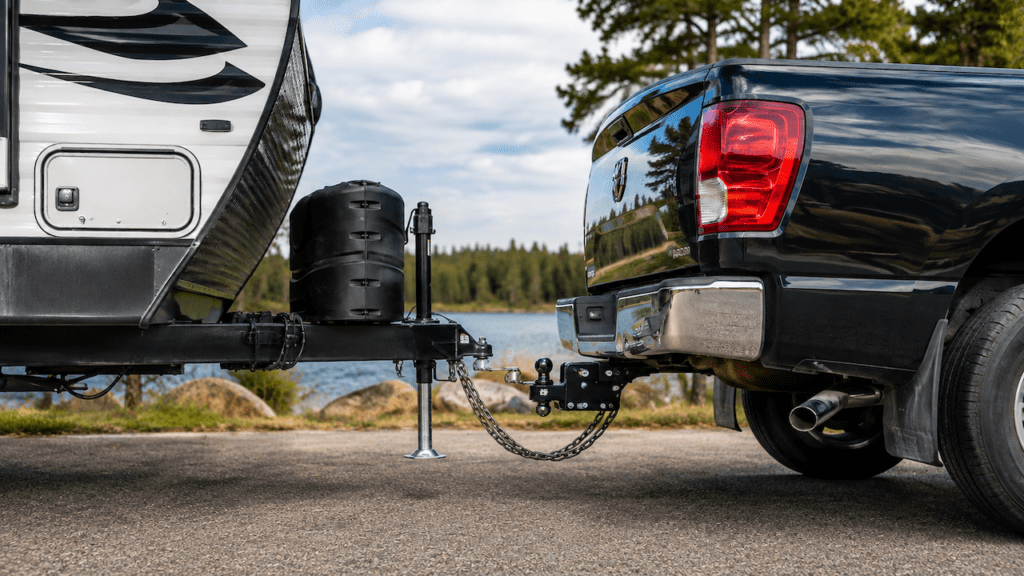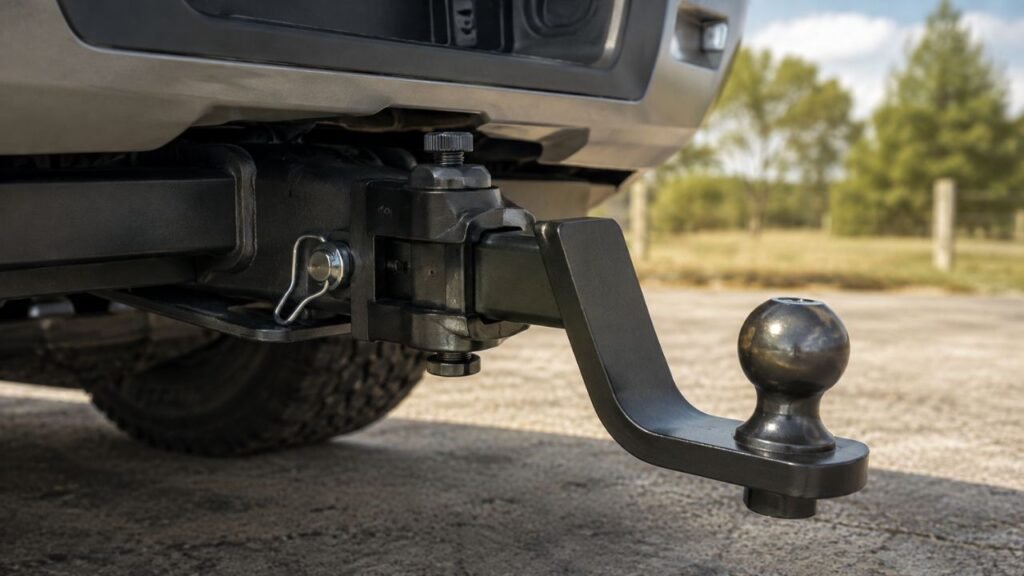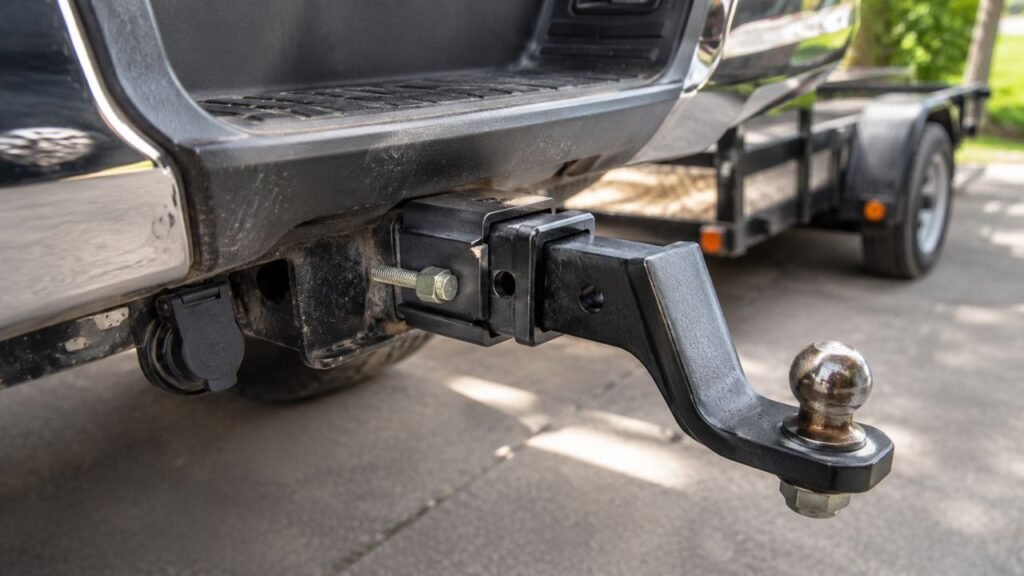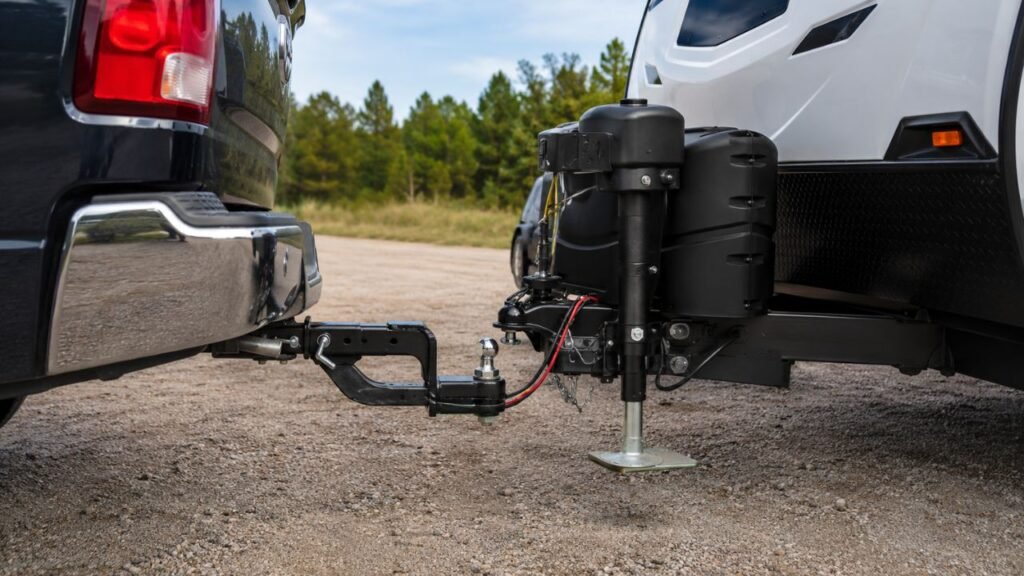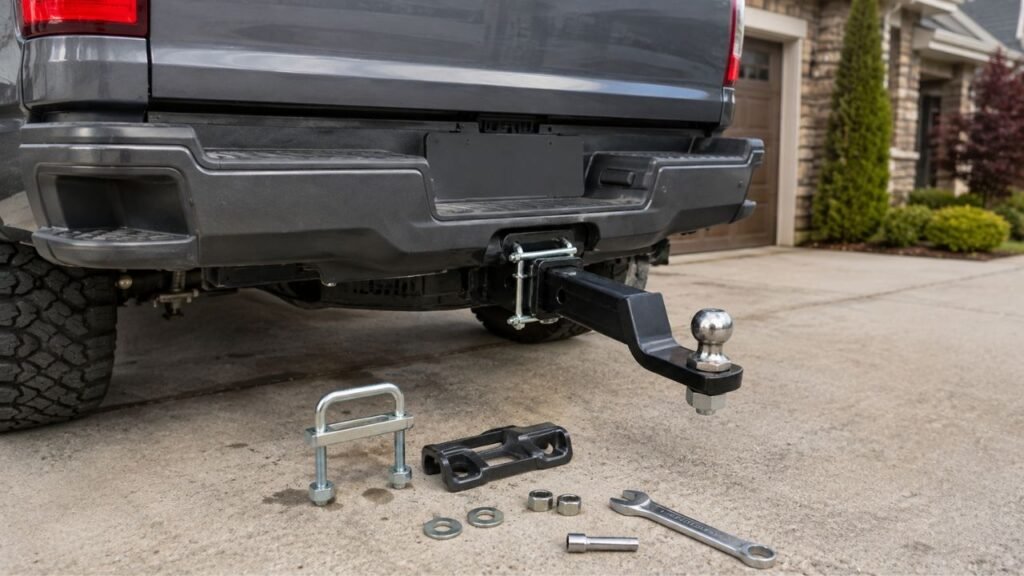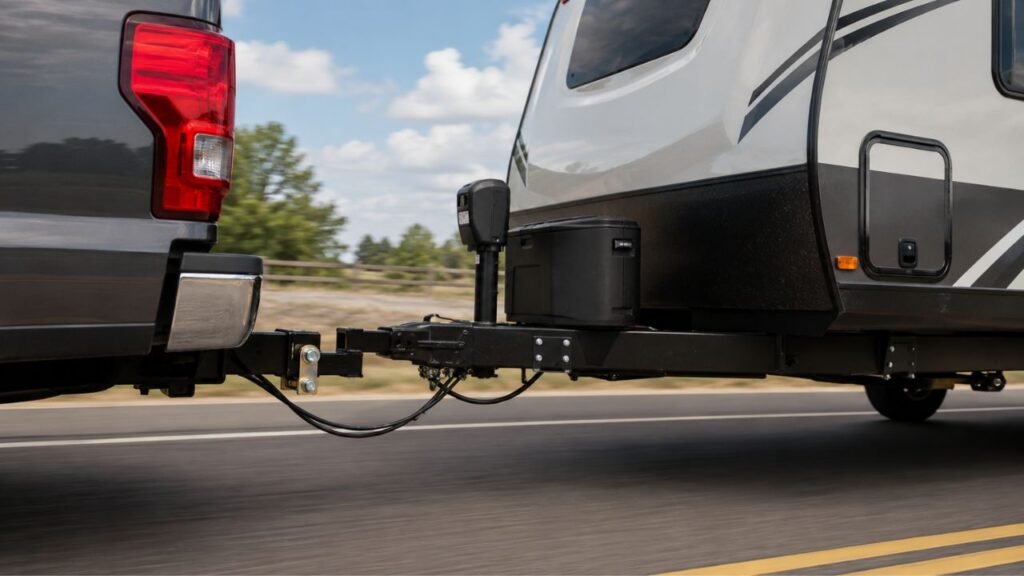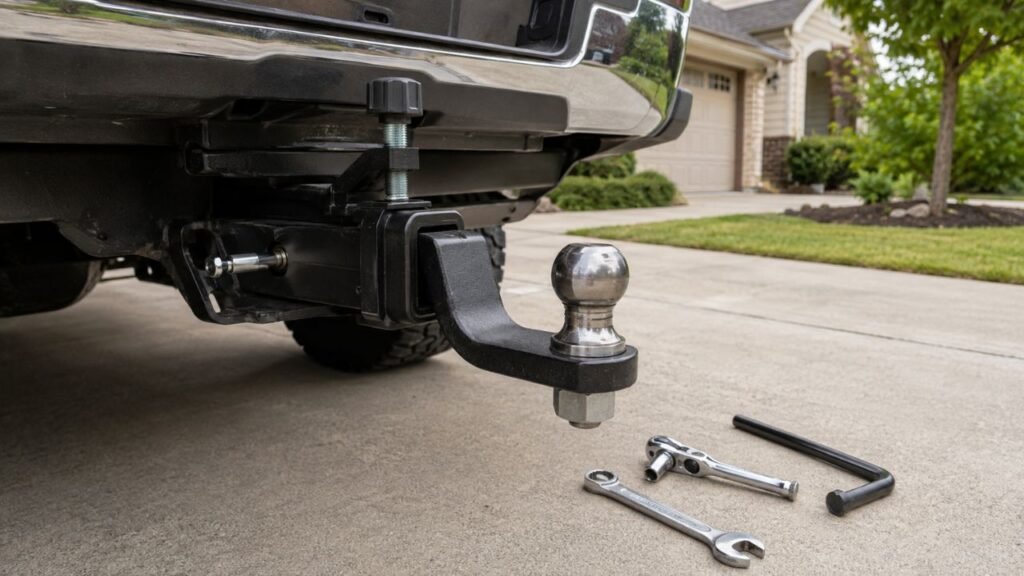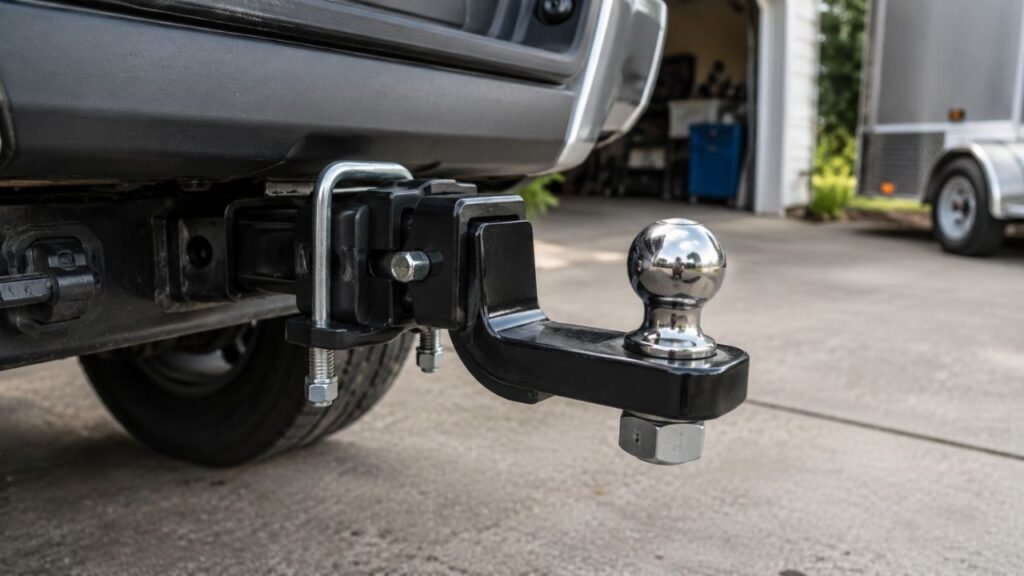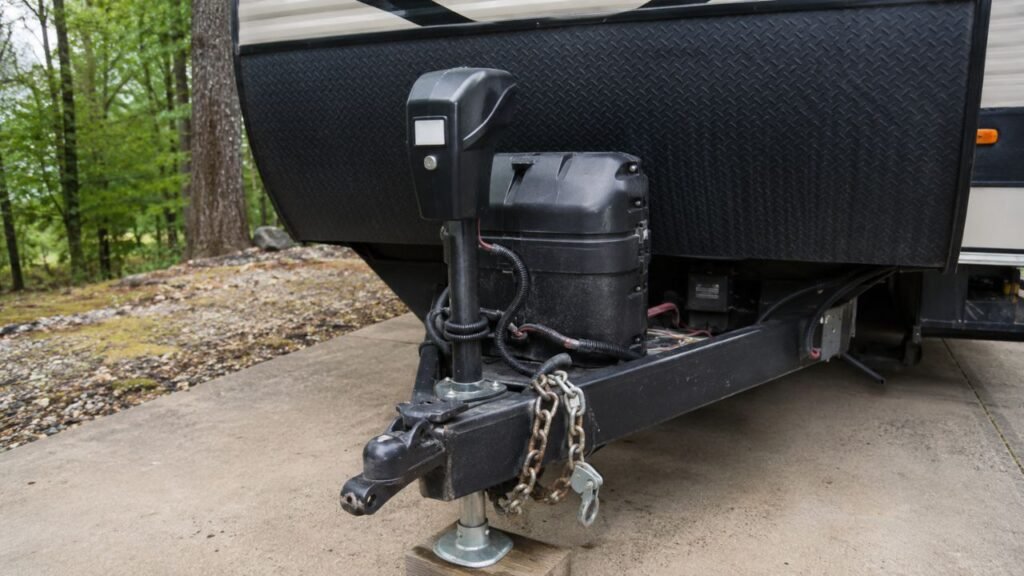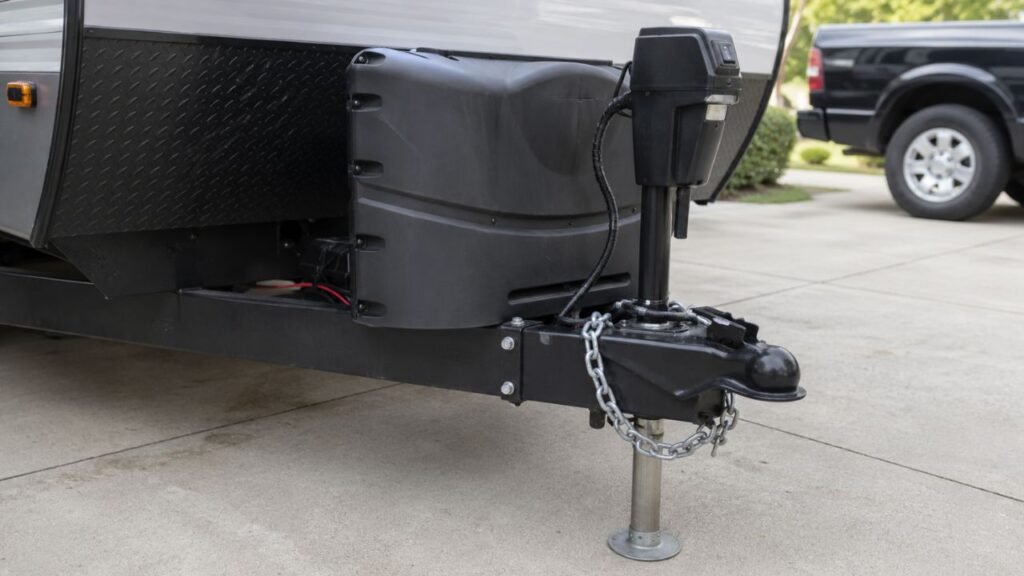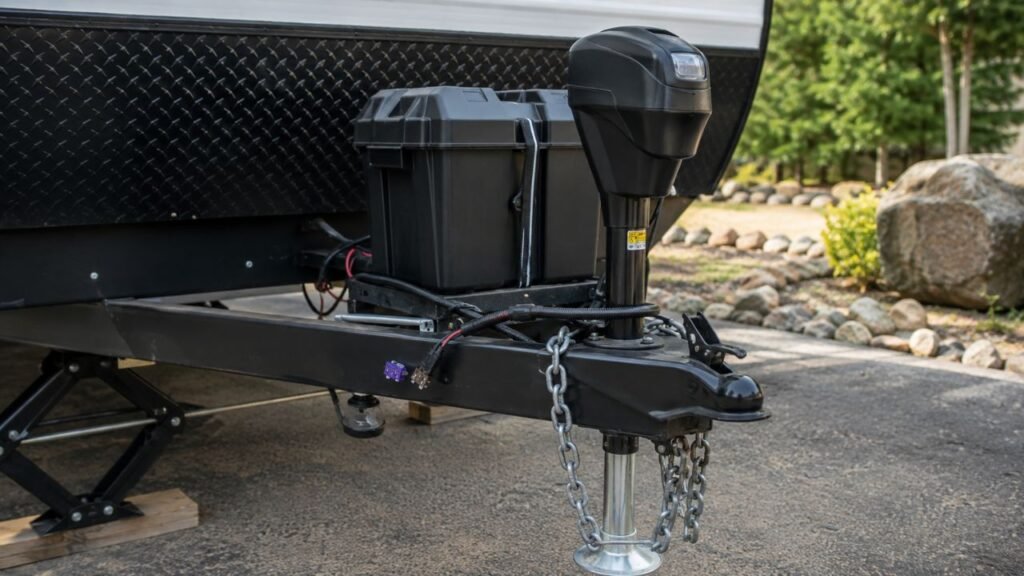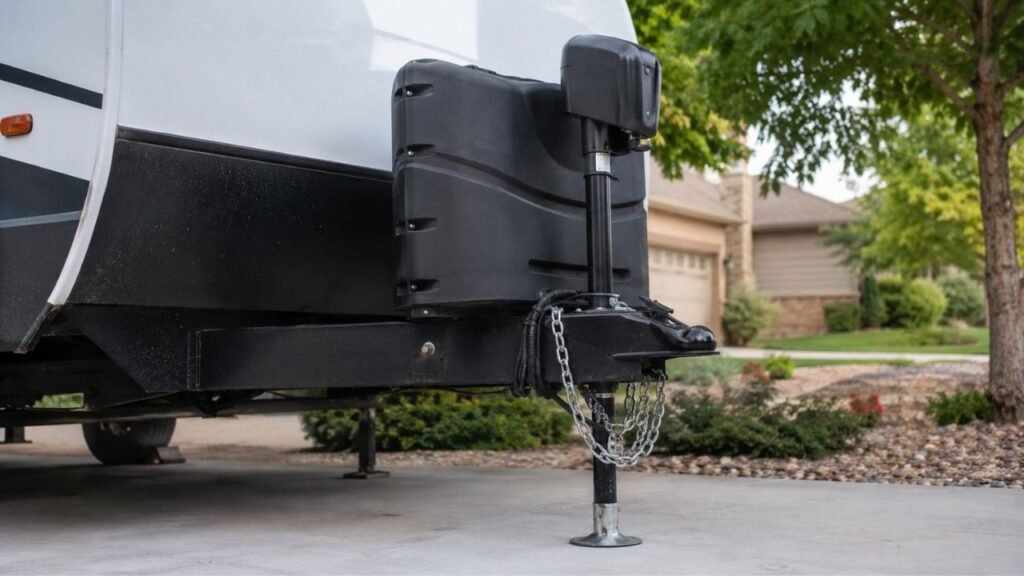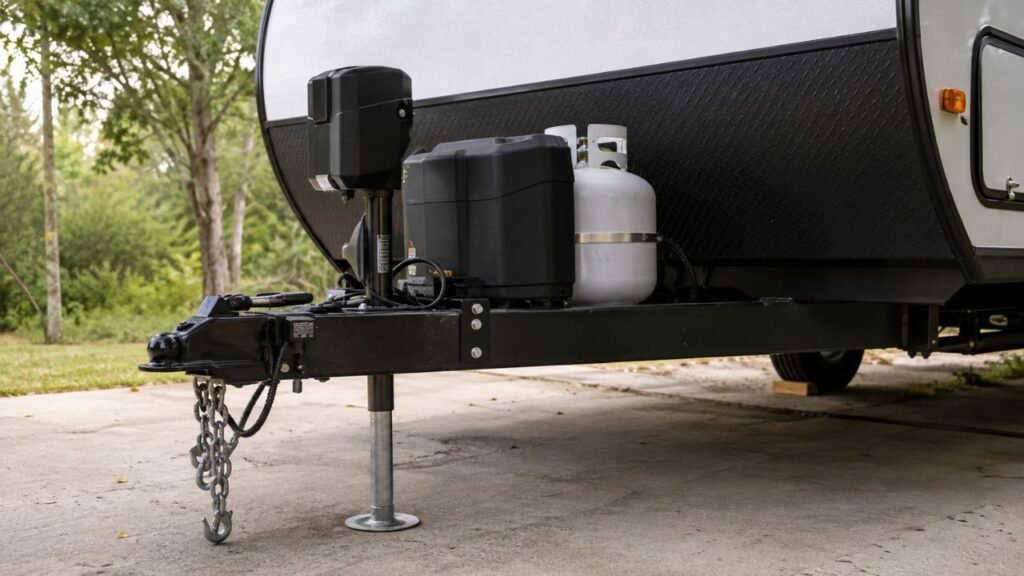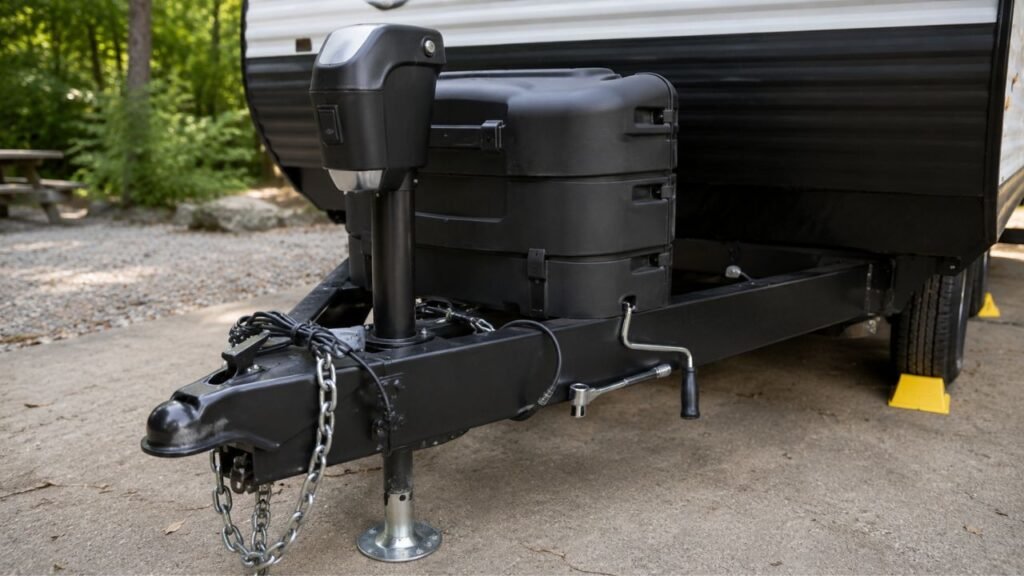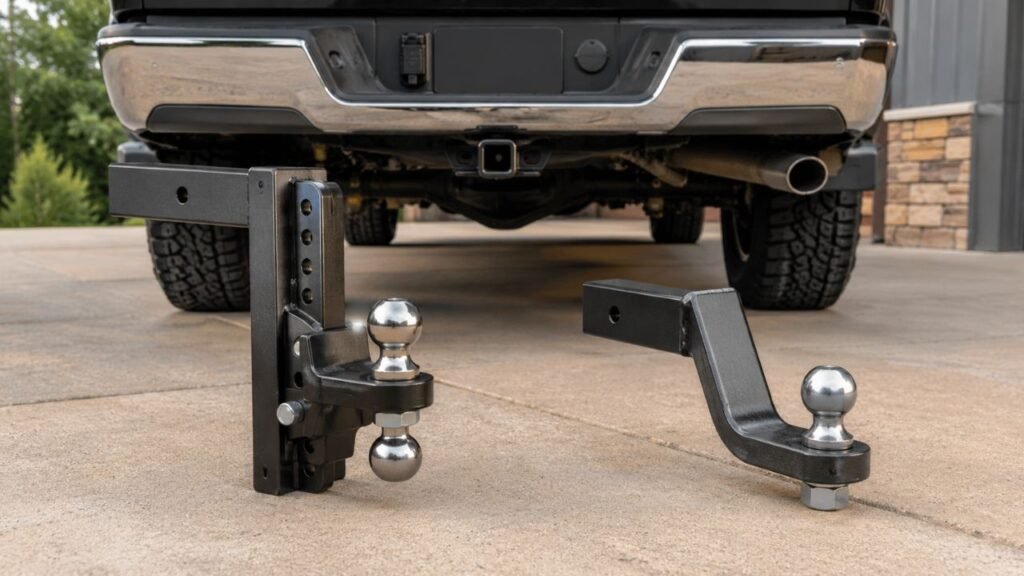
An adjustable hitch lets you change the ball height for different trailers, while a fixed ball mount uses a predetermined drop or rise. Adjustable mounts work well for changing towing setups. Fixed mounts are simpler when you tow the same trailer consistently.
In this guide, I’ll compare both options in practical terms. We’ll cover height, towing behavior, cost, rattle, maintenance, clearance, safety, and which one fits your setup better.
Key Takeaways
- Adjustable ball mounts offer several height positions for different trailers.
- Fixed ball mounts use a predetermined drop or rise measurement.
- Some fixed mounts can be flipped into an approved rise position.
- Adjustable mounts make more sense when towing several different trailers.
- Fixed mounts are ideal for one consistent truck-and-trailer combination.
- Neither design automatically increases your vehicle’s towing capacity.
- Proper ball height matters more than simply choosing an adjustable mount.
- Always match receiver size, ball size, and weight ratings correctly.
Adjustable Hitch vs Fixed Ball Mount: Quick Comparison
Both options perform the same basic job. They connect your receiver hitch to the trailer coupler. The main differences involve adjustability, convenience, cost, weight, and complexity.
| Feature | Adjustable Hitch | Fixed Ball Mount |
| Ball height | Multiple positions | Predetermined rise or drop |
| Best use | Multiple trailers or changing vehicles | One consistent towing setup |
| Height changes | Fast and easy | Usually requires another mount |
| Ball options | Often dual-ball or multi-ball | Usually one installed ball |
| Upfront cost | Usually higher | Usually lower |
| Weight | Generally heavier | Generally lighter |
| Moving parts | More adjustment hardware | Fewer components |
| Rattle potential | Can have more adjustment-point movement | Can still move inside receiver |
| Maintenance | Pins and adjustment points need checking | Generally simpler |
| Ground clearance | Deep-drop models need extra attention | Depends on selected drop |
| Versatility | High | Limited |
| Towing capacity | Depends on individual rating | Depends on individual rating |
The better option depends on how often your towing setup changes.
What Is an Adjustable Hitch?
An adjustable hitch, more accurately called an adjustable ball mount, slides into your vehicle’s receiver hitch. It allows the trailer ball position to move higher or lower.
Most designs use a vertical channel with several mounting holes. You reposition the ball platform and secure it using pins.
This lets one mount accommodate different trailer coupler heights.
Many models also include reversible dual-ball assemblies. For example, one side may have a 2-inch ball. The other may have a 2-5/16-inch ball.
That combination can be helpful if you own several trailers.
However, adjustability does not mean universal compatibility. You still need the correct receiver size, ball diameter, and weight rating.
What Is a Fixed Ball Mount?
A fixed ball mount uses a predetermined amount of drop or rise. It does not have a multi-position vertical adjustment channel.
That makes the design simple and dependable.
If your truck and trailer always require approximately the same ball height, there may be little reason to adjust anything.
One important detail often gets overlooked here.
A fixed mount does not necessarily mean only one possible orientation. Many fixed mounts can be installed in either an approved drop or rise position.
For example, a particular mount might provide a 4-inch drop. Flipping it may provide a different specified rise.
What you cannot do is move through several height settings.
That is the real difference between fixed and adjustable designs.
How Are Adjustable Hitches and Fixed Ball Mounts Different?
There is more to this comparison than adjustable versus non-adjustable. Here are the differences that actually affect everyday towing.
Height Adjustment and Trailer Leveling
Height flexibility is the biggest advantage of an adjustable mount.
Imagine your truck’s receiver sits fairly high. Your utility trailer coupler sits much lower. You may need several inches of drop.
Your boat trailer may sit higher.
With an adjustable mount, you can reposition the ball platform between trips.
A fixed mount works differently. You choose the correct drop or rise beforehand. Once selected, that geometry stays the same during normal use.
If your trailer never changes, that is usually fine.
Towing Multiple Trailers
This is where adjustable mounts become especially useful.
Different trailers can have noticeably different coupler heights. Common examples include:
- Utility trailers
- Boat trailers
- Cargo trailers
- Landscape trailers
- Equipment trailers
- Campers and travel trailers
You might need a 2-inch drop for one trailer. Another trailer might require 5 inches.
Instead of owning several mounts, one adjustable unit may cover both.
That can save storage space and reduce hardware swapping.
Switching Between Tow Vehicles
Receiver height can also change between tow vehicles.
A full-size pickup may place its receiver higher than an SUV. Lift kits, suspension changes, and larger tires can increase the difference.
If you occasionally use different vehicles, an adjustable mount provides flexibility.
However, do not assume the same mount automatically fits both.
The receiver opening must match the shank size. The mount also needs adequate towing and tongue-weight ratings.
Hitch Ball and Coupler Compatibility
Adjustable height does not solve every compatibility problem.
Your trailer coupler must match the hitch ball diameter.
Common trailer ball sizes include:
- 1-7/8 inch
- 2 inch
- 2-5/16 inch
A 2-inch coupler should not be connected to a 1-7/8-inch ball. Likewise, using an oversized ball will not work correctly.
Some adjustable mounts include dual-ball or tri-ball assemblies. That makes switching ball sizes much easier.
A fixed mount can also use different hitch balls. However, changing them may require removing and properly torquing hardware.
Cost
Fixed ball mounts generally cost less upfront.
That makes sense when you need only one specific configuration.
Suppose you tow one utility trailer with one pickup. You already know the required drop. A fixed mount may be all you need.
The situation changes when you own several trailers.
Buying three fixed mounts can eventually cost more than one adjustable unit. You also need somewhere to store those separate mounts.
So think about total use, not simply purchase price.
Weight and Ease of Handling
Adjustable ball mounts are usually heavier.
They need additional metal, pins, channels, and adjustment hardware. Heavy-duty models can become fairly bulky.
That matters if you remove your mount after every towing trip.
A fixed mount is generally easier to carry and store.
For occasional towing, that simplicity can be surprisingly convenient.
Rattle and Receiver Play
Adjustable mounts sometimes have more places where small movements can develop.
The ball platform connects to the adjustment channel. Pins secure those parts together. Each connection may contribute some movement.
You may hear clunking or rattling on rough roads.
However, a fixed mount is not automatically silent.
The fixed shank still slides into your receiver. Clearance between those two pieces can create movement.
So if your hitch rattles, determine where the movement occurs first.
Do not assume the adjustable mechanism is always responsible.
Maintenance and Corrosion
Fixed mounts have fewer adjustment points to maintain.
You should still inspect the hitch ball, pin, shank, welds, and corrosion.
Adjustable mounts need several additional checks.
Pay attention to:
- Adjustment pins
- Pin holes
- Locking mechanisms
- Ball platform movement
- Rust or corrosion
- Damaged clips
- Unusual wear
Road salt and moisture can make adjustment hardware difficult to remove.
Keeping those parts clean can make future height changes much easier.
Ground Clearance
Ground clearance deserves more attention than it usually receives.
A deep-drop mount can sit noticeably lower behind your truck.
That can become a problem when crossing steep driveways, dips, ramps, or uneven campsites.
Adjustable mounts often provide large drop ranges. That makes clearance especially important.
But this is not unique to adjustable hitches.
A fixed mount with a large drop can also scrape the ground.
Choose only the amount of drop your setup actually requires.
Does an Adjustable Hitch Tow Better Than a Fixed Ball Mount?
An adjustable hitch does not automatically tow better than a fixed ball mount.
If both mounts position the hitch ball correctly, either can provide a proper towing connection. The adjustable design simply makes changing that position easier.
This distinction matters.
A trailer that tows poorly may have several other problems.
You could have incorrect tongue weight, poor cargo placement, low tire pressure, worn suspension parts, or excessive speed.
Changing to an adjustable hitch does not automatically correct those issues.
Think of adjustability as a setup advantage.
It helps you reach the correct ball height more easily. It does not replace proper loading or safe towing practices.
Why Does the Correct Ball Mount Height Matter?
Your ball mount should help the trailer sit at its intended towing attitude. Excessive nose-up or nose-down positioning can affect how the trailer behaves.
What Happens When the Trailer Is Nose-High?
A noticeably nose-high trailer can change how weight is carried.
On multi-axle trailers, the axles may not share the load as intended. Handling can also feel less predictable.
A nose-high position may also reduce clearance at the trailer’s rear.
If the angle looks excessive, measure your hitch setup again.
What Happens When the Trailer Is Nose-Low?
A severely nose-low trailer creates a different loading angle.
It may place additional stress on certain suspension or axle components. The front of the trailer may also sit unnecessarily close to the road.
Small differences are not always dramatic.
But the goal is still to bring the trailer reasonably level.
Does Correct Hitch Height Prevent Trailer Sway?
Correct hitch height can support a properly balanced towing setup.
However, it cannot guarantee that trailer sway will disappear.
Sway can also result from:
- Insufficient tongue weight
- Poor cargo placement
- Excessive speed
- Improper tire pressure
- Strong crosswinds
- Worn suspension components
- Improper trailer loading
Do not treat hitch height as the only sway adjustment.
If the trailer becomes unstable, investigate the entire towing setup.
How Do You Measure the Correct Drop or Rise?
You do not need to guess your required ball mount height. A few measurements can show whether you need drop or rise.
- Park your tow vehicle on reasonably level ground.
- Place the uncoupled trailer on level ground.
- Level the trailer as accurately as practical.
- Measure from the ground to the receiver opening.
- Use the top inside edge of the receiver tube.
- Measure from the ground to the trailer coupler’s underside.
- Compare your two measurements.
- If the receiver is higher, you generally need drop.
- If the coupler is higher, you generally need rise.
- Select a correctly rated mount close to that difference.
- Couple the loaded trailer and check its towing attitude again.
Simple Drop Measurement Example
Suppose your receiver height measures 22 inches.
Your level trailer coupler measures 18 inches.
The difference is 4 inches.
You would generally start by looking for approximately 4 inches of drop.
An adjustable mount could then let you fine-tune that position.
A properly sized fixed mount could also work perfectly.
Choose an Adjustable Hitch If…
An adjustable mount makes the most sense when flexibility solves a real towing problem. Consider one when several parts of your setup regularly change.
- You tow several trailers with different coupler heights.
- You switch between more than one tow vehicle.
- Your truck has a relatively high receiver.
- Your trailers require different amounts of drop or rise.
- You frequently change between hitch ball sizes.
- You want fewer separate ball mounts in storage.
- You expect your towing setup to change later.
- You regularly tow for work or property maintenance.
If none of those situations apply, adjustability may provide little benefit.
Choose a Fixed Ball Mount If…
A fixed ball mount is often the better choice when your towing setup stays consistent. You do not need extra adjustment simply because it is available.
- You use the same trailer regularly.
- You tow with the same vehicle.
- Your correct drop or rise is already known.
- Your trailer consistently sits properly when connected.
- You prefer a lighter and simpler mount.
- You want fewer pins and adjustment components.
- You prefer a lower upfront cost.
- You rarely expect your towing setup to change.
There is nothing inferior about choosing a fixed mount.
For the right combination, it can be the simplest solution.
Which Works Better for Common Towing Situations?
Different towing situations make the choice much easier. Here is how I would approach several common setups.
One Pickup and One Boat Trailer
If you tow the same boat with the same truck, a fixed mount is usually enough.
Measure the required drop or rise correctly once.
After that, your setup should remain consistent.
One Truck With Several Trailers
Suppose you own a boat trailer, utility trailer, and cargo trailer.
Their coupler heights may differ considerably.
An adjustable ball mount makes those changes much easier. You can move the ball height instead of changing complete mounts.
A dual-ball design may provide even more convenience.
Lifted Pickup Truck
Lifted trucks often need more drop because the receiver sits higher.
An adjustable mount can provide useful flexibility here.
Just pay close attention to ground clearance.
Do not automatically buy the longest drop available.
Measure what you actually need first.
Contractor Using Several Work Trailers
Contractors frequently switch between cargo, dump, landscape, and equipment trailers.
An adjustable mount can make those changes quicker.
It can also reduce the number of separate mounts carried inside the truck.
Again, every trailer still needs compatible ball sizes and weight ratings.
Occasional Homeowner Towing One Utility Trailer
A basic fixed mount often makes more sense here.
If you tow the same utility trailer a few times yearly, additional adjustment may not provide much value.
Get the correct fixed drop or rise and keep things simple.
Does an Adjustable Hitch Increase Towing Capacity?
No. An adjustable hitch does not increase your vehicle’s towing capacity.
This is one of the most important points to understand.
Imagine your ball mount carries a 20,000-pound rating. That does not mean your truck can suddenly tow 20,000 pounds.
Your towing setup includes several rated components.
These can include:
- Tow vehicle
- Receiver hitch
- Ball mount
- Hitch ball
- Trailer coupler
- Safety chains
- Weight-distribution equipment, when used
You must stay within the applicable limits for the complete setup.
A stronger ball mount cannot compensate for a lower vehicle rating.
Safety and Compatibility Checks Before Using Either Ball Mount
Whether you choose fixed or adjustable, basic compatibility matters more than style. Run through these checks before towing.
- Match the ball mount shank to your receiver size.
- Confirm the ball mount’s gross trailer weight rating.
- Confirm its tongue-weight rating.
- Match the hitch ball diameter to the trailer coupler.
- Check the hitch ball’s individual weight rating.
- Follow the manufacturer’s approved rise and drop positions.
- Secure all hitch pins and clips correctly.
- Inspect adjustable pins for wear or damage.
- Check fixed mounts for cracks or damaged welds.
- Watch for excessive receiver or shank movement.
- Check corrosion before every towing season.
- Maintain enough road and driveway clearance.
- Confirm the trailer sits at the intended towing attitude.
- Never exceed the tow vehicle’s rated limits.
I also recommend checking your setup again after changing trailers.
Something as simple as a different coupler height can change everything.
Common Mistakes When Choosing Between Adjustable and Fixed Mounts
Most ball mount problems begin before the trailer gets connected. Avoid these common mistakes when deciding which style to use.
- Buying a hitch before measuring receiver and coupler heights
- Assuming more drop automatically creates a better setup
- Choosing the wrong receiver shank size
- Using the wrong hitch ball diameter
- Ignoring tongue-weight ratings
- Assuming adjustable hitches automatically stop trailer sway
- Assuming fixed mounts never work in a rise position
- Buying excessive drop without considering ground clearance
- Ignoring worn adjustment holes or pins
- Assuming fixed mounts cannot rattle
- Choosing equipment based only on appearance
- Believing a high-rated ball mount increases truck towing capacity
One quick measurement session can prevent most of these mistakes.
Adjustable Hitch vs Fixed Ball Mount: Which One Should You Choose?
Choose based on how often your towing combination changes.
If you use the same truck and same trailer, a properly sized fixed ball mount is usually the easiest option. It costs less, weighs less, and keeps the setup simple.
If you tow different trailers, different coupler heights, or different vehicles, an adjustable hitch becomes much more useful. It lets you reposition the ball without buying several mounts.
I would not choose based on which design looks stronger.
Instead, focus on correct height, sufficient ratings, proper ball size, receiver compatibility, and usable ground clearance.
That approach will serve you much better on the road.
Final Verdict
An adjustable hitch is the more versatile option, but versatility is not always necessary. If your towing setup changes regularly, being able to move the ball height can save considerable time and frustration.
A fixed ball mount is often better for a predictable setup. Once you have the correct rise or drop, there is very little to adjust.
So the answer is fairly simple.
Changing trailers or vehicles frequently? Choose adjustable.
Using the same properly matched setup every time? Fixed is usually enough.
Related FAQs
Is an Adjustable Hitch Better Than a Fixed Ball Mount?
Not automatically. An adjustable hitch is better when you need several height positions. A fixed mount can be equally effective when one truck and trailer combination always requires the same drop or rise.
Are Adjustable Hitches Safe for Heavy Trailers?
Yes, provided the adjustable hitch has adequate weight ratings and is used correctly. Always confirm the ball mount, hitch ball, receiver, vehicle, and trailer ratings before towing.
Do Adjustable Hitches Rattle More Than Fixed Ball Mounts?
They can because adjustable designs contain additional pins and connection points. However, fixed ball mounts can also rattle where the shank fits inside the receiver.
Can You Flip a Fixed Ball Mount for More Rise?
Many fixed ball mounts can be used in an approved rise position, but not every model allows every orientation. Follow the manufacturer’s specified rise, drop, and installation instructions.
How Much Drop or Rise Do I Need for My Trailer?
Measure your receiver height and level trailer coupler height. The difference between those measurements provides your approximate required rise or drop.
Can an Adjustable Hitch Reduce Trailer Sway?
It may help you achieve the correct trailer attitude, but it does not directly cure sway. Proper tongue weight, cargo placement, tires, speed, and overall setup also matter.
Can One Adjustable Hitch Work With Different Ball Sizes?
Yes, if the mount uses a compatible dual-ball or multi-ball assembly. Always match the selected ball diameter and rating to the trailer coupler.
Does an Adjustable Hitch Change Tongue Weight?
Changing hitch height can affect trailer attitude, but it does not replace proper cargo loading. Tongue weight should still be checked and kept within the required range for your setup.
Does an Adjustable Hitch Increase Towing Capacity?
No. A higher-rated adjustable hitch does not increase your vehicle’s towing capacity. Your towing setup must stay within the ratings of the vehicle and every applicable component.
Can I Use an Adjustable Ball Mount With a Weight Distribution Hitch?
A standard adjustable ball mount should not automatically be treated as weight-distribution equipment. Weight-distribution systems use their own rated shanks, heads, spring bars, and setup procedures.

Ryan Mitchell writes for readers who prefer independent travel and practical outdoor motorhome living. His how-to guides and reviews focus on simplicity, durability, and real value. He brings a calm, hands-on perspective to every topic.