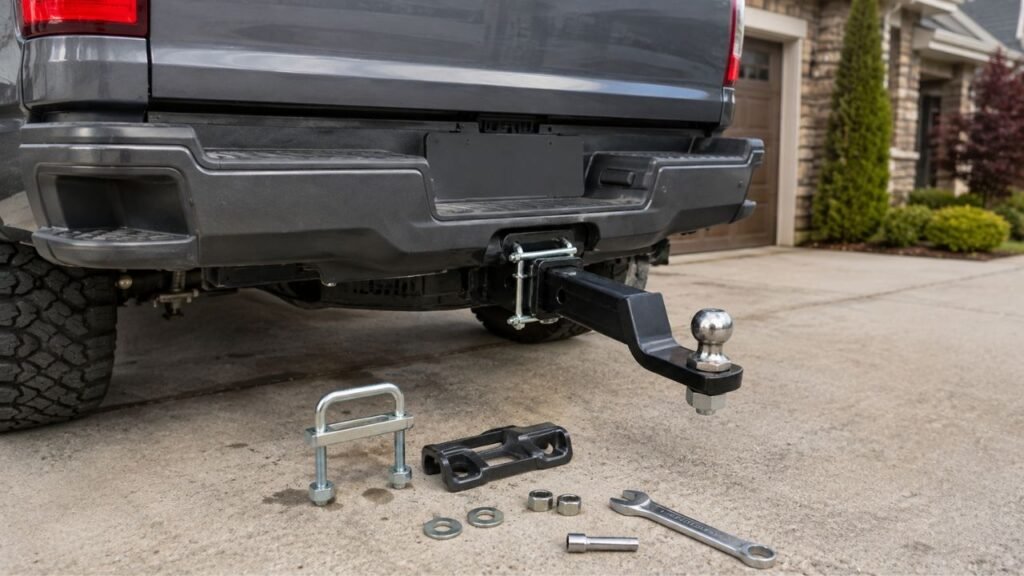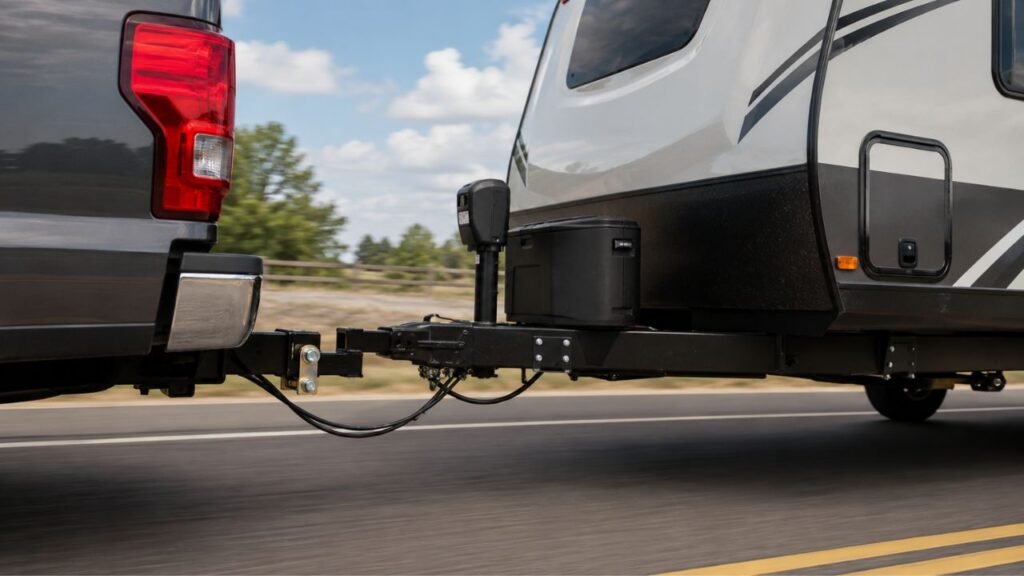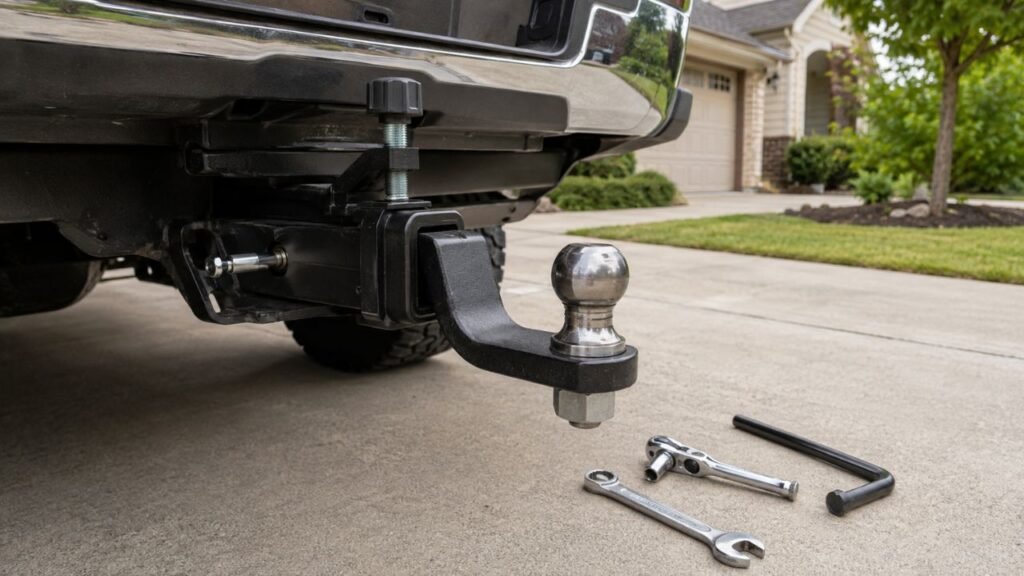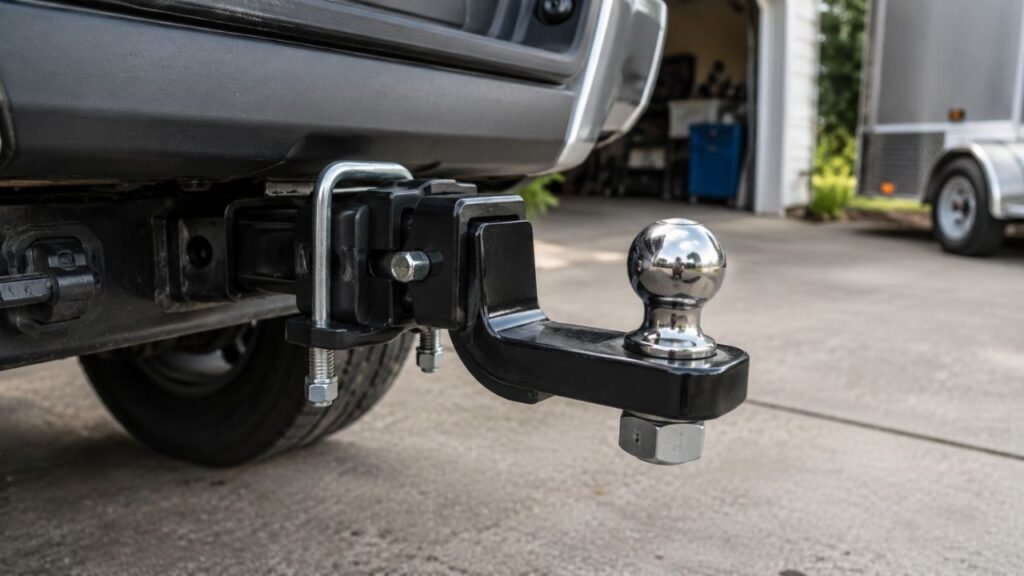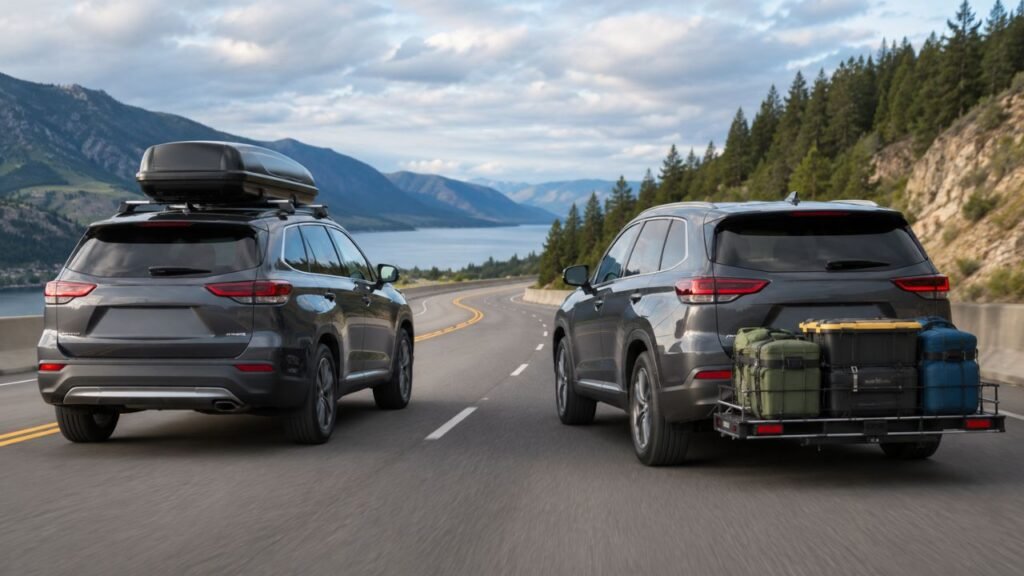
A roof cargo box usually changes vehicle handling more than a hitch cargo carrier when both carry similar weight. Roof cargo sits high, raises the vehicle’s center of gravity, and catches more wind. Hitch cargo stays lower, although heavy rear loads can affect suspension, steering, and braking.
That simple answer needs some context before you choose. Below, I’ll compare cornering, crosswinds, highway stability, braking, weight distribution, and real-world loading.
Key Takeaways
- A roof cargo box usually changes overall handling more.
- Roof cargo raises your vehicle’s center of gravity.
- Higher cargo can increase body roll during cornering.
- Roof boxes are usually more noticeable in strong crosswinds.
- Hitch cargo stays low but puts weight behind the rear axle.
- Heavy hitch loads can cause rear suspension sag.
- Too much rear weight may change steering and braking feel.
- Cargo weight matters just as much as mounting location.
- Vehicle, hitch, roof, and axle ratings always come first.
Hitch Cargo Carrier vs Roof Cargo Box: Quick Handling Comparison
Both systems change how your vehicle carries weight. However, they change it in very different ways.
| Handling Factor | Roof Cargo Box | Hitch Cargo Carrier | Usually Changes More |
| Center of gravity | Raises weight higher | Keeps weight relatively low | Roof box |
| Body roll | Can increase noticeably | Usually changes less | Roof box |
| Crosswind sensitivity | More exposed to wind | Mostly protected behind vehicle | Roof box |
| Highway aerodynamics | Larger effect | Usually smaller effect | Roof box |
| Rear suspension sag | Usually limited | Possible with heavy cargo | Hitch carrier |
| Rear weight bias | Small to moderate | Can be significant | Hitch carrier |
| Steering feel | Can feel more top-heavy | May feel lighter at front when overloaded | Depends |
| Braking behavior | Added weight and higher load | Added weight behind rear axle | Depends |
| Parking | Adds height | Adds rear length | Different issue |
| Emergency lane changes | More body movement possible | Usually smaller change unless heavily loaded | Roof box |
The important word here is usually. A lightly loaded roof box may affect your vehicle less than a heavily loaded hitch carrier.
That is why cargo weight cannot be ignored.
Why a Roof Cargo Box Usually Changes Handling More
A roof box puts cargo at the highest practical point on your vehicle. That location affects both weight transfer and airflow.
It Raises the Vehicle’s Center of Gravity
Every vehicle has a center of gravity.
You can think of it as the point where the vehicle’s mass is balanced. Cars are designed to keep that point reasonably low.
Placing cargo on the roof moves some weight much higher.
The effect may be small with lightweight clothing or sleeping bags. It becomes more noticeable as roof cargo gets heavier.
A higher center of gravity can make your vehicle feel less planted. You may notice more movement when entering a curve quickly.
This doesn’t mean a properly loaded roof box is unsafe.
It simply means your vehicle may respond differently than usual.
It Can Increase Body Roll During Turns
Body roll is the leaning sensation you feel while cornering.
Some vehicles already lean more than others. Tall SUVs and softer crossovers can show more body movement naturally.
Adding weight to the roof can increase that sensation.
You may notice it most during:
- Highway entrance ramps
- Curving mountain roads
- Quick lane changes
- Tight neighborhood turns
- Sudden steering corrections
Smooth steering becomes more important when carrying heavier roof cargo.
You don’t need to crawl around every corner. Just remember that your vehicle is carrying weight higher than normal.
Crosswinds Have More Leverage on Roof Cargo
Wind is another major difference.
A roof box sits directly in moving air. It also increases the vehicle’s exposed surface area.
That can make strong crosswinds more noticeable.
You might feel this while crossing a bridge. You may also notice it when passing large trucks.
Open highways can make the effect more obvious.
A gust does not only push against the box. Because the box sits high, that force has more leverage against the vehicle.
This is one reason roof cargo can feel different even when it isn’t extremely heavy.
The Effect Becomes More Noticeable at Highway Speed
Aerodynamic forces rise quickly as vehicle speed increases.
Around town, a streamlined roof box may feel fairly normal.
At interstate speeds, airflow becomes much more important.
The box creates additional drag and airflow disturbance above the vehicle. Crosswinds can also create stronger steering corrections.
That’s why many drivers notice roof cargo most during longer highway trips.
How a Hitch Cargo Carrier Changes Vehicle Handling
A hitch carrier avoids the high center-of-gravity problem. However, its rearward position creates a different set of concerns.
The Cargo Stays Low, but It Sits Farther Back
This is the biggest difference between these systems.
A hitch carrier usually positions cargo near bumper height.
That keeps the weight much lower than roof cargo.
From a center-of-gravity standpoint, that’s helpful.
However, the load also sits behind the rear axle.
That rearward position creates leverage against the vehicle’s suspension and weight distribution.
The farther the cargo sits from the axle, the more important that leverage becomes.
So a hitch carrier solves one problem but introduces another.
Heavy Loads Can Make the Rear Suspension Sag
You’ve probably seen vehicles with the rear end sitting unusually low.
That often happens when too much weight sits over, or behind, the rear axle.
A heavily loaded hitch carrier can create similar sag.
Some vehicles tolerate rear cargo better than others.
Soft suspension may compress noticeably with coolers, tools, generators, or other dense cargo.
Rear sag can:
- Reduce ground clearance
- Increase scraping on steep driveways
- Change suspension geometry
- Alter headlight aim
- Affect how the vehicle feels over bumps
Carrier capacity alone does not determine safe loading.
Your vehicle must also be capable of supporting that weight.
Too Much Rear Weight Can Change Steering Feel
Rear loading can also influence the front axle.
Imagine pushing down on the back of a long board.
The opposite end tends to become lighter.
A vehicle isn’t exactly the same, but the basic leverage idea helps.
Very heavy cargo behind the rear axle can alter front-to-rear loading.
If the effect becomes large enough, steering may feel lighter.
The vehicle might also feel less responsive than normal.
This is more likely when the vehicle is already heavily loaded inside.
Passengers, luggage, and rear cargo all count toward total payload.
Rear Weight Can Affect Braking Behavior
Extra cargo increases the amount of mass your brakes must control.
The location of that weight also matters.
A properly loaded hitch carrier may create little noticeable difference. A heavily loaded setup can change how the rear suspension settles while braking.
Stopping distance may also increase simply because the vehicle weighs more.
Give yourself more following distance when carrying substantial cargo.
Smooth braking is especially helpful during wet or slippery conditions.
Center of Gravity vs Weight Distribution: What Is the Real Difference?
This is the easiest way to understand the whole comparison.
A roof cargo box mainly changes where the weight sits vertically.
A hitch carrier mainly changes where the weight sits front-to-back.
Roof cargo moves weight upward.
That can increase body roll and wind sensitivity.
Hitch cargo moves weight rearward.
That can increase rear suspension compression and alter axle loading.
Neither location automatically makes a vehicle unstable.
Problems usually appear when cargo becomes heavy, poorly positioned, or exceeds vehicle limits.
So when comparing both systems, don’t ask only:
“Which carrier is better?”
Ask:
“Where is this weight going on my specific vehicle?”
That question gives you a much more useful answer.
Which Feels More Different in Common Driving Situations?
The handling difference can change depending on where you’re driving. Here’s what you may notice in everyday situations.
Around Town
At lower speeds, a lightly loaded roof box may barely change driving feel.
Your bigger concern may simply be vehicle height.
Parking garages, drive-thrus, and low tree branches suddenly matter more.
A hitch carrier creates a different problem.
Your vehicle is now longer than usual.
Backing into parking spaces requires more attention. You also need to remember the carrier while reversing near curbs.
Heavy hitch cargo may feel more noticeable over bumps.
Highway Driving
This is where roof boxes usually become more noticeable.
Airflow around the vehicle is much stronger at highway speeds.
You may hear additional wind noise.
You may also notice stronger responses to gusts.
A hitch carrier generally sits behind the main body of the vehicle. That position keeps it away from much of the direct airflow.
A properly loaded hitch carrier may therefore feel more natural on long highway trips.
However, heavy rear cargo can still affect ride quality.
Curvy Roads
Roof boxes generally create the larger change on curvy roads.
The higher cargo position can increase body movement.
That does not mean every curve becomes difficult.
You may simply notice more leaning than normal.
Reduce aggressive steering inputs and keep your speed reasonable.
A hitch carrier often feels more planted because its cargo sits lower.
Again, this assumes the hitch isn’t overloaded.
Strong Crosswinds
A hitch carrier usually wins here.
Roof boxes provide additional surface area high above the road.
That makes side gusts easier to feel.
Large trucks can also create sudden airflow changes when passing.
Keep both hands available for steering during gusty conditions.
Small, smooth corrections work better than sudden steering movements.
Emergency Braking or Quick Lane Changes
There is no universal winner in an emergency maneuver.
A roof box raises the center of gravity.
A hitch carrier moves weight farther behind the rear axle.
Either can affect vehicle behavior when heavily loaded.
This is exactly why comparing equal cargo weights matters.
A 60-pound roof load should not be compared with a 350-pound hitch load.
Does Cargo Weight Matter More Than Carrier Type?
Sometimes, yes.
Carrier location matters, but cargo weight can easily change the result.
Imagine one vehicle carrying 60 pounds inside a roof box.
Now imagine another carrying 300 pounds behind the bumper.
The roof setup has the higher cargo position.
But the hitch setup is carrying five times more weight.
You cannot reasonably assume the roof setup will affect handling more.
Always calculate the complete load.
That includes:
- Cargo weight
- Carrier weight
- Passengers
- Interior luggage
- Other accessories
- Anything already stored inside the vehicle
You should also understand your vehicle’s main weight limits.
These can include:
- Vehicle payload capacity
- Gross Vehicle Weight Rating
- Front Gross Axle Weight Rating
- Rear Gross Axle Weight Rating
- Dynamic roof load rating
- Hitch or receiver load rating
- Cargo carrier rating
The lowest applicable limit controls what you can safely carry.
Why You Should Not Compare a 100-Pound Roof Load With a 400-Pound Hitch Load
This is where many roof-versus-hitch comparisons become misleading.
Carrier location is only one part of the equation.
You also need to consider total mass.
A fair comparison looks at:
carrier weight + cargo weight + location of that weight.
Suppose your roof system weighs 40 pounds.
You add another 60 pounds of luggage.
That’s 100 pounds total above the vehicle.
Now suppose your hitch carrier weighs 60 pounds.
You load 300 pounds of equipment.
That’s 360 pounds sitting behind the rear axle.
The hitch setup may create the bigger handling change despite staying lower.
This doesn’t contradict the general rule.
With comparable loads, roof cargo usually affects overall handling more.
With dramatically different loads, total weight can become the bigger factor.
How Aerodynamics Change Highway Stability
Weight isn’t the only thing changing your vehicle. External cargo also changes how air moves around it.
Roof Box Aerodynamics
A roof box sits directly in the airflow.
Modern roof boxes are shaped to reduce drag.
They cannot eliminate it completely.
The vehicle must push both itself and the box through the air.
That can cause:
- More wind noise
- Higher fuel consumption
- Greater sensitivity to crosswinds
- More steering correction during strong gusts
The effect increases with speed.
A poorly positioned or unusually bulky roof load may feel worse.
Keep the box properly mounted and facing the correct direction.
Hitch Carrier Aerodynamics
A hitch carrier usually sits behind the vehicle.
Much of the air has already been pushed aside by the vehicle’s body.
That means the carrier often creates less aerodynamic disturbance.
Open trays usually have a particularly small frontal area.
Large hitch-mounted cargo boxes can still affect airflow.
However, they normally remain lower than roof systems.
Remember that lower aerodynamic drag does not make rear weight harmless.
You still need to respect your vehicle’s loading limits.
Which Vehicles Notice the Difference Most?
Vehicle design changes how noticeable either carrier feels. Some vehicles react more strongly than others.
- Small sedans: Roof cargo represents a larger change compared with overall vehicle size.
- Tall SUVs: Their higher body makes careful roof loading especially important.
- Crossovers: Either system can work well within proper load ratings.
- Soft-suspension vehicles: Heavy hitch loads may create noticeable rear sag.
- Short-wheelbase vehicles: Rearward cargo may have a stronger leverage effect.
- EVs: Roof drag can noticeably reduce highway driving range.
- Fully loaded family vehicles: Remaining payload may already be limited.
- Older vehicles: Worn suspension can make rear loading feel more noticeable.
Vehicle-specific limits matter more than general recommendations.
Check the owner’s manual before loading either system heavily.
When Can a Hitch Carrier Change Handling More Than a Roof Box?
Roof boxes usually create the larger handling change with similar cargo. Certain situations can reverse that result.
- The hitch carrier carries substantially more total weight.
- The vehicle already has heavy cargo near the rear.
- Rear suspension is soft or already compressed.
- Cargo sits near the outer edge of the carrier.
- A hitch extender moves the carrier farther backward.
- The vehicle has limited remaining payload capacity.
- The carrier approaches the receiver’s applicable load limit.
- Rear axle loading is already near its rating.
- Heavy passengers are sitting in the rear seats.
- The vehicle has a relatively short wheelbase.
Hitch extenders deserve extra attention.
Moving the carrier farther behind the vehicle increases leverage.
Some receiver and accessory ratings may also change with extenders.
Always follow the specific instructions for your setup.
How to Load a Roof Cargo Box for Better Handling
Where you place cargo inside the box can make a noticeable difference. A few simple habits help keep your vehicle predictable.
- Stay within your vehicle’s dynamic roof load rating.
- Include crossbars and box weight in your calculation.
- Keep heavy items as low as practical.
- Center cargo from left to right.
- Spread weight across the box when appropriate.
- Prevent bags from sliding during braking.
- Avoid concentrating heavy items at one end.
- Secure everything according to box instructions.
- Recheck mounting hardware during long trips.
- Remove unnecessary heavy items before driving.
Do not assume the cargo box’s capacity equals your vehicle’s capacity.
Your roof may have a lower allowable load.
How to Load a Hitch Cargo Carrier Without Hurting Handling
Hitch carriers work best when heavy cargo stays close to the vehicle. Rearward placement should be minimized whenever possible.
- Count the carrier’s weight before adding cargo.
- Check your vehicle and receiver limits first.
- Keep heavier items nearest the bumper.
- Center cargo from left to right.
- Avoid stacking heavy items excessively high.
- Secure cargo against forward and sideways movement.
- Check rear suspension height after loading.
- Watch ground clearance on steep driveways.
- Verify rear lights remain visible.
- Make sure the license plate isn’t improperly blocked.
- Check exhaust clearance around bags or plastic containers.
- Recheck straps after driving several miles.
If the rear suspension looks unusually compressed, investigate before driving farther.
Visible sag is a sign worth taking seriously.
What About Fuel Economy?
Roof boxes usually affect fuel economy more than hitch carriers.
The reason is mostly aerodynamic drag.
A roof box sits directly in high-speed airflow.
The vehicle’s engine or electric motors must work harder to maintain speed.
Hitch cargo generally remains behind the vehicle.
That usually results in a smaller aerodynamic penalty.
Real-world testing has shown meaningful highway differences between these systems.
However, the exact MPG change varies greatly.
Vehicle shape, speed, box design, cargo size, and weather all matter.
Fuel economy isn’t exactly the same thing as handling.
Still, it helps show how strongly roof cargo interacts with airflow.
If you regularly drive long interstate distances, that matters.
Other Differences That Matter Before Choosing
Handling should be a major consideration, but it isn’t the only one. These practical differences may decide which system fits your trips.
| Practical Factor | Roof Cargo Box | Hitch Cargo Carrier |
| Loading height | Requires overhead lifting | Easy low-level loading |
| Garage clearance | Adds vehicle height | Keeps roof height unchanged |
| Parking length | No major change | Adds length behind vehicle |
| Rear hatch access | Usually unaffected | May become restricted |
| Backup camera | Usually unaffected | May be partially blocked |
| Parking sensors | Usually unaffected | Can detect carrier as obstacle |
| Weather protection | Excellent with hard box | Depends on carrier design |
| Road grime | Less exposed | More exposed behind vehicle |
| Long skis or gear | Very convenient | Usually less practical |
| Heavy coolers | Harder to lift | Much easier to load |
| Receiver required | No | Yes |
| Crossbars required | Yes | No |
| Ground clearance | Usually unaffected | Can decrease at rear |
| Overhead clearance | Reduced | Unchanged |
Neither option wins every category.
Choose around the cargo you actually carry most often.
Hitch Cargo Carrier or Roof Cargo Box: Which Should You Choose?
The better carrier depends on your cargo, vehicle, and driving habits. Start with your vehicle ratings before considering convenience.
Choose a Roof Cargo Box If…
A roof box usually makes more sense when:
- Your cargo is relatively light but bulky.
- You regularly carry skis or long gear.
- Keeping the hitch free matters.
- You need regular rear hatch access.
- Your vehicle has adequate roof capacity.
- You don’t mind lifting items overhead.
- Your parking locations have enough height clearance.
- Weather protection is a major priority.
Roof boxes work particularly well for clothing and lighter travel gear.
Those items provide useful volume without adding extreme roof weight.
Choose a Hitch Cargo Carrier If…
A hitch carrier may suit you better when:
- You want a smaller center-of-gravity change.
- You frequently carry heavy coolers or totes.
- Lifting cargo overhead is difficult.
- You use parking garages regularly.
- Your vehicle has a suitable receiver.
- Rear axle capacity is sufficient.
- You can accept additional vehicle length.
- You want less aerodynamic drag.
Heavy cargo is usually easier to manage near bumper height.
Just don’t confuse easier loading with unlimited capacity.
Choose Based on Weight Limits First If…
If either setup approaches a vehicle limit, stop comparing convenience.
Vehicle ratings come first.
The “better” cargo system is the one your vehicle can safely support.
Never exceed a weight limit because another carrier seems inconvenient.
Final Verdict
With similar cargo weights, a roof cargo box usually changes vehicle handling more than a hitch cargo carrier.
Its higher position raises the vehicle’s center of gravity.
That can increase body roll during turns.
The box also sits directly in moving air.
This makes crosswinds and highway aerodynamics more noticeable.
A hitch carrier keeps cargo much lower.
That normally makes it feel more stable during cornering and highway driving.
But don’t treat a hitch carrier as handling-neutral.
Heavy cargo behind the rear axle can compress the suspension.
It can also alter steering feel, braking, and weight distribution.
My practical rule is simple.
Use the roof for lighter, bulky cargo. Use the hitch for heavier cargo when your vehicle’s rear load ratings allow it.
Whichever option you choose, stay within every applicable vehicle rating.
That matters far more than winning a roof-versus-hitch argument.
Related FAQs
Does a Roof Cargo Box Make a Car Less Stable?
A roof cargo box can make a vehicle feel slightly less stable because cargo sits higher above the road. Heavier roof loads can increase body roll and make crosswinds more noticeable, especially during highway driving.
Does a Hitch Cargo Carrier Affect Steering?
Yes, a heavily loaded hitch carrier can affect steering because its weight sits behind the rear axle. Moderate loads may create little noticeable difference, while excessive rear loading can make steering feel lighter or less responsive.
Can a Hitch Cargo Carrier Make the Front of a Car Feel Light?
It can if enough weight is positioned far behind the rear axle. Rearward cargo creates leverage and changes axle loading, so always stay within vehicle, receiver, axle, and payload limits.
Does a Roof Box Increase Body Roll?
A loaded roof box can increase body roll because it raises the vehicle’s overall center of gravity. The change is usually more noticeable with heavier cargo, taller vehicles, and quicker cornering.
Is a Hitch Cargo Carrier Safer Than a Roof Box?
Neither design is automatically safer. A hitch carrier usually causes less center-of-gravity change, while a roof box avoids heavy rear loading. Proper installation, weight limits, cargo placement, and securement matter most.
Which Is Better in Strong Crosswinds, a Roof Box or Hitch Carrier?
A hitch carrier usually feels better in strong crosswinds because the cargo remains lower and largely behind the vehicle. Roof boxes add surface area higher up, making strong gusts more noticeable.
Which Is Better for Highway Driving?
A hitch carrier generally creates less aerodynamic drag and less high-mounted weight, making it the more predictable option for highway driving. However, heavy rear loading can still affect suspension and steering.
How Much Weight Can I Put on a Hitch Cargo Carrier?
The safe amount depends on your vehicle, hitch receiver, carrier, axle ratings, and remaining payload. Use the lowest applicable rating rather than relying only on the carrier’s advertised capacity.
Does a Hitch Cargo Carrier Affect Gas Mileage?
Yes, but usually less than a roof cargo box. Hitch carriers sit behind the vehicle and create less direct aerodynamic drag, although weight, carrier size, vehicle design, and speed still affect fuel economy.
Does a Roof Cargo Box Affect MPG More Than a Hitch Carrier?
Usually, yes. Roof boxes sit directly in high-speed airflow and increase aerodynamic drag. Hitch carriers remain lower and behind the vehicle, so their highway fuel-economy effect is generally smaller.
Can a Roof Box Affect Emergency Lane Changes?
Yes. Added roof weight raises the center of gravity and can increase body movement during rapid direction changes. Keep roof loads within manufacturer limits and use smooth steering whenever possible.
Is It Better to Put Heavy Gear on the Roof or Hitch Carrier?
Heavy gear is generally easier to manage on a hitch carrier because it stays lower. However, the vehicle must have enough rear axle, payload, receiver, and carrier capacity for that load.
Should Heavy Items Go Closest to the Vehicle on a Hitch Carrier?
Yes. Keeping heavier cargo closer to the bumper reduces how far that weight sits behind the rear axle. This helps reduce leverage and can improve overall weight distribution.
Do Hitch Extenders Affect Vehicle Handling?
They can. A hitch extender moves the carrier farther behind the rear axle, increasing leverage. It may also change the allowable load rating of the hitch setup, so always follow manufacturer instructions.
Can I Use Both a Roof Box and Hitch Cargo Carrier Together?
You can on some vehicles if every load rating remains within limits. Remember that passengers, interior cargo, roof equipment, hitch equipment, and external cargo all contribute to the vehicle’s overall load.

Ryan Mitchell writes for readers who prefer independent travel and practical outdoor motorhome living. His how-to guides and reviews focus on simplicity, durability, and real value. He brings a calm, hands-on perspective to every topic.