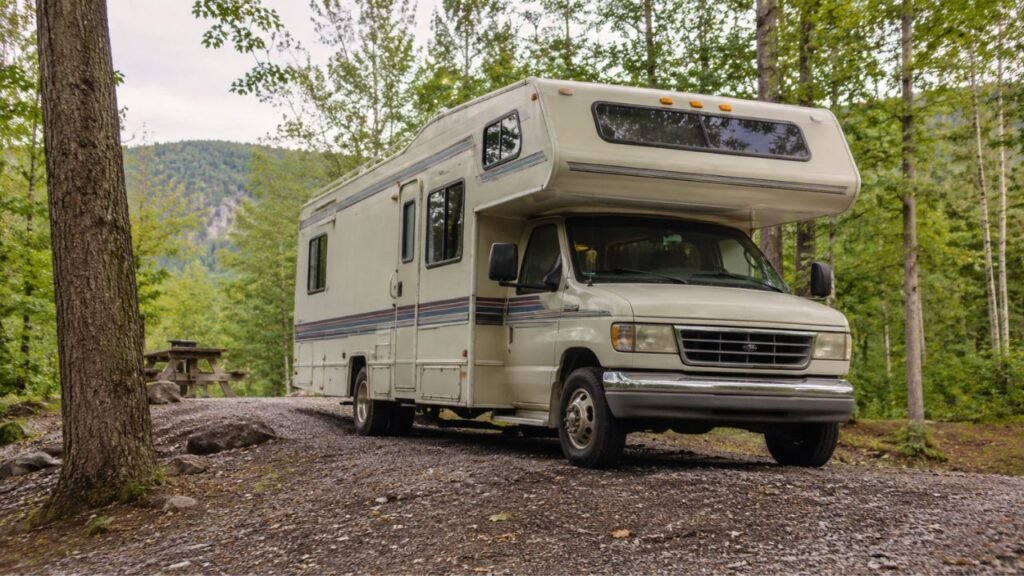
When an RV is not level, it can affect refrigerator operation, slide-outs, plumbing drainage, holding-tank readings, doors, and overall comfort. A slight tilt usually is not an emergency, but staying noticeably off-level for long periods can cause problems, especially with certain absorption refrigerators and slide-out systems.
Below, I’ll explain what actually happens when your RV sits unevenly, which problems deserve immediate attention, and how to tell when your RV is too far out of level.
Key Takeaways
- A slightly unlevel RV usually does not mean immediate damage.
- Absorption refrigerators are more sensitive to being off-level.
- Slide-outs may bind or move unevenly when the RV twists.
- Sinks, showers, and holding tanks may drain poorly.
- Tank sensors can give misleading readings on a steep slope.
- Doors and drawers may swing open or closed by themselves.
- Sleeping and cooking become uncomfortable when the tilt is noticeable.
- Always follow your RV and appliance manufacturer’s leveling requirements.
What Problems Can an Unlevel RV Cause?
Being a little off-level and being parked on a severe slope are very different situations. The more noticeable the tilt becomes, and the longer your RV stays that way, the more likely you are to experience problems.
| RV System | What Can Happen | Typical Concern Level |
| Absorption refrigerator | Reduced circulation, poor cooling, possible cooling-unit problems | High when significantly off-level |
| Slide-outs | Binding, uneven movement, sealing problems | Moderate to high |
| Holding tanks | Incomplete draining and inaccurate readings | Moderate |
| Sink and shower drains | Slow drainage or standing water | Low to moderate |
| Doors and cabinets | Swinging, rubbing, or poor latching | Usually low |
| Bed and living area | Uncomfortable sleeping and walking | Low but noticeable |
| Roof drainage | Water may favor one side | Depends on RV design |
| Frame and body alignment | Increased twisting under severe uneven support | Depends on severity |
The refrigerator and slide-outs usually deserve the most attention. Comfort problems are less serious, but they often tell you that your RV needs additional leveling.
Can Being Unlevel Damage an RV Refrigerator?
This is probably the most important leveling concern, but refrigerator type matters. Not every RV refrigerator reacts to an uneven campsite in the same way.
Absorption Refrigerators Are the Main Concern
Traditional propane/electric absorption refrigerators depend heavily on gravity during their cooling process.
Inside the cooling system, heated refrigerant moves through a network of tubing. When the refrigerator sits significantly off-level while parked, normal circulation can become restricted.
That may cause:
- Poor refrigerator cooling
- Higher cooling-unit temperatures
- Refrigerant pooling in unwanted areas
- Reduced refrigerator efficiency
- Long-term cooling-unit damage in severe situations
This does not mean your refrigerator immediately fails because one wheel sits slightly higher.
The greater concern is operating an absorption refrigerator significantly outside its approved leveling range for an extended period.
What About 12V Compressor and Residential Refrigerators?
Modern compressor refrigerators work differently.
A 12V compressor refrigerator does not depend on the same gravity-driven absorption cycle. Residential-style compressor refrigerators also have different operating requirements.
That generally makes them less sensitive to ordinary campsite leveling.
However, compressor refrigerators can still have maximum operating-angle requirements. You should therefore check your refrigerator manual rather than assuming any angle is acceptable.
Your refrigerator type makes a big difference here.
Will One Short Period Off-Level Ruin the Refrigerator?
Usually, a brief stop on uneven ground is very different from camping badly tilted for several days.
For example, parking temporarily at a rest area does not automatically mean your refrigerator will suffer damage.
Still, if you have an absorption refrigerator, I would avoid leaving it running while the RV is obviously tilted beyond the refrigerator manufacturer’s recommended range.
When in doubt, use the refrigerator manual rather than a generic leveling rule.
What Happens to RV Slide-Outs When the RV Is Not Level?
Slide-outs move through openings that depend on reasonably correct RV alignment. When the RV body twists because of uneven positioning, those openings can change slightly.
The Slide May Bind or Move Unevenly
An unlevel RV may place more resistance on one side of the slide.
You might notice:
- One side moving before the other
- Unusual popping or creaking
- Slower slide movement
- The motor sounding strained
- A slide stopping before fully extending
- Difficulty retracting the room completely
A small slope does not automatically damage your slide.
However, if the RV is noticeably twisted, forcing the slide through resistance can place unnecessary stress on the mechanism.
Slide Seals May Not Seat Evenly
Your slide needs to sit correctly against its seals when fully extended or retracted.
If the RV body is twisted, one corner may compress more tightly while another does not seal as evenly.
That could contribute to:
- Small seal gaps
- Wind entering around the slide
- Water intrusion during heavy rain
- Uneven pressure on slide seals
If your slide suddenly seals poorly only when camping on an uneven site, leveling should be one of the first things you check.
Should You Level the RV Before Extending the Slides?
In many RVs, yes.
I recommend leveling the RV before operating the slides unless your manufacturer specifically gives a different procedure.
Some RVs and leveling systems have their own setup sequence. Follow that sequence instead of assuming every travel trailer, fifth wheel, and motorhome works identically.
If a slide feels unusually tight, stop rather than forcing it.
Can an Unlevel RV Affect Plumbing and Holding Tanks?
Yes. RV drainage depends heavily on gravity, so an uneven floor can change where water and waste naturally collect.
Sinks and Showers May Drain Poorly
If your RV leans away from a drain opening, water can collect on the low side.
You might notice:
- Water sitting in the shower pan
- A sink draining more slowly
- Small puddles remaining after use
- Residue collecting in one area
This is usually more annoying than dangerous.
However, constantly leaving water standing in the wrong place can create staining, odors, or moisture issues.
Holding Tanks May Not Empty Completely
Your gray and black tanks have fixed drain outlets.
When the RV sits at the wrong angle, liquid may collect at the opposite end of the tank instead of flowing toward the outlet.
You may finish dumping and still have some liquid remaining inside.
Repeated incomplete draining can contribute to:
- Gray-tank odors
- Waste buildup
- Black-tank residue
- Confusing tank-level behavior
You do not need the RV perfectly laboratory-level to dump successfully. You simply want the tank positioned so gravity can move waste toward the outlet.
Tank Monitor Readings Can Become Misleading
Tank sensors measure liquid at specific positions.
When your RV tilts, water moves toward the lowest side of the tank. That can change which sensors contact liquid.
As a result, your monitor might show:
- More water than expected
- Less water than expected
- A reading that changes after leveling
Keep in mind that leveling is not the only reason RV tank gauges become inaccurate. Dirty sensors and tank residue are extremely common causes as well.
Can Being Unlevel Damage the RV Frame or Structure?
A mildly unlevel campsite does not automatically bend or destroy your RV frame.
The bigger concern is severe uneven support.
If one section of the RV is raised too aggressively while another remains unsupported, the body and chassis can twist more than intended.
You may then notice doors that suddenly rub, slide openings that seem misaligned, cabinet doors that stop latching properly, or unusual creaks around the body.
Soft ground can create a similar situation. One leveling block or jack pad may slowly sink while the others stay in place.
That is why I recommend checking your RV again after settling into a campsite, especially on dirt, sand, or recently soaked ground.
Proper leveling keeps the RV sitting more naturally instead of forcing the structure into an unnecessary twist.
Why Do Doors and Cabinets Swing Open in an Unlevel RV?
Gravity makes this problem easy to notice.
When your RV leans, interior doors naturally want to move toward the lower side.
A bathroom door might keep swinging shut. A cabinet door may refuse to stay open. Drawers can slowly slide outward.
You may also notice objects rolling across countertops.
These problems usually will not damage your RV, but they provide a quick clue that your campsite angle needs correction.
If several doors behave strangely at once, check your level before adjusting hinges or latches.
What Does Sleeping in an Unlevel RV Feel Like?
You usually notice an uneven RV very quickly when you go to bed.
A sideways tilt may make your body slide toward the wall. A front-to-back tilt can leave your head lower than your feet.
Even when the angle looks small outside, it may feel surprisingly noticeable while lying still.
You might also experience:
- Pillows moving during the night
- A constant feeling of leaning
- Difficulty finding a comfortable position
- Objects sliding off bedside surfaces
- Uncomfortable walking through the RV
Comfort alone is a perfectly good reason to level your RV.
If you can clearly feel the slope while lying down, spending a few extra minutes leveling usually improves the entire camping experience.
Does an Unlevel RV Affect the Air Conditioner?
An RV air conditioner generally does not have the same leveling sensitivity as an absorption refrigerator.
However, the RV’s angle can influence where condensation and rainwater travel across the roof.
If the coach leans significantly, water may favor one side of the rooftop assembly.
In some situations, you could notice water collecting where it normally would not or dripping toward an area that is more sensitive to leaks.
If your AC starts dripping inside only when the RV sits at a particular angle, check the RV’s level.
Also inspect the AC gasket, drain paths, roof condition, and signs of coil freeze-up. An unlevel RV is only one possible cause of interior AC water.
How Unlevel Is Too Unlevel for an RV?
You do not need to chase perfect zero-degree measurements every time you camp. The goal is to stay within equipment limits while keeping the RV comfortable and functioning normally.
Your RV Does Not Have to Be Mathematically Perfect
If your bubble is slightly off-center but everything operates normally, you probably do not need to spend another hour moving blocks around.
I would focus on four things:
- Refrigerator requirements
- Slide-out operation
- Plumbing drainage
- Personal comfort
If those systems are working properly and you remain within manufacturer specifications, a tiny imperfection is usually not worth worrying about.
Refrigerator Limits Depend on the Refrigerator
There is no single leveling angle that applies to every RV refrigerator ever made.
Older absorption refrigerators may be particularly sensitive. Newer absorption units can have different tolerances, while compressor refrigerators operate differently again.
For that reason, I would not rely on internet advice saying every refrigerator must be within one exact number of degrees.
Check the leveling specification for your actual refrigerator model.
Signs Your RV Is Too Far Out of Level
You should consider making another leveling adjustment when:
- You can easily feel the floor slope.
- Doors immediately swing by themselves.
- Water stays on one side of the shower.
- Your absorption refrigerator exceeds its approved angle.
- A slide hesitates or sounds unusually strained.
- Items roll across counters.
- Sleeping feels obviously tilted.
- Holding tanks do not drain normally.
These signs are often more helpful than chasing an absolutely perfect bubble.
Is It Okay to Leave an RV Slightly Unlevel Overnight?
A slightly unlevel RV overnight is usually very different from leaving your RV severely tilted for days.
You do not normally need to panic because the bubble is a little off-center.
The main question is whether the angle interferes with equipment.
Check your absorption refrigerator first if you have one. Then make sure your slides operate normally and water drains correctly.
If everything remains within manufacturer specifications and the tilt is comfortable, a small amount of unevenness is usually manageable.
If you can clearly feel yourself sliding in bed, however, I would level it again.
What Should You Do If You Cannot Get Your RV Completely Level?
Sometimes the campsite itself makes perfect leveling unrealistic. In that situation, focus on getting safely within acceptable limits rather than repeatedly rebuilding your entire setup.
- Check level from side to side and front to back.
- Reposition the RV if a flatter area is available.
- Raise the low side with proper RV leveling blocks.
- Use equipment rated for your RV’s weight.
- Place jack pads beneath supports on soft ground.
- Never rely on loose rocks, bricks, or unstable materials.
- Do not use stabilizer jacks for lifting unless designed for it.
- Follow the manufacturer’s slide-out operating procedure.
- Check your refrigerator’s permitted leveling range.
- Recheck your setup if blocks or pads begin sinking.
Remember that being safely close to level is more important than creating a complicated or unstable tower of blocks trying to achieve perfection.
Leveling vs. Stabilizing: Why the Difference Matters
Leveling and stabilizing solve two different problems.
Leveling changes the angle of the RV. Stabilizing reduces movement after it is level.
Your travel trailer can be perfectly level and still shake when someone walks inside.
You can also crank the stabilizer jacks down firmly while the trailer remains tilted.
Level first. Stabilize afterward.
Avoid trying to force an RV into level using stabilizer jacks unless your particular system is specifically designed to lift and level the RV.
When an Unlevel RV Is a Sign of Another Problem
Sometimes you keep correcting the RV, yet it continues leaning. When that happens, the campsite may not be the real problem.
Check for:
- A tire losing air
- A damaged or sagging leaf spring
- Suspension damage
- A leveling block sinking
- Soft soil beneath one jack
- Hydraulic leveling jacks losing pressure
- An electric leveling system malfunction
- Extremely uneven cargo loading
- An incorrectly calibrated auto-level system
If your RV suddenly develops a noticeable lean on otherwise level ground, investigate the cause.
Adding more blocks may temporarily hide a mechanical problem rather than fix it.
Final Words
An RV does not need to sit at a mathematically perfect angle every second you are parked. A small amount of unevenness is usually manageable.
What you want to avoid is a significant or prolonged tilt that affects your refrigerator, slide-outs, plumbing, or normal operation.
Pay particular attention if your RV uses an absorption refrigerator. Follow its leveling requirements instead of relying on a universal rule.
Once your RV is comfortably level and its systems operate normally, stabilize it properly and enjoy your campsite instead of chasing the bubble endlessly.
Related FAQs
Does an RV Have to Be Perfectly Level?
No. An RV generally does not have to be perfectly level to the fraction of a degree. It should be level enough for comfortable living and within the operating limits specified for appliances, slides, and other equipment.
How Long Can an RV Refrigerator Run While Unlevel?
There is no universal safe time because refrigerator designs and approved operating angles vary. If you have an absorption refrigerator and the RV is significantly outside its specified leveling range, correct the RV’s position or follow the refrigerator manufacturer’s instructions.
Will an Unlevel RV Damage the Refrigerator?
A significantly unlevel RV can cause problems for an absorption refrigerator because its cooling process depends partly on gravity. Compressor-style RV refrigerators are generally less sensitive, although you should still follow their specified operating-angle limits.
Can I Put My Slides Out If My RV Is Not Level?
It is generally better to level the RV before extending the slides unless your manufacturer specifies another procedure. A twisted RV body can change slide alignment and may cause binding, uneven movement, or poor sealing.
Can an RV Be Level but Still Shake?
Yes. Leveling corrects the RV’s angle, while stabilization reduces movement. A travel trailer can sit perfectly level and still shake if its stabilizer jacks, wheel chocks, or other stabilization equipment are not set properly.
Does an RV Need to Be Level for the Black Tank to Drain?
The RV does not have to be perfectly level, but its position can affect how completely the black tank drains. A significant slope may cause liquid or waste to collect away from the tank outlet.
Does an RV Need to Be Level When Stored?
Keeping an RV reasonably level during storage can help with drainage and prevent unnecessary body twist. The exact requirements depend on your RV, refrigerator, leveling system, and whether appliances remain in operation.
Which Direction Should an RV Be Leveled First?
For most towable RVs, you normally correct side-to-side level before unhitching, then use the tongue jack or landing gear to adjust front-to-back level. Follow your RV’s specific leveling procedure if it uses an automatic or manufacturer-specific system.

Ryan Mitchell writes for readers who prefer independent travel and practical outdoor motorhome living. His how-to guides and reviews focus on simplicity, durability, and real value. He brings a calm, hands-on perspective to every topic.