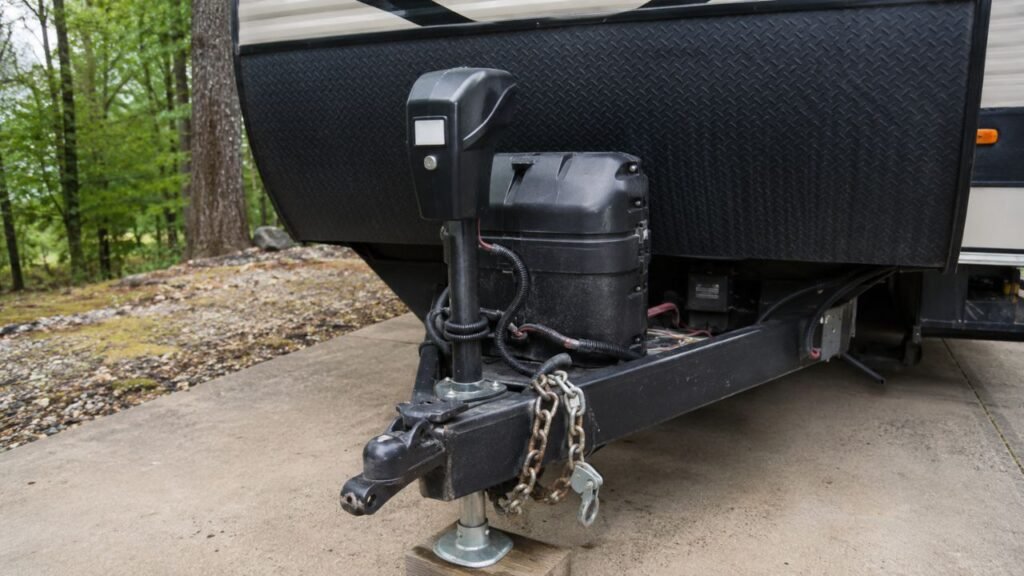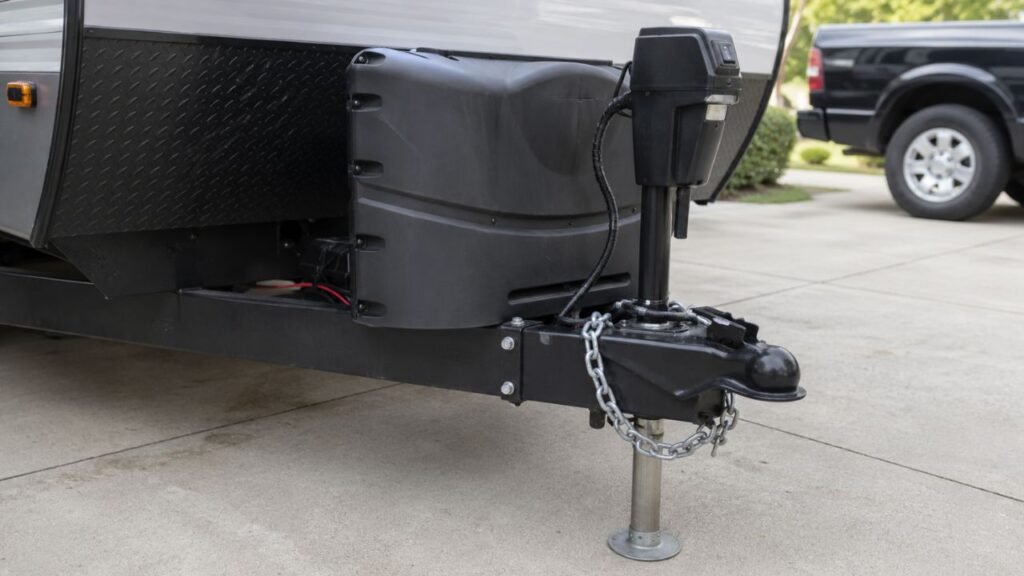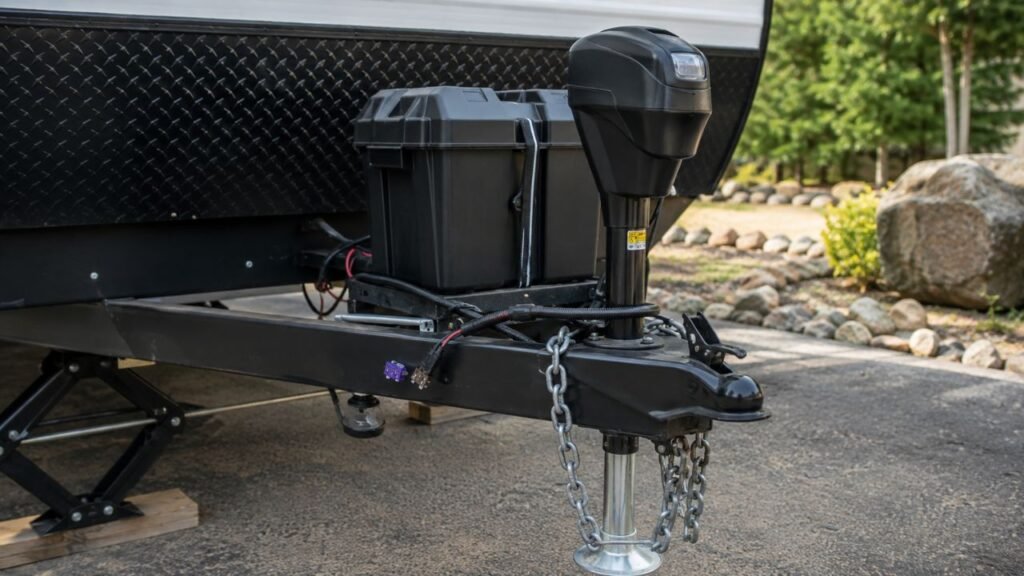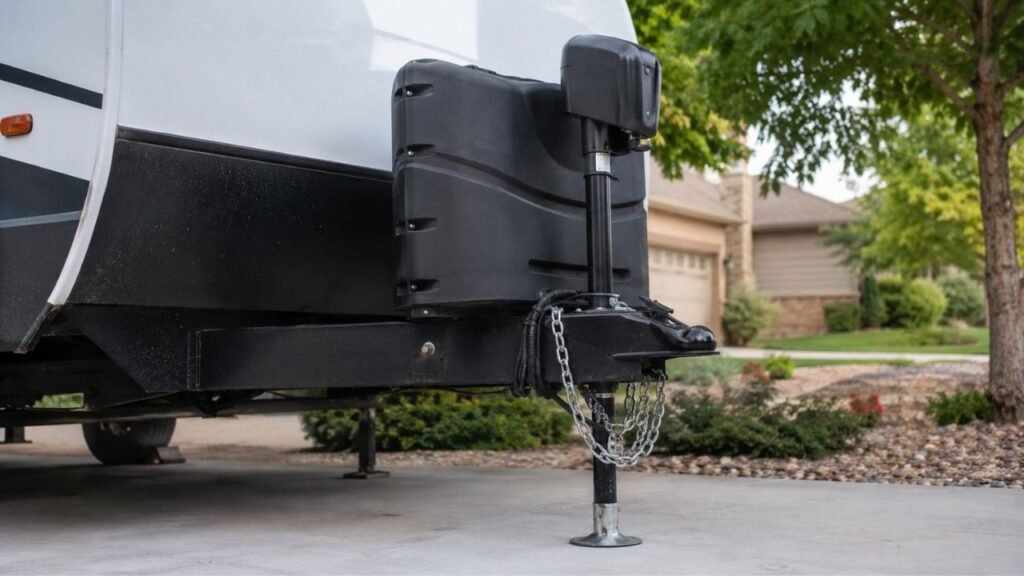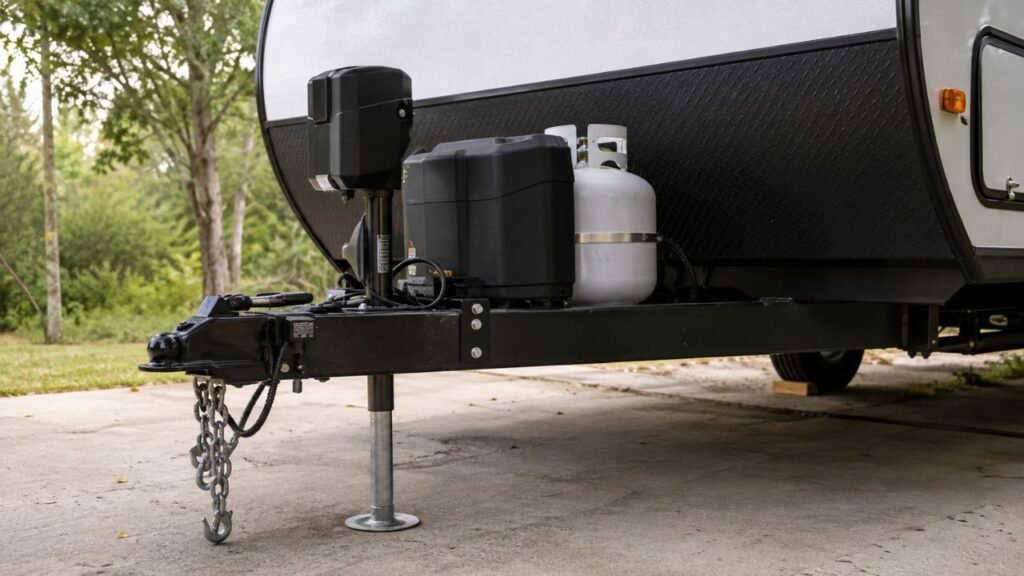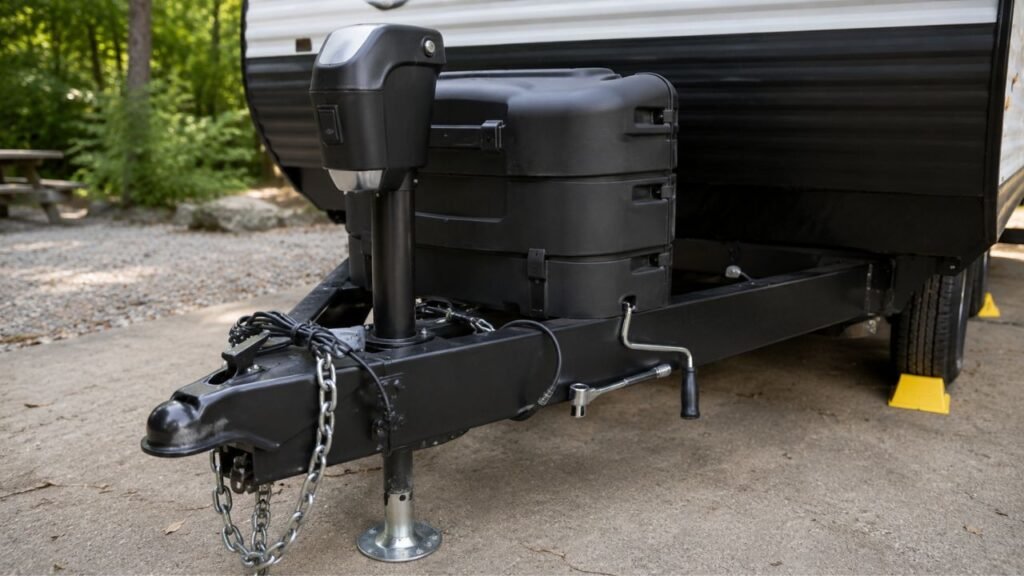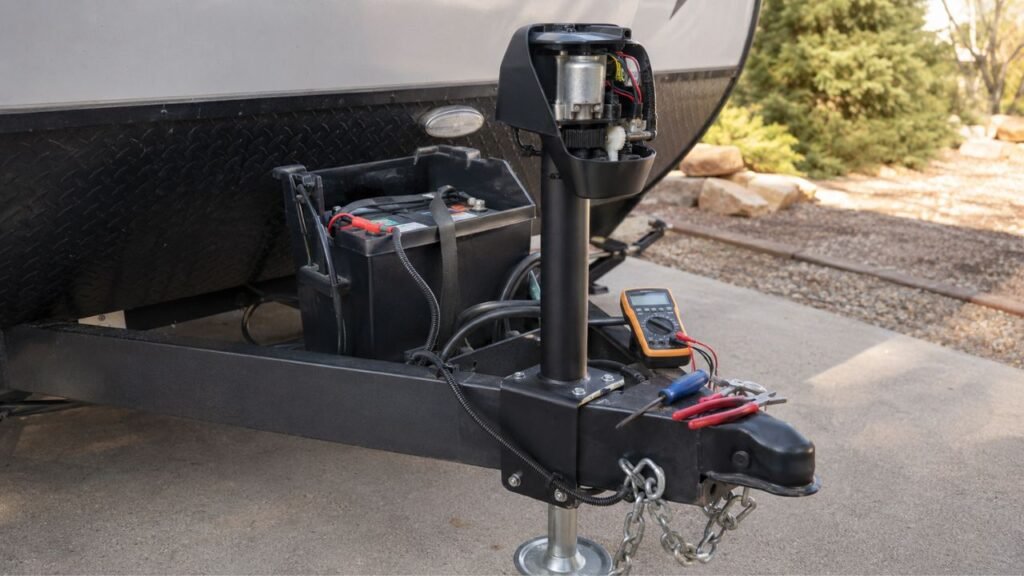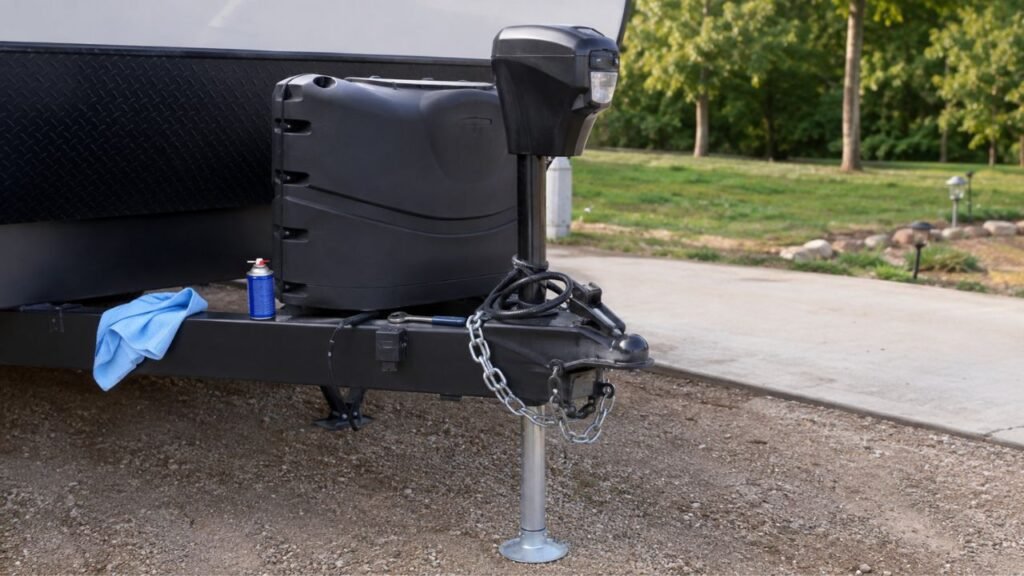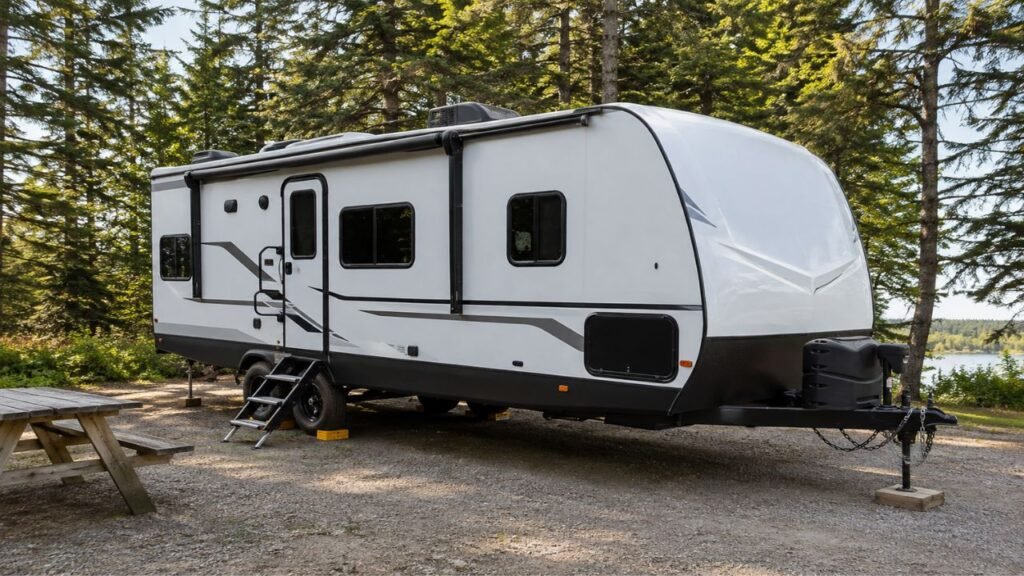
An RV needs to be level because several important systems work best on a flat, properly aligned platform. Leveling helps an absorption refrigerator cool correctly, supports smooth slide-out operation, improves plumbing drainage, and makes sleeping, cooking, and walking inside more comfortable.
You do not need to chase absolute perfection every time. In this guide, I’ll explain why leveling matters, what can happen when your RV sits crooked, and how to know when your setup is level enough.
Key Takeaways
- Your RV should be reasonably level from side to side and front to back.
- Absorption refrigerators are especially sensitive to extended off-level operation.
- Compressor refrigerators are generally less dependent on RV leveling.
- Proper leveling can help slide-outs operate with better alignment.
- Sinks, showers, and holding tanks drain better when properly positioned.
- Being level makes sleeping, cooking, and moving around more comfortable.
- Leveling and stabilizing are two different parts of campsite setup.
- Your RV and appliance manuals should override generic leveling advice.
Why Does an RV Need to Be Level?
Several parts of your RV rely on gravity, alignment, or both. A slightly uneven campsite may only feel annoying at first. However, a noticeably tilted RV can eventually affect appliances and everyday comfort.
Here are the main reasons I recommend leveling before settling into camp.
An Absorption Refrigerator Relies on Gravity
The refrigerator is one of the biggest reasons RV leveling matters.
Many traditional RV refrigerators use an absorption cooling system. Instead of relying entirely on a compressor, the system circulates refrigerant through tubing using heat, pressure changes, and gravity.
That circulation works best when the refrigerator sits reasonably level.
When an absorption refrigerator operates significantly off-level for several hours, refrigerant circulation may become restricted. Cooling performance can drop, and unwanted heat can build inside the cooling system.
Long-term improper operation may eventually damage the cooling unit.
This does not mean your RV must be perfectly level. A small variation usually isn’t something to panic about.
The important thing is avoiding an obviously tilted setup for extended periods while using an absorption refrigerator.
I also recommend checking your refrigerator owner’s manual. Different models can have different operating requirements.
Slide-Outs Need Proper Alignment
Your slide-outs contain heavy rooms moving through carefully designed openings.
Depending on your RV, the system may use:
- Electric motors
- Gear-driven mechanisms
- Cables
- Hydraulic cylinders
- Tracks and rollers
When the RV sits severely uneven, the chassis and slide opening may not remain in their intended position.
That can make a slide work harder than necessary.
You might notice uneven movement, unusual noises, binding, or difficulty sealing properly.
A slightly uneven campsite will not automatically damage your slide-out. However, getting the RV properly positioned before operating the slides reduces unnecessary stress.
Always follow your RV manufacturer’s recommended setup sequence. Some RVs and leveling systems have specific instructions about when slides should be extended.
Sinks and Showers Need Gravity to Drain
Water naturally moves toward the lowest point available.
That sounds obvious, but it matters inside an RV.
If your shower floor slopes away from the drain, water can collect along one side. You may finish showering and still find a puddle sitting behind.
Your sinks can behave similarly.
Water may drain slowly or leave small amounts around the basin. Persistent standing water can also contribute to unpleasant odors and extra cleaning.
Getting the RV reasonably level helps your plumbing work as designed.
Holding Tanks Empty More Predictably
Your fresh, gray, and black tanks are large containers mounted beneath the RV.
When the RV is tilted, liquids naturally collect toward the low side.
That can affect how completely a tank drains.
For example, you may dump the gray tank but leave more wastewater behind because the outlet sits slightly higher than the lowest portion of the tank.
Tank-monitor readings can also become less predictable.
Many RV tank sensors already struggle with accuracy. An angled tank can make the situation even more confusing because liquid sits unevenly against the sensor locations.
Leveling will not repair dirty or defective tank sensors. However, it can give the monitoring system more consistent conditions.
Doors, Drawers, and Cabinets Behave Normally
You can often tell an RV is uneven without touching a level.
Open a cabinet door.
If it immediately swings toward you, the RV may be leaning.
Drawers may slowly slide open. Bathroom doors can drift closed. Interior doors may become harder to latch.
Small objects can even roll across countertops and tables.
None of these issues will destroy your RV. They simply make everyday life more frustrating.
Getting level removes many of those little annoyances immediately.
Sleeping, Cooking, and Walking Feel More Comfortable
You will probably notice an uneven RV most when bedtime arrives.
Sleeping with your feet slightly lower than your head may not bother you. Sleeping with your head noticeably downhill usually feels much worse.
You may keep sliding toward one side of the mattress.
Cooking can also become annoying.
Oil gathers on one side of a frying pan. Drinks appear uneven. Round foods can roll across countertops.
Even walking through the RV can feel strange on a noticeable slope.
A properly leveled RV simply feels more like a normal living space.
What Happens If an RV Is Not Level?
Not every off-level situation causes immediate damage. The consequences depend on how uneven the RV is, how long it stays that way, and which systems you operate.
Here’s a practical overview of what you may notice.
| RV System or Area | What You May Notice | Why Leveling Matters | Concern Level |
| Absorption refrigerator | Weak cooling or excess heat | Cooling circulation depends partly on gravity | High |
| 12V compressor refrigerator | Usually fewer leveling problems | Compressor cooling is less gravity-dependent | Lower |
| Slide-outs | Binding, noise, or uneven movement | Proper alignment helps smooth operation | Moderate to High |
| Shower and sinks | Standing or slow-draining water | Drainage depends on gravity | Moderate |
| Holding tanks | Incomplete dumping | Liquid collects toward the low side | Moderate |
| Doors and cabinets | Swinging, drifting, or sticking | Gravity affects doors and drawers | Low |
| Beds and seating | Uncomfortable sleeping or sitting | Interior surfaces remain tilted | Low |
| Interior movement | Walking feels awkward | The entire floor remains angled | Low |
The refrigerator deserves the most attention when your RV uses an absorption cooling system.
Other problems are often related more to comfort and proper operation than immediate damage.
How Level Does an RV Actually Need to Be?
Your RV usually does not need to achieve perfect laboratory-level accuracy. It simply needs to sit within the acceptable limits specified by your RV, appliance, and leveling-system manufacturers.
You may see universal angle recommendations online. I would be careful about treating one number as correct for every RV.
Refrigerators vary. Leveling systems vary. RV manufacturers can also provide different setup instructions.
Instead, use these practical checks:
- Walking inside should feel natural.
- Your bed should not have an obvious downhill slope.
- Cabinet doors should mostly stay where you leave them.
- Shower water should move toward the drain.
- Your bubble or digital level should show only minor deviation.
- Slides should operate according to the manufacturer’s instructions.
- Your refrigerator should remain within its specified operating limits.
If you are visibly leaning while standing inside, I would correct the setup.
If the bubble is only slightly off-center and everything works normally, you probably do not need endless adjustments.
When generic advice conflicts with your appliance manual, follow the manual.
Does Every RV Refrigerator Need the RV to Be Level?
Not every RV refrigerator uses the same cooling technology. That distinction matters because absorption and compressor refrigerators respond differently to an uneven campsite.
Before worrying about refrigerator damage, first identify what type you have.
Absorption RV Refrigerators
Traditional propane-capable RV refrigerators commonly use absorption cooling.
You may have a two-way refrigerator operating on propane and electricity. Some RVs also use three-way units with additional power options.
These refrigerators depend partly on gravity for proper refrigerant circulation.
That makes leveling particularly important while parked for extended periods.
If your RV has this refrigerator type, I would make leveling part of every campsite setup.
12V Compressor Refrigerators
Many newer RVs now use 12-volt compressor refrigerators.
These operate more like conventional household refrigerators. A compressor circulates refrigerant instead of relying on the same absorption process.
That means mild campsite slopes are generally less concerning for the refrigerator itself.
You should still level the RV for slides, drainage, sleeping, and overall comfort.
Always check your refrigerator manual because installation requirements can still vary.
Residential Refrigerators
Some larger motorhomes and fifth wheels use residential-style refrigerators.
These also typically use compressor-based cooling.
They do not carry the same gravity-related leveling concern associated with traditional absorption units.
Again, that does not make RV leveling unnecessary.
The refrigerator is only one reason your RV benefits from sitting level.
Does an RV Need to Be Level While Driving?
No, you do not level an RV while driving. Leveling becomes important once you park and begin using the RV as a living space.
An RV naturally tilts, climbs, descends, and moves while traveling.
Absorption refrigerators designed for RV use account for normal road movement during travel. The concern develops when the RV remains noticeably off-level and stationary for an extended period.
Once you arrive at camp, check the site before settling in.
If you plan to stop briefly without using slides or spending much time inside, perfect leveling may not be necessary.
For an overnight or extended stay, I would level properly.
Should You Level an RV Before Extending the Slide-Outs?
Generally, you should properly position and level your RV before extending the slide-outs. However, your RV manufacturer’s instructions should determine the exact sequence.
Slide mechanisms are designed to move through specific openings.
A severely tilted or twisted setup can change how those components are loaded.
That does not mean every slightly uneven campsite will damage your slide.
The safer approach is simple.
Park correctly, secure the RV, complete the recommended leveling procedure, and then operate your slides according to the owner’s manual.
If your manufacturer says to extend slides before using a particular leveling system, follow that instruction instead.
RV setup procedures are not completely universal.
RV Leveling vs. Stabilizing: They Are Not the Same
Leveling and stabilizing are closely related, but they do different jobs. Understanding that difference can prevent damaged stabilizers and unnecessary frame stress.
Leveling changes the RV’s position. You raise the low side or adjust front-to-back height until the RV sits reasonably flat.
Stabilizing reduces movement after leveling. Stabilizers help control shaking when someone walks through the RV.
Travel trailer stabilizer jacks usually are not designed to lift the trailer.
Trying to level the RV by forcing stabilizers downward can overload them or place unnecessary stress on the frame.
Level first.
Then deploy your stabilizers according to their instructions.
Motorhomes and larger RVs may have hydraulic or electric jacks specifically designed for leveling. Those systems are different from ordinary trailer stabilizers.
How Can You Tell If Your RV Is Level Enough?
You do not need complicated equipment to make a good campsite setup. A simple bubble level, built-in level, or properly calibrated digital level can usually tell you everything you need.
I also recommend using the RV itself as a practical check.
- Check the RV from side to side.
- Check it again from front to back.
- Walk through the interior normally.
- Open a few cabinet doors.
- Check whether your bathroom door drifts.
- Look at how water drains from the shower.
- Verify your refrigerator remains within its requirements.
- Recheck after extending large slide-outs when appropriate.
- Recheck after several days on soft ground.
- Watch for leveling blocks or jack pads sinking.
The goal is not perfection.
You want a comfortable RV with properly operating equipment.
A Quick Way to Level Your RV Safely
The exact leveling process changes depending on the type of RV you own. However, the basic idea remains the same: correct the low side, secure the RV, and stabilize only after leveling.
Here is the basic approach for common RV types.
Travel Trailer
Start by checking the trailer from side to side.
If one side is low, place approved leveling blocks or ramps beneath the tires on that side.
Pull or back onto the blocks slowly.
Once the trailer is level side to side, chock the wheels securely.
You can then unhitch and use the tongue jack to adjust the trailer from front to back.
After the trailer is level, deploy the stabilizer jacks.
Do not use ordinary stabilizers to raise the trailer unless they are specifically designed for that purpose.
Fifth Wheel
The process begins similarly with a fifth wheel.
Correct side-to-side leveling while you remain connected to the tow vehicle.
Use appropriate leveling blocks beneath the low-side tires when necessary.
Once positioned properly, chock the wheels.
After disconnecting from the truck, use the landing gear or approved leveling system to correct front-to-back height.
Many modern fifth wheels have automatic leveling systems.
When your RV has one, follow its operating sequence instead of improvising.
Motorhome
Motorhomes can have several leveling arrangements.
You may use:
- Leveling blocks
- Electric leveling jacks
- Hydraulic leveling jacks
- Automatic leveling systems
Park on the best portion of the campsite before making adjustments.
Correct major differences with your approved leveling equipment.
If your motorhome has automatic leveling, follow the system’s instructions and verify the final position afterward.
Never assume every jack beneath a motorhome works the same way.
Common RV Leveling Mistakes to Avoid
A few campsite mistakes create more problems than the uneven ground itself. Avoiding them makes leveling safer and usually much faster.
Watch for these common problems:
- Using stabilizer jacks to lift an ordinary travel trailer
- Trying to compensate for an excessively steep campsite
- Forgetting to install wheel chocks before unhitching
- Assuming every refrigerator has identical leveling requirements
- Operating slide-outs without checking the recommended setup sequence
- Supporting only part of a tire on a leveling block
- Stacking unstable materials beneath tires or jacks
- Placing leveling equipment on loose or sinking soil
- Ignoring jack pads when camping on soft ground
- Forgetting to recheck the setup during longer stays
Take an extra minute before finishing your campsite setup.
It can save you from repositioning the entire RV later.
Is It Okay for an RV to Be Slightly Unlevel?
Yes, an RV can usually be slightly unlevel without creating an immediate problem.
You should not feel pressured to spend thirty minutes chasing a perfectly centered bubble.
The bigger concern is an RV that is noticeably tilted.
If you can clearly feel the slope while walking, your doors swing aggressively, your shower will not drain, or your absorption refrigerator sits outside its recommended range, correct the setup.
A minor difference that stays within manufacturer specifications is generally much less concerning.
Think of leveling as getting the RV comfortably and safely within range, not achieving mathematical perfection.
Does an RV Need to Be Level During Storage?
Keeping an RV reasonably level during storage is generally a good practice.
It helps keep the chassis positioned normally and prevents the interior from remaining significantly tilted for months.
Leveling becomes especially important when you operate appliances while the RV is stored.
For example, an absorption refrigerator should follow its normal parked operating requirements if you leave it running.
Water drainage also deserves consideration.
A perfectly level roof is not always the goal for exterior drainage because RV roofs and drainage systems vary by design.
If your manufacturer provides storage-position recommendations, follow them.
For long-term storage, stable support and proper tire care matter just as much as leveling.
Final Words
An RV needs to be level because it was designed to operate as a relatively flat living space.
The most important concern is often the absorption refrigerator. Proper leveling can also support slide operation, improve plumbing drainage, and make your campsite much more comfortable.
You do not need to become obsessed with achieving perfect zero-level readings.
Get the RV reasonably flat, use the correct equipment, and follow the manufacturer’s instructions for your refrigerator, slide-outs, and leveling system.
Once those basics are handled, you can stop adjusting blocks and start enjoying your campsite.
Related FAQs
Does an RV Need to Be Perfectly Level?
No, an RV usually does not need to be perfectly level. It should be reasonably level and remain within the operating requirements specified by your RV and appliance manufacturers. Small variations are generally less important than a clearly noticeable tilt.
How Unlevel Is Too Unlevel for an RV?
There is no single angle that applies to every RV and refrigerator. If you noticeably feel the slope inside, doors swing strongly, water will not drain correctly, or an appliance exceeds its manufacturer’s limits, the RV should be leveled again.
Can an Unlevel RV Damage the Refrigerator?
A significantly unlevel RV can potentially damage certain absorption refrigerators when they operate that way for extended periods. Poor refrigerant circulation can reduce cooling and create excess heat. Compressor refrigerators generally do not have the same gravity-related concern.
Can an RV Be Slightly Unlevel Overnight?
A slightly unlevel RV is usually acceptable if your appliances remain within their specified operating limits and the slope is comfortable. I would correct a noticeable tilt, especially when an absorption refrigerator will run throughout the night.
Does an RV Need to Be Level With the Slides In?
You may not need precise leveling during a short stop when the slides remain retracted. However, leveling still improves refrigerator operation, drainage, sleeping comfort, and general usability whenever you stay inside the RV for extended periods.
Can You Use Stabilizer Jacks to Level an RV?
Ordinary travel trailer stabilizer jacks should generally not be used for leveling. Their job is reducing movement after the trailer is already level. Use leveling blocks, a tongue jack, landing gear, or a purpose-built leveling system instead.
Does an RV Need to Be Level When the Refrigerator Is Off?
Refrigerator leveling becomes less important when an absorption refrigerator is completely off. However, the RV may still benefit from leveling for slide-outs, plumbing drainage, doors, sleeping comfort, and proper campsite setup.
Should an RV Be Level During Storage?
Keeping an RV reasonably level during storage is a good general practice. It becomes more important if appliances remain operational. Always follow manufacturer recommendations for long-term storage, support points, tires, jacks, and appliance use.

Ryan Mitchell writes for readers who prefer independent travel and practical outdoor motorhome living. His how-to guides and reviews focus on simplicity, durability, and real value. He brings a calm, hands-on perspective to every topic.