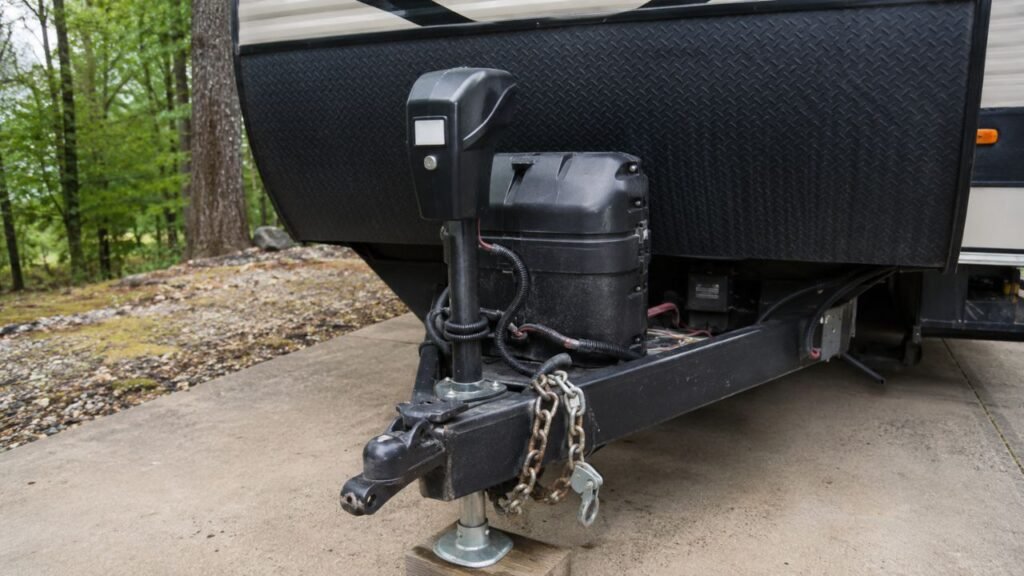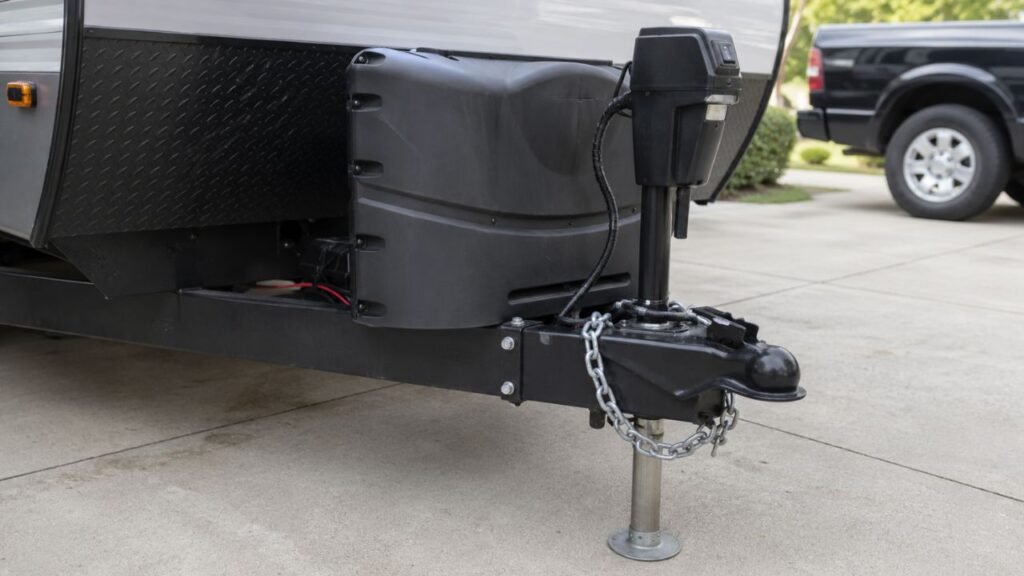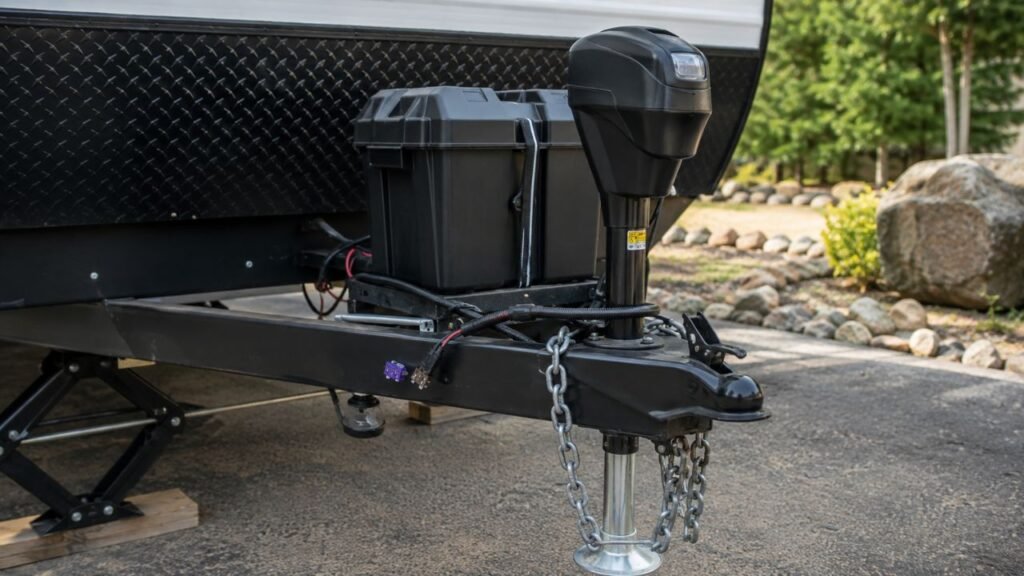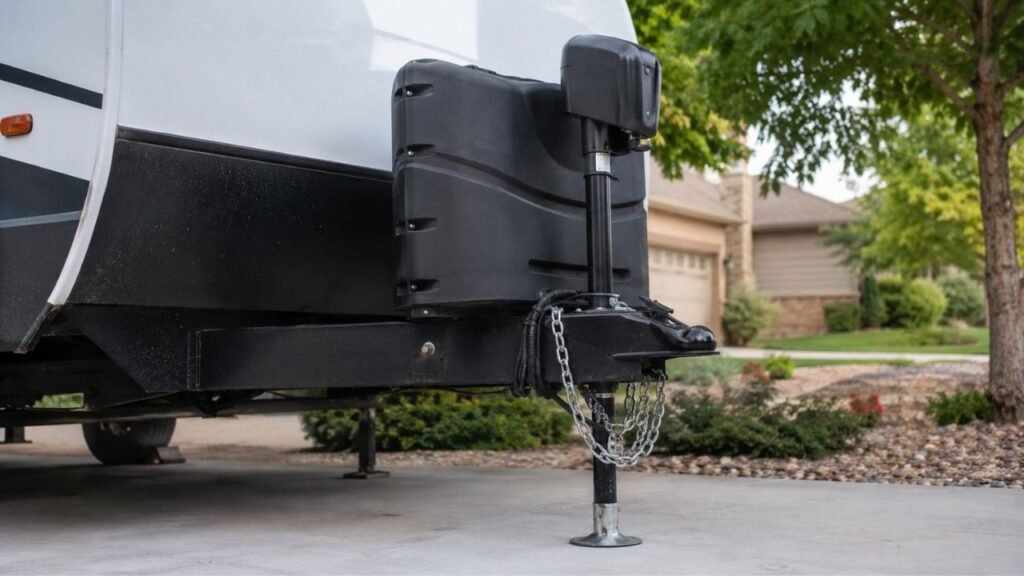
Yes, you can usually sleep in a slightly unlevel RV for one night if the RV is securely parked and the slope is minor. However, a noticeable tilt can make sleeping uncomfortable and may create problems for certain RV equipment, especially an absorption refrigerator.
Below, I’ll help you figure out how much tilt is too much, what can happen overnight, which way you should sleep, and what to do when leveling the RV is not practical.
Key Takeaways
- Sleeping in a slightly unlevel RV is usually more uncomfortable than dangerous.
- A steep or unstable parking position should be corrected before sleeping.
- Absorption refrigerators are more sensitive to being off-level than compressor refrigerators.
- You do not need to make the RV perfectly level for comfortable camping.
- Avoid operating slide-outs when the RV is noticeably tilted unless your manual allows it.
- Stabilizer jacks should stabilize the RV, not lift it into a level position.
- If you must sleep on a small slope, keeping your head toward the higher end usually feels better.
Is It Safe to Sleep in an Unlevel RV?
A slightly unlevel RV is generally okay to sleep in for a short period, provided the rig is securely parked, properly chocked, and sitting on stable ground.
The important word here is slightly.
If you can walk normally inside, doors are not violently swinging open, and you are not sliding toward one end of the mattress, the slope is probably more of a comfort issue than an immediate sleeping hazard.
Things change when the RV is obviously tilted.
A strong slope can make it harder to walk around safely. Loose objects may slide from tables or countertops. Cabinet doors can swing unexpectedly, and sleeping can become frustrating.
You also need to think beyond your own comfort.
Certain RV systems, especially traditional absorption refrigerators, may not operate correctly when the RV remains significantly off-level for several hours.
So, I would look at the situation in two parts.
First, ask whether you can safely and comfortably sleep at that angle.
Second, ask whether your RV equipment can safely operate at that angle overnight.
Those are not always the same thing.
How Unlevel Is Too Unlevel for Sleeping in an RV?
There is no single angle that applies to every RV, refrigerator, or leveling system. Instead of chasing one universal number, I recommend looking at how noticeable the slope is and checking the limits provided by your RV and appliance manufacturers.
| RV Position | What You May Notice | Main Concern | What I Would Do |
| Barely off-level | Almost no noticeable tilt | Mostly comfort | Usually okay if appliances remain within their limits |
| Slightly unlevel | Bed feels mildly angled | Sleep quality and fridge operation | Level it if convenient |
| Clearly tilted | Doors move, water pools, sleeping feels awkward | Appliances, slides, drainage | Correct the tilt before settling in |
| Steep or unstable | Walking feels difficult or RV feels poorly supported | Personal safety and RV stability | Reposition the RV |
You do not need to make the bubble sit absolutely perfect every time you camp.
What matters more is whether the slope is significant enough to affect how you move, sleep, operate appliances, or support the RV.
If you immediately notice the tilt when you step inside, I would try to improve the setup before calling it a night.
What Does Sleeping in an Unlevel RV Actually Feel Like?
A small slope may not bother you much at first, but you often notice it more once you lie down. Your sleeping direction also makes a big difference in how comfortable the night feels.
Sleeping With Your Head Lower Than Your Feet
Sleeping with your head on the lower side of the RV often feels worse than sleeping in the opposite direction.
Even on a relatively small slope, you may feel like your body is sliding toward the head of the bed. Some people also find the position uncomfortable enough that they keep waking during the night.
If you cannot level the RV completely, I would rotate your sleeping position so your head is toward the higher end.
That simple change can make a surprisingly noticeable difference.
Sleeping Sideways on a Slope
A side-to-side tilt can be even more annoying because your body keeps settling toward one side of the mattress.
On a narrow RV bed, you might end up pressed against a wall or constantly repositioning yourself.
You can sometimes reduce the problem by changing which side of the bed you use or placing a small wedge beneath the mattress.
Just remember that adjusting the mattress only improves your sleeping surface. It does not correct an unsafe RV setup.
Walking Around Inside the RV
The more tilted the RV becomes, the more obvious it feels when you walk around.
You may notice:
- Cabinet doors swinging open or closed
- Bottles rolling across counters
- Shower water collecting away from the drain
- Cookware shifting on tables
- Drinks becoming easier to spill
- A strange feeling when walking through the RV
If normal movement feels difficult, that is a strong sign that the RV should be repositioned or leveled.
Can Sleeping Unlevel Damage Your RV Refrigerator Overnight?
Your refrigerator is one of the biggest reasons to pay attention to leveling. However, the answer depends heavily on which type of RV refrigerator you have.
Absorption RV Refrigerators
Traditional RV absorption refrigerators use heat and a chemical cooling process rather than a normal household-style compressor.
The cooling system depends partly on gravity to move the refrigerant mixture through the system.
When the RV remains noticeably off-level for several hours, that circulation may be affected. Cooling performance can drop, and excessive off-level operation may put unnecessary stress on the cooling unit.
This is why I would not automatically assume that running an absorption refrigerator overnight is fine just because you can personally tolerate the slope.
Also, switching the refrigerator from propane to electricity does not eliminate the leveling concern. The same absorption cooling system is still being used.
Check the manual for your exact refrigerator model if the RV will remain noticeably unlevel overnight.
If you know the refrigerator is outside its permitted operating range, shutting it down temporarily is safer than simply hoping it will be fine.
12-Volt Compressor Refrigerators
A 12-volt compressor refrigerator works much more like a household refrigerator.
It uses a compressor rather than the gravity-dependent absorption process.
Because of that, these refrigerators are generally much less sensitive to small changes in RV level.
That does not mean you should park a severely tilted RV just because your refrigerator can handle it.
Your bed, slide-outs, drainage, doors, and overall stability can still be affected.
How Do I Know Which Refrigerator I Have?
You can usually get a good idea by looking at the refrigerator controls and specifications.
An absorption refrigerator may have:
- A propane or GAS mode
- AUTO and GAS controls
- Exterior refrigerator vents
- A burner assembly outside
- Both propane and electric operating options
A compressor refrigerator will usually mention:
- 12V DC compressor operation
- Compressor cooling
- No propane operating mode
If you are unsure, find the refrigerator model number and check the owner’s manual.
That is much more reliable than guessing based on the RV’s age or refrigerator appearance.
What Else Can an Unlevel RV Affect Overnight?
The refrigerator gets most of the attention, but it is not the only part of your RV that can behave differently when the rig is sitting on a noticeable slope.
Slide-Out Operation
Slide-outs are heavy assemblies that move through tracks, gears, cables, or hydraulic systems.
Many RV manufacturers recommend leveling the RV before extending or retracting slides.
When the RV is significantly tilted, the weight of a slide can load the mechanism unevenly. You may notice slow movement, binding, unusual noises, or poor sealing.
I would not repeatedly operate a slide-out on a clearly unlevel campsite unless your RV manufacturer specifically says the system can handle it.
If the slide sounds different from normal, stop and correct the RV position before forcing it.
Sinks, Showers, and Holding Tanks
Water always follows gravity, so even a moderate slope can change how your plumbing behaves.
Shower water may collect on one side of the pan instead of flowing directly toward the drain.
A sink may drain a little more slowly.
Holding tanks can also retain liquid toward one side, which may affect drainage or make tank readings less accurate.
These problems are usually annoying rather than dangerous, but they are another sign that the RV would benefit from better leveling.
Doors, Cabinets, and Loose Objects
One of the first signs of an unlevel RV is often a door that refuses to stay where you put it.
Cabinet doors may swing open. Drawers may slide. Bottles can roll across tables.
None of these issues sound serious until something falls while you are sleeping or a cabinet door swings into you while you are walking past.
Before sleeping in an unlevel RV, secure anything that could move overnight.
Frame and Chassis Stress
You may hear claims that spending one night slightly unlevel will permanently twist an RV frame.
I would not worry about that from a small, properly supported tilt.
The bigger concern is improper leveling or supporting the RV in ways it was never designed to handle.
For example, trying to lift part of a trailer with stabilizer jacks can create loads those jacks are not designed to support.
Always use the RV’s approved leveling points and follow the manufacturer’s instructions.
Which Way Should You Sleep in an Unlevel RV?
If you must sleep in a slightly unlevel RV, position your head toward the higher side of the slope.
This usually feels more natural than sleeping with your head downhill.
If the RV slopes from front to back, you may only need to turn around in bed.
If the RV slopes from side to side, changing your position on the mattress may help.
You can also use an extra pillow or a small mattress wedge to make the sleeping surface feel flatter.
However, do not use pillows as a reason to ignore a severely tilted RV.
If the slope is strong enough that your bed needs major compensation, improving the RV’s position is the better solution.
What Should You Do If You Have to Sleep Unlevel for One Night?
If you arrive late, the campsite is awkward, or you simply cannot get the RV perfectly level, you can still make the situation much safer and more comfortable.
- Try repositioning the RV first. Moving forward or backward a few feet can sometimes make a surprisingly large difference.
- Check how far off-level you really are. Use a bubble level, mounted RV level, or digital leveling system rather than relying only on how the RV feels.
- Secure the RV properly. Use the parking brake where appropriate and install proper wheel chocks.
- Check your refrigerator type. Absorption refrigerators deserve extra attention when the RV will remain off-level for hours.
- Check the refrigerator manual if needed. Do not assume every refrigerator has the same operating tolerance.
- Avoid unnecessary slide movement. If the RV is clearly tilted, leave the slide alone until the RV is properly positioned.
- Secure loose items. Close cabinets, remove bottles from counters, and store anything that might slide.
- Sleep with your head uphill. This usually makes a small remaining slope easier to tolerate.
- Check the ground before bed. Make sure blocks, tires, and jacks are not sinking into soft soil.
A slightly imperfect setup is one thing. An unstable setup is another.
When Should You Move the RV Instead of Sleeping on the Slope?
Sometimes the better solution is not another leveling block. It is simply finding a better place to park.
I would reposition the RV if:
- Walking inside feels difficult.
- You noticeably slide down the bed.
- The wheels cannot be securely chocked.
- Your leveling blocks cannot sit flat.
- The ground is soft or unstable.
- The RV rocks or shifts despite being secured.
- Your absorption refrigerator is outside its permitted operating position.
- Slide-outs bind or sound unusual.
- Doors or other components are badly misaligned.
- You would need a tall, unstable stack of improvised blocks.
Do not build a questionable tower of scrap wood just to save a parking spot.
Moving the RV a few feet or choosing another site is often much easier than dealing with a bad leveling setup all night.
Can You Use Stabilizer Jacks to Fix an Unlevel RV Before Bed?
No, not if your RV has standard stabilizer jacks.
Stabilizer jacks are designed to reduce shaking and movement after the RV is already level.
They are not intended to lift one side of a travel trailer into position.
Trying to level with stabilizers can overload the jacks or place unnecessary stress on their mounting points.
The proper process is to level the RV first with approved leveling blocks, the tongue jack, landing gear, or a dedicated leveling system.
After that, lower the stabilizers until they make firm contact with the ground.
Some motorhomes and fifth wheels have hydraulic or electric jacks specifically designed for leveling. Those systems are different.
Always know whether your jacks are leveling jacks or stabilizer jacks before putting significant weight on them.
How Can You Level an RV Quickly Before Going to Sleep?
You do not need to turn a late-night campsite setup into a major project. The process is usually simple once you know which direction needs correction.
Travel Trailer or Fifth Wheel
Start by checking the RV from side to side.
If one side is low, place proper leveling blocks in front of or behind the tires on that side and carefully drive onto them.
Once the side-to-side position looks good, securely chock the wheels.
Then unhitch when appropriate.
Use the tongue jack on a travel trailer or landing gear on a fifth wheel to adjust the RV from front to back.
After the RV is level, deploy the stabilizers.
Do not use the stabilizers to perform the actual leveling.
Motorhome or Camper Van
With a motorhome or camper van, repositioning the vehicle is often the easiest first step.
If the slope remains minor, approved tire leveling blocks can help.
Motorhomes equipped with automatic or hydraulic leveling systems should be operated according to their specific instructions.
Do not assume every leveling system works the same way.
Some manufacturers have specific requirements about the parking brake, engine position, transmission, or slide-outs before leveling begins.
Is It Okay to Be Slightly Unlevel for Just One Night?
Yes, being slightly unlevel for a single night is usually not something to panic about.
A tiny amount of tilt is very different from leaving the RV parked at a severe angle.
Before settling in, ask yourself four simple questions.
Is the RV securely parked and properly chocked?
Can I comfortably walk and sleep inside?
Can my refrigerator safely operate at this angle?
Am I using the slide-outs and leveling equipment correctly?
If the answer to all four is yes, being slightly less than perfectly level is usually manageable.
If one of those answers is no, fix that specific problem before going to bed.
Final Verdict
It is generally safe to sleep in a slightly unlevel RV for one night as long as the RV is stable, securely parked, and not sitting at an extreme angle.
You do not need to chase a perfectly centered bubble every time you stop. A small amount of tilt is usually more of a sleeping-comfort issue than an immediate safety problem.
The biggest exception is your equipment. If you have an absorption refrigerator, confirm that the RV is within the refrigerator’s permitted operating position. Also follow your RV manufacturer’s instructions for slides, jacks, and leveling systems.
If the RV is tilted enough that walking feels awkward, doors swing aggressively, or you slide across the mattress, I would not try to work around it. Reposition or level the RV before sleeping.
Related FAQs
Can You Sleep in an RV That Is Slightly Unlevel?
Yes. A slightly unlevel RV is generally okay to sleep in if it is securely parked and stable. Check your refrigerator requirements and make sure the slope is not making normal movement difficult.
How Unlevel Is Too Unlevel for an RV?
The RV is probably too unlevel when the slope is clearly affecting walking, sleeping, doors, drainage, slide operation, or appliance requirements. Your RV and refrigerator manuals should determine the acceptable operating limits.
Will One Night Unlevel Damage an RV Refrigerator?
A very small tilt may not cause a problem, but running an absorption refrigerator significantly off-level for several hours can interfere with its cooling system. Check your refrigerator’s manual before leaving it operating overnight.
Which Way Should Your Head Face in an Unlevel RV?
If the slope is minor, sleep with your head toward the higher side of the RV. This usually feels more comfortable than sleeping with your head downhill.
Does a 12V RV Refrigerator Need the RV to Be Level?
A compressor-style 12V refrigerator is generally much less sensitive to leveling than an absorption refrigerator. However, you should still follow the operating limits specified by the refrigerator manufacturer.
Can I Turn Off My RV Fridge and Sleep Unlevel?
Turning off an absorption refrigerator can remove one equipment-related concern, but it does not make a severely tilted or unstable RV safe. The RV should still be securely parked and comfortable enough to move around inside.
Can You Sleep With the Slide-Out Open When the RV Is Unlevel?
A very small tilt may not cause an immediate issue, but many manufacturers recommend leveling before operating slide-outs. If the RV is noticeably unlevel, follow your owner’s manual before extending or retracting the slide.
Can Stabilizer Jacks Be Used to Level an RV?
Standard stabilizer jacks should not be used to level an RV. They are designed to reduce movement after the RV has already been leveled with the correct equipment.
Does an RV Have to Be Perfectly Level?
No. An RV does not normally need to be mathematically perfect. It should be reasonably level, stable, comfortable to use, and within the operating requirements of its appliances and systems.
Can You Sleep in a Motorhome Parked on a Hill?
You can sleep on a mild slope if the motorhome is securely parked and its systems can safely operate at that angle. A steep hill or unstable parking position should be avoided.

Ryan Mitchell writes for readers who prefer independent travel and practical outdoor motorhome living. His how-to guides and reviews focus on simplicity, durability, and real value. He brings a calm, hands-on perspective to every topic.