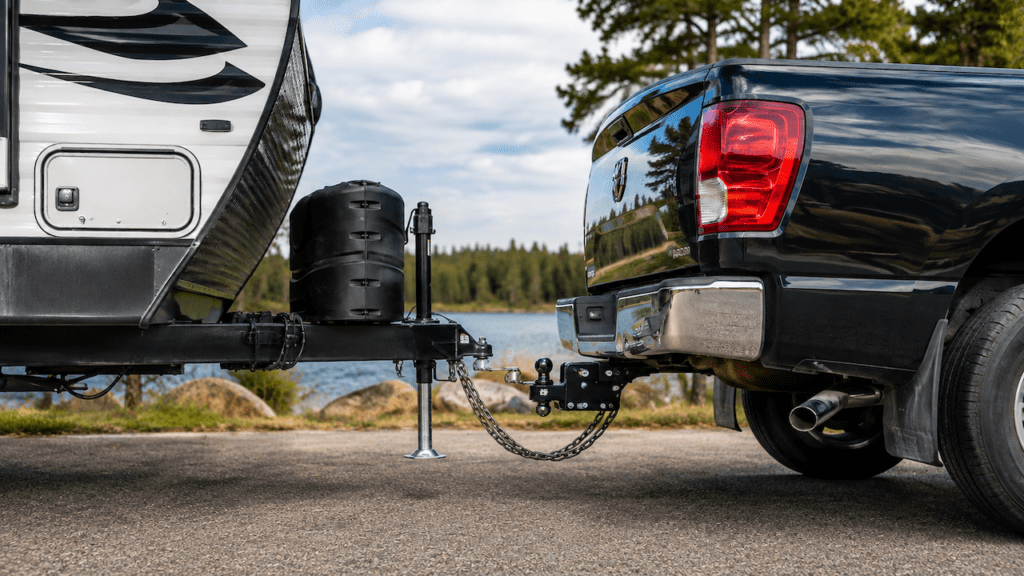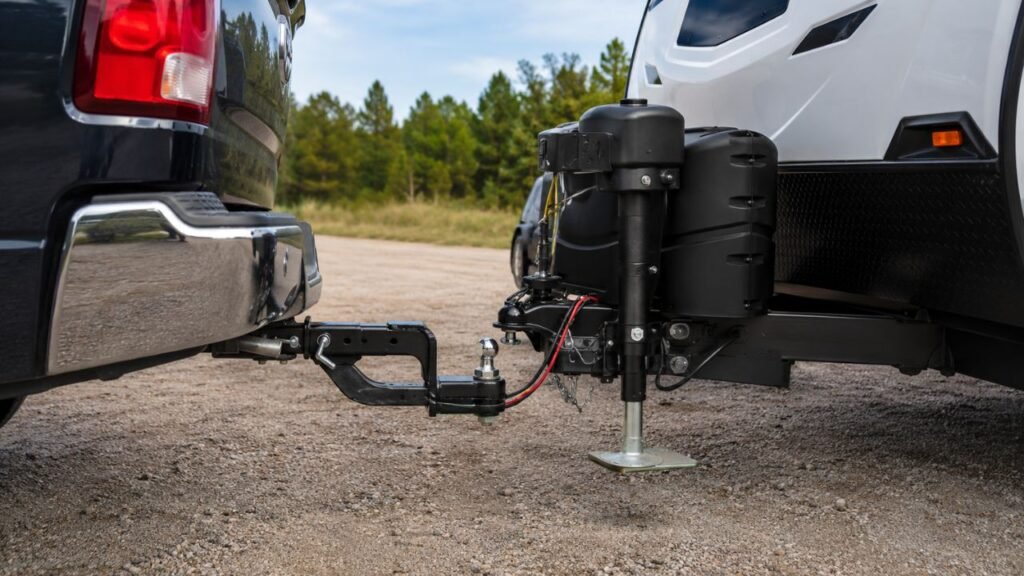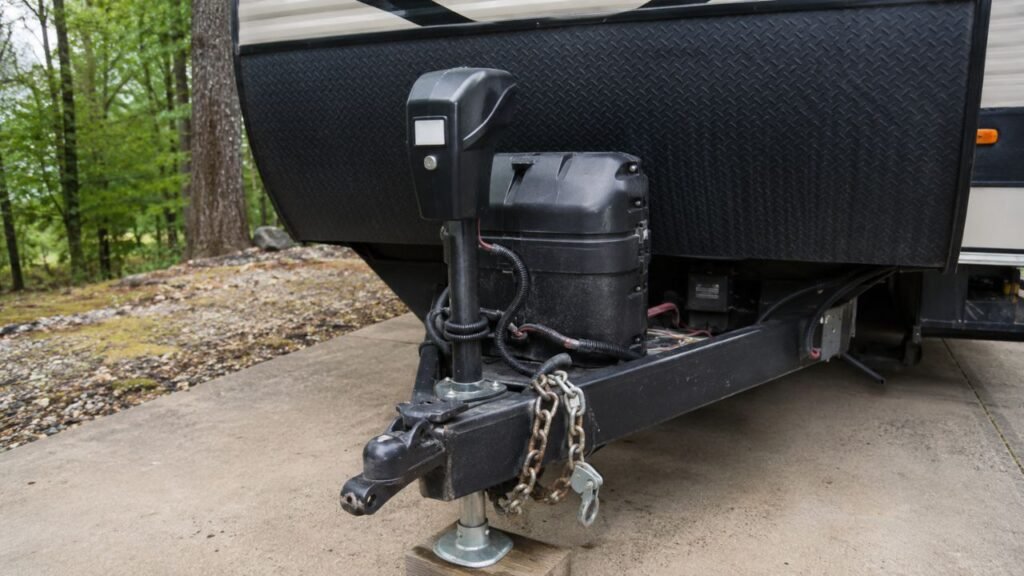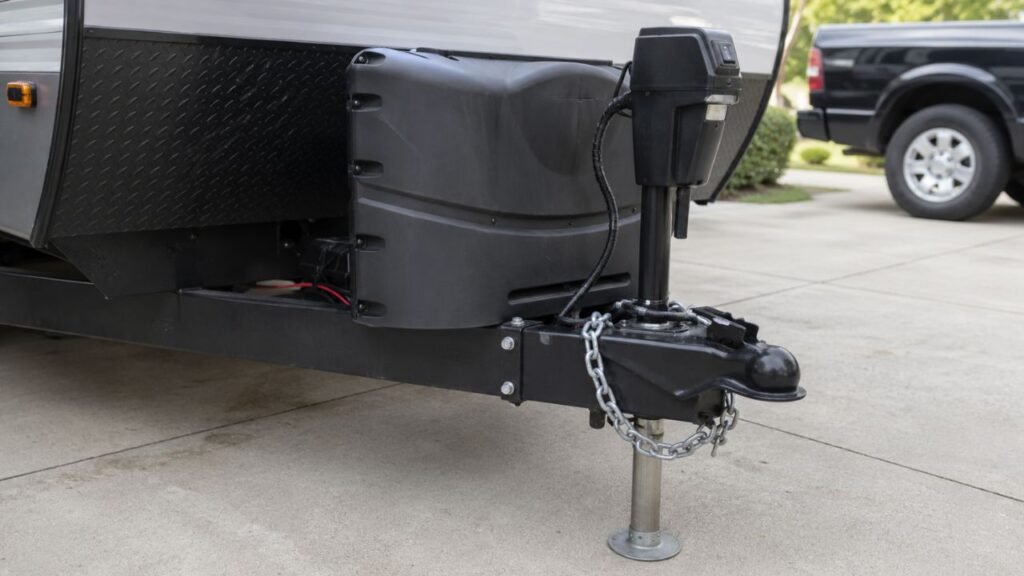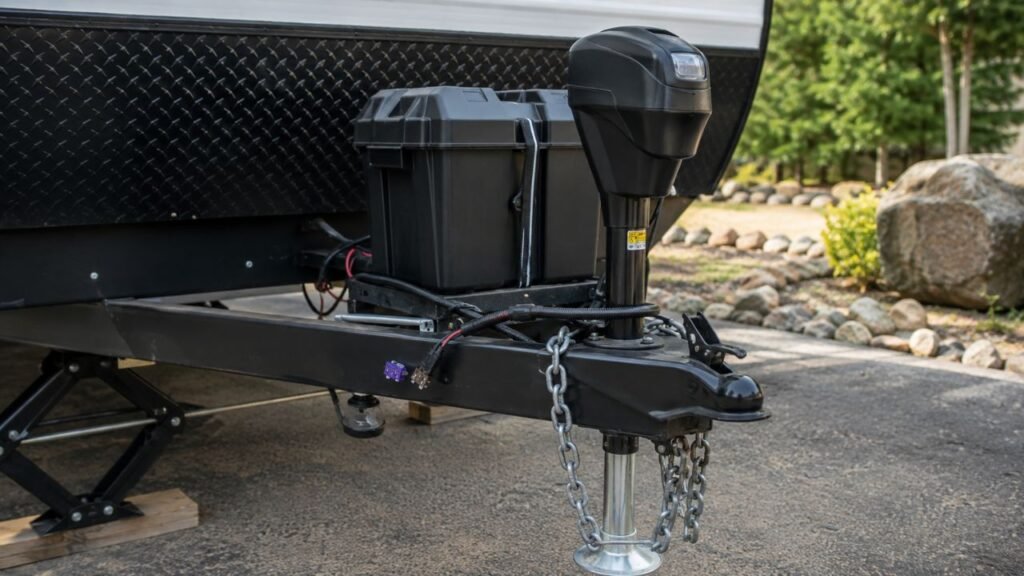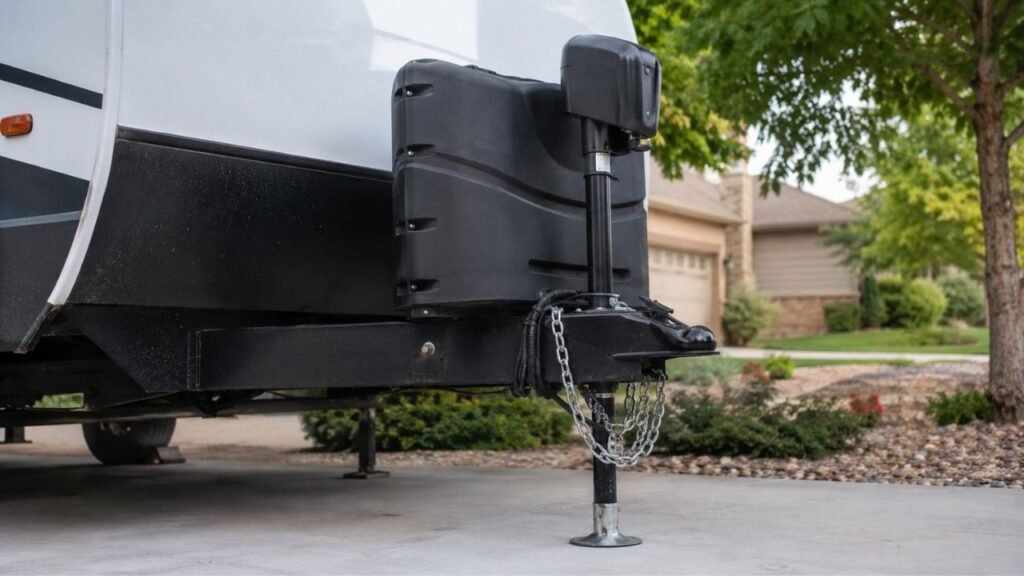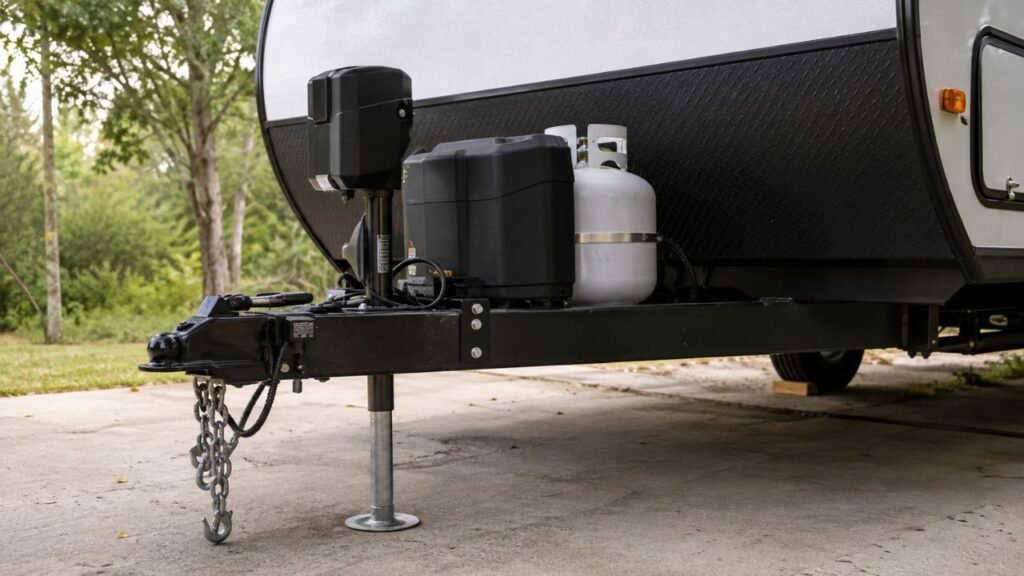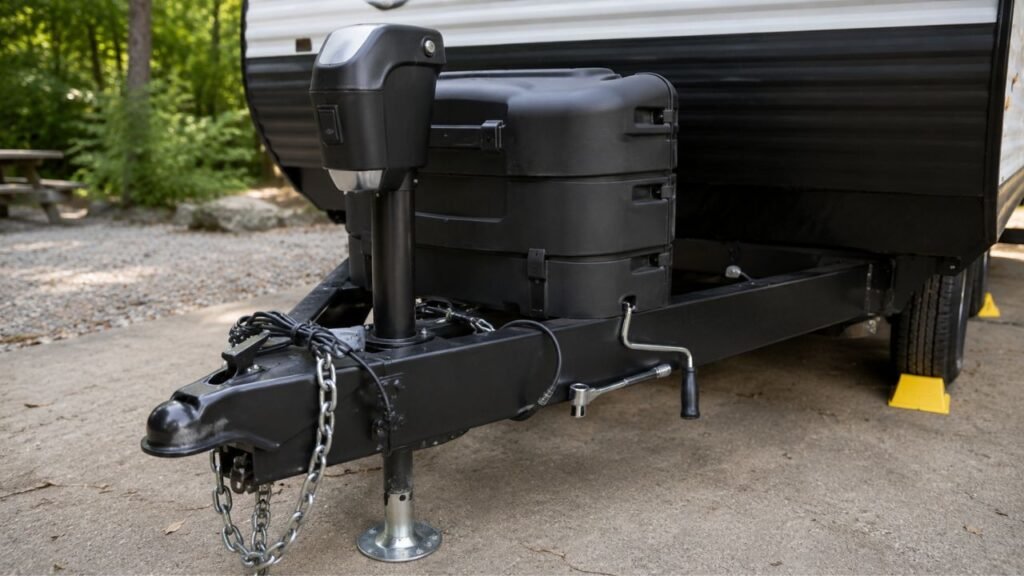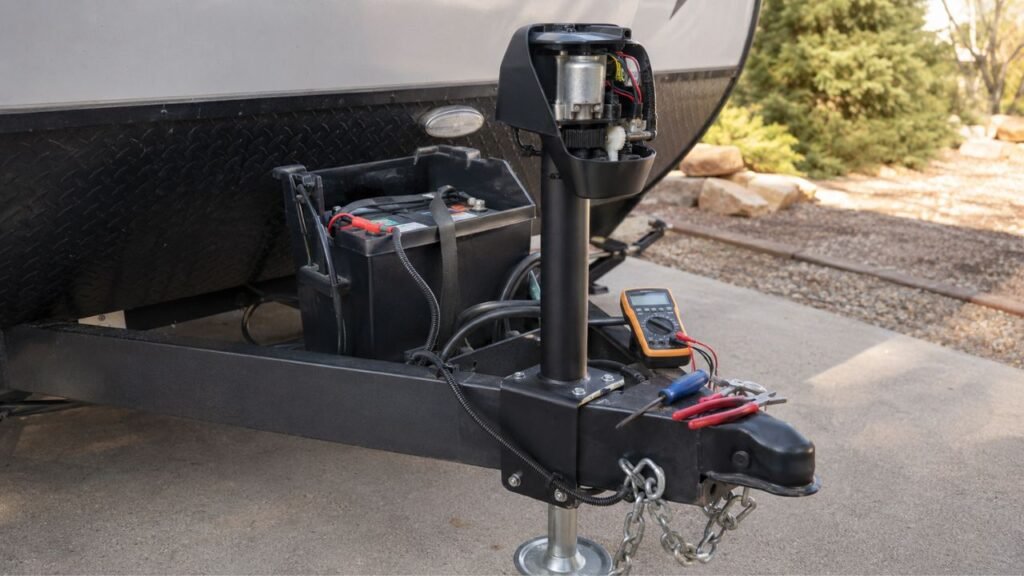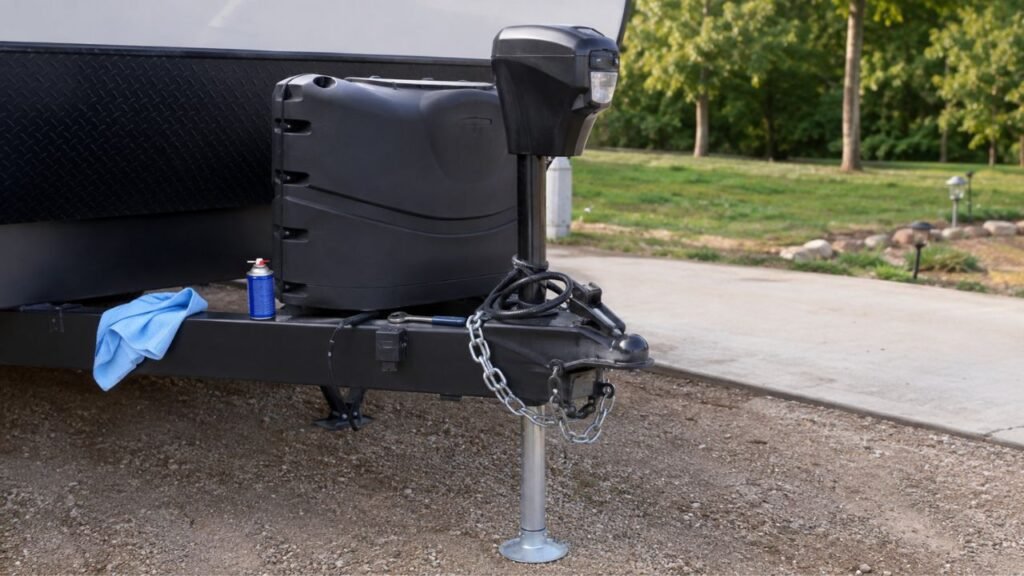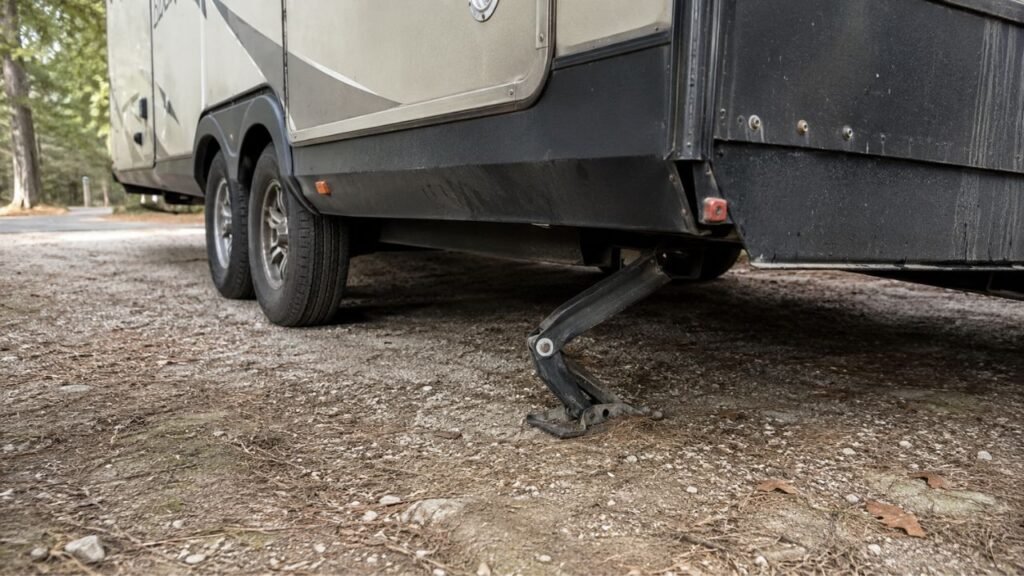
Your RV stabilizer jack probably bent because it carried more weight or sideways force than it was designed to handle. Common causes include using the jack to level or lift the RV, changing tongue height while the stabilizers are down, extending the jack too far, overtightening it, letting the trailer shift, or striking an obstacle.
A bent jack does not always mean you need major RV repairs. Below, I’ll help you identify what caused the damage, decide whether the jack should be repaired or replaced, and prevent the same problem from happening again.
Key Takeaways
- RV stabilizer jacks are mainly designed to reduce movement, not level the camper.
- Trying to lift part of your RV can bend lightweight stabilizer arms.
- Raising or lowering the tongue while stabilizers remain planted can side-load them.
- An overextended scissor jack is more vulnerable to bending and twisting.
- Soft ground can allow a jack to sink or move sideways under pressure.
- A severely bent, cracked, twisted, or binding jack should usually be replaced.
- Always follow the instructions for your specific RV and stabilizer system.
Why Did My RV Stabilizer Jack Bend?
A stabilizer jack usually bends when the force acting on it goes beyond normal stabilization pressure. Sometimes that force comes straight down. Other times, the more damaging force comes from the RV moving sideways while the jack remains firmly planted.
You Used the Stabilizer Jack to Level or Lift the RV
This is one of the most common reasons stabilizer jacks bend.
A stabilizer jack may look similar to equipment designed for lifting. That can make it tempting to crank one side higher when your campsite is uneven.
However, most RV stabilizers are not meant to lift the trailer.
Their job starts after the RV is already level. You lower them until they make firm contact with the ground and reduce the rocking you feel while walking inside.
Problems begin when you continue cranking.
As the stabilizer begins carrying more trailer weight, its arms, pivots, mounting bracket, and screw assembly experience much greater stress.
You might notice the RV corner rising slightly. At that point, you may already be placing more load on the stabilizer than intended.
If your campsite is uneven, level the RV using the appropriate leveling method first. Then use the stabilizers to steady it.
You Changed the Tongue Height With the Stabilizers Down
This cause surprises many RV owners.
Imagine your rear stabilizers are firmly planted. You then raise the front of your travel trailer several inches with the tongue jack.
The trailer changes angle.
However, the rear stabilizers are still trying to remain in the same position against the ground. Instead of simply supporting downward pressure, they may now experience sideways or twisting force.
That can bend a scissor arm surprisingly quickly.
The same thing can happen when lowering the tongue significantly.
Before making a major front-to-back adjustment, retract the stabilizers unless your RV manufacturer specifically instructs otherwise.
The RV Shifted While the Jack Was Planted
Your RV does not need to move very far to damage a stabilizer.
Even a small amount of rolling or shifting can push the bottom of the jack sideways while the top remains attached to the frame.
That creates lateral force.
Common reasons this happens include:
- Inadequate wheel chocking
- Parking on a slope
- Trailer settling after unhitching
- Shifting weight inside the RV
- Hitching or unhitching movement
- Soft ground beneath one side
- Adjusting trailer height after stabilization
This is why wheel chocks and stabilizer jacks serve different purposes.
Your stabilizers reduce movement inside the camper. Your wheel chocks help stop the trailer itself from rolling.
The Jack Was Extended Too Far
A scissor stabilizer becomes more vulnerable as it approaches maximum extension.
When the jack remains relatively compact, its arms form a wider diamond shape. As it stretches taller, those arms become more vertical.
That can reduce resistance to sideways forces.
If you routinely need nearly the entire extension range, consider using suitable stabilizer blocks or pads beneath the jack when permitted by the manufacturer.
A block reduces the distance the jack must travel.
Just make sure the block is wide, stable, and appropriate for RV use. Avoid creating an unstable tower simply to shorten jack extension.
The Jack Sank or Slipped on Soft Ground
Soft campsites can cause trouble even when you use your stabilizers correctly.
Mud, sand, loose gravel, wet soil, and softened asphalt may allow the jack foot to sink.
Straight, even sinking may simply make your RV feel less stable.
Uneven sinking is more concerning.
If one edge of the jack foot sinks while the opposite side stays higher, the jack can lean. The RV may also shift slightly as the ground compresses.
That sideways movement can bend the arms or mounting bracket.
A properly sized jack pad can spread the load over a larger surface area and reduce sinking.
You Hit a Rock, Curb, Dip, or Other Obstacle
Physical impact can bend a stabilizer instantly.
The obvious example is driving away while a jack is still partially extended.
However, damage can also occur when a stabilizer appears retracted but still hangs unusually low.
A deep dip, steep driveway, campground entrance, rock, curb, or uneven road can catch the jack.
Depending on the direction of impact, you might bend:
- The scissor arms
- The mounting bracket
- The footplate
- The drive screw
- The entire jack assembly
After any known impact, inspect more than the visibly bent part.
The Jack Was Overtightened
More pressure does not always mean more stability.
A common mistake is continuing to crank the stabilizer after it already has firm ground contact.
You may be trying to eliminate the last little bit of movement inside the RV.
Unfortunately, that additional force can begin transferring significant trailer weight onto the jack.
Once the RV starts rising, you have gone beyond simple stabilization on most systems.
Instead, bring each jack down according to your manufacturer’s instructions and apply only the required stabilizing pressure.
A Drill or Impact Tool Applied Too Much Torque
Using a cordless drill can make setup much easier.
It can also make overtightening easier.
With a hand crank, you can usually feel resistance increasing gradually. A powerful drill reaches that point much faster.
An impact driver can be even more aggressive because it applies repeated impacts as resistance increases.
That can stress:
- Threads
- Pivot points
- Scissor arms
- Mounting hardware
- Drive components
Check whether your stabilizer manufacturer allows powered tools and whether it specifies speed or torque limitations.
Do not assume every drill adapter means every power tool is safe.
The Jack or Mount Was Already Weakened
Sometimes the bending event is only the final part of a longer problem.
A stabilizer may already have:
- Rust
- Corrosion
- A slightly bent arm
- A damaged pivot
- Loose mounting hardware
- A previous impact
- A distorted bracket
- Worn holes
- A damaged screw mechanism
Then a load that normally would not cause obvious damage may finish the job.
This is especially important if the same stabilizer has bent more than once.
Replacing the jack without inspecting the surrounding mount may not solve the underlying problem.
What Part of My Stabilizer Jack Actually Bent?
Knowing which component bent can give you useful clues about how the damage happened. It also helps determine whether you are dealing with a simple jack replacement or something that needs closer inspection.
| Bent Part | What You May Notice | Possible Cause | What to Inspect Next |
| Scissor arm | Arm bows or folds sideways | Overloading, side force, impact | Opposite arm, pivots, screw |
| Drive screw | Wobbles or binds while turning | Impact, excessive force, misalignment | Threads, nut and pivots |
| Footplate | No longer sits flat | Uneven ground or side loading | Jack alignment and ground contact |
| Mounting bracket | Entire jack hangs crooked | Impact or strong lateral force | Bolts, welds and frame area |
| Powered stabilizer leg | One side sits crooked | Overload, movement or impact | Support arms and drive system |
| Entire assembly | Jack retracts unevenly | Severe overload or collision | Frame mount and nearby hardware |
Do not base your repair decision on appearance alone. A jack can look only slightly bent while the screw or pivot points are badly misaligned.
Can I Tell What Caused the Bend From Its Direction?
The direction of the damage can provide clues, although it cannot prove exactly what happened.
A scissor jack bent noticeably sideways often suggests lateral force.
That may have come from the trailer rolling slightly, changing tongue height, unstable ground, or an impact.
A jack that looks compressed or buckled more vertically may have been overloaded while someone was trying to lift or level the RV.
A bent footplate can indicate uneven ground contact.
A mounting bracket pulled sideways may suggest that the entire stabilizer was forced laterally.
If the drive screw visibly wobbles during operation, the jack may have been twisted or struck.
Think of the damage pattern as evidence rather than a final diagnosis.
Is It Safe to Use an RV Stabilizer Jack After It Bends?
I would not continue using a visibly bent stabilizer normally until you inspect the damage.
Once metal bends, the original geometry has changed.
That can cause the jack to:
- Bind unexpectedly
- Extend unevenly
- Retract incorrectly
- Twist under load
- Put extra stress on its screw
- Stress its mounting bracket
A tiny cosmetic bend is different from a creased structural arm.
Still, if you can clearly see that a load-bearing portion has changed shape, treating it as normal equipment is not worth the risk.
Inspect it first.
Can You Straighten a Bent RV Stabilizer Jack?
Whether straightening makes sense depends heavily on what bent and how badly it was damaged. A jack that can physically be pushed back into shape is not automatically restored to its original strength.
Slightly Bent Manual Scissor Jack
Some owners straighten minor bends in manual scissor stabilizers.
The concern is that bent steel may already have been weakened, stretched, or misaligned.
Even if the arm looks straight afterward, the pivot points and screw may no longer line up correctly.
For an inexpensive stabilizer assembly, replacement is often the simpler option.
Check the manufacturer’s repair recommendations before deciding.
Buckled or Folded Stabilizer Jack
A severely buckled jack should generally be treated much more cautiously.
Warning signs include:
- Sharp creases
- Folded arms
- Cracked metal
- Torn mounting holes
- Damaged pivots
- Twisted brackets
- Bent screw shafts
- Persistent binding
These are structural problems rather than simple cosmetic damage.
Replacing the damaged assembly is usually the safer approach.
Bent Electric Stabilizer Leg
Powered stabilizers require extra attention because the visible leg is only part of the system.
A bent component may also affect:
- Motor loading
- Cross shafts
- Gears
- Switches
- Wiring
- Support arms
- Drive mechanisms
Some systems allow individual parts to be replaced. Others require replacing a larger assembly.
Find the manufacturer’s label and exact model before ordering anything.
Bent Mounting Bracket
A bent mounting bracket deserves careful inspection.
Look at:
- Mounting bolts
- Welds
- Bolt holes
- Frame flange
- Nearby steel
- Cracks
- Distortion
If the RV frame or welded mounting area appears damaged, have it inspected by a qualified RV repair facility.
Do not treat a frame problem as a simple jack replacement.
When Should I Replace the Stabilizer Jack Instead of Repairing It?
Minor damage sometimes leaves room for inspection and manufacturer-approved repair. More serious structural damage usually makes replacement the better choice.
Consider replacing the jack if you find:
- Severe buckling
- Deep creases in the arms
- Cracked metal
- Cracked welds
- Bent drive screw
- Damaged threads
- Enlarged pivot holes
- Twisted mounting plate
- A jack that binds badly
- A jack that will not retract completely
- Repeated bending
- Damage following a significant impact
Replacement can also make sense when a new jack assembly costs little more than repairing several individual worn components.
What Should I Check After a Stabilizer Jack Bends?
The visible bend may not be the only damage. Take a few minutes to inspect the complete stabilizer installation before putting another jack in its place.
Check:
- Both scissor arms
- Pivot bolts or rivets
- Drive screw
- Screw threads
- Footplate
- Mounting bracket
- Mounting bolts
- Welds
- Nearby frame area
- Wiring on powered systems
- Motor or gearbox
- Cross shafts when equipped
- Opposite-side stabilizer
- Ground clearance when retracted
If both sides use identical jacks, compare the damaged side with the good side.
Differences can make subtle twisting easier to spot.
How Do I Replace a Bent RV Stabilizer Jack?
Replacing many bolt-on stabilizer jacks is straightforward, but the exact procedure varies by RV and jack design.
- Identify the stabilizer manufacturer and model.
- Confirm the correct replacement and mounting pattern.
- Park the RV on firm, reasonably level ground.
- Chock the wheels securely.
- Follow the RV manufacturer’s instructions for supporting the trailer.
- Disconnect electrical power when servicing powered equipment.
- Remove the damaged stabilizer according to its service instructions.
- Inspect the mounting bracket and surrounding frame.
- Install the replacement using the specified hardware.
- Tighten hardware to the manufacturer’s specifications.
- Test extension and retraction before applying normal stabilizing pressure.
- Recheck the installation after initial use if recommended.
Do not guess mounting-bolt torque values.
Different stabilizers, bolts, brackets, and RV frames can require different specifications.
Does a Bent Stabilizer Jack Mean My RV Frame Is Damaged?
Not necessarily.
In many situations, the stabilizer itself bends before serious frame damage occurs.
However, a strong impact or major sideways load can also damage the mounting area.
Look carefully for:
- Cracked welds
- Bent frame flanges
- Enlarged mounting holes
- Distorted brackets
- Loose hardware
- New gaps around the mount
Also pay attention to unusual changes elsewhere in the RV after a severe incident.
For example, a door or slide that suddenly fits differently deserves further investigation.
If you see structural damage around the frame, have a qualified professional inspect it.
Why Did Only One Stabilizer Jack Bend?
One bent jack does not mean the other stabilizers should have bent too.
The load may not have been shared equally.
One jack might have:
- Contacted firm ground before the others
- Been extended farther
- Been sitting on softer ground
- Taken most of a sideways load
- Hit an obstacle
- Had preexisting damage
- Been mounted slightly differently
A single stabilizer can take a surprisingly large percentage of the unwanted force during trailer movement.
That is why inspecting the circumstances around the damaged corner can be helpful.
How Can I Keep My RV Stabilizer Jacks From Bending Again?
Preventing another bent stabilizer mostly comes down to setup order, controlling trailer movement, and avoiding unnecessary load on the jack.
Level the RV Before Deploying the Stabilizers
Get your trailer level before relying on stabilizers.
For a typical travel trailer, side-to-side leveling usually happens at the wheels using an appropriate leveling method.
Front-to-back leveling is normally handled using the tongue jack after the trailer is properly positioned and secured.
Only after leveling should the stabilizers come down.
Chock the Wheels Before Lowering the Stabilizers
Chock the trailer securely so it cannot roll while you are setting up.
Do not expect the stabilizers to stop wheel movement.
A trailer shifting even slightly can put tremendous sideways stress on a planted stabilizer.
Use Blocks to Reduce Excessive Jack Extension
If your stabilizers routinely extend almost their full length, suitable blocks may help.
A solid block reduces the distance the jack needs to travel and can help maintain better geometry.
Use products or materials appropriate for the load and surface.
Avoid tall, unstable stacks.
Apply Only the Pressure Your Jack Requires
Once the jack makes solid contact, follow the manufacturer’s procedure for final tightening.
Do not keep cranking simply because the RV still has a tiny amount of movement.
Some movement may come from:
- Tires
- Suspension
- Frame flex
- Steps
- The campsite surface
Trying to eliminate every bit of movement by placing more weight on the stabilizers can create another bent jack.
Retract Stabilizers Before Major Trailer Adjustments
Before significantly raising or lowering the tongue, think about what the planted stabilizers are doing.
If the trailer angle changes while they remain firmly against the ground, they can become side-loaded.
Retract them when appropriate before making major height adjustments, hitching, repositioning, or moving the trailer.
Follow your RV manufacturer’s setup and breakdown procedure.
Do a Walkaround Before Moving the RV
Make a complete walkaround part of your departure routine.
Check:
- Stabilizer jacks
- Tongue jack
- Wheel chocks
- Steps
- Awning
- Power cord
- Water hose
- Sewer connection
Pay particular attention to the stabilizers.
All of them should be fully retracted and safely clear of the ground before the RV moves.
What Is the Correct Order for Leveling and Stabilizing a Travel Trailer?
Following a consistent setup order helps prevent accidental stabilizer loading. Your RV manual should take priority, but a typical travel-trailer setup follows this general sequence.
- Position the trailer at the campsite.
- Level the trailer side-to-side using the proper wheel-based method.
- Chock the wheels securely.
- Unhitch when appropriate.
- Level front-to-back using the tongue jack.
- Place suitable stabilizer pads or blocks if needed.
- Lower the stabilizers.
- Apply the recommended stabilizing pressure.
- Check that the trailer feels secure.
The important part is simple: level first and stabilize afterward.
Stabilizer Jacks vs. Leveling Jacks: Why the Difference Matters
RV owners sometimes use the words stabilizing and leveling interchangeably. The equipment may look similar, but its intended job can be very different.
| Feature | Stabilizer Jack | Leveling Jack or System |
| Main purpose | Reduce RV movement | Correct RV level according to system design |
| Intended to lift RV | Usually no | Some systems are specifically designed to |
| Typical use | After leveling | During leveling |
| Common design | Scissor or powered stabilizer | Hydraulic, electric or mechanical |
| Common misuse | Applying too much lifting force | Operating outside system limits |
| Best guidance | Stabilizer manual | Leveling-system manual |
The word usually matters here.
Different RV products have different designs and ratings. Always verify what your particular jack or leveling system is designed to do.
Final Words
A bent RV stabilizer jack usually tells you that the jack experienced a force it was not intended to handle.
Sometimes that comes from trying to lift the camper. Other times, the real culprit is trailer movement, excessive extension, unstable ground, overtightening, or changing tongue height while the stabilizers remain planted.
Before installing a replacement, figure out why the original bent.
Check the mounting area, look for additional damage, and review your setup routine. Fixing the cause is what keeps your next stabilizer straight.
Related FAQs
Can a Bent RV Stabilizer Jack Be Straightened?
A slightly bent manual jack may sometimes be straightened, but that does not guarantee its original strength or alignment returns. If an arm is sharply creased, twisted, cracked, or binding, replacement is usually the better choice.
Should I Replace a Slightly Bent Stabilizer Jack?
Replacement is worth considering if the jack no longer extends smoothly, sits crooked, has damaged pivots, or shows structural deformation. For minor damage, check the manufacturer’s guidance before deciding whether continued use is acceptable.
Can Stabilizer Jacks Lift an RV?
Most RV stabilizer jacks are intended to reduce movement after the RV is already level, not lift the camper for leveling or service. Use equipment specifically approved for lifting when lifting is required.
Can I Use a Drill on RV Stabilizer Jacks?
You can use a drill on some stabilizers if the manufacturer allows it, but excessive speed or torque can cause damage. An impact driver may apply much more force than necessary, so check your stabilizer instructions before using one.
How Tight Should RV Stabilizer Jacks Be?
There is no universal number of turns that works for every stabilizer. Lower the jack until it contacts the surface, then apply only the additional pressure recommended by your manufacturer without trying to lift the RV.
Why Does My Stabilizer Jack Bend Sideways?
A stabilizer commonly bends sideways when the trailer shifts while the foot remains planted. Soft ground, poor wheel chocking, changing tongue height, impact, or excessive jack extension can all create this lateral force.
Why Does My Stabilizer Jack Keep Bending?
Repeated bending usually means the underlying cause has not been corrected. Check for overloading, excessive extension, unstable ground, trailer movement, damaged mounting brackets, poor setup order, or the wrong replacement jack.
Can Soft Ground Bend an RV Stabilizer Jack?
Soft ground can contribute to bending if the foot sinks unevenly or slides sideways. Using a suitable stabilizer pad can spread the load and provide a more stable contact surface.
Can Moving the Tongue Jack Bend the Rear Stabilizers?
Yes, it can. Raising or lowering the front of the trailer significantly while rear stabilizers remain firmly planted changes the trailer’s angle and can place strong sideways forces on those stabilizers.
Can I Tow My RV With a Slightly Bent Stabilizer Jack?
Do not assume a damaged jack is safe for travel simply because it retracts. Make sure it is structurally secure, fully retracted, and has adequate ground clearance, and repair or replace questionable components before towing.

Ryan Mitchell writes for readers who prefer independent travel and practical outdoor motorhome living. His how-to guides and reviews focus on simplicity, durability, and real value. He brings a calm, hands-on perspective to every topic.