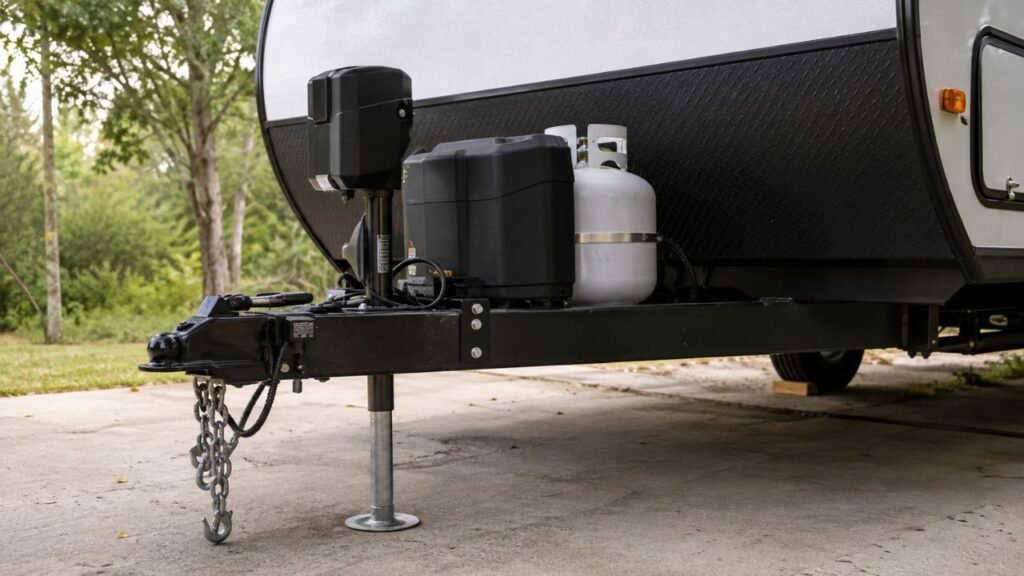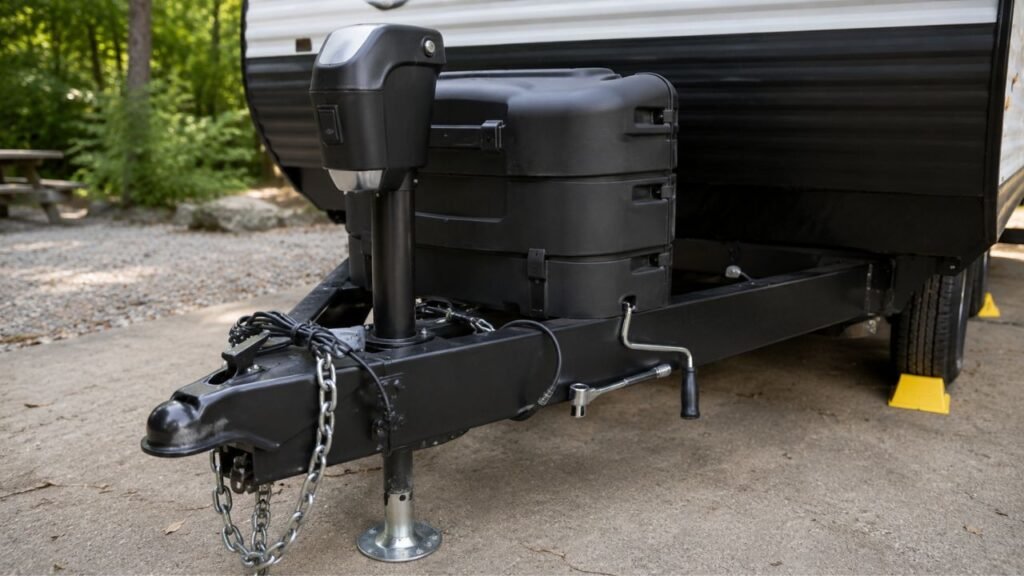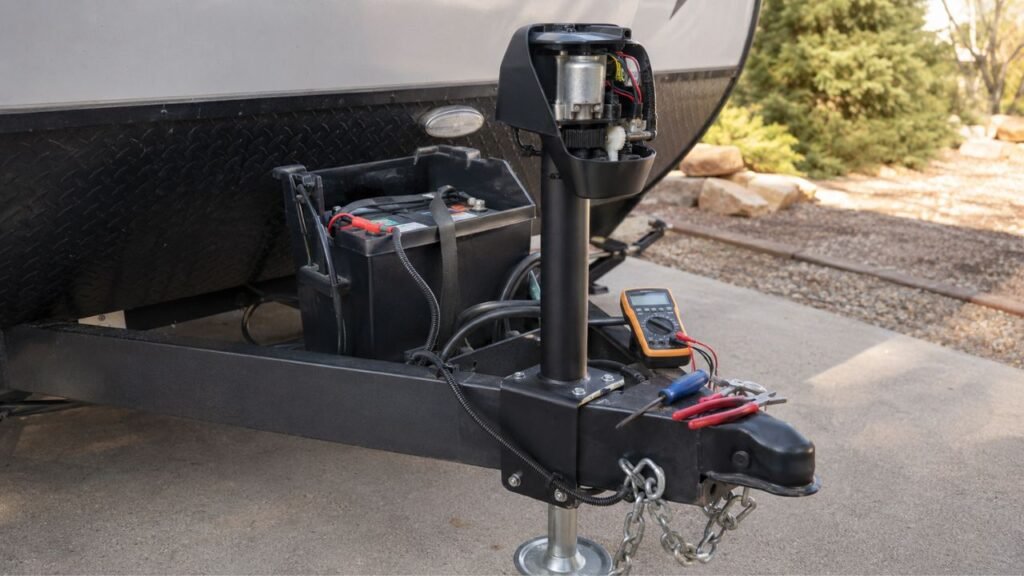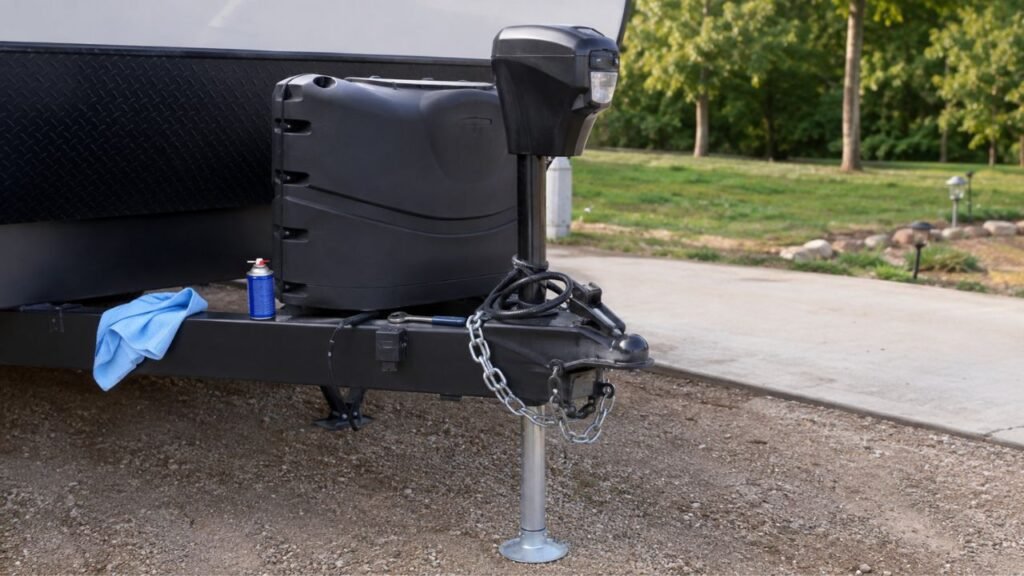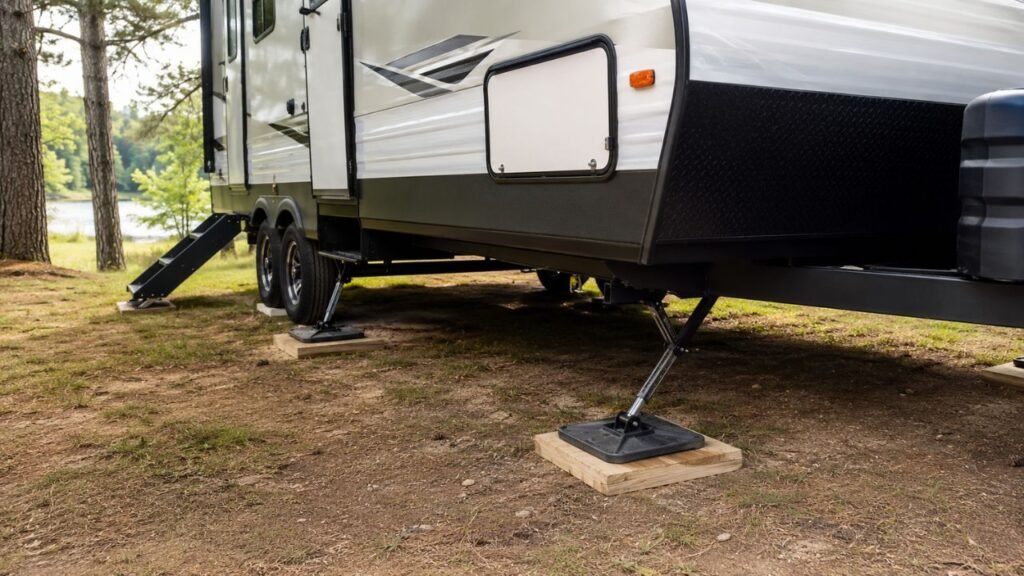
You can stop RV jacks from sinking by placing wide, strong jack pads or blocks beneath each jack foot. The larger surface spreads the RV’s weight across more ground, reducing pressure on soft dirt, sand, grass, or asphalt.
In this guide, I’ll show you what works best under RV jacks, how to set them up properly, and what to do if your jacks are already sinking.
Please follow the user manual carefully before proceeding.
Always take necessary safety precautions while operating.
Key Takeaways
- Use wide jack pads to spread the load over more ground.
- Soft sand, wet dirt, and mud usually need larger pads.
- Leveling jacks and stabilizer jacks serve different purposes.
- Never use ordinary stabilizer jacks to lift the entire RV.
- Make sure every jack foot sits fully centered on its pad.
- Avoid narrow, tall, or unstable stacks beneath RV jacks.
- Recheck your setup after rain or noticeable ground movement.
- Move the RV if the ground cannot safely support it.
Why Do RV Jacks Sink Into the Ground?
RV jacks sink when the weight pressing through each jack exceeds what the ground can support. Several campsite conditions can make this happen faster than you might expect.
The Jack Foot Has Too Little Surface Area
Most RV jack feet are relatively small compared with the weight they support.
Think about walking across soft sand. A narrow shoe sinks much easier than a wide snowshoe.
Your RV jack works in a similar way.
A small jack foot concentrates a large amount of force onto one spot. A wide pad spreads that force over a larger area.
That is why adding surface area usually makes such a noticeable difference.
The Soil Is Loose, Wet, or Saturated
Soft soil cannot resist concentrated pressure very well.
You may experience sinking on:
- Loose sand
- Fresh dirt
- Wet campground grass
- Muddy sites
- Recently disturbed soil
- Waterlogged ground
The difficult part is that the surface may initially look solid.
After several hours, the weight can compress deeper soil layers. Rain can make the problem even worse overnight.
Too Much Weight Is Reaching One Jack
An uneven campsite can place more pressure on one jack.
This often happens when someone tries correcting too much slope using the jacks themselves.
The lower side may end up carrying considerably more weight.
With travel trailers, this is especially important. Stabilizer jacks normally help reduce movement after leveling. They are not usually intended to become your primary lifting system.
The Jack Is Sitting on Soft Asphalt
Your RV does not need to be parked on dirt for sinking to happen.
Hot asphalt can soften considerably during summer.
A small metal jack foot can leave a noticeable depression under heavy pressure. Wide jack pads help spread that load while protecting the parking surface.
Stabilizer Jacks and Leveling Jacks Are Not the Same
Before adding blocks underneath anything, identify what type of jack you have. How you should use the jack depends heavily on its purpose.
Travel Trailer Stabilizer Jacks
Most travel trailers have stabilizer jacks near their corners.
Their main job is reducing shaking and movement while you are parked.
You normally level the trailer first using the tires and tongue jack. Then you lower the stabilizers until they make firm contact.
You do not need to crank them excessively.
Trying to lift your trailer using ordinary stabilizer jacks can overload them. It can also concentrate unnecessary pressure against the ground.
Hydraulic and Electric Leveling Jacks
Motorhomes and some larger towable RVs use true leveling systems.
These jacks are designed to support substantially more weight. Some automatic systems can raise or lower different corners during leveling.
However, every leveling system has operating limits.
Follow the instructions provided for your particular RV and jack system. Pay attention to extension limits, wheel-contact requirements, and pad recommendations.
Using the correct jack pad becomes especially important on soft ground.
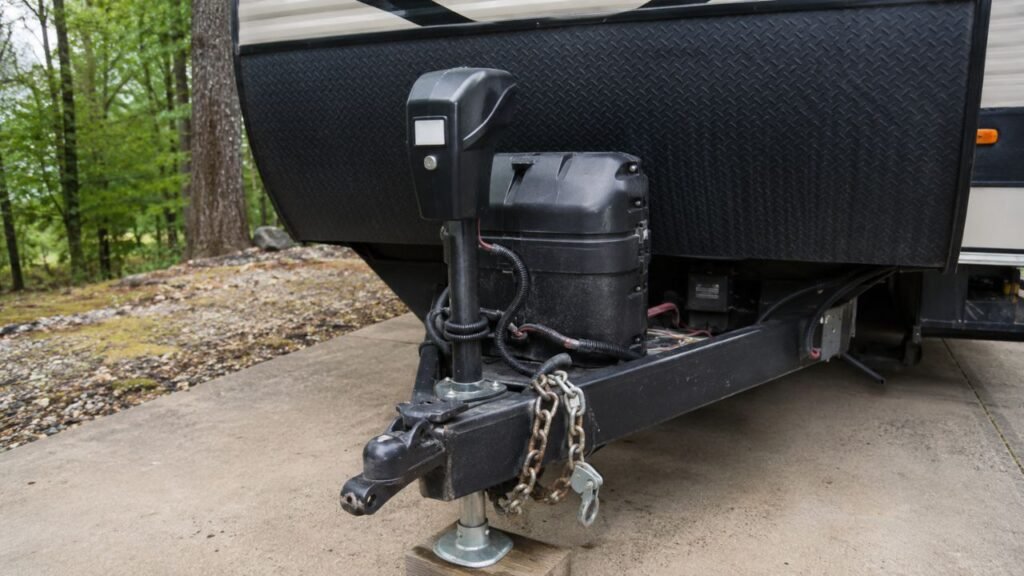
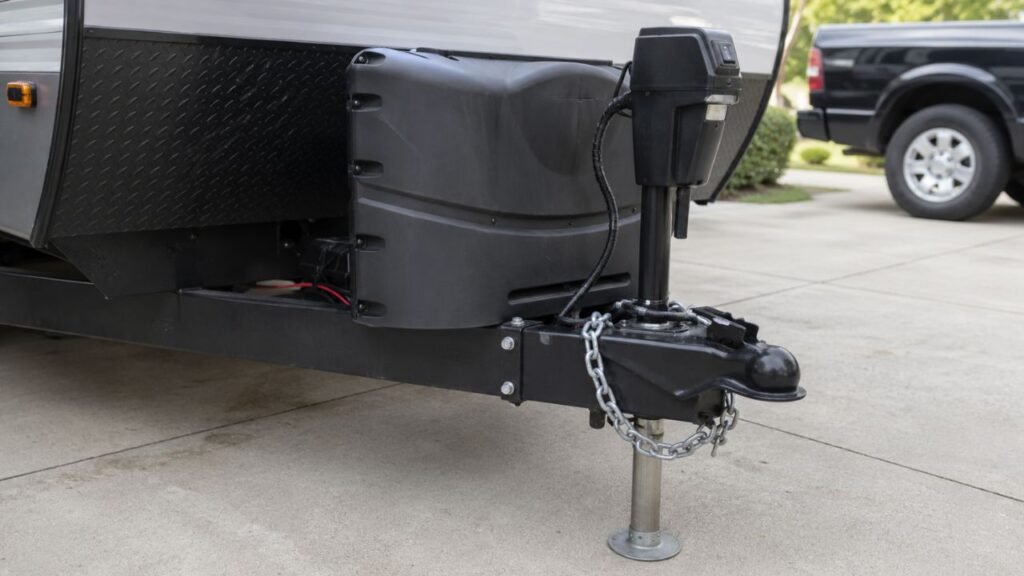
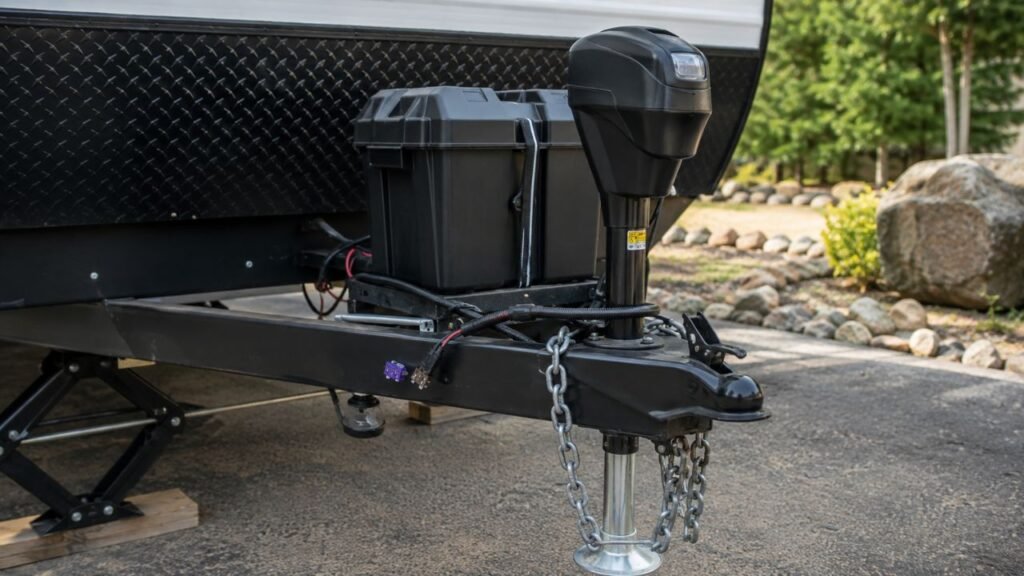
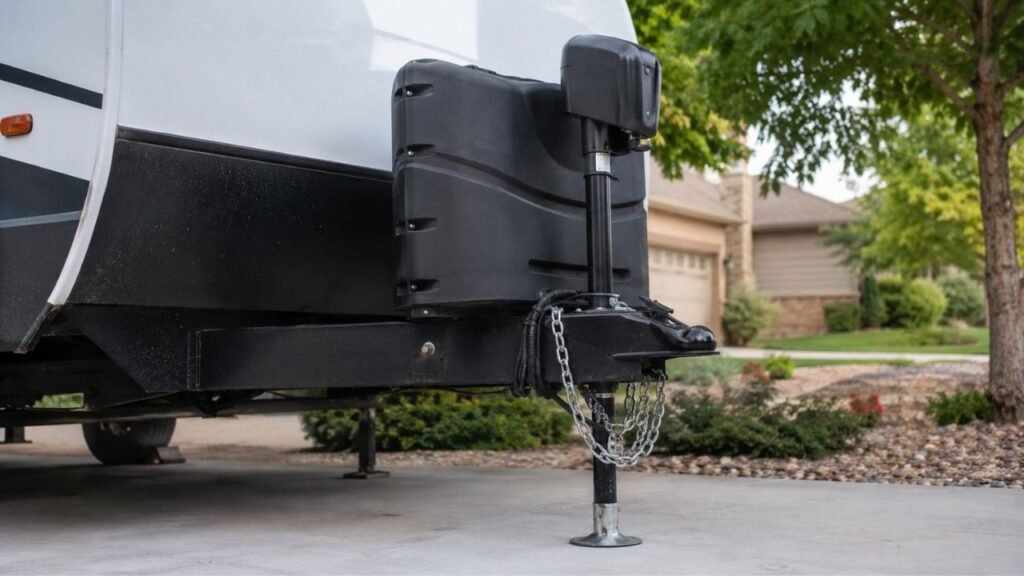
Tongue Jacks and Fifth-Wheel Landing Gear
A travel trailer tongue jack naturally carries substantial tongue weight.
Fifth-wheel landing gear also supports significant front-end weight.
I would always give these jacks a wide, strong foundation on soft campsites.
A tiny piece of wood might technically fit beneath the foot. That does not mean it provides enough surface area.
What Should You Put Under RV Jacks?
You have several good options for supporting RV jacks. The best choice depends on your RV, campsite surface, available storage space, and expected jack load.
| Material | Best Use | Advantages | Main Limitation |
| Wide RV jack pads | Most campsites | Large footprint and easy setup | Need correct size and load rating |
| Heavy-duty plastic pads | Dirt, grass, gravel | Lightweight and water-resistant | Cheap designs may flex or crack |
| Thick rubber pads | Firm or moderately soft ground | Good grip and surface protection | May flex on very soft soil |
| Leveling blocks | Firm to moderately soft surfaces | Provide height and added footprint | Improper stacking can become unstable |
| Wide wooden boards | Dirt, sand, grass | Affordable and widely available | Can split, warp, or absorb moisture |
| Permanent jack pads | Frequent travelers | Always attached and convenient | May still need larger ground pads |
| Small scrap blocks | Temporary emergency use | Easy to find | Usually provide too little surface area |
For most campers, purpose-built jack pads are the easiest choice.
They are generally easy to store and clean. You can also carry a few broad wooden boards as backup.
How Big Should RV Jack Pads Be?
There is no single jack pad size that works perfectly for every RV.
Instead, focus on increasing the contact area significantly compared with the original jack foot.
Your ideal pad size depends on several things:
- RV weight
- Jack type
- Jack-foot size
- Pad strength
- Soil condition
- Number of supporting jacks
Soft ground usually benefits from a larger footprint.
For example, a pad that works perfectly on compact gravel may still sink into wet sand.
The pad also needs enough rigidity.
A huge thin sheet that bends upward around the jack may not distribute the load properly. Strength matters just as much as overall dimensions.
Always check your pad’s weight rating before using it beneath a heavily loaded leveling jack.
How Do You Stop RV Jacks From Sinking on Different Surfaces?
Different campsite surfaces behave differently beneath concentrated RV weight. Adjusting your setup for the ground underneath you can prevent many frustrating problems.
Soft Dirt
Start by finding the firmest available section of the site.
Remove obvious loose material where practical. You can gently flatten the area using your foot.
Then place a broad, rigid jack pad flat against the ground.
Avoid placing the jack directly inside an existing hole or rut.
If the pad immediately starts disappearing into the dirt, you probably need more surface area.
Sand
Sand requires extra attention because it moves easily under pressure.
Small jack pads may simply sink along with the jack.
Use a much wider footprint whenever possible.
Keep your setup low and stable. Avoid making a tall stack just to keep the jack above the sand.
If the campsite is extremely loose, moving to firmer ground may be the better solution.
Wet Grass or Mud
Wet grass can be deceptive.
The grass itself may look firm while the soil underneath is completely saturated.
Use broad pads that distribute weight well.
If water squeezes from the ground when you step nearby, I would be very cautious about putting heavy leveling loads there.
Continuous sinking means the site may not provide enough support.
Gravel
Gravel is usually better than mud or sand, but loose gravel can still shift.
A flat jack pad helps bridge several stones together.
It also reduces the chance of the jack foot sliding between rocks.
Try to keep the pad flat rather than balancing it on a few large stones.
Hot Asphalt
Use jack pads on asphalt whenever you are concerned about surface damage.
This becomes especially important during hot summer weather.
Wide pads spread the pressure and reduce the chance of leaving jack-foot impressions.
Concrete
Concrete normally provides excellent support.
Jack pads are still useful because they improve grip and protect the surface from scratches.
You usually do not need extremely large ground-distribution pads on solid concrete.
How to Set Up RV Jacks on Soft Ground
The safest setup starts before you extend any jacks. Following the correct order keeps your RV stable while reducing unnecessary pressure.
- Inspect the campsite before fully positioning your RV.
- Avoid obviously muddy or waterlogged areas when possible.
- Level a towable RV side-to-side using the tires first.
- Chock the wheels securely before disconnecting.
- Level front-to-back using the proper tongue or leveling system.
- Flatten loose surface material beneath each jack location.
- Place a wide, strong pad on firm contact with the ground.
- Center the entire jack foot over the pad.
- Operate true leveling jacks according to your owner’s manual.
- Lower stabilizer jacks until they are firmly snug.
- Check every pad for bending, tilting, or sinking.
- Recheck your RV after everything settles.
Do not rush the final inspection.
Walk around your RV once everything is deployed. One pad leaning sideways can tell you something is wrong before the problem becomes serious.
Should You Compact the Ground Before Putting Down Jack Pads?
Lightly compacting loose surface dirt can help create a flatter base.
You can step firmly on the location before placing the pad. Removing loose stones or clumps can also help.
However, surface compaction has limits.
You cannot fix deeply saturated soil simply by stomping on the top layer.
If your shoe sinks deeply into the site, your RV jack may eventually do the same.
That is when I would look for firmer ground rather than building bigger block towers.
Can You Put Wood Under RV Jacks?
Yes, you can use strong wooden boards under RV jacks.
Wide boards can work very well because they spread the load across more ground.
Many RV owners use broad pieces of dimensional lumber for this purpose.
A 2×10 or 2×12 board can provide substantially more area than a small jack foot.
However, inspect the wood before every use.
Avoid boards that are:
- Rotten
- Split
- Warped
- Water-damaged
- Extremely narrow
- Cracked around knots
Wood also absorbs moisture and gets dirty faster than plastic pads.
Purpose-built RV pads are usually easier to store. Still, good lumber remains a practical campsite solution.
Can You Stack Leveling Blocks Under RV Jacks?
You can often place leveling blocks beneath RV jacks when the block manufacturer allows it.
Stacking blocks can also reduce how far the jack must extend.
That can create a firmer setup in some situations.
However, keep the stack wide and stable.
Never build a narrow tower simply because you need extra height.
The jack foot should sit fully on the upper block. Every layer underneath should also remain properly aligned.
Follow the stacking pattern recommended by the leveling block manufacturer.
If the stack starts twisting or leaning, retract the jack and correct it.
Do Permanent RV Jack Pads Stop Sinking?
Permanent jack pads can reduce sinking because they increase the factory foot’s surface area.
They are convenient because you do not need to place loose pads every time you arrive.
They can also improve grip on pavement and campground surfaces.
However, they do not make soft soil stronger.
A permanent pad may still sink into deep sand or waterlogged ground.
Think of permanent pads as your first layer of support.
On unusually soft campsites, you may still need a larger ground pad beneath them.
What If Your RV Jack Is Already Sinking?
If a jack starts sinking, avoid adding more pressure. First make sure the RV remains stable before trying to correct the setup.
- Stop extending the sinking jack.
- Check whether the RV has begun leaning.
- Keep hands and feet away from loaded jack areas.
- Never slide another pad underneath a loaded jack.
- Retract the jack only when the RV remains safely supported.
- Install a larger or stronger pad before extending again.
- Re-level the RV using the proper procedure.
- Move to firmer ground if sinking continues.
- Replace cracked or badly bent jack pads.
If your RV has shifted significantly, do not crawl underneath it.
A badly leaning RV can be unpredictable. Professional assistance may be safer if you cannot stabilize it normally.
Why Do My RV Jacks Keep Sinking Even With Pads?
Jack pads solve many sinking problems, but they cannot fix every campsite. If yours still disappear into the ground, one of these conditions is usually responsible.
Your Pads Are Too Small
A pad can be wider than your jack foot and still be too small.
Very soft ground may require considerably more surface area.
If the pad keeps sinking evenly into the ground, increasing the footprint may help.
The Ground Is Saturated Beneath the Surface
The top layer may appear firm when you arrive.
Deeper soil can still be wet and weak.
Your RV’s weight gradually compresses those lower layers.
That explains why a jack can look perfect during setup and sink overnight.
The Pad Is Flexing
Some lightweight pads bend under heavy loads.
When the edges lift, only the middle portion contacts the ground.
That means the effective surface area becomes much smaller.
Use pads strong enough for your expected jack load.
One Jack Is Carrying Too Much Weight
Uneven leveling can place excessive load on one corner.
Check whether one jack is dramatically more extended than the others.
Also make sure you are not using ordinary stabilizer jacks as primary leveling equipment.
Rain Changed the Campsite Conditions
Rain can turn a firm campsite into soft ground very quickly.
This is especially common on grass and dirt sites.
Inspect your pads again after heavy rain.
You may need to retract the jacks and reposition them on wider bases.
You Need to Move to Firmer Ground
Sometimes more pads are not the answer.
If the entire surface keeps collapsing underneath you, moving the RV may be safer.
That is especially true when your pads begin tilting or disappearing deeply into mud.
Common Mistakes That Make RV Jacks Sink
Most jack problems come from small setup mistakes rather than equipment failure. Avoiding these habits can make your campsite noticeably more stable.
- Placing bare jack feet directly onto soft soil.
- Using tiny pieces of scrap wood.
- Choosing thin pads that cannot support the load.
- Using stabilizer jacks to lift the trailer.
- Building tall, narrow block stacks.
- Putting pads on steep or uneven surfaces.
- Ignoring wet or saturated campsite soil.
- Letting part of the jack foot hang off the pad.
- Forgetting to chock the RV wheels.
- Assuming permanent pads work on every surface.
- Ignoring soil changes after heavy rain.
- Continuing to use cracked leveling blocks.
When Should You Move the RV Instead of Using More Jack Pads?
Jack pads can improve many campsites, but they cannot overcome completely unsuitable ground. Knowing when to relocate prevents a small inconvenience from becoming a safety problem.
Consider moving your RV when:
- Water pools around the jack locations.
- Your feet sink deeply while walking nearby.
- Pads repeatedly disappear into the soil.
- The RV keeps becoming unlevel.
- Jack pads tilt sideways under pressure.
- Your blocks require an unstable stack.
- One jack must extend excessively.
- You cannot maintain a stable base.
You do not have to force every campsite position to work.
Moving the RV a few feet can sometimes place the jacks over much firmer soil.
How Often Should You Recheck RV Jacks on Soft Ground?
I recommend checking your jacks shortly after setting up and periodically during your stay.
You should pay extra attention after:
- Heavy rain
- Major temperature changes
- Deploying slide-outs
- Filling freshwater tanks
- Emptying holding tanks
- Noticeable RV movement
- Ground thawing
- Strong storms
You do not need to obsess over the jacks every hour.
Simply make them part of your campsite walk-around.
Look for sinking pads, tilted blocks, or unexpected jack extension.
Correcting a small amount of settlement early is much easier.
Final Words
Stopping RV jacks from sinking is mainly about spreading weight across a larger, stronger base.
Wide jack pads, sturdy leveling blocks, or broad lumber can all help when used correctly.
The ground itself still matters.
If your pads keep sinking despite increasing the footprint, the campsite may simply be too soft. Moving to firmer ground is often better than building a taller or more complicated support system.
Most importantly, use each jack for its intended job.
Leveling jacks, stabilizers, tongue jacks, and landing gear do not all handle loads the same way. Follow your RV and jack-system manual whenever its instructions differ from general advice.
Related FAQs
What Is the Best Thing to Put Under RV Jacks?
Wide, strong RV jack pads are usually the easiest solution. Heavy-duty plastic, composite, rubber, or broad wooden boards can also work when they safely support the jack load.
How Big Should RV Jack Pads Be?
Your pad should provide noticeably more ground-contact area than the original jack foot. Heavier RVs and softer ground generally benefit from wider, stronger pads.
Can I Use 2×12 Boards Under RV Jacks?
Yes, sound 2×12 lumber can work well beneath RV jacks because it creates a broad footprint. Avoid using cracked, rotten, warped, or badly damaged boards.
Do I Need Jack Pads on Grass?
Jack pads are a good idea on grass because the soil underneath may compress or soften after rain. Wider pads reduce the amount of pressure placed on one small area.
Do RV Jacks Sink Into Gravel?
Yes, RV jacks can sink or shift in loose gravel. A strong pad helps distribute the weight across multiple stones and provides a flatter support surface.
Can RV Jacks Sink Into Asphalt?
Yes, especially during hot weather when asphalt becomes softer. Wide jack pads spread the load and can help prevent deep impressions in the pavement.
Should Stabilizer Jacks Lift the RV?
Ordinary travel trailer stabilizer jacks generally should not be used to lift or level the trailer. Their main purpose is reducing movement after the RV is already level.
Can I Stack Blocks Under RV Stabilizer Jacks?
You can use stackable blocks when their manufacturer allows it. Keep the stack low, wide, centered, and stable rather than creating a narrow tower.
Are Rubber Jack Pads Better Than Plastic?
Neither material is automatically better. Choose based on load rating, rigidity, footprint, grip, campsite surface, and how easily you can store the pads.
Why Are My RV Jacks Still Sinking With Jack Pads?
Your ground may be saturated, your pads may be too small or flexible, or one jack may be carrying excessive weight. Continued sinking can also mean you need firmer ground.

Ryan Mitchell writes for readers who prefer independent travel and practical outdoor motorhome living. His how-to guides and reviews focus on simplicity, durability, and real value. He brings a calm, hands-on perspective to every topic.