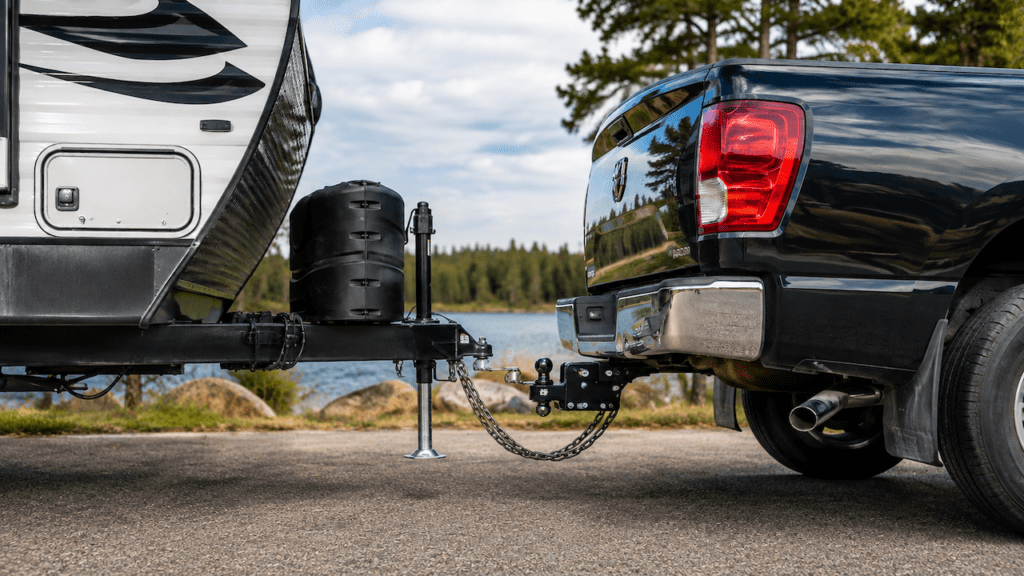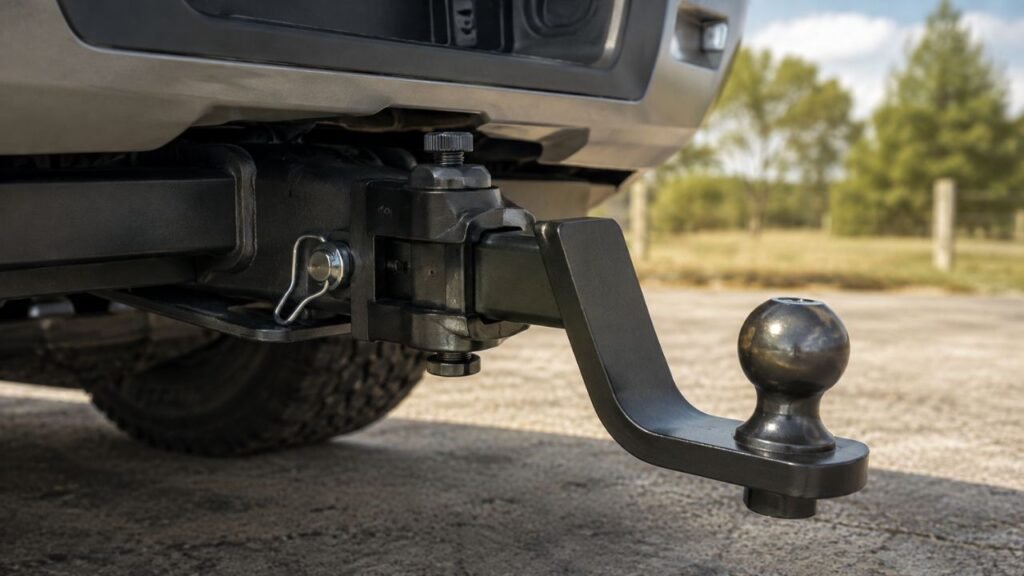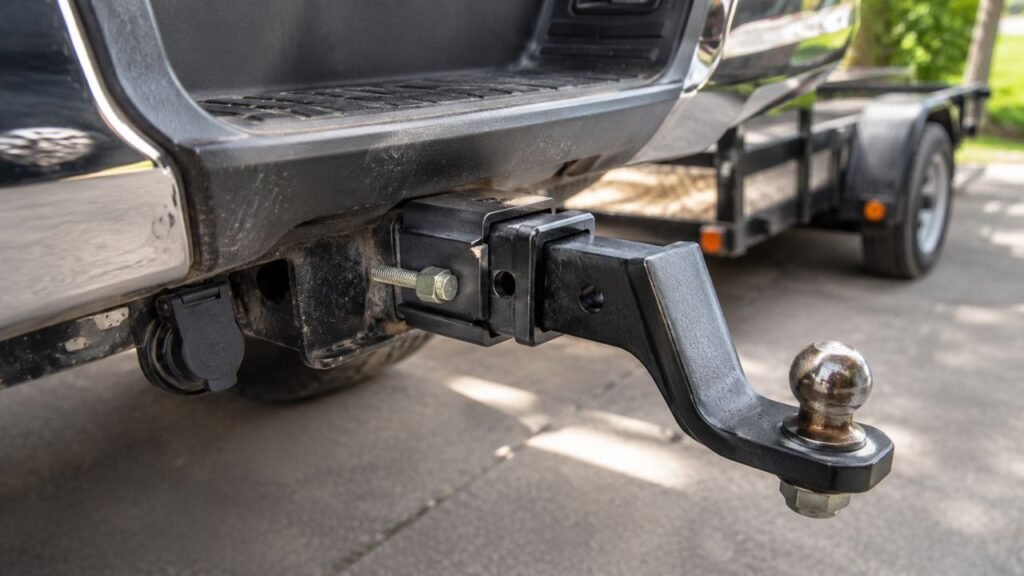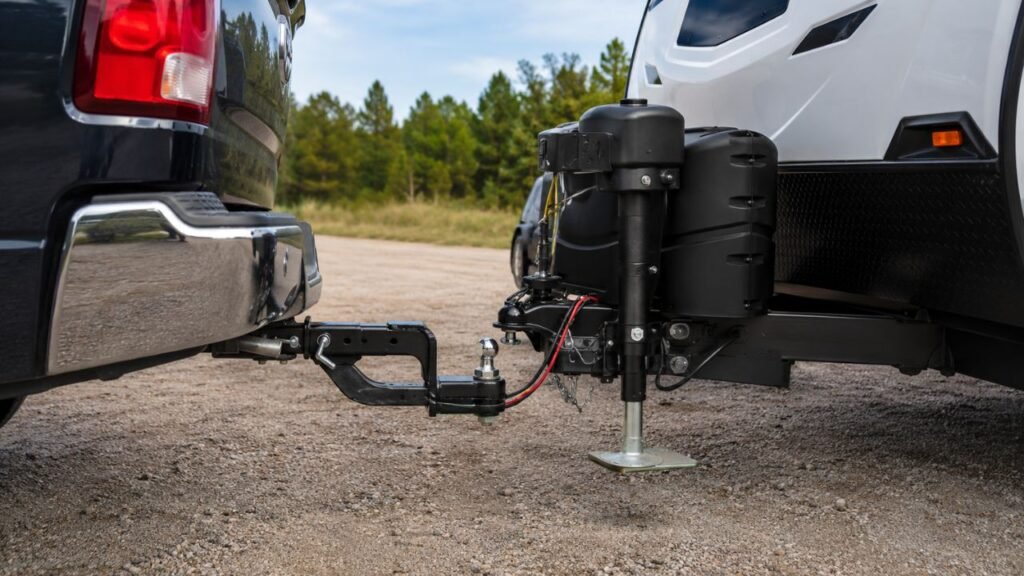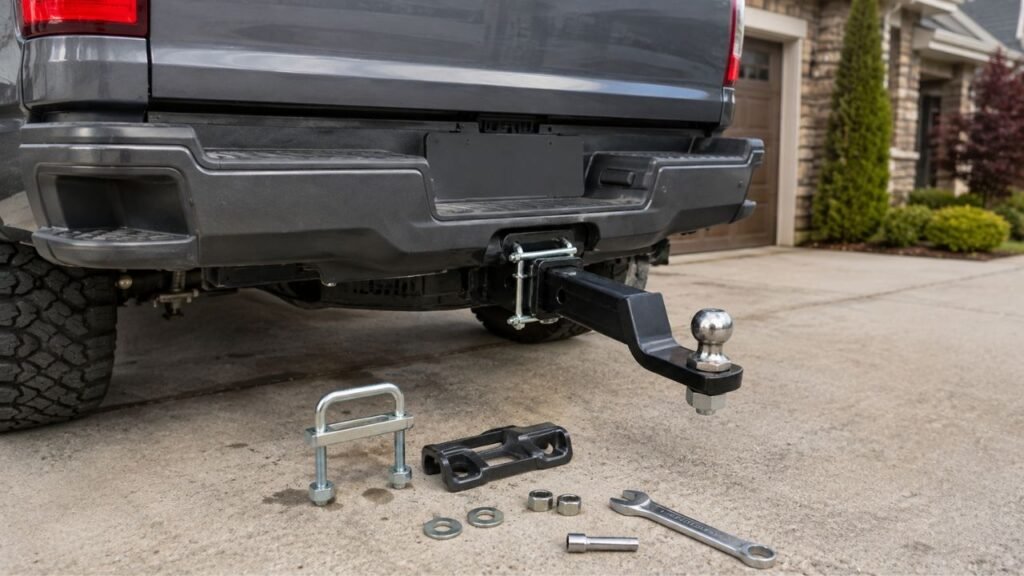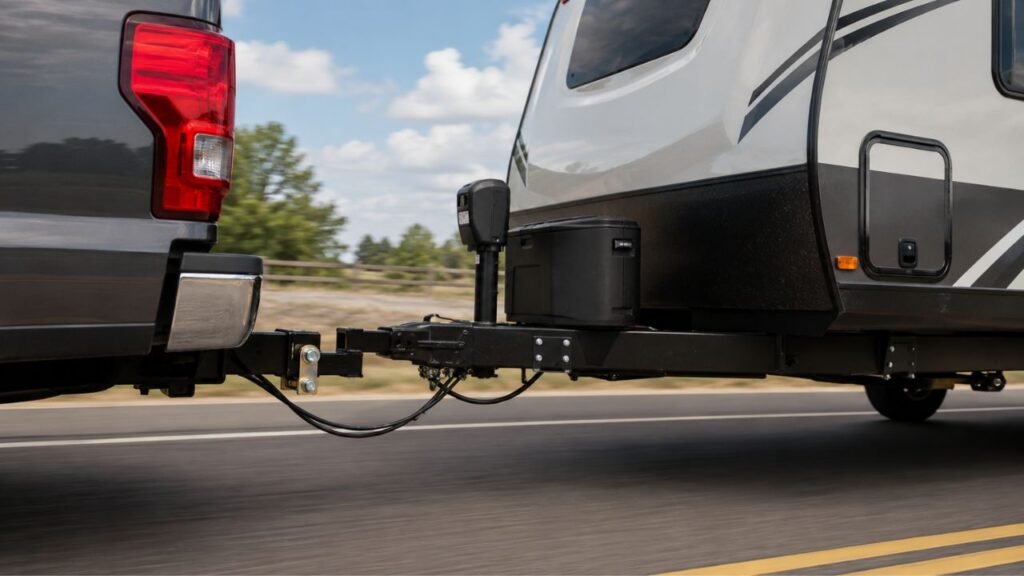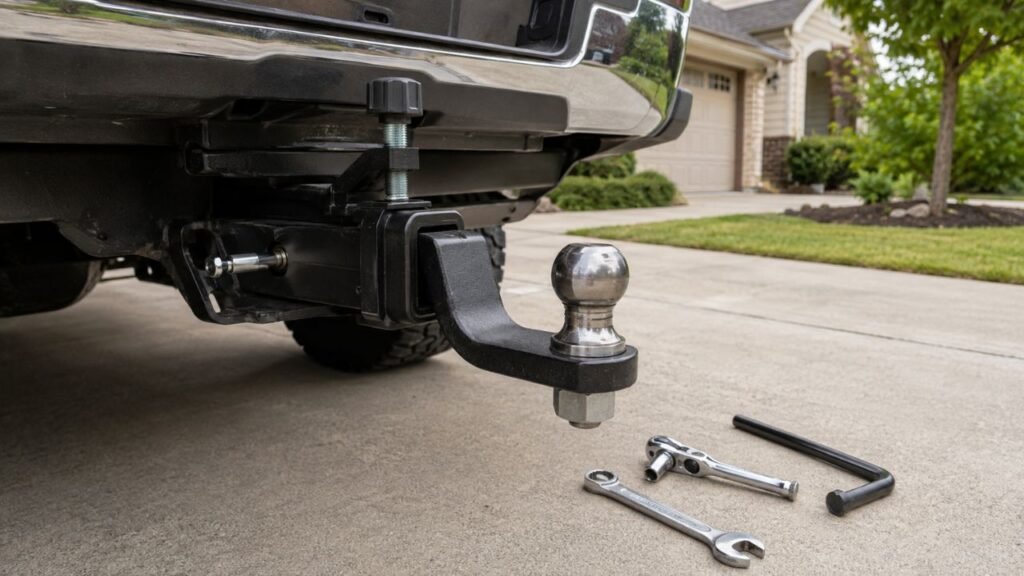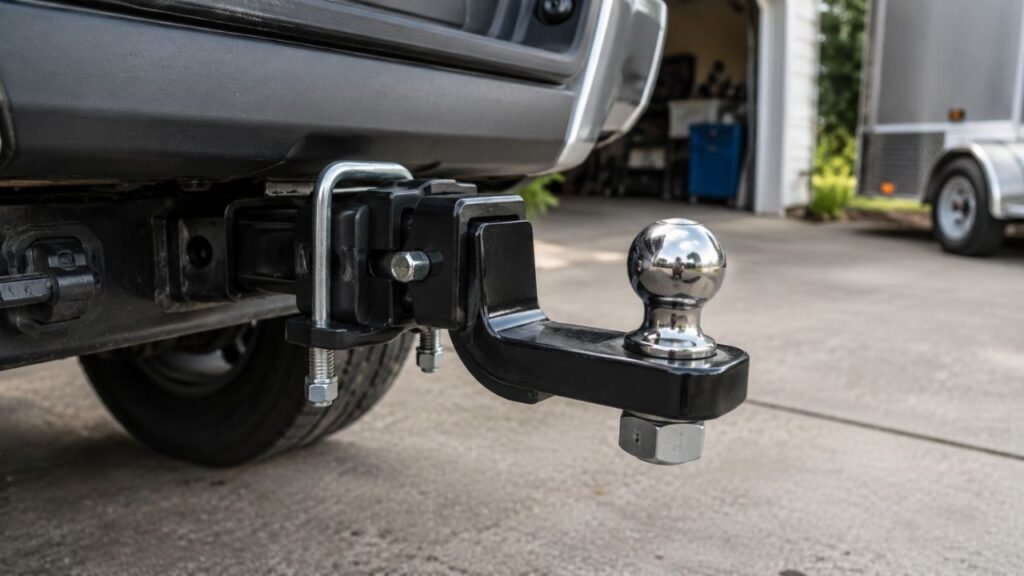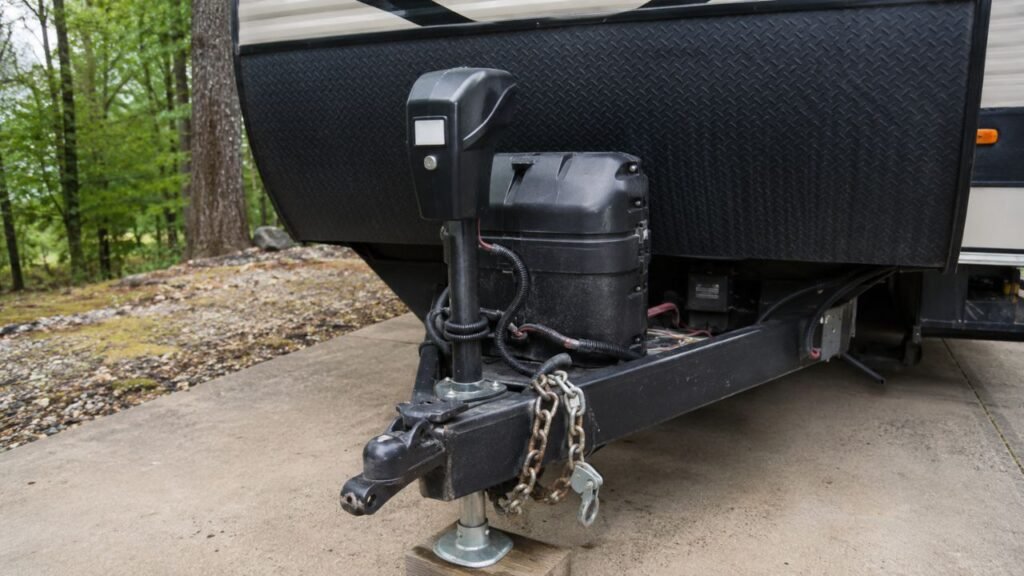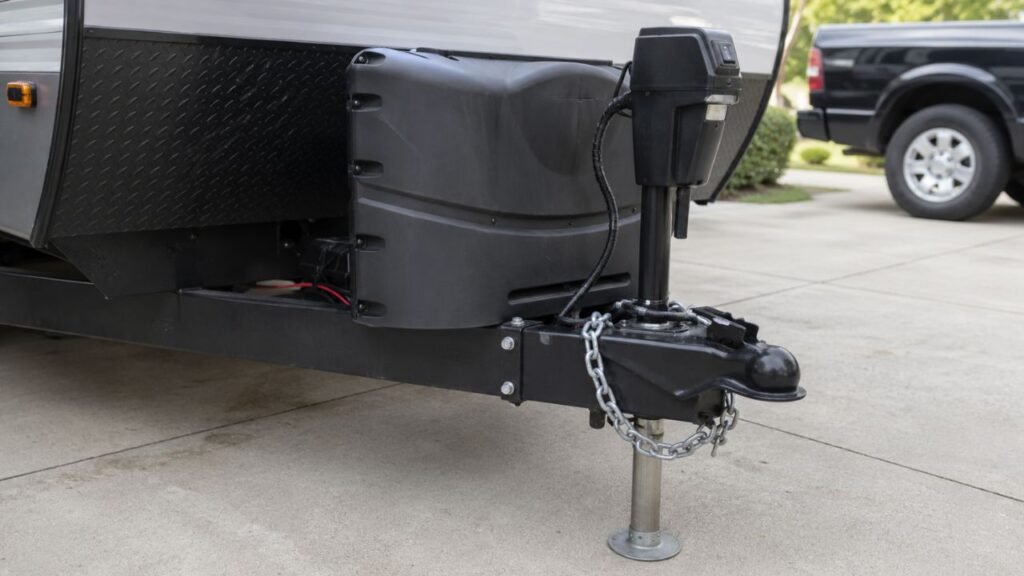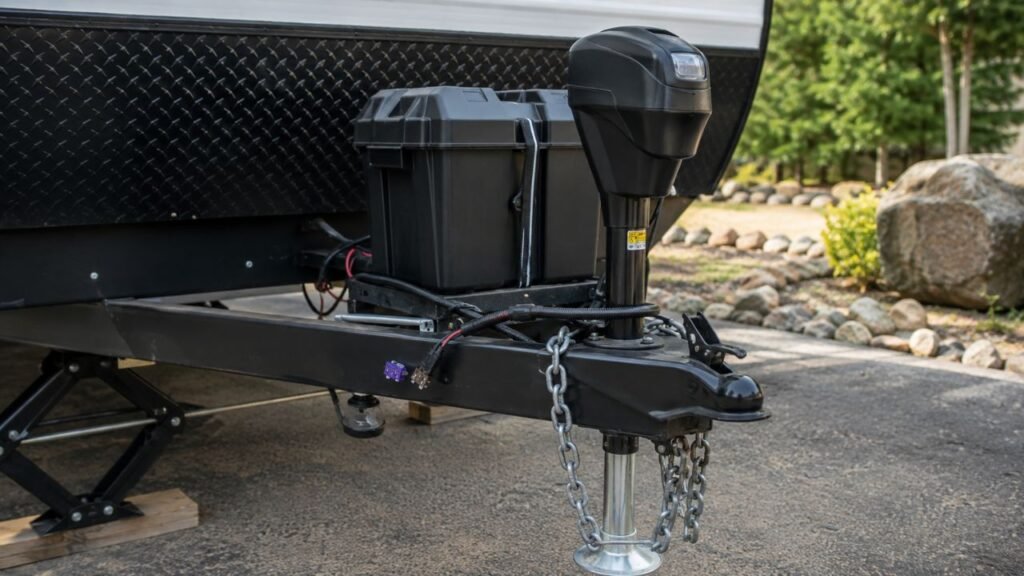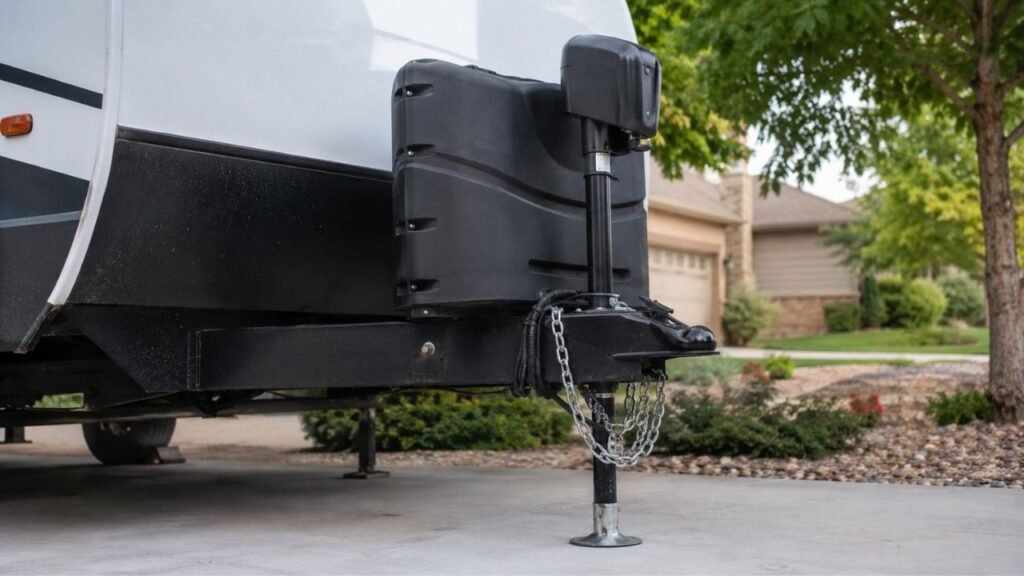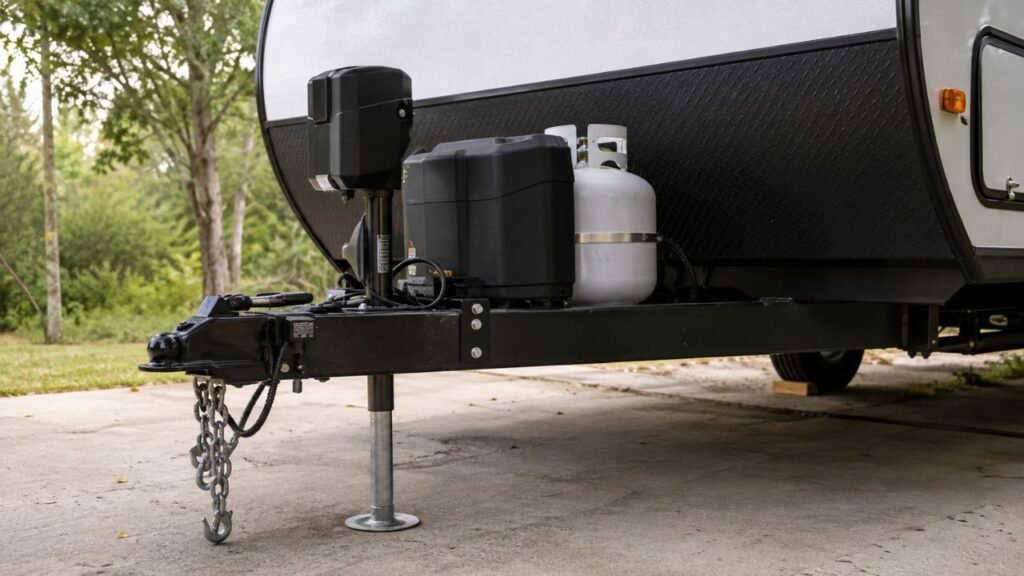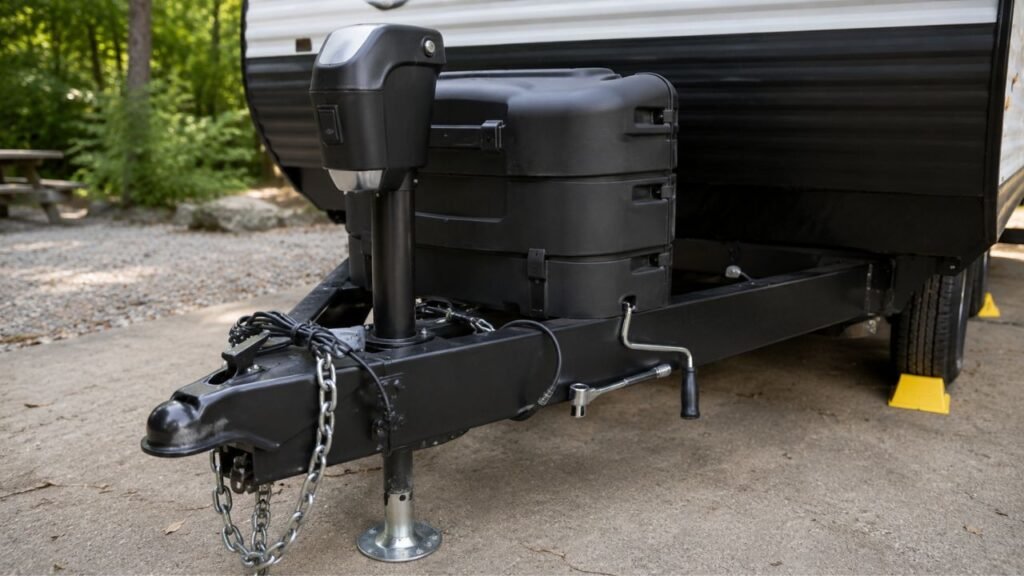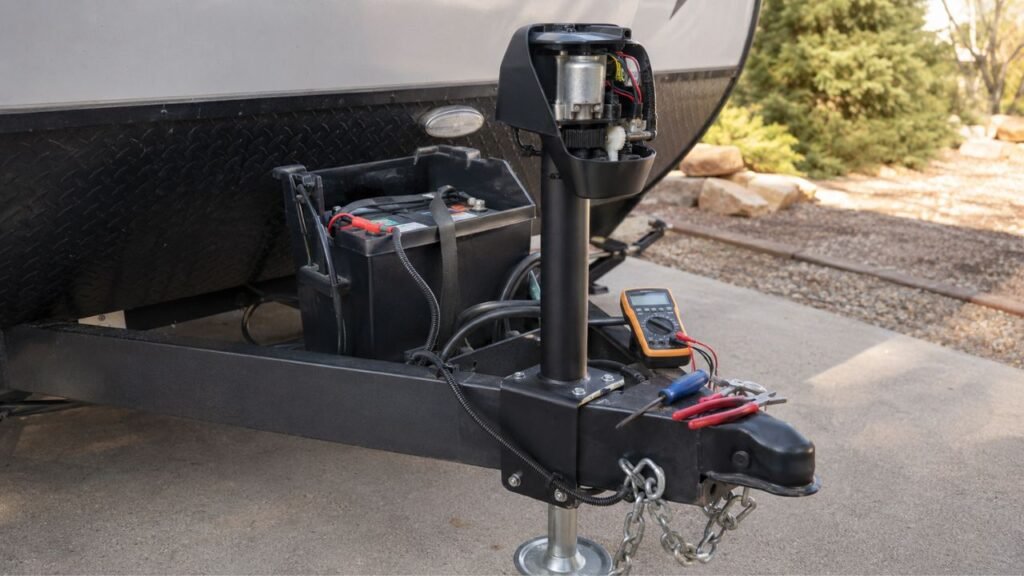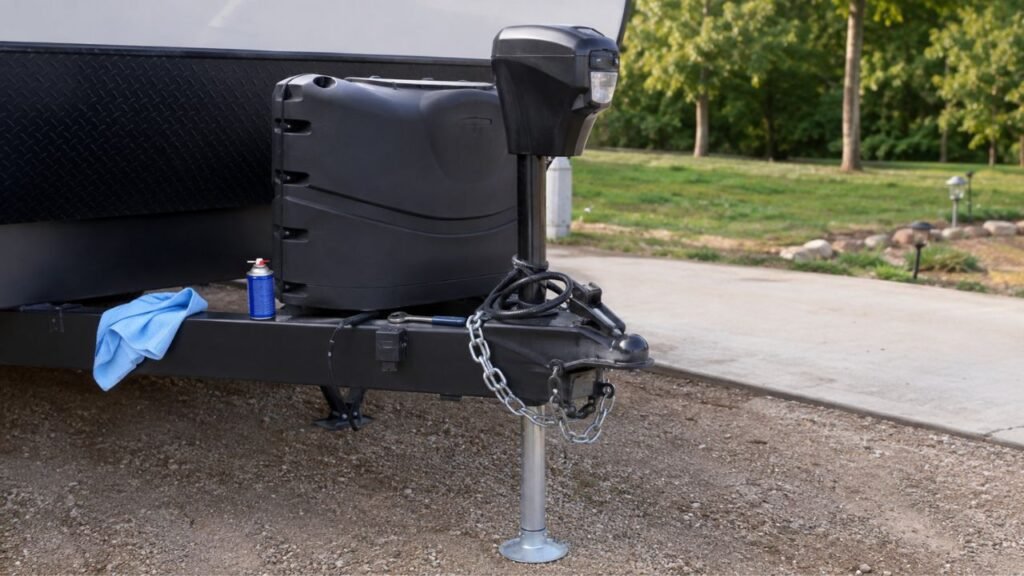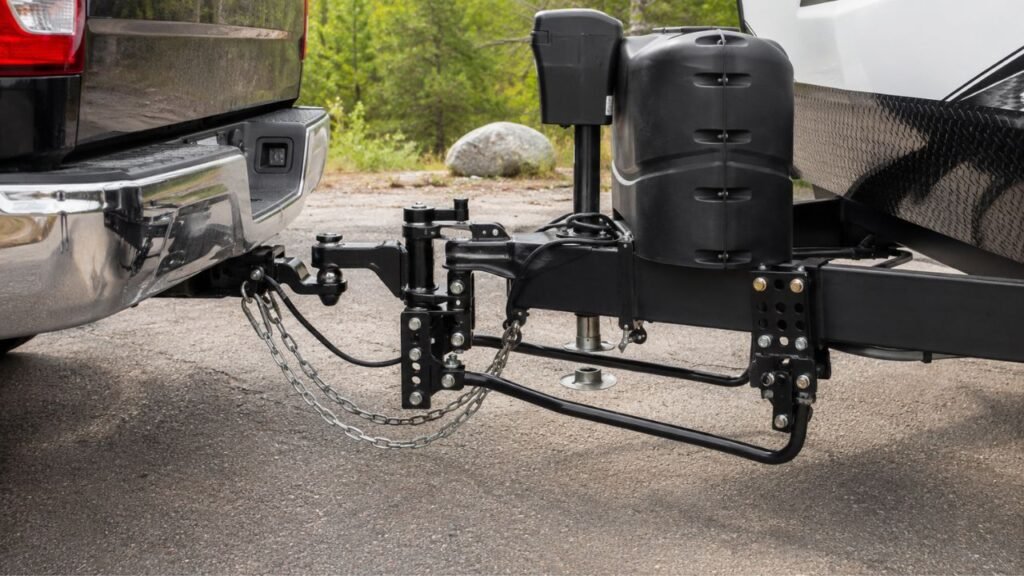
A weight-distribution hitch often makes groaning, creaking, squeaking, or occasional popping noises because its spring bars and sway-control parts work under heavy pressure and friction. Some noise is completely normal, especially during slow turns. However, grinding, repeated clunking, sudden new noises, or visibly loose parts deserve closer inspection.
In this guide, I’ll help you identify what each hitch noise means, where it comes from, and what you can safely do about it. We’ll also cover lubrication, adjustment problems, spring-bar noise, and the warning signs you should never ignore.
Key Takeaways
- Some creaking, groaning, and popping from a weight-distribution hitch is normal.
- Friction-style sway-control hitches are usually louder during slow, sharp turns.
- A dry hitch ball or hitch-head pivot can cause unnecessary squeaking.
- Spring bars can make loud noises because they operate under considerable tension.
- Clunking often points to receiver play or loose hitch components.
- Grinding and scraping sounds deserve inspection before continued towing.
- Do not grease every friction surface simply because it makes noise.
- Lubrication requirements vary between hitch brands and designs.
- Incorrect spring-bar sizing or hitch adjustment can increase noise.
- A sudden change in sound is more concerning than familiar operating noise.
Is It Normal for a Weight-Distribution Hitch to Make Noise?
Yes, some noise from a weight-distribution hitch is completely normal. In fact, certain hitch designs rely on controlled friction to help resist trailer sway.
Your spring bars are carrying considerable force while you tow. Every time your truck turns, enters a driveway, crosses uneven ground, or changes angle relative to the trailer, those loaded components have to move.
That movement can create:
- Groaning
- Creaking
- Squeaking
- Popping
- Occasional snapping sounds
The noise can sound surprisingly dramatic from inside the truck. You may even think something has broken when entering a campground or making a tight turn.
If the hitch remains securely connected, the spring bars stay properly seated, and the trailer handles normally, familiar creaking or groaning generally isn’t a reason to panic.
What matters is learning the difference between normal operating friction and abnormal mechanical movement.
What Do Different Weight-Distribution Hitch Noises Mean?
Different sounds usually point toward different areas of the towing system. Use this table as a starting point before taking anything apart.
| Hitch Noise | Likely Source | When You May Hear It | Usually Normal? | What to Check |
| Groaning | Spring bars or friction brackets | Slow turns | Often | Bar and bracket condition |
| Creaking | Spring-bar sockets or hitch pivots | Turns and uneven roads | Often | Approved lubrication points |
| Popping | Loaded spring bars shifting | Sharp turns | Sometimes | Bar seating and brackets |
| Squeaking | Dry hitch ball or pivot | Turning | Often fixable | Lubrication |
| Clunking | Receiver or shank movement | Accelerating or braking | Not always | Hitch pin and receiver fit |
| Rattling | Loose hardware or chains | Rough roads | Usually inspect | Bolts, pins, and chains |
| Grinding | Unwanted metal contact | Turning or articulation | Usually not | Bars, chains, brackets |
| Scraping | Misalignment or interference | Tight turns | No | Frame and hitch components |
The sound alone cannot diagnose everything, but it helps narrow your inspection to the most likely area.
Why Does My Weight-Distribution Hitch Make So Much Noise?
A weight-distribution hitch has several highly loaded contact points, so there are multiple places where noise can originate. Some causes are harmless, while others need adjustment or repair.
Spring Bars Are Rubbing Against the Sway-Control Brackets
This is one of the most common reasons a weight-distribution hitch groans loudly.
On many integrated sway-control systems, the spring bars rest directly on metal brackets attached to the trailer frame. The bars slide across these brackets slightly while the truck and trailer turn.
That metal-on-metal resistance helps control sway.
Because substantial pressure is pressing the bar against the bracket, even a small movement can produce a loud creak or groan.
You will usually notice it most while:
- Pulling into a campsite
- Turning through a gas station
- Backing around a corner
- Entering a steep driveway
- Making tight parking-lot turns
The noise can be unpleasant without indicating a failure.
The Hitch Ball and Coupler Are Dry
Your hitch ball supports considerable tongue load while allowing the trailer coupler to pivot.
Without sufficient lubrication where your specific hitch design requires it, the ball and coupler can squeak or groan as they rotate against each other.
You might also notice:
- A dry scraping sound
- Visible polishing on the hitch ball
- Rust around the ball
- Increased resistance while turning
Keeping an approved conventional hitch ball properly lubricated can reduce unnecessary friction and wear.
However, always check the instructions for your specific hitch. Some specialized systems use different coupling or friction arrangements.
The Spring-Bar Sockets or Hitch-Head Pivots Need Lubrication
Another common source of noise is the point where the spring bars connect to or pivot inside the hitch head.
These areas operate under heavy loading. They may rotate slightly each time your trailer changes angle.
As lubricant wears away, those contact points can become noticeably louder.
A creaking sound that seems to come directly from the hitch head may indicate that an approved lubrication point needs attention.
Do not assume every nearby surface should receive grease. I’ll explain that difference later.
Your Spring Bars Are Moving Under Heavy Tension
Spring bars are essentially large loaded levers.
They transfer part of the trailer tongue load toward the tow vehicle’s front axle and the trailer axles. That means they remain under substantial pressure while connected.
When the truck and trailer move at different angles, the bars flex and shift slightly.
That sudden movement can create a pop.
One occasional pop during a sharp turn does not automatically mean your bar has slipped or broken.
What matters is whether:
- The bar remains correctly attached
- The brackets remain in place
- Nothing is bent
- The trailer still handles normally
The Receiver Shank Has Too Much Play
Not every noise comes from the weight-distribution mechanism itself.
The hitch shank fits inside your truck’s receiver tube. A certain amount of clearance is needed so the shank can be inserted and removed.
That clearance can also allow movement.
You may hear a noticeable clunk when:
- Accelerating
- Braking
- Moving from reverse to drive
- Traveling over bumps
This sound is different from the long groan commonly produced by spring-bar friction.
If the clunk comes directly from the receiver, inspect the hitch pin, receiver tube, and shank for excessive wear or movement.
Something Is Loose or Improperly Torqued
Loose hardware should never be dismissed as normal hitch noise.
A weight-distribution hitch has multiple fasteners that experience repeated loading. If something begins moving where it should remain fixed, it may produce clicking, knocking, or clunking.
Inspect areas such as:
- Hitch-head bolts
- Frame brackets
- Hitch-ball hardware
- Spring-bar retaining components
- Receiver hardware
- Hitch pins and clips
Do not guess at tightening torque.
Use the torque values specified for your hitch because hardware size and requirements vary considerably between manufacturers.
The Weight-Distribution Hitch Is Adjusted Incorrectly
A poorly adjusted hitch can put components in positions they were not intended to operate in.
Possible setup problems include:
- Incorrect hitch-head angle
- Brackets positioned incorrectly
- Too much or too little weight restoration
- Spring bars sitting improperly
- Trailer riding noticeably nose-high or nose-low
You do not need to make your hitch completely silent.
Your main goal should be correct weight distribution, stable towing, adequate clearance, and proper component positioning.
The Spring Bars Do Not Match Your Loaded Tongue Weight
Using spring bars with an unsuitable rating can affect how your hitch behaves.
Bars that are too light may flex excessively under the actual tongue load.
Bars that are significantly heavier than needed may produce a harsher setup and place unnecessary forces into the system.
Your spring bars should be selected according to the hitch manufacturer’s recommended tongue-weight range.
Remember that actual tongue weight should reflect the trailer as loaded for travel, not simply its empty published weight.
Cargo placed behind the tow vehicle’s rear axle may also affect how some manufacturers want the weight-distribution system sized.
Rust, Dirt, or Worn Parts Are Increasing Friction
A hitch works close to the road, so it constantly encounters:
- Rain
- Dust
- Road grime
- Moisture
- Salt
- Mud
Eventually, corrosion or contamination can make moving components louder.
Inspect the hitch for:
- Heavy rust
- Rough contact surfaces
- Excessive wear
- Damaged coatings
- Bent brackets
- Worn spring-bar contact areas
Some polished wear marks are expected on friction surfaces.
Deep gouges, unusual deformation, or rapidly increasing wear should be investigated.
The Noise May Not Be Coming From the Weight-Distribution Hitch
This is something I always recommend checking before adjusting the hitch.
Noise travels through the trailer frame very easily. Something several feet away can sound like it is coming directly from the hitch.
Possible impostors include:
- Safety chains touching the frame
- Loose breakaway cables
- Trailer suspension bushings
- Leaf springs
- Shackles
- Brake components
- A loose coupler
- Propane-tank hardware
- Battery-box hardware
- Loose cargo
- Receiver movement
If you cannot immediately locate the noise, inspect the entire front portion of the trailer instead of assuming the spring bars are responsible.
Why Does My Weight-Distribution Hitch Creak or Pop When Turning?
Creaking and popping during turns are particularly common because turning forces several loaded hitch components to move at the same time.
As your truck turns, the trailer remains at a different angle.
The coupler rotates around the hitch ball. The spring bars change their angle relative to the trailer. Friction-style bars may also slide across their support brackets.
During a very tight turn, these components move farther than they do while driving straight.
That is why a hitch may remain fairly quiet on the highway and suddenly sound terrible when you enter a campground.
An occasional creak, groan, or pop during a tight maneuver can therefore be normal.
However, investigate the sound if you notice:
- Violent repeated popping
- Visible spring-bar movement
- A bracket shifting position
- Grinding against the frame
- Bent hardware
- Changed trailer handling
Those symptoms go beyond ordinary hitch articulation.
Why Is My Weight-Distribution Hitch Louder at Low Speeds?
A weight-distribution hitch often sounds louder at low speeds because tight steering angles create more movement between the truck and trailer.
Road, tire, wind, and engine noise also become quieter while you are moving slowly. This makes every hitch creak much easier to hear.
Typical situations include:
- Campground roads
- Parking lots
- Fuel stations
- Tight residential turns
- Driveway entrances
At highway speeds, your truck and trailer usually remain closer to a straight line for long periods.
The hitch is still working, but there may be less large-angle movement between its components.
How Can I Quiet a Noisy Weight-Distribution Hitch?
You should never try to silence a weight-distribution hitch by simply covering every moving part with grease. Start by finding the actual source, then apply the correct solution for that component.
First, Identify Exactly Where the Noise Is Coming From
Before changing anything, determine whether the sound originates from:
- Hitch ball
- Coupler
- Hitch head
- Spring-bar sockets
- Spring bars
- Frame brackets
- Receiver
- Safety chains
- Trailer suspension
Have another adult listen from a safe location while the vehicle performs a very slow maneuver if necessary.
Never stand between the truck and trailer while either vehicle could move.
Once you know the source, the correct fix becomes much easier.
Lubricate Only the Manufacturer-Approved Points
Lubrication can dramatically reduce unnecessary hitch noise.
The key word is approved.
Depending on your hitch, approved lubrication points may include:
- Hitch ball
- Spring-bar sockets
- Hitch-head pivots
- Trunnion contact points
- Other specified joints
But the friction surfaces responsible for sway control may have very different requirements.
Always follow your exact hitch manual rather than applying general trailer grease advice everywhere.
Clean Rust, Dirt, and Old Contaminated Grease
Adding fresh grease over dirty, gritty lubricant can create an abrasive paste.
Before lubricating an approved area:
- Remove loose dirt.
- Wipe away contaminated grease.
- Inspect for abnormal wear.
- Apply the recommended lubricant.
Keeping the hitch clean also makes cracks, damaged hardware, and unusual wear easier to spot.
Check the Hitch Adjustment
If your hitch has become louder after installation changes, loading changes, or trailer modifications, check the setup again.
Look at:
- Trailer attitude
- Spring-bar loading
- Bracket position
- Hitch-head angle
- Tow-vehicle front-height restoration
Do not change adjustments only to chase noise.
The hitch should first be adjusted for proper towing performance.
Inspect and Tighten the Hardware
Loose hardware can create movement that sounds much harsher than ordinary spring-bar friction.
Check all accessible fasteners according to the manufacturer’s maintenance instructions.
Pay particular attention after:
- Initial installation
- A long towing trip
- Rough-road travel
- Adjustments
- Component replacement
If a fastener repeatedly loosens after being correctly tightened, investigate why instead of simply tightening it again forever.
Correct Excessive Receiver-to-Shank Movement
If the noise is clearly coming from the receiver, reducing excessive shank movement may help.
A compatible anti-rattle solution can sometimes reduce receiver movement.
However, do not confuse receiver clunking with WDH spring-bar noise.
An anti-rattle clamp will not eliminate intentional friction noise occurring several inches farther back at the spring bars.
Replace Worn or Damaged Components
Noise caused by damage should not be masked with grease.
Replace or professionally inspect components showing:
- Cracks
- Severe deformation
- Bent hardware
- Damaged retaining pins
- Excessively worn sockets
- Distorted brackets
- Unusual gouging
The goal is not merely quiet towing.
The goal is a properly functioning hitch.
Where Should You Lubricate a Weight-Distribution Hitch?
Lubrication rules vary significantly between hitch designs. Use the table below as general guidance, then confirm everything against your hitch manufacturer’s manual.
| Hitch Area | Lubricate? | What You Should Know |
| Conventional hitch ball | Often yes | Follow hitch and coupler instructions |
| Hitch-head pivots | Commonly | Use specified lubricant |
| Spring-bar sockets | Model dependent | Check the manual |
| L-brackets | Model dependent | Never assume grease is allowed |
| Sway-control friction surfaces | Only when specifically approved | Lubrication can alter friction |
| Receiver/shank | Usually not the main noise fix | Diagnose excessive play instead |
| Chain or linkage joints | Design dependent | Follow manufacturer instructions |
The important takeaway is simple:
Do not grease every metal-on-metal contact point just because it makes noise.
Some friction is unwanted.
Some friction is intentionally part of the sway-control system.
Those are two completely different situations.
Why You Should Not Automatically Grease the L-Brackets or Sway-Control Surfaces
Some weight-distribution hitches use friction between the spring bars and trailer-frame brackets to help resist sway.
In those systems, the noisy contact point may also be one of the surfaces creating sway-control resistance.
Greasing it without checking the manufacturer’s instructions could change how the system behaves.
That does not mean every friction-style hitch forbids lubrication everywhere.
For example, one manufacturer may want grease inside the hitch-head sockets while keeping the trailer-side friction brackets dry.
Another design may specify different maintenance altogether.
So when you hear someone say, “Just grease the bars,” don’t treat that as universal advice.
Check the instructions for your exact model first.
Do All Weight-Distribution Hitches Make the Same Amount of Noise?
No. Weight-distribution hitches use different mechanisms, so their normal noise characteristics vary considerably.
| Hitch Design | Typical Noise Level | Why |
| Friction L-bracket system | Often louder | Bars slide against friction surfaces |
| Traditional chain-style WDH | Often quieter at brackets | Chains support spring-bar ends |
| Cam-style sway system | Moderate | Cam and bar surfaces move under load |
| Alternative integrated sway systems | Varies | Different sway-control mechanisms |
| Chain/friction-cone designs | Different sound profile | No conventional L-bracket arrangement |
This explains why your neighbor may tow almost silently while your hitch groans through every campground turn.
It does not automatically mean one system is better than another.
Different designs balance sway control, ease of use, adjustment, cost, and noise differently.
Normal Weight-Distribution Hitch Noise vs. Problem Noise
Some hitch sounds are expected. Others deserve immediate attention. This table makes the difference easier to recognize.
| Situation | Usually Normal | Needs Inspection |
| Groaning during a slow sharp turn | Yes | |
| Mild creaking over an uneven driveway | Yes | |
| Occasional pop while bars articulate | Often | If unusually violent |
| Constant receiver clunking | Yes | |
| Grinding metal sound | Yes | |
| Spring bar scraping the trailer frame | Yes | |
| Suddenly louder than usual | Yes | |
| Loose hitch-head movement | Yes | |
| Bent or cracked component | Stop towing | |
| Noise combined with unstable handling | Stop and inspect |
The biggest clue is often change.
A hitch that has always creaked during turns is usually less concerning than a hitch that was quiet yesterday and suddenly starts grinding today.
When Should Weight-Distribution Hitch Noise Concern Me?
Normal friction noise is usually predictable and happens in familiar situations. Pay closer attention when the sound changes or appears alongside visible movement.
Watch for:
- A sudden increase in noise
- Repeated grinding sounds
- Strong clunks during every stop
- A spring bar touching the trailer frame
- Brackets shifting from their original position
- Hardware repeatedly loosening
- Bent components
- Cracked welds or brackets
- Excessive coupler movement
- Severe receiver play
- Increased trailer sway
- Poor steering feel
- Trailer attitude changing unexpectedly
- Spring bars no longer sitting normally
Noise plus a handling change should always be taken more seriously than noise alone.
Should I Stop Towing If My Weight-Distribution Hitch Is Making Noise?
You usually do not need to stop towing simply because your hitch makes its familiar creaking or groaning sounds during turns.
However, stop and inspect the setup when you hear unexplained grinding, violent clunking, or a sudden new sound accompanied by visible movement.
You should also avoid continuing if you find:
- Loose structural hardware
- A displaced bracket
- Bent hitch components
- A damaged spring bar
- Cracks
- Severe interference
- An insecure coupler
If you cannot determine whether the hitch is safely assembled, have the setup inspected before continuing your trip.
Quick Troubleshooting Checklist for a Noisy Weight-Distribution Hitch
When your hitch suddenly sounds different, work through the problem in a logical order instead of immediately changing the setup.
- Listen carefully and identify the type of noise.
- Note exactly when the noise happens.
- Inspect the hitch ball and coupler.
- Check that both spring bars are correctly seated.
- Inspect the trailer-frame brackets.
- Look for abnormal spring-bar wear.
- Check hitch-head hardware.
- Check receiver-to-shank movement.
- Inspect safety chains for frame contact.
- Look for rust, damage, or contamination.
- Verify that nothing is scraping the trailer frame.
- Confirm your WDH adjustment.
- Confirm the spring-bar rating matches your loaded setup.
- Lubricate only approved locations.
- Test the setup carefully.
- Reinspect anything that still sounds unusual.
This method helps prevent you from fixing the wrong problem.
How to Prevent Excessive Weight-Distribution Hitch Noise
You probably cannot make every WDH completely silent, but regular maintenance can prevent unnecessary noise and wear.
- Keep the hitch clean.
- Lubricate approved locations on schedule.
- Inspect the spring bars before trips.
- Check trailer-frame brackets periodically.
- Inspect hitch pins and clips.
- Follow manufacturer torque specifications.
- Look for unusual rust or wear.
- Verify spring-bar capacity for your loaded tongue weight.
- Recheck the hitch after major loading changes.
- Inspect the receiver for excessive movement.
- Keep the ball and coupler maintained as required.
- Replace damaged parts instead of trying to quiet them.
- Learn what your hitch normally sounds like.
That final point matters more than many people realize.
Once you become familiar with the normal groans and creaks of your own setup, a genuinely unusual sound becomes much easier to notice.
Final Words
A noisy weight-distribution hitch is not automatically a bad weight-distribution hitch. These systems handle considerable force, and many designs intentionally create friction while controlling sway.
If yours groans during a slow turn, creaks entering a driveway, or occasionally pops while the spring bars change angle, you may simply be hearing the hitch work.
The sounds that deserve more attention are grinding, severe clunking, scraping, sudden new noises, or anything accompanied by loose hardware or changed trailer handling.
Most importantly, do not try to make the hitch silent by greasing every surface you can reach. Identify the noise first, follow the lubrication instructions for your exact hitch, and make safety and correct adjustment the priority.
Related FAQs
Why Does My Weight-Distribution Hitch Pop When Turning?
A weight-distribution hitch can pop during a turn because the loaded spring bars, brackets, and hitch-head components change position as the truck and trailer articulate. An occasional pop may be normal, but repeated violent popping or visible component movement should be inspected.
Why Does My Weight-Distribution Hitch Creak When Backing Up?
Backing often requires sharper steering angles than normal forward driving, causing the spring bars and sway-control surfaces to move farther against each other. This can make normal friction-related creaking much louder.
Why Does My Weight-Distribution Hitch Groan on Sharp Turns?
Groaning usually comes from loaded spring bars sliding or pivoting against friction surfaces while the trailer changes angle behind the truck. Friction-style sway-control systems can be particularly noticeable during slow, sharp turns.
Should I Grease My Weight-Distribution Hitch?
Many weight-distribution hitches require lubrication at certain points, such as the hitch ball, spring-bar sockets, or head pivots. However, the correct locations vary by model, so always follow the manufacturer’s lubrication instructions.
Can I Grease the Spring Bars on a Weight-Distribution Hitch?
It depends on the hitch design and the exact area of the spring bar. Some spring-bar pivot or socket areas require grease, while other contact surfaces intentionally rely on friction for sway control and should not be lubricated unless specifically approved.
Should I Grease the L-Brackets on My Weight-Distribution Hitch?
Do not automatically grease L-brackets. On some integrated sway-control systems, friction between the spring bars and L-brackets contributes to sway resistance, so lubrication may not be recommended. Check your specific hitch manual.
Is It Normal for an Equal-i-zer Hitch to Make Noise?
Yes, friction-style Equal-i-zer-type hitch systems can produce noticeable groaning, creaking, and popping during turns because their spring bars work against loaded friction surfaces. Familiar operating noise is usually different from grinding, looseness, or damaged hardware.
Why Is My Weight-Distribution Hitch Suddenly Louder?
A sudden increase in noise can come from lost lubrication, dirt, rust, loose hardware, shifted brackets, changed trailer loading, or developing wear. Because the sound has changed from normal, inspect the hitch before assuming it is harmless.
Can Too Much Spring-Bar Tension Cause Noise?
An incorrectly adjusted weight-distribution system can change the forces acting on its bars and brackets, potentially increasing harshness or unusual noises. However, adjustment should be based on proper weight distribution and manufacturer specifications rather than noise alone.
Can the Wrong Spring Bars Make a Weight-Distribution Hitch Noisy?
Yes. Spring bars that do not match the loaded tongue-weight range can change how the hitch flexes and responds. Use spring bars sized according to the manufacturer’s requirements for your actual loaded towing setup.
Can I Tow With a Noisy Weight-Distribution Hitch?
You can generally continue towing when the noise is familiar creaking or groaning and the hitch is properly assembled. Stop and inspect the setup if you hear grinding, severe clunking, see displaced components, or notice changed towing behavior.
How Often Should I Lubricate My Weight-Distribution Hitch?
There is no universal lubrication interval for every WDH. Frequency depends on the hitch design, towing conditions, mileage, weather exposure, and manufacturer’s maintenance schedule, so use the instructions supplied with your specific model.

Ryan Mitchell writes for readers who prefer independent travel and practical outdoor motorhome living. His how-to guides and reviews focus on simplicity, durability, and real value. He brings a calm, hands-on perspective to every topic.