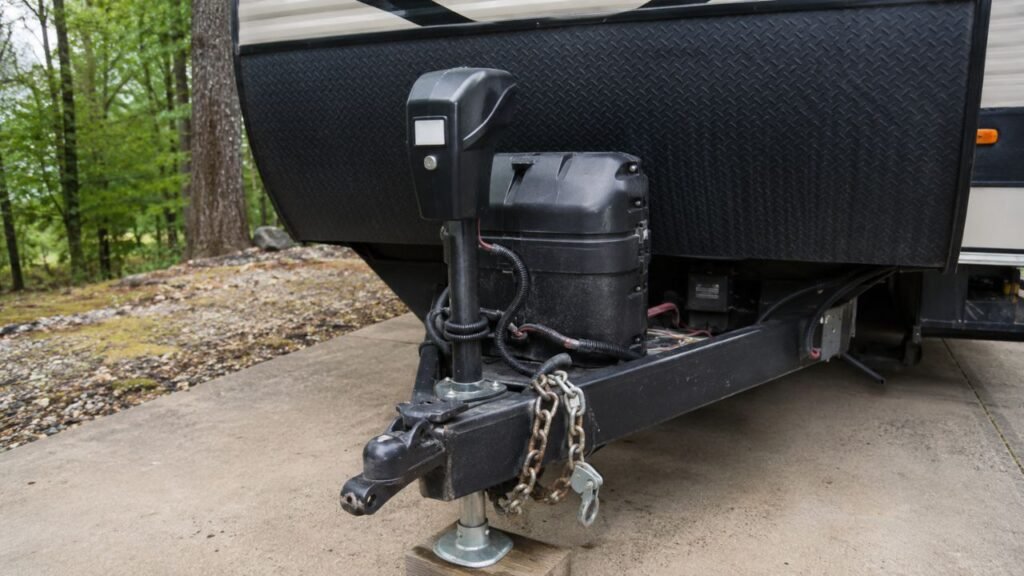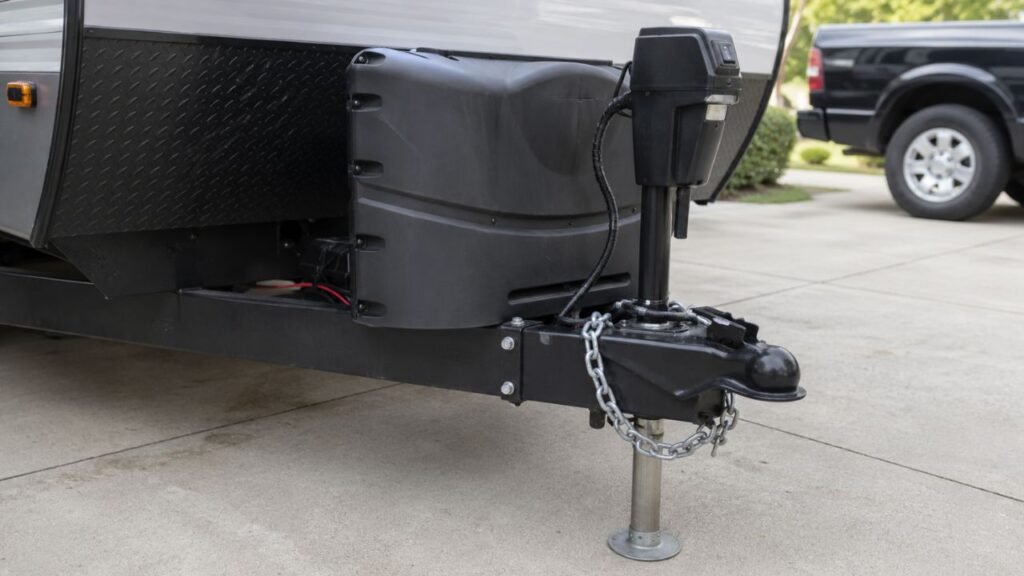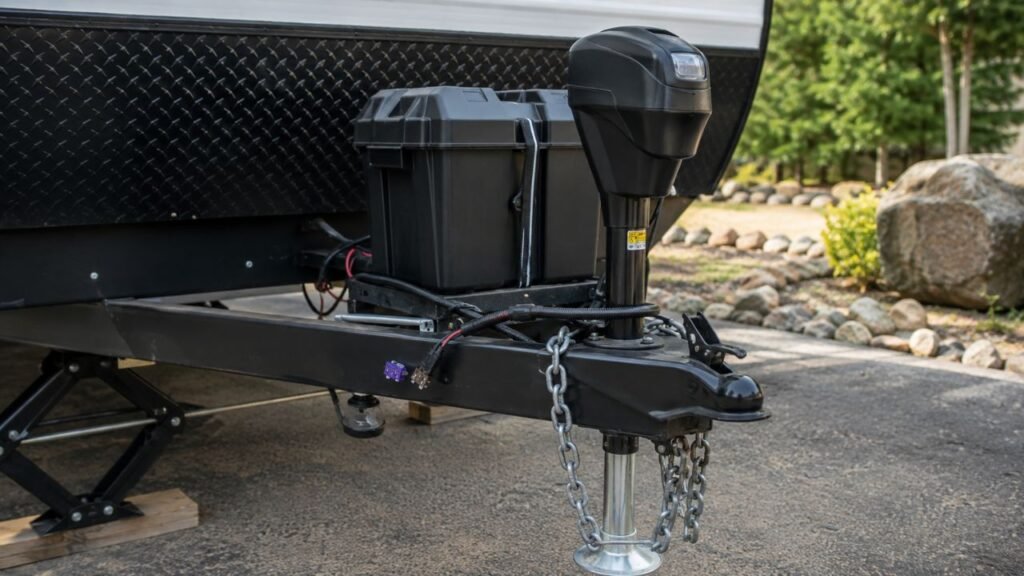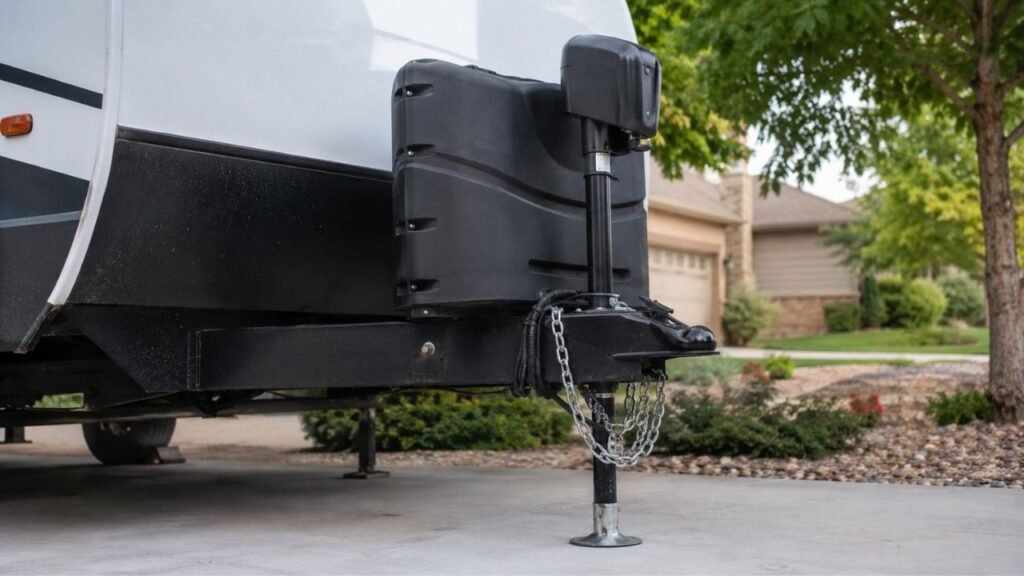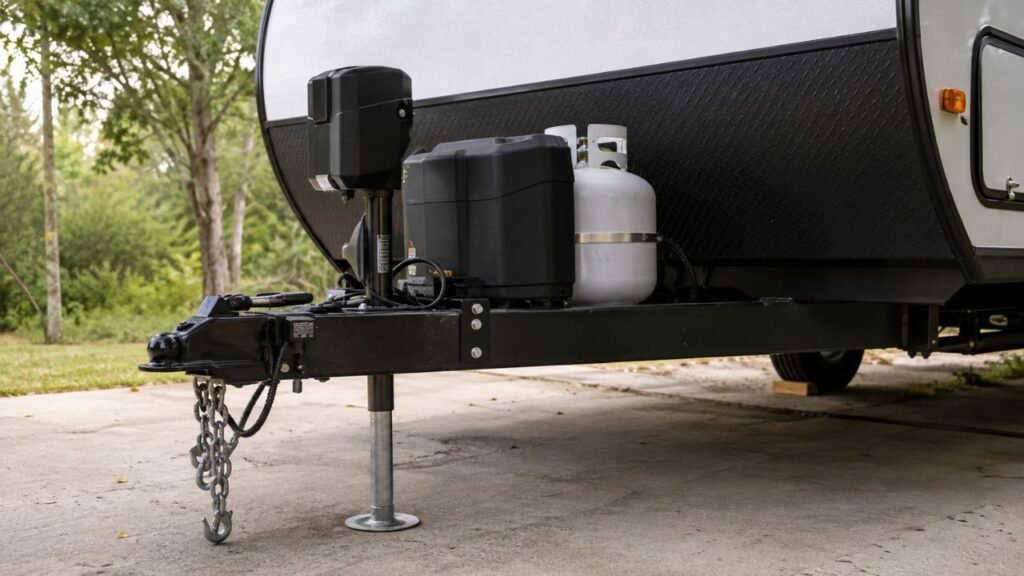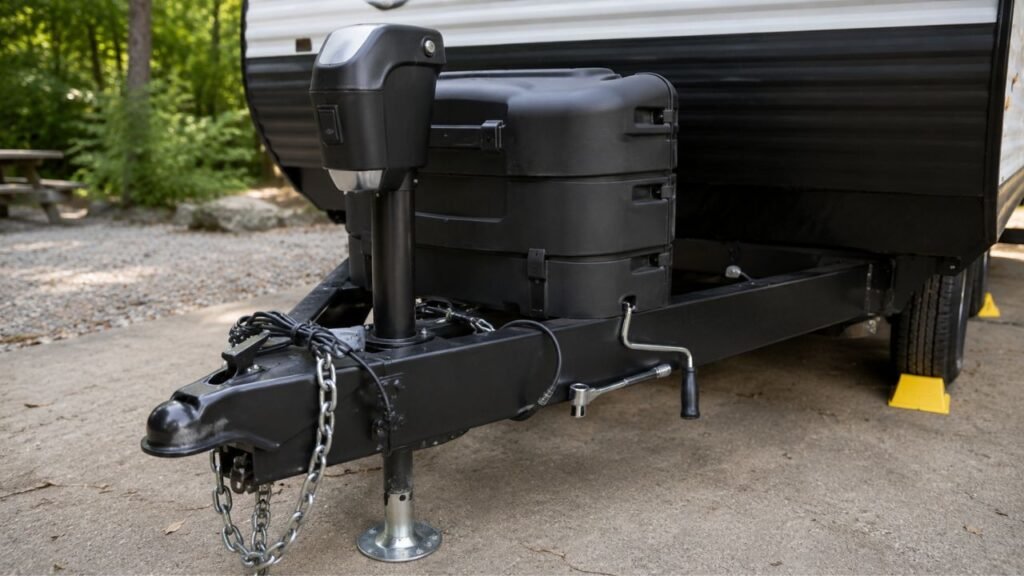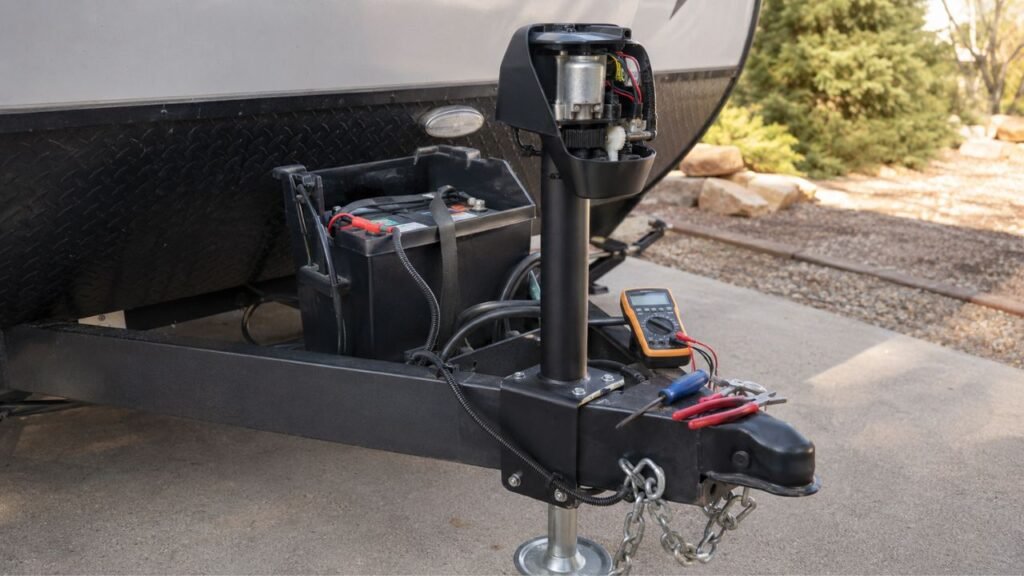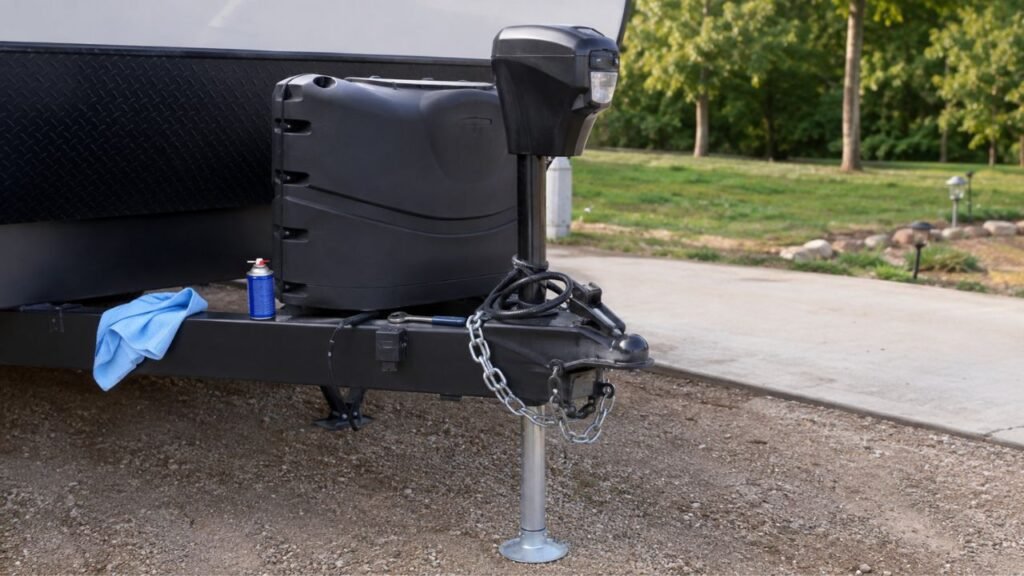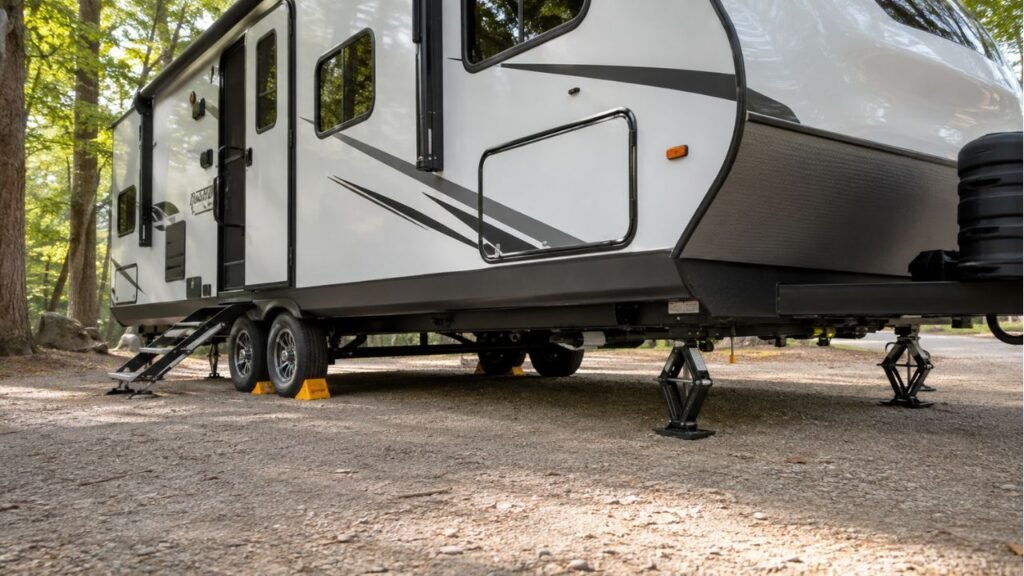
Your RV shakes when someone walks inside because weight shifts through the floor and frame while the tires, suspension, stabilizer jacks, and ground still allow some movement. A little rocking is normal, especially in travel trailers and fifth wheels, but excessive movement can often be reduced with a better campsite setup.
If your RV feels more like a boat than a parked camper, I’ll help you figure out where that movement is coming from. We’ll also go through the easiest fixes first, so you do not spend money on equipment you may not need.
Key Takeaways
- A small amount of RV movement while walking inside is normal.
- Tires and suspension can allow front-to-back rocking even when parked.
- Stabilizer jacks reduce movement but do not make an RV completely rigid.
- Proper leveling and wheel chocking should come before stabilization.
- Soft ground or poorly supported jacks can make shaking much worse.
- Different types of movement require different stabilization methods.
- Sudden or unusually severe shaking may indicate a mechanical problem.
Is It Normal for an RV to Shake When You Walk Inside?
Yes, some movement inside a parked RV is completely normal. An RV does not sit on a permanent concrete foundation like a house. Instead, much of its weight remains supported by tires, suspension components, jacks, and a relatively lightweight frame.
When someone walks from one end of the RV to another, their weight shifts across those support points. The floor and chassis transfer that movement throughout the camper, which can create a noticeable shake.
You may notice the movement more in a long travel trailer or fifth wheel. Someone walking through the rear living area can be several feet away from the nearest major support point.
A slight wiggle or bounce usually does not indicate a problem. However, violent shaking, obvious settling, bending jacks, loud popping sounds, or suddenly increased movement deserves closer attention.
Why Does My RV Shake When Someone Walks Inside?
Several small sources of movement usually work together rather than one single problem causing all the shaking. Knowing what each part of your RV is doing makes finding the right fix much easier.
The Tires and Suspension Still Allow Movement
Your RV may be parked, but the suspension has not stopped working.
Rubber tire sidewalls flex slightly as weight shifts. Leaf springs, equalizers, shackles, and other suspension components can also move under changing loads.
Imagine someone walking from the rear bedroom toward the front kitchen. Their weight may only be 150 or 200 pounds, but that weight is moving across the chassis.
The suspension reacts to those changes.
This often creates the front-to-back rocking you feel when another person walks through the trailer.
The RV Frame Naturally Flexes Slightly
RV frames are strong, but they are also designed with weight in mind. Manufacturers cannot build every travel trailer like a stationary steel building because the tow vehicle still has to pull it down the highway.
That means some chassis and floor movement is expected.
Longer RVs can make that movement more noticeable because there is more distance between support points.
Think of a long board supported near both ends. Pressing near the center produces more noticeable movement than pressing directly above a support.
Your RV is obviously much stronger than a board, but the same basic leverage principle helps explain why you may feel more movement near the middle.
Your Stabilizer Jacks Cannot Remove Every Bit of Motion
This is where many RV owners become frustrated.
You lower all four stabilizer jacks, walk inside, and the trailer still moves.
That does not necessarily mean your jacks are failing.
Stabilizer jacks are designed to reduce movement after the RV is properly leveled. They are generally not intended to lift the trailer or carry the same loads as leveling equipment.
They also do not control every direction of movement.
Your corner stabilizers may reduce vertical and side movement while the tires and suspension still allow the trailer to rock forward and backward.
Your Stabilizer Jacks May Not Be Set Up Effectively
Stabilizer jacks work best when they have solid, dependable contact with the ground.
If one jack barely touches the ground while another has much firmer contact, the RV may still feel unstable.
Other common setup issues include:
- unstable blocks under the jack feet
- soft or uneven ground
- excessive force applied to one stabilizer
- jack feet sinking into soil
- incorrect jack positioning
- worn or damaged stabilizer components
How far a stabilizer should extend can also depend on its design.
Using appropriate blocks or jack pads may improve the setup, but I would not automatically assume that the shortest possible jack extension is always best. Follow the operating instructions for your particular stabilizer system.
The Wheels Are Moving Slightly
Your trailer wheels may look completely stationary, but very small movements can still occur.
The tires can rotate slightly against the wheel chocks. Tandem tires can also move relative to each other as the suspension flexes.
That small movement can become surprisingly noticeable inside the RV.
If the trailer feels like it moves forward and backward when someone walks, wheel movement should be one of the first things you check.
The Ground or Jack Pads Are Shifting
Sometimes the RV is perfectly fine. The campsite underneath it is the problem.
Soft soil can compress under stabilizer feet. Gravel can shift. Wet ground may allow the pads to settle gradually.
Even hot asphalt can become softer than expected under concentrated jack pressure.
You might set up your camper in the afternoon and feel reasonably stable. Several hours later, one corner may have settled slightly.
That small change can introduce movement throughout the entire trailer.
A Long RV Can Flex Between Its Support Points
Long travel trailers and fifth wheels often have large areas between the tires, landing gear, tongue jack, and rear stabilizers.
You may notice the most movement around:
- the center kitchen
- the entry door
- rear living areas
- long slide-out sections
- bedrooms far from the axles
This does not automatically mean you should place random jacks underneath the middle of your RV.
Only use additional supports at locations approved by the RV or chassis manufacturer. Supporting the wrong component can create more problems than it solves.
What Type of RV Movement Are You Feeling?
The way your RV moves gives you valuable clues. Before adjusting every jack or buying another stabilizer, pay attention to the direction and location of the movement.
| What You Feel | Most Likely Source | What to Check First |
| Front-to-back rocking | Tires or suspension movement | Wheel chocks and tandem tire movement |
| Side-to-side sway | Stabilizer or lateral frame movement | Stabilizer contact and bracing |
| Up-and-down bounce | Suspension or unsupported frame span | Stabilizer setup and support points |
| Movement near one corner | Jack or ground issue | Jack foot, pad, block, and soil |
| Movement mostly near the center | Long frame span or chassis flex | Overall stabilizer setup |
| Movement gets worse after several hours | Ground or blocks settling | Recheck jack contact |
| Sudden heavy shaking | Loose or damaged component | Inspect the RV before normal use |
This simple test can save you plenty of frustration.
If your RV rocks mainly front to back, tightening the corner stabilizers harder may not help much. The tires may still be allowing movement.
If the trailer sways sideways, wheel chocks alone may not solve the problem either.
Match the solution to the direction of movement.
How to Reduce RV Shaking When Someone Walks Inside
Start with the simple campsite setup changes before adding extra hardware. In many cases, proper leveling, secure wheel chocking, and correctly deployed stabilizers make a much bigger difference than people expect.
Level the RV Before Trying to Stabilize It
Always separate leveling from stabilizing.
For a typical travel trailer, you normally level side to side at the wheels first. Once that is correct, you can use the tongue jack to level the trailer front to back.
Only after the RV is level should you deploy the stabilizer jacks.
Trying to correct a badly unlevel trailer using corner stabilizers can put unnecessary stress on the jacks and frame.
The simple order is:
Level first. Stabilize second.
Chock the Wheels Securely
Wheel chocks are one of the simplest ways to reduce unwanted trailer movement.
Place proper chocks securely against the tires before unhitching. Make sure they fit firmly and cannot slide easily across the campsite surface.
On sloped campsites, secure wheel chocking becomes even more important.
Remember that regular wheel chocks and tandem-wheel stabilizers do different jobs.
Standard wheel chocks primarily help prevent the trailer from rolling.
Tandem-wheel stabilizers help reduce movement between adjacent tires.
Set the Stabilizer Jacks Correctly
Once the RV is level and the wheels are secure, lower the stabilizer jacks according to the manufacturer’s instructions.
The goal is firm, stable contact with the ground.
You generally do not need to crank the jacks aggressively in an attempt to lift the trailer.
More pressure does not automatically mean more stability.
Excessive force can place unnecessary loads on the chassis and stabilizer mounting points.
I like to think of the stabilizers as removing unwanted wiggle rather than supporting the entire trailer.
Use Stable Jack Pads or Blocking When Needed
Jack pads spread the load over a larger area.
That can be particularly useful on:
- dirt
- grass
- gravel
- soft campsites
- hot asphalt
Solid blocking may also help you achieve a better stabilizer setup without unnecessary extension.
However, make sure whatever you place underneath the jack is stable and rated for the load.
Avoid stacking loose pieces in a way that can shift sideways.
A perfectly strong stabilizer sitting on an unstable block will still make the RV feel unstable.
Add Tandem-Wheel Stabilizers for Fore-and-Aft Movement
If you have a tandem-axle travel trailer, movement between the two tires can contribute to the rocking you feel inside.
Tandem-wheel stabilizers fit between the tires and expand outward against them.
This can reduce the small fore-and-aft movements that regular corner stabilizers may not control.
They can be helpful when your trailer feels solid vertically but still rocks when someone walks from one end to the other.
However, they do not replace proper wheel chocks.
Use them as an additional stabilization tool rather than your primary method of securing the trailer.
Add Cross-Bracing for Side-to-Side Movement
If sideways movement is your biggest complaint, stabilizer bracing can make a noticeable difference.
Cross-bracing creates a more rigid triangular connection between the frame and stabilizer system.
This helps resist the lateral movement that ordinary straight-down stabilizers may still allow.
These systems make the most sense after you have already:
- leveled the RV
- secured the wheels
- properly deployed the stabilizers
- confirmed that side-to-side motion remains the problem
Do not buy more hardware until you know which movement you are trying to eliminate.
Consider Approved Additional Frame Stabilization on Long RVs
Very long campers can sometimes retain noticeable movement around the middle even after the normal stabilizers are set properly.
Additional frame stabilization may help in certain applications.
However, this is one area where I would avoid improvising.
Never place a jack under:
- a holding tank
- plumbing
- the underbelly
- thin frame extensions
- slide mechanisms
- unsupported floor areas
If you want additional support, identify the manufacturer-approved structural locations first.
Best Setup Order for a More Stable Travel Trailer
A good stabilization routine removes several possible causes of movement in the correct order. Follow the same sequence each time you arrive at a campsite, and troubleshooting becomes much easier.
- Park on the most stable section of the campsite.
- Level the trailer from side to side.
- Secure the tires with proper wheel chocks.
- Unhitch the trailer when appropriate.
- Level the RV from front to back.
- Place suitable pads or blocks under the stabilizers.
- Deploy the stabilizer jacks correctly.
- Add tandem-wheel stabilizers if you use them.
- Tighten approved stabilizer bracing if installed.
- Walk through the RV and check the remaining movement.
- Recheck the stabilizers after the RV has settled.
That last step is easy to forget.
If the campsite surface compresses after several hours, one stabilizer may lose some contact. A quick inspection can restore much of the stability.
Why Does My RV Still Shake With the Stabilizer Jacks Down?
Your RV can still shake with all the stabilizer jacks down because those jacks only control certain types of movement. The tires, suspension, frame, and ground can continue moving independently.
This explains why cranking the stabilizers harder often produces disappointing results.
For example, your corner jacks may stop most vertical movement while the suspension continues allowing slight front-to-back rocking.
Or your wheels may be tightly secured while the long chassis still flexes sideways.
Instead of assuming the stabilizers are defective, identify the direction of the remaining movement.
You may find that the missing piece is better wheel chocking, tandem-wheel stabilization, firmer jack pads, or lateral bracing.
Does Shortening the Stabilizer Jacks Reduce RV Shaking?
Using appropriate blocks beneath stabilizer jacks can sometimes improve stability by reducing unnecessary extension and improving ground contact. However, shorter is not automatically better for every stabilizer design.
Scissor jacks and other stabilizers have specific operating ranges and load ratings.
That is why I would avoid using a fixed rule such as “always keep your stabilizers as short as possible.”
Instead, use stable blocking where appropriate and operate the jack within its recommended range.
The most important things are proper positioning, firm ground contact, and correct operation.
Travel Trailer vs. Fifth Wheel vs. Motorhome Shaking
Different RV designs transfer movement in slightly different ways. Knowing your RV type helps narrow down where the shaking may originate.
- Travel trailers: Tire movement, suspension flex, tongue-jack support, and corner stabilizers often influence how much shaking you feel.
- Fifth wheels: Landing gear, rear stabilizers, long chassis spans, and side-to-side frame movement can all contribute.
- Motorhomes: Tires and suspension remain major sources of movement unless the motorhome has an appropriate leveling system deployed.
A Class A motorhome with hydraulic leveling jacks may feel very different from a 30-foot travel trailer sitting primarily on its tires and stabilizers.
That does not necessarily make one setup wrong. They simply support their weight differently.
What Not to Do When Trying to Stop RV Shaking
A stable RV is nice, but trying to make the camper completely motionless can lead people to use stabilizers incorrectly. Avoid these common mistakes.
- Do not use ordinary stabilizer jacks to lift the RV.
- Do not use stabilizers to correct major leveling problems.
- Do not keep cranking the jacks because the RV still moves slightly.
- Do not place supports under random parts of the frame or underbelly.
- Do not stack unstable pieces of wood beneath jack feet.
- Do not assume tandem-wheel stabilizers replace proper wheel chocks.
- Do not ignore stabilizers that bend, slip, or lose contact.
- Do not use slide-out supports unless your RV manufacturer allows them.
- Do not assume more jack pressure always creates more stability.
- Do not ignore a sudden increase in shaking.
The goal should be a comfortably stable RV, not an RV forced into complete rigidity.
How Much RV Movement Can You Realistically Eliminate?
You can often reduce RV movement dramatically, but completely eliminating every vibration is difficult.
Remember that the RV is still a lightweight structure sitting above tires and suspension components.
Someone walking through a 30-foot or 40-foot camper is moving weight across a long chassis. Some vibration may still transfer through the floor.
A properly stabilized RV should feel comfortable enough that normal walking does not create distracting rocking.
If someone turns over in bed and the entire camper feels like it is swaying, you probably still have room for improvement.
If you can only feel a small vibration when another person walks by, your setup may already be working exactly as intended.
When RV Shaking May Indicate a Problem
Most walking-related RV movement is annoying rather than dangerous. However, certain symptoms deserve more attention because they may point to a damaged support, loose hardware, frame problem, or hydraulic issue.
Watch for:
- shaking that suddenly becomes much worse
- one corner dropping noticeably
- a stabilizer that keeps losing contact
- bent stabilizer legs
- cracked brackets or mounting points
- loose stabilizer bolts
- unusual popping or snapping sounds
- visible chassis cracks
- a floor that feels soft or moves independently
- doors suddenly becoming difficult to close
- slides becoming noticeably misaligned
- hydraulic leveling jacks slowly retracting
- one side of the RV settling overnight
- severe movement even after a proper setup
If you see frame damage, damaged stabilizer mounts, hydraulic problems, or significant structural movement, have the RV inspected before relying on the affected equipment.
Final Words
If your RV shakes when someone walks inside, the first thing I would do is avoid assuming something is broken.
Start with the basics.
Make sure the RV is properly leveled, the wheels are securely chocked, the stabilizers have firm contact, and the ground underneath them is stable.
Then pay attention to the direction of the remaining movement.
Front-to-back rocking may point toward tires and suspension. Side-to-side movement may respond better to stabilizer bracing. Movement at one corner may simply mean the jack or pad has settled.
Once you know where the motion comes from, the fix becomes much easier.
You may never make a travel trailer feel exactly like a house sitting on concrete, but you can usually make it solid enough that someone walking to the refrigerator does not shake everyone else inside.
Related FAQs
Is It Normal for a Travel Trailer to Move When You Walk Inside?
Yes. A small amount of movement is normal because a travel trailer remains supported by tires, suspension, jacks, and a lightweight chassis rather than a permanent foundation. Excessive or suddenly increased movement should be investigated.
Why Does My Camper Shake Even With the Stabilizers Down?
Stabilizer jacks mainly control certain directions of movement. Your tires, suspension, frame, or ground may still allow the camper to rock even when all four stabilizers are properly deployed.
How Do I Make My RV Feel More Solid When Parked?
Start by leveling the RV correctly, securely chocking the wheels, using stable jack pads, and properly deploying the stabilizers. If movement remains, identify whether it is front-to-back or side-to-side before adding more stabilization equipment.
Do X-Chocks Stop an RV From Shaking?
Tandem-wheel stabilizers can reduce movement between adjacent tires and may noticeably reduce front-to-back rocking. They usually work best alongside proper wheel chocks and correctly deployed stabilizer jacks rather than replacing them.
Will Wheel Chocks Reduce RV Movement?
Yes. Secure wheel chocks can reduce unwanted tire movement and prevent the trailer from rolling. However, they may not eliminate suspension flex, frame movement, or side-to-side shaking.
Should Stabilizer Jacks Support the Weight of the RV?
Ordinary RV stabilizer jacks are generally designed to reduce movement rather than lift or level the RV. Use them according to the manufacturer’s instructions and avoid putting excessive trailer weight on them.
How Tight Should RV Stabilizer Jacks Be?
Stabilizer jacks should normally have firm contact with the ground without being aggressively cranked to lift the trailer. The correct setup depends on the stabilizer design, so follow the manufacturer’s operating instructions.
Do Jack Pads Make an RV More Stable?
They can. Jack pads provide a larger, more stable contact surface and help prevent stabilizer feet from sinking into dirt, gravel, grass, or softened asphalt.
Why Does My Fifth Wheel Shake When Someone Walks Around?
A fifth wheel can shake because its tires, suspension, landing gear, rear stabilizers, and long chassis all allow small amounts of movement. Proper leveling, wheel security, rear stabilization, and approved bracing can reduce it.
Can I Completely Eliminate Movement Inside My RV?
Probably not completely. RVs are lightweight vehicles sitting above flexible tires and suspension systems. However, a proper stabilization setup can reduce movement enough that normal walking becomes barely noticeable.
Should I Put Extra Jacks Under the Middle of My Travel Trailer?
Only if the RV or chassis manufacturer approves the support location and method. Randomly placing jacks beneath the frame, floor, underbelly, or plumbing can cause damage instead of improving stability.
Can Too Much Stabilizer-Jack Pressure Damage an RV?
Yes. Excessive stabilizer pressure can place unnecessary stress on the jack, mounting brackets, frame, or RV structure. Stabilizers should reduce unwanted movement without being used to lift the trailer.

Ryan Mitchell writes for readers who prefer independent travel and practical outdoor motorhome living. His how-to guides and reviews focus on simplicity, durability, and real value. He brings a calm, hands-on perspective to every topic.